Enamel vs Engraved Cufflinks: Choosing the Right Face Construction
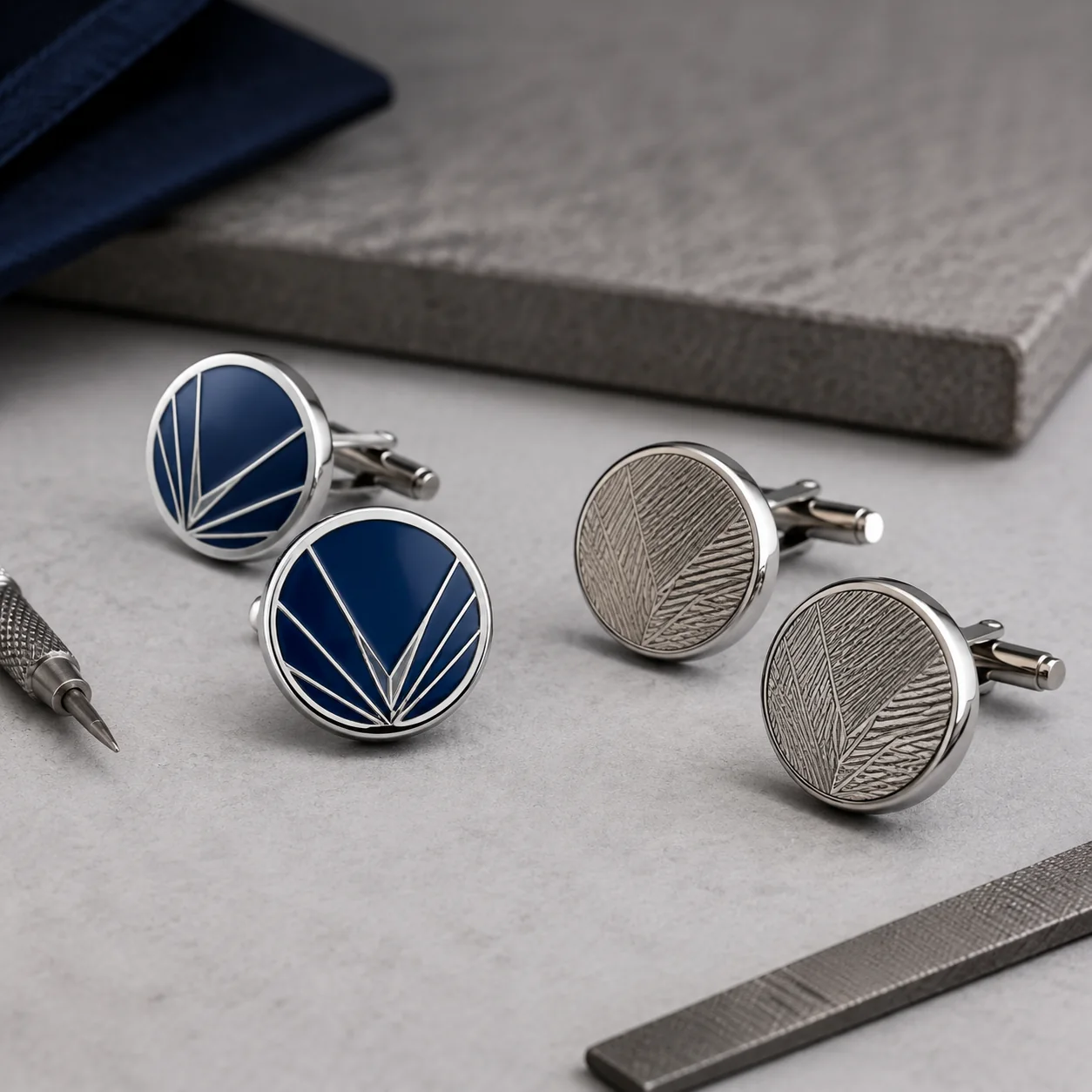
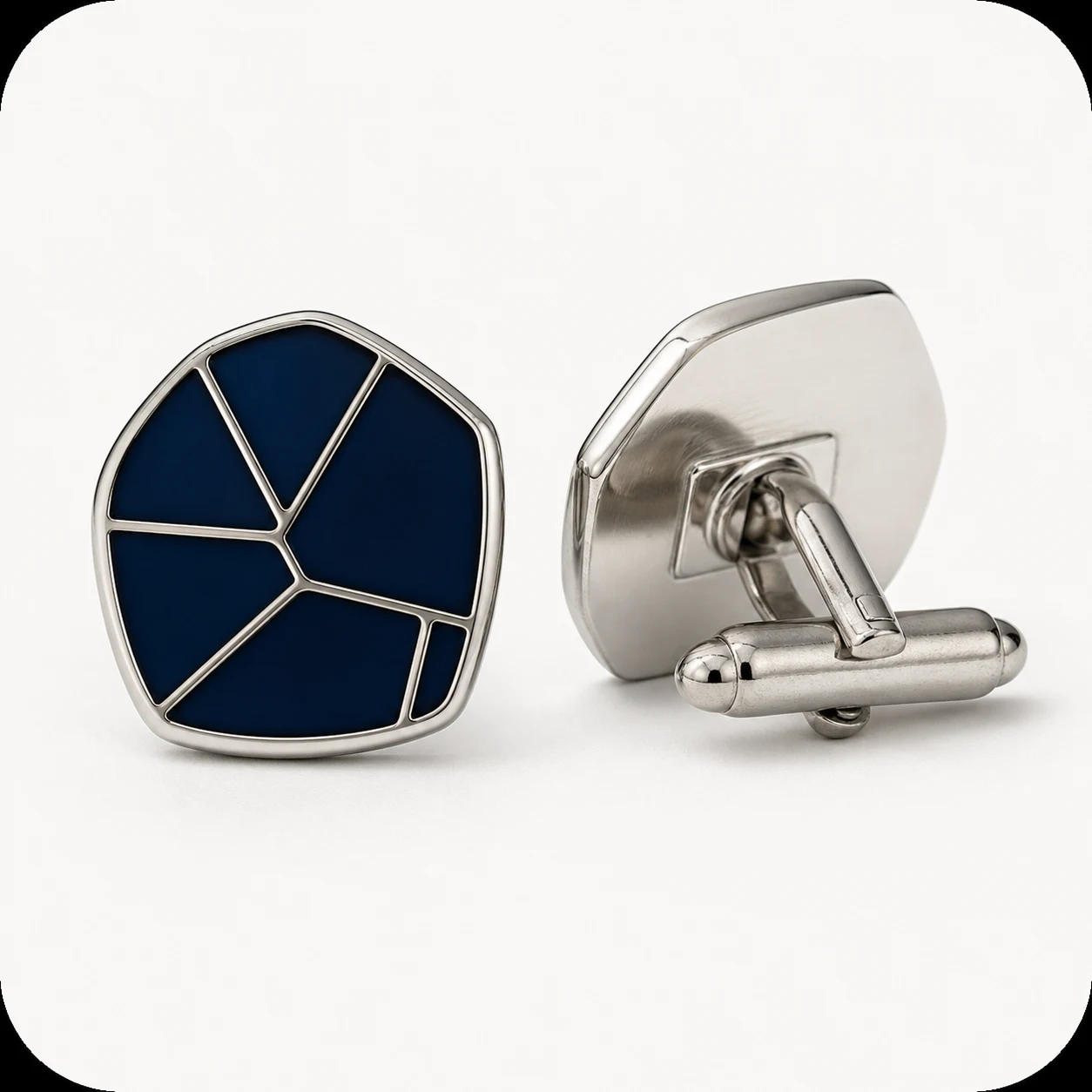
Choose hard enamel on brass when the cufflink face needs a smooth, jewelry-grade color finish. Choose soft enamel when budget matters and the logo benefits from visible raised metal lines. Specify die-struck relief for a metal-only front design, and use reverse engraving for initials, dates, or roles while keeping the front common across the order. Use offset print with an epoxy dome when the artwork should remain printed rather than be divided into enamel fills or translated into metal relief.
Decision rule for the cufflink face
The enamel vs engraved cufflinks decision becomes clearer when the cufflink is treated as a small jewelry face rather than a general promotional blank. A typical face is 14-20mm, so decoration must remain clear after artwork is reduced. Small marks, tight color areas, fine metal lines, and left-right pair consistency matter more here than on a larger badge. For corporate gifting and menswear orders, hard enamel on brass is the usual premium choice when the front logo needs color and a smooth surface. Soft enamel is the more economical color option when raised metal lines are part of the intended look. Die-struck relief suits a metal-only front, while reverse engraving is the documented option for names, dates, roles, and initials within one run.
| Decoration method | Best procurement fit | Main trade-off | Facts to specify |
|---|---|---|---|
| Hard enamel | Corporate milestones, executive gifts, wedding party gifts, and retail menswear lines needing a mirror-smooth, jewelry-grade face. | Artwork needs to work as separated enamel color areas rather than as a printed image. | Brass is the default base metal. Typical face size is 14-20mm. Available plating includes gold, silver, rose-gold, gunmetal, black nickel, and antique brass. |
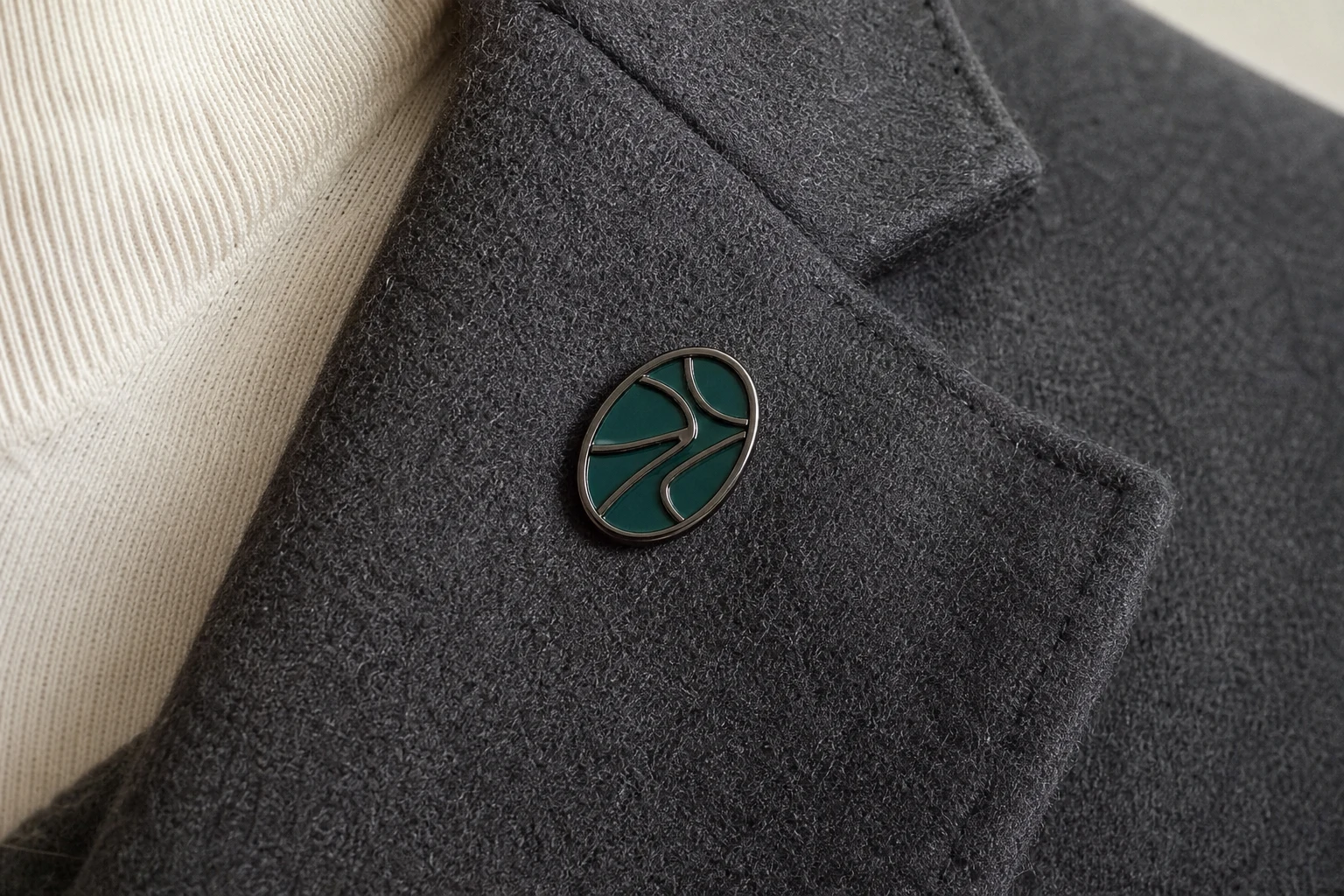
| Soft enamel | Economical custom cufflinks where fine raised metal lines are a visible part of the design. | The face retains visible relief, so buyers need to decide whether that texture supports the intended presentation. | Soft enamel uses the same enamel and plating craft as lapel pins and suits designs where raised metal lines should remain visible. |
| Die-struck relief | Metal-only crests, monograms, club regalia, and logos that can read through relief instead of color. | The supplied facts do not define a relief or engraving depth, so the approved sample must establish legibility. | Base metal options include brass, stainless steel, zinc-alloy, and copper. Shapes include round, square, rectangle, oval, and custom die-cut. |
| Offset print with epoxy dome | Artwork that should remain printed instead of being converted into enamel fills or metal relief. | The epoxy-domed surface has a different touch and reflection from polished enamel or bare metal. | Specify plating, face shape, face size, and packaging. The supplied facts do not state an abrasion, chemical, or UV-resistance rating for the dome. |
| Reverse engraving | Personalized groomsmen gifts, service awards, and role-based corporate sets where the front remains identical. | Personalization belongs on the reverse when a common front face and matched presentation are the priority. | Initials, dates, or roles can be engraved on the reverse within a single run while keeping the front design identical. |
Match artwork to enamel fill limits
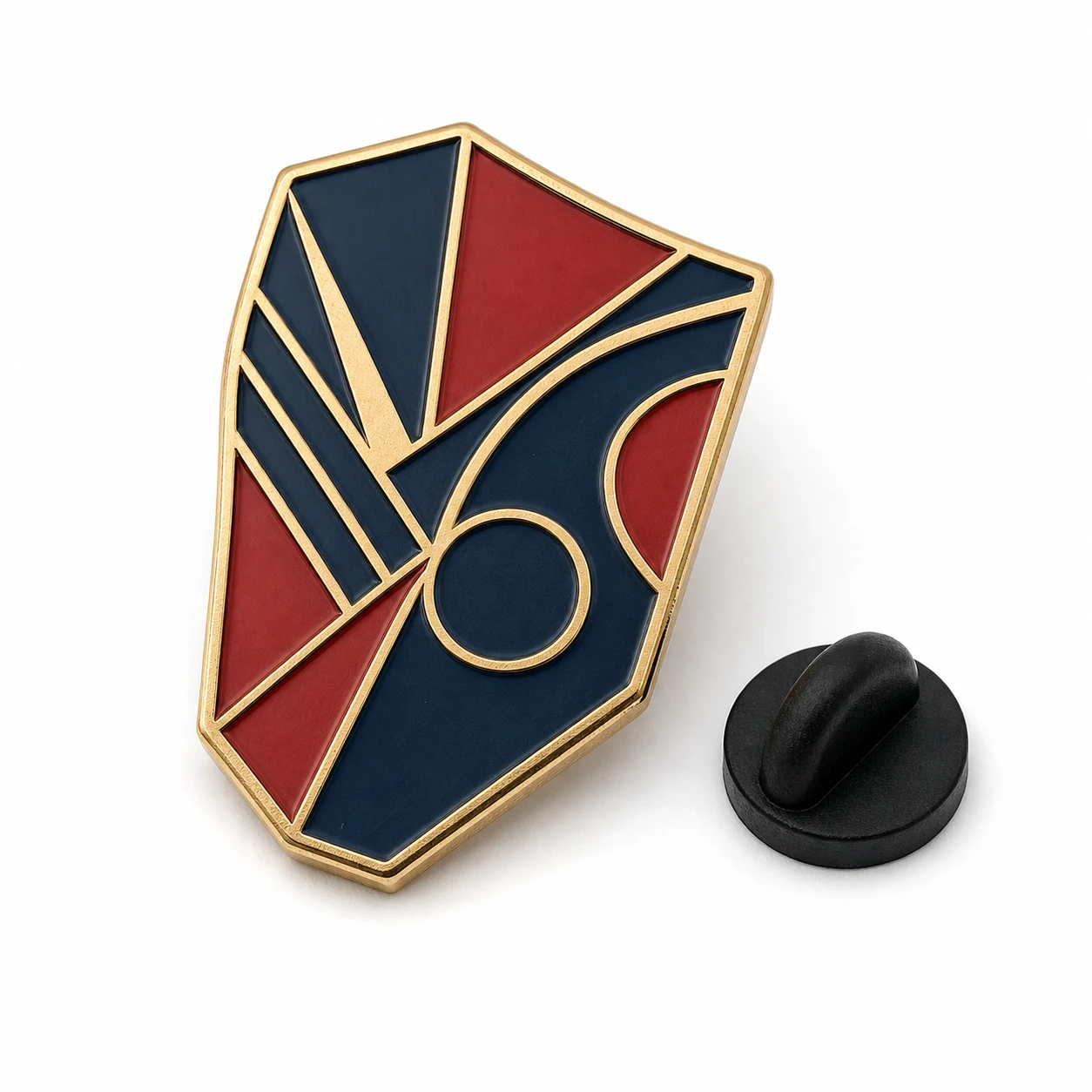
Enamel is strongest when artwork can be organized into defined color areas separated by metal lines. The supplied cufflink facts do not provide a universal minimum fill width, line width, or registration tolerance, so a purchase order should not invent one. On a 14-20mm face, simplify the logo enough for colors to be filled cleanly and for the metal structure to remain legible. If a brand mark depends on very small internal gaps, complex shading, or artwork that cannot be separated into fills, offset print with an epoxy dome is usually the more appropriate specification. If the artwork is a crest, seal, monogram, or club device that can work without front color, request a die-struck relief sample before committing to enamel.
Finish also affects perceived value. Hard enamel on brass provides the mirror-smooth, jewelry-grade result identified for gifting buyers. Soft enamel is more economical and can show fine raised metal lines clearly, making it useful for logos that need tactile definition. The approved sample should determine the final method, especially when the artwork contains small details or when the design will be used across a large matched-pair order.
Base metal and plating choices
Brass is the default base metal for these custom cufflinks. Stainless steel, zinc-alloy, and copper are also available. The chosen metal and plating affect how the decoration is presented, even when the artwork remains unchanged. Bright gold or silver plating can support a more formal presentation, while gunmetal, black nickel, rose-gold, or antique brass can suit fashion, club regalia, or menswear retail directions. Available shapes are round, square, rectangle, oval, and custom die-cut to the logo, so buyers do not need to force every design into a round face.
The practical constraint remains the small face area. Typical 14-20mm sizing should control artwork reduction, line clarity, and the final choice between enamel, relief, and print. For matched gift sets, corporate buyers may pair cufflinks with a matching lapel pin or tie bar in the same plating. Specify plating by its exact selected finish rather than a general color description. The order specification should state base metal, plating, face shape, decoration method, face size, back fitting, and packaging.
Where engraving fits
Buyers should distinguish a front metal effect from reverse personalization. For the front, the supplied product specification identifies die-struck relief. It is appropriate for a crest, monogram, emblem, or simple logo that can be read through metal detail rather than enamel color. For personalization, the documented option is engraving initials, dates, or roles on the reverse while the front design stays identical across the order. This distinction keeps the product specification aligned with the available decoration methods.
That approach also supports pair consistency. If each recipient requires a different front design, artwork control and pair matching become more demanding. A shared front with reverse personalization creates a more coherent corporate or wedding gift. The supplied facts do not state a fixed engraving depth. Require the sample to prove that the selected text or mark is legible at the chosen face size and plating, rather than assuming that engraving will read the same across every finish.
Printed graphics with an epoxy dome
Offset print plus epoxy dome is the option when artwork should remain printed. It is not the same visual language as enamel or metal relief. The dome covers the printed graphic and creates a distinct surface feel and reflection on the cufflink face. This makes it useful for designs that are awkward to divide into enamel fill areas or that depend on printed visual detail that would not translate well into die-struck relief.
The epoxy dome should not be represented as having a specific wear, abrasion, chemical, or UV-resistance performance unless that requirement is confirmed with the supplier. For executive gifts and retail menswear lines, buyers should compare an epoxy-domed sample with hard enamel and die-struck relief because the surface appearance differs. For campaign artwork, event graphics, or designs where retaining printed artwork is the priority, print plus epoxy may be the practical choice. Approve a paired sample to review print position, dome coverage, plating edge, and overall pair presentation.
Wear, backs, and presentation
Cufflinks are handled as a pair, worn at the shirt cuff, and viewed at close range. Back fitting and packaging are therefore part of the product specification. The standard fitting is a smooth swivel toggle, also called a T-bar. Fixed bullet backs and chain links are optional. For many corporate orders, the standard swivel toggle is a straightforward choice because it is the standard supplied fitting. A chain link may suit fashion or club regalia, but it should be selected at the beginning of sampling rather than added after the face construction is approved.
Packaging changes the recipient experience. The default is a poly-bag, which can suit internal distribution or downstream kitting. For gifting, a paired gift box with a foam insert is recommended and adds about $0.50 to $1.00. That additional cost can be material against the stated $0.80-$5.50 per pair FOB range, so it should be quoted as part of the complete order rather than treated as a late packaging change. The foam insert also helps keep the two cufflinks organized for personalized and matched-pair orders.
Pair consistency checklist
Because cufflinks are judged as a pair, inspect them as a pair. A single approved face is not sufficient if the two pieces later differ in plating tone, print position, enamel fill, fitting, or packaging placement.
- Confirm the same base metal on both pieces: brass by default, or the selected stainless steel, zinc-alloy, or copper option.
- Confirm the exact same plating on both pieces: gold, silver, rose-gold, gunmetal, black nickel, or antique brass.
- Check that both faces use the approved decoration method: soft enamel, hard enamel, die-struck relief, or offset print with epoxy dome.
- Compare the 14-20mm face size with the approved sample so the logo does not become too compressed in bulk production.
- For enamel, check clean color areas and legible raised metal lines.
- For die-struck relief and reverse engraving, check legibility in the selected plating because no fixed depth is supplied.
- For printed epoxy-domed faces, check print position, dome coverage, and whether the surface appearance matches the intended presentation.
- Confirm the back fitting on both pieces: standard swivel toggle, fixed bullet back, or chain link.
- For personalized orders, verify the reverse engraving data while keeping the approved front design identical across the run.
- Confirm the packaging format: default poly-bag or paired gift box with foam insert.
Cost, timing, and next step
The supported MOQ is 100 pairs per design. The stated price range is $0.80-$5.50 per pair FOB. Final cost depends on the selected base metal, decoration method, plating, shape, back fitting, and packaging. Sample timing is 7-10 days, and bulk timing is 15-22 days. Steel dies are archived for five years for reorders, which can support annual awards, recurring groomsmen styles, club regalia, and retail replenishment.
For the purchase decision, specify hard enamel on brass for the smoothest jewelry-grade color face, soft enamel for an economical raised-line color face, die-struck relief for a metal-only front, reverse engraving for personalization, and offset print with an epoxy dome for artwork that should remain printed. Send the logo, target quantity, preferred plating, face size, back fitting, packaging choice, and any reverse engraving data for a custom cufflinks quote through /products/custom-cufflinks.html.
Ready to get this made?
Send your sketch, target quantity and ship-date. Detailed quotation in 12 hours.