Enamel Pins vs Metal Keychains: Which to Spec First
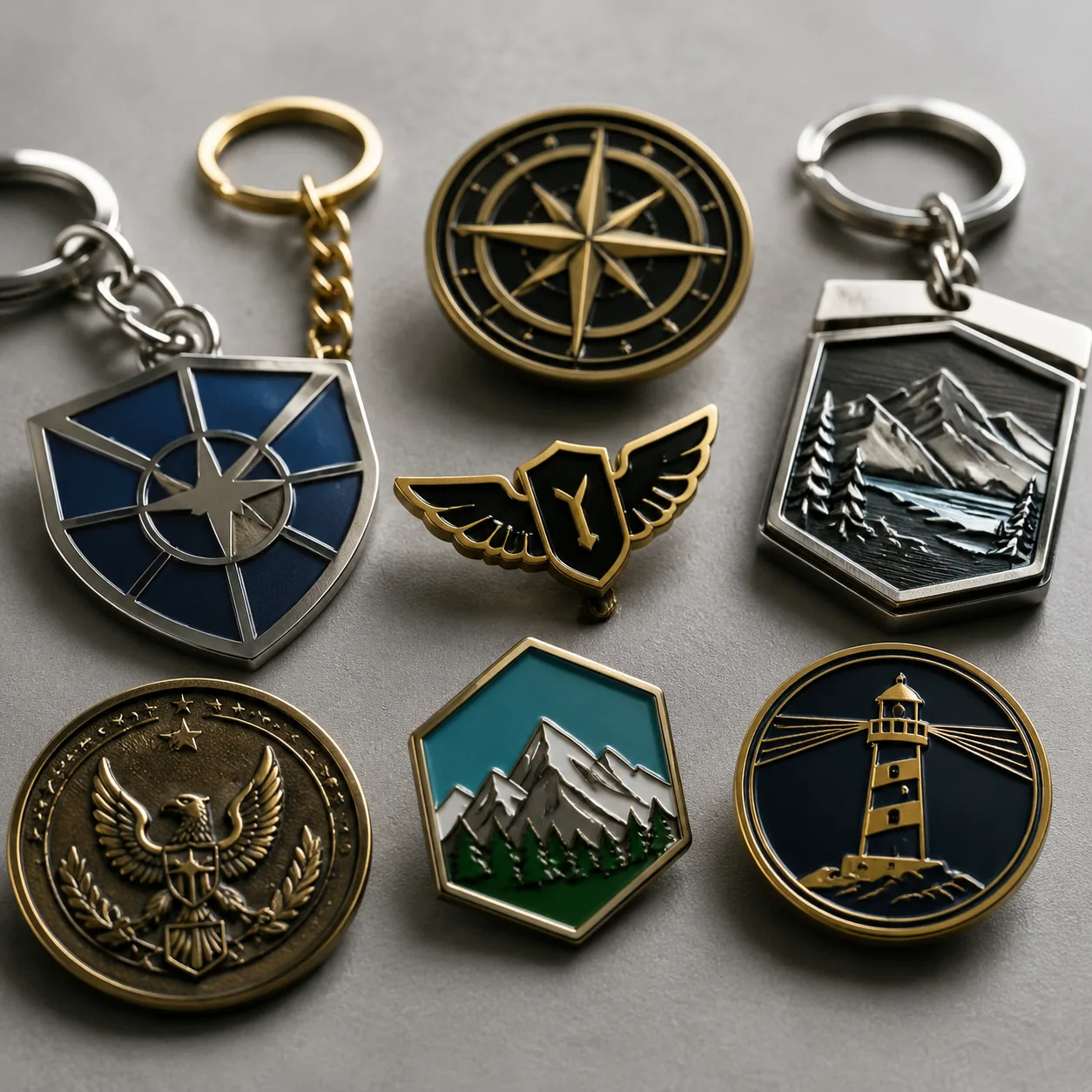
Start with the use case, not the artwork
When buyers compare custom enamel pins and custom metal keychains, the first mistake is judging which one “looks better.” The better question is which format best fits the way the item will be worn, handled, packed, and reordered. A pin is usually better for display and apparel use; a keychain is usually better for everyday carry and retail utility. That difference drives everything else: thickness, hardware, finish, approval risk, and total landed cost.
For procurement teams, the decision should be spec-first. Define the audience, the attachment method, the durability expectation, and the packaging format before requesting pricing. Otherwise, one supplier quotes a simple flat pin while another prices a reinforced keychain with upgraded hardware, and the comparison becomes useless. If you lock the use case first, you can compare quotes on the same basis and avoid hidden add-ons later.
Side-by-side spec table: where the real differences sit
| Spec | Custom enamel pin | Custom metal keychain |
|---|---|---|
| Typical finished size | 20–35 mm is the common range; 40 mm+ usually raises cost quickly | 30–50 mm body plus ring; total footprint is larger because of hardware |
| Base metal | Iron, zinc alloy, or brass; iron is usually lowest cost | Zinc alloy or iron; zinc alloy is preferred for 3D forms and thicker bodies |
| Typical thickness | 1.2–2.0 mm | 2.0–4.0 mm body, plus 2–3 mm ring or chain hardware |
| Decoration | Soft enamel, hard enamel, printed epoxy, glitter, glow, sandblast | Soft enamel, hard enamel, laser engraving, epoxy dome, 3D relief |
| Tooling complexity | Low to medium; 2D dies are standard | Medium to high; thicker bodies and hardware assembly add cost |
| MOQ | 100–300 pcs for simple styles; 500 pcs often improves unit cost | 100–300 pcs for standard styles; custom hardware can make 500 pcs more practical |
| Typical lead time | 12–18 days after sample approval | 14–20 days after sample approval |
| FOB price range | About USD 0.35–1.80/pc for standard specs | About USD 0.55–3.20/pc depending on size, hardware, and finish |
| Best fit | Campaigns, staff recognition, collectible sets, apparel branding | Retail merch, souvenir programs, trade shows, bundled gift sets |
The table shows why a pin RFQ and a keychain RFQ should not use the same template. A pin is efficient when the artwork is compact and the back attachment is simple. A keychain adds functional hardware, which improves utility but introduces more assembly steps and more failure points. In both categories, plating, edge finish, and attachment choice can move the quote more than the artwork itself.
Artwork fit: display object or daily-use item?
If the design is a logo, badge, mascot face, or simple icon, a pin is usually the cleaner solution. The face stays visible, the part remains light, and the design can tolerate fine linework if the die lines and enamel walls are controlled correctly. Pins also work well when the item must sit flat on jackets, caps, lanyards, or tote straps without bulky hardware getting in the way.
If the item will be handled every day, clipped to bags, or used as a carry item, the keychain usually wins. Larger surfaces support stronger branding, but the body must be thick enough to survive repeated handling without bending, scratching, or chipping at the plated edges. A keychain is the right choice when function matters more than display. A pin is the right choice when display matters more than function.
In practical terms, pins are the better spec when the artwork is under about 35 mm and needs to read clearly on clothing. Keychains are the better spec when the buyer expects the recipient to interact with the item repeatedly. If the artwork has delicate interior details, a keychain can crowd the design with ring, chain, or clasp hardware; if the audience expects a practical promo item, a pin can feel too decorative.
- Choose a pin if the design must stay lightweight and wearable.
- Choose a keychain if the item must be used daily, not only collected.
- Avoid a keychain if the artwork is crowded by the ring or clasp.
- Avoid a pin if the campaign needs a functional carry item.
Plating and finish: what each format tolerates
Pins are usually more forgiving on tooling because the front face is relatively simple and the back structure is standardized. Soft enamel and hard enamel both work well, but the buyer should specify line depth, fill level, and plating color before sample approval. For many standard pin builds, plating thickness of about 0.8–1.2 microns is common for nickel or black nickel finishes. If the quote uses a premium decorative plate, the supplier should state whether the micron figure applies to the base plate or the decorative layer.
Hard enamel is the safer choice when the artwork needs a flatter, more premium surface and crisp boundaries. It usually costs about 15–30 percent more than soft enamel because of extra polishing and leveling steps. Soft enamel is cheaper and faster, but the recessed color areas leave a more tactile surface that can show wear sooner on high-contact programs.
Keychains tolerate thicker builds and can benefit from 3D relief, but they expose more hardware variables. A split ring is low-cost and reliable, while a swivel hook or lobster clasp improves usability but adds cost and assembly complexity. Because keychains are handled in pockets, bags, and drawers, the finish must resist abrasion better than a lapel pin. On larger metal surfaces, scratches and handling marks are more visible, so mirror-polished plating should be approved carefully.
| Finish choice | Pin impact | Keychain impact |
|---|---|---|
| Soft enamel | Lowest cost; color sits slightly below the metal line | Good for bold branding, but raised edges wear faster in pockets |
| Hard enamel | Flatter surface and more premium appearance | Possible, but more polishing time and higher unit cost |
| Laser engraving | Usually used for backstamps or serials | Useful for QR codes, edition numbers, or subtle branding |
| Epoxy dome | Adds gloss and protects print | Better for printed logos than for tactile 3D relief |
| Glitter, glow, transparent enamel | Strong visual impact on collectible formats | Works, but defects are more visible on larger surfaces |
Hardware and wear: the hidden cost of usefulness
Pins fail differently from keychains. A pin usually fails at the clutch, post, or plating edge if the back hardware is poor or the part is too heavy for the attachment. A keychain fails at the ring, clasp, chain link, or the junction between the body and hardware. That is why a pin can be economically safer when the campaign does not require daily handling. For comfort or fabric protection, buyers often choose rubber clutches, butterfly clutches, or magnetic backs when the garment can support the weight.
Keychains need more explicit hardware specifications because the default setup is not always suitable. A 25–30 mm split ring is standard for general use, but a heavier bundle needs a thicker ring or a swivel clasp. If the design is top-heavy or uses 3D relief, the attachment point should be reinforced to reduce twisting. For safety-sensitive promotions or bag tags, buyers should state whether the chain must stay short and whether the ring must fit a specific organizer, zipper pull, or gift set tray.
Ask the supplier to define the hardware tolerance, not just the hardware type. On pins, post placement tolerance of ±0.3 mm is generally acceptable for standard builds, while tightly spaced multi-post designs may need tighter control. On keychains, ring diameter tolerance of about ±0.5 mm is common, but it should be stated if the part must fit a fixed insert tray or lock onto a particular key format. These small figures matter because hardware variation is one of the main reasons a sample can approve cleanly but production still miss the mark.
MOQ, lead time, and FOB price: what changes by format
MOQ is driven more by setup and finishing complexity than by raw material cost. Simple enamel pins often start at 100–300 pieces, with better pricing at 500+ pieces because die setup, plating, and color-fill labor are spread across more units. Keychains follow a similar pattern, but once custom clips, extra rings, or specialty packaging are added, the practical MOQ can rise faster because assembly becomes the bottleneck. A buyer who only compares base metal cost will underestimate the fully loaded price.
Lead time is not identical. A standard pin order with soft enamel, one plating color, and a standard backing can often ship in about 12–18 days after sample approval. A comparable keychain usually needs about 14–20 days because of extra assembly and hardware inspection. If the deadline is tight, the safer format is usually the one with fewer moving parts, not the one that appears simplest on a catalog page.
For budgeting, FOB pricing typically lands in these bands: soft enamel pins around USD 0.35–1.20 per piece at 100–300 pcs, dropping to about USD 0.25–0.85 at 500+ pcs for simple 25–30 mm designs; hard enamel pins commonly run USD 0.60–1.80 at low MOQ and can decline with volume. Simple flat keychains often start around USD 0.55–1.60 per piece, while zinc-alloy 3D keychains with upgraded hardware can reach USD 1.50–3.20. Special plating, backstamps, and retail packaging can add another 5–25 percent to unit cost.
- Simple pin MOQ: 100–300 pcs is realistic; 500 pcs usually improves price.
- Simple keychain MOQ: 100–300 pcs, but complex hardware can make 500 pcs more practical.
- Standard pin lead time: about 12–18 days after sample approval.
- Standard keychain lead time: about 14–20 days after sample approval.
- Rush orders are usually easier on pins than on keychains because hardware sourcing is less variable.
Tolerance, quality control, and approval risk
The quality conversation should not stop at appearance. A pin quote should state color tolerance, line-width limits, and attachment consistency. A keychain quote should state ring fit, clasp movement, and whether the body can rotate under load. If the supplier cannot state those details, the sample may look fine but production can still drift. Buyers should ask for the same controls they would expect in any repeatable manufacturing program.
For enamel fills, a practical color match target is usually within Delta E 2.0–3.0 for brand-critical colors and looser for novelty merchandise, depending on the artwork and substrate. Edge burrs should be removed, and the visible linework should hold a clean tolerance of roughly ±0.2–0.3 mm on standard flat designs. For plated surfaces, the buyer should request a clear finish spec: nickel, black nickel, gold, rose gold, copper, or antique effects, with the understanding that antique plating is intentionally darker and less mirror-like.
A production order should also define inspection criteria. For repeat orders, a normal B2B tolerance target is zero critical defects, with minor cosmetic defects controlled at AQL 2.5 and major defects at AQL 1.0, or tighter if the item is retail-facing. If packaging includes printed cards or inserts, the buyer should specify whether the print color tolerance matches the product artwork or only the brand identity standard. The earlier these controls are written, the easier it is to protect both price and consistency.
When the cheaper item is the wrong item
A pin is not always the economical answer just because the unit price is lower. If the audience expects something usable, a pin can underperform even if it saves USD 0.20–0.30 per unit. Likewise, a keychain can look efficient on a quote sheet but become expensive once the design needs custom clasp hardware, extra attachment points, or protective packaging. The cheapest item is the one that matches the campaign job without forcing the factory to improvise.
Use pins when the goal is recognition, collection, internal culture, or a coordinated apparel program. Use keychains when the goal is everyday utility, retail souvenir appeal, or an item that will live in bags and pockets rather than on clothing. If you are building a launch kit, the strongest answer can even be both: a pin for the wearable identity and a keychain for the carry item. When the colors and plating must match across categories, compare them as a set instead of as isolated SKUs.
Shipping and packing also matter. Pins are easier to ship in bulk because they stack flat, while keychains need more carton space and can scuff if packed loosely. If the order is retail-bound, a blister card, polybag, or backing card insert may be required; that typically adds about USD 0.05–0.20 per unit depending on print complexity and carton quantity. For a promo campaign, that packaging delta can matter more than the base metal itself.
What to put in the RFQ before you ask for quotes
Before requesting pricing, decide which format the end user will actually use and write the spec around that use case. If you are leaning toward pins, define size in millimeters, plating color, enamel type, backing style, and whether the design must stay wearable on delicate fabric. If you are leaning toward keychains, define body size, ring type, chain length, finish, and any functional requirement such as anti-twist behavior or heavy-duty use. Buyers who include those details get faster pricing and fewer sample revisions.
If you want the comparison to be quote-ready, prepare one RFQ for each format with the same artwork, target MOQ, target FOB ceiling, plating preference, and packaging plan, then ask the supplier to price both side by side. That shows the real delta in tooling, assembly, and hardware. For new projects, a low-risk sample in the simplest structure is usually the right first step; once that passes, upgrade finish or hardware only if the campaign justifies it.
- Define the use case first: wearable, collectible, or functional.
- Request the same artwork in both formats for a true cost comparison.
- Lock the hardware family before sample approval.
- Specify plating thickness and finish level in the RFQ.
- Approve one simple sample before adding special effects or premium packaging.
Have a project? Send your artwork and target quantity and we’ll reply with a detailed quotation within 12 working hours.
Ready to get this made?
Send your sketch, target quantity and ship-date. Detailed quotation in 12 hours.



