Enamel Pin vs Soft PVC Pin: Which Fits Your Order?
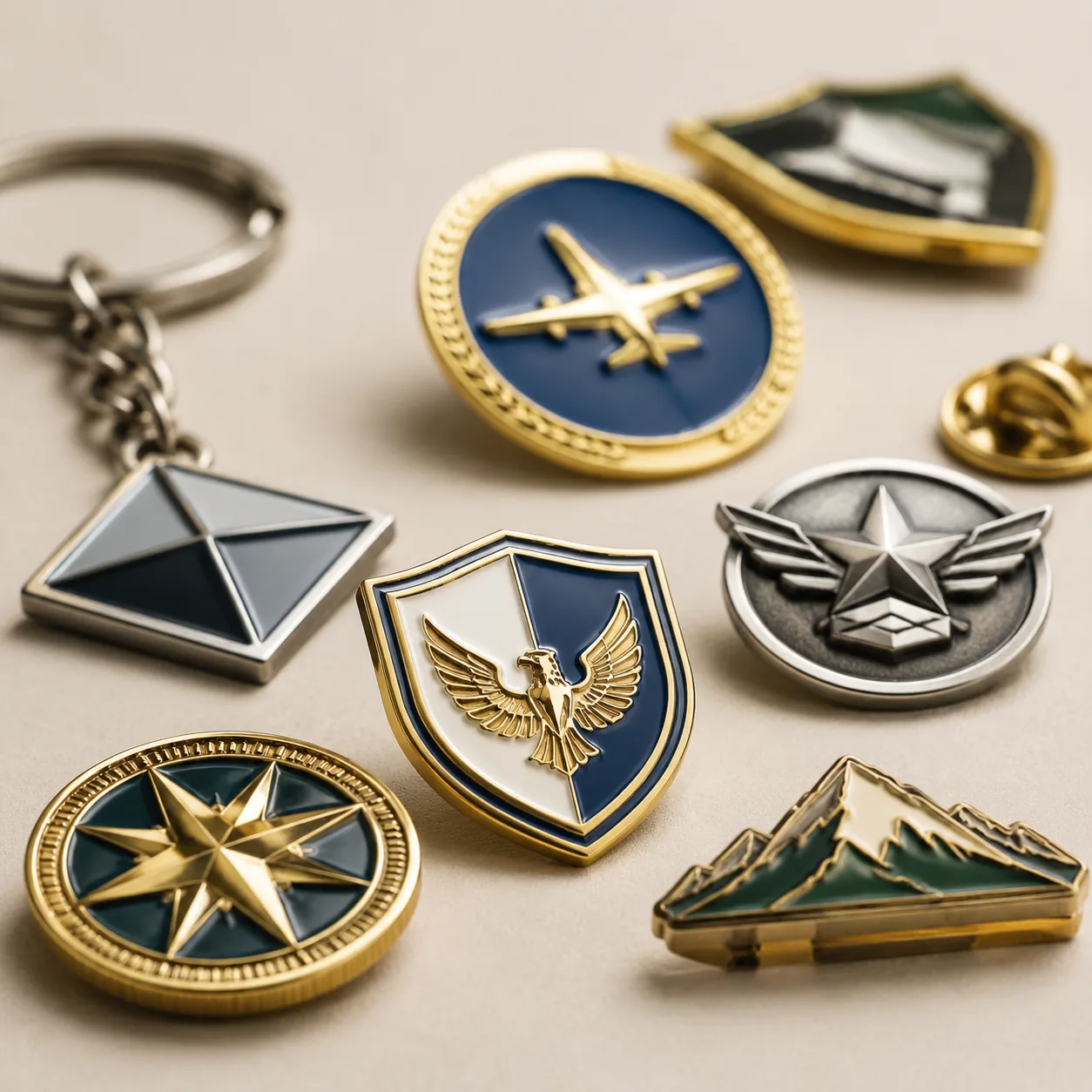
The buying decision behind the artwork
For small branded emblems, the real sourcing choice is often not hard enamel versus soft enamel. It is metal enamel pin versus soft PVC pin. Both can be custom-shaped, both support Pantone-matched colors, and both can sit in a similar FOB price band. They fail in different ways. The wrong build can turn a clean logo into soft text, create weak attachments, show plating wear, or produce a sample that feels below the brand even if the quote looked attractive.
This comparison is for procurement teams, promotional distributors, and brand managers who need a production decision. A 25 mm staff recognition badge, a 50 mm mascot giveaway, and a retail collectible may all be called “custom pins,” but they should not be specified the same way. The correct choice depends on line width, target finish, attachment, packout, quantity, and how the item will be handled after delivery.
| Spec item | Metal enamel pin | Soft PVC pin |
|---|---|---|
| Typical size range | 18–50 mm; most orders 22–35 mm | 25–80 mm; most orders 35–60 mm |
| Typical thickness | 1.2–1.8 mm for stamped iron/brass; 2.0–3.0 mm for cast zinc | 2.5–5.0 mm; 3.0 mm common for giveaways |
| Base material | Iron, brass, or zinc alloy with plated finish | Molded soft PVC, often with embedded steel pin post or plastic backing |
| Minimum raised line or divider | 0.20–0.25 mm for metal lines; 0.30 mm safer for bulk | 0.45–0.60 mm; 0.80 mm safer for high contrast lines |
| Minimum legible text | About 4.5–5 pt at 25–30 mm if bold and high contrast | About 7–8 pt; avoid condensed or serif fonts |
| Typical MOQ | 100–300 pcs per design/colorway | 300–500 pcs per design/colorway |
| Bulk lead time after sample approval | 12–18 days for standard metal; 18–25 days with special plating or packaging | 15–22 days standard; 20–30 days for large multi-layer molds |
| Typical FOB price range | USD 0.55–2.80/pc, plus tooling | USD 0.45–2.20/pc, plus mold charge |
| Best fit | Premium giveaways, collectibles, awards, staff badges | Bold merch, youth campaigns, event giveaways, mascot shapes |
What each build is actually made of
A metal enamel pin starts with a stamped or cast metal body. Stamped iron is the common cost-efficient option for 2D badges. Brass costs more but gives cleaner detail and a sharper plated edge, which matters for small lettering or premium retail work. Zinc alloy is usually selected for thicker, sculpted, or irregular 3D shapes. After forming, the factory plates the base, fills recessed color areas, bakes or cures the enamel, polishes the surface, and attaches the post, magnet, safety pin, or other hardware.
Decorative plating should be specified rather than assumed. Low-cost flash plating may be roughly 0.03–0.05 microns and is acceptable for short-term promo use. Better decorative nickel, gold, black nickel, or antique finishes are commonly specified around 0.08–0.10 microns, with higher thickness available at added cost. For retail or frequent-wear programs, ask the supplier to state plating type, nickel-free requirement if needed, and whether the quoted finish is polished, matte, antique, epoxy-coated, or dual-plated.
A soft PVC pin is molded from colored polyvinyl chloride compound. Color is built into the material rather than painted into metal recesses. The mold forms raised and recessed layers, typically in 2D or 3D relief. PVC does not provide a polished metallic edge, but it resists casual scratching because there is no plating layer to abrade. It is strong for rounded silhouettes, thick outlines, cartoon graphics, and tactile relief. It is weak for hairline strokes, tiny counters in letters, crisp serif text, or artwork that depends on metal shine.
The practical difference is simple: metal is detail-first; PVC is shape-first. Metal rewards precise line work, clean plating, and controlled enamel fill. PVC rewards bold silhouettes, generous spacing, and soft dimensional molding. If the item must feel like a premium badge on a backing card, metal usually wins. If the item should be larger, softer, and friendly for mass distribution, PVC is often the better build.
Where metal wins and where PVC wins
Metal enamel pins win when perceived value and detail control matter. They look more formal, sit well on backing cards, and are accepted in retail, employee recognition, executive gifting, and collectible programs. Fine logo gaps, small lettering, metallic brand colors, and crisp outlines are easier to hold in stamped metal than in molded PVC. A 28 mm corporate mark with 0.25 mm internal dividers and five enamel colors is usually a metal job, not a PVC job.
Soft PVC wins when the design is bold, oversized, tactile, or intentionally playful. Mascots, sports icons, school campaigns, outdoor event graphics, and youth-oriented promotions often look better in PVC because the softer edge is part of the visual language. A 55 mm character head with four large color zones, raised cheeks, and a thick outline can look more natural in PVC than in metal. PVC also handles bumps and moisture well during event distribution because there is no polished plating to scratch in a bulk carton.
The trade-off is presentation. PVC can feel casual even when well made. Metal can feel too rigid or sharp-edged for youth programs or large novelty shapes. The best selection is not based on which digital mockup looks cleaner; it is based on whether the material reinforces the intended use.
- Choose metal enamel when the logo has thin outlines, small text, metallic finish requirements, or a retail/executive target.
- Choose soft PVC when the design is large, playful, built from thick color blocks, or needs a soft tactile feel.
- Avoid PVC when the customer expects polished gold, nickel, antique metal, cloisonné-style shine, or collector value.
- Avoid metal when the item is an oversized mascot, a child-facing giveaway, or a shape where soft edges reduce perceived risk.
- For either product, reject artwork with lines below the factory’s stated minimum before sampling; scaling up later changes the buying decision.
Production specs buyers should lock before quoting
Many RFQs only say “custom pin, 30 mm, four colors.” That is not enough to compare quotes. Metal and PVC differ in tolerance, surface behavior, mold cost, weight, and inspection criteria. A supplier can reduce price by using thinner base metal, lighter plating, looser color control, cheaper clutch hardware, or bulk packing instead of individual bags. The quote should state the measurable build, not just the category name.
| Decision point | Metal enamel pin | Soft PVC pin |
|---|---|---|
| Dimensional tolerance | ±0.10–0.15 mm typical on stamped 2D parts | ±0.20–0.30 mm typical; ±0.50 mm possible on large soft parts |
| Color registration tolerance | ±0.15–0.25 mm between metal dividers and enamel fill | ±0.30–0.50 mm between molded color layers |
| Surface finish | Polished, matte, antique, epoxy dome, glitter, translucent enamel, or dual plating | Matte or semi-matte molded color; raised/recessed 2D or 3D relief |
| Common color control | Pantone solid coated reference; visual tolerance often within 1 Pantone step after curing | Pantone reference, but PVC compound can shift slightly after heating/cooling |
| Attachment strength target | Post solder or rivet pull test often specified at 3–5 kgf depending on size | Embedded pin post or backing should be pull-tested; 2–4 kgf common for promo use |
| Carton packing risk | Plating scratches if pins rub; use polybags or tissue for premium jobs | Shape distortion if packed hot or compressed; avoid over-tight cartons |
| Recommended inspection level | AQL 2.5 major / 4.0 minor for promo; tighter for retail | AQL 2.5 major / 4.0 minor, with explicit color bleed and deformation limits |
For metal, define the plating finish, enamel type, border width, enamel fill level, and backing. Raised metal lines should normally be at least 0.20–0.25 mm wide, with 0.30 mm preferred for reliable bulk production. Recessed enamel areas are commonly 0.4–0.8 mm deep depending on the die and pin size; the buyer should approve whether the finish is soft enamel with recessed color, hard enamel polished flush, or epoxy-coated soft enamel.
For PVC, define the minimum raised line thickness, total thickness, number of levels, and acceptable color bleed. A practical minimum raised separator is 0.50 mm, but 0.80 mm is safer for high-volume event orders. If the piece is more than 60 mm wide, specify flatness and warpage tolerance, such as no visible curl when placed on a flat surface and maximum edge lift of 1.0 mm. Without these limits, two suppliers can quote the same artwork and deliver very different sharpness.
Cost, MOQ, tooling, and lead time
For simple small pins, metal enamel is often less expensive than buyers expect. A 25 mm stamped iron soft enamel pin with one to three colors, nickel or gold plating, butterfly clutch, and individual polybag commonly lands around USD 0.55–1.10 FOB at 300–500 pcs. The same size in brass, hard enamel, antique finish, glitter enamel, epoxy coating, or custom backing card can move to roughly USD 1.20–2.80 FOB. Tooling is often USD 40–120 for a standard 2D die, with higher charges for multiple cutouts, 3D relief, or very large sizes.
Soft PVC can be highly competitive on larger, simpler designs but is not automatically cheaper. A 40–50 mm 2D soft PVC pin with three to five colors may run around USD 0.60–1.30 FOB at 500 pcs. Larger 60–80 mm shapes, 3D relief, many separated color zones, or special attachments can reach USD 1.40–2.20 FOB or higher. Mold charges commonly sit around USD 80–200 for standard 2D PVC and can exceed USD 250 for large 3D molds.
MOQ differs because the setup economics differ. Metal pins are commonly available from 100 pcs per design, though 300 pcs is a cleaner pricing tier. PVC usually starts at 300–500 pcs per design and colorway because the mold setup and color preparation need more volume to amortize. Splitting 500 pcs into five colorways is not the same as one 500 pc run; each colorway may trigger separate setup, matching, and QC risk.
Lead time should be quoted in stages. Typical sampling takes 5–7 days for metal after artwork approval and 7–10 days for PVC. Bulk production after sample approval is usually 12–18 days for standard metal and 15–22 days for PVC. Add 3–7 days for custom backing cards, retail barcodes, insert cards, or OPP bag labeling. During peak seasons, or when multiple Pantone corrections are required, add another 5–10 days rather than assuming the fastest stated schedule.
Quality risks that change the decision
Metal enamel pins fail most often at die cutting, enamel fill, polishing, plating, and hardware attachment. Common defects include underfilled enamel, enamel overflow onto raised metal, dust trapped in recessed areas, rounded borders from over-polishing, plating pits, inconsistent antique wiping, bent posts, and loose clutches. For premium work, define critical defects separately: wrong plating color, missing color, incorrect logo shape, sharp burrs, and backing failure should not be treated as ordinary minor defects.
Soft PVC pins fail in different ways. The common issues are color bleed, misregistration between layers, air bubbles, uneven surface level, oily residue, odor, warping, and distorted thin projections such as tails, hands, or letter strokes. A PVC item can pass a quick visual glance but still look soft compared with the approved vector file. That is why the artwork should be simplified before tooling, not after the first bulk run.
A reasonable inspection plan for promotional orders is AQL 2.5 major / 4.0 minor, with critical defects at 0 acceptance if they affect safety, brand identity, or function. For retail programs, buyers often tighten cosmetic requirements to AQL 1.5 major / 2.5 minor or require 100% sorting of front-face defects. Define what counts as a major defect: visible color bleed over 0.50 mm on PVC, plating peel, missing enamel, attachment pull failure, wrong Pantone beyond agreed tolerance, or scratches visible at 30 cm under normal light.
Environmental use also matters. Metal is stable in normal indoor use but can tarnish or show plating wear if the finish is thin and the item is handled often. PVC handles casual moisture and impact well, but prolonged high heat can soften it and long UV exposure can shift color. Avoid storing PVC in hot containers or pressed tightly under weight. For long-life retail programs, choose the material whose likely wear pattern the customer will accept.
Decision matrix by use case
The fastest way to choose is to connect the build to the actual use case. If the product must look premium in a pouch, on a backing card, or inside a gift box, metal usually gives a better perceived value. If the product must be larger, soft, colorful, and economical for handout distribution, PVC usually gives a better user experience. The target audience matters as much as the artwork.
| Use case | Better choice | Practical reason |
|---|---|---|
| Retail collectible pin on backing card | Metal enamel pin | Higher perceived value, better edge definition, more accepted by collectors |
| Corporate staff recognition badge | Metal enamel pin | Formal finish, precise logo control, durable presentation |
| Sports event or school giveaway | Soft PVC pin | Bold colors, safer soft edges, lower scratch concern in bulk handling |
| Kids campaign item | Soft PVC pin | Friendly tactile feel and fewer hard edges |
| Tiny logo with fine text | Metal enamel pin | Better legibility at 25–30 mm and cleaner internal gaps |
| Large mascot or character shape | Soft PVC pin | Works well at 50–80 mm with raised layers and thick outlines |
| Outdoor festival merch | Depends on design | PVC handles impact; metal looks premium but needs suitable plating and packing |
| Luxury or executive gift | Metal enamel pin | Plated finish, weight, and backing-card presentation support the price point |
Use this rule of thumb before sampling: if the artwork depends on line quality, choose metal; if it depends on silhouette and color blocks, choose PVC. That single distinction resolves most disputes before tooling money is spent.
How to brief the supplier next
Before asking for pricing, run the artwork through a production check. Confirm final size in millimeters, smallest text height, thinnest line, number of Pantone colors, finish expectation, attachment, packing method, and inspection level. Then request metal and PVC quotes against the same assumptions. If one quote includes individual polybags and backing cards while the other assumes bulk packing, the comparison is not valid.
- State quantity tiers: for example 300, 500, 1,000, and 3,000 pcs per design.
- Ask for tooling or mold cost separately from unit price.
- Require FOB price, port, sample lead time, bulk lead time, and packing details in writing.
- Specify attachment: butterfly clutch, rubber clutch, magnet, safety pin, keyring, or adhesive pad.
- Define finish: hard enamel, soft enamel, epoxy dome, antique plating, matte PVC, 2D PVC, or 3D PVC.
- Set inspection terms: AQL level, major/minor defect definitions, and whether pre-shipment photos are enough or third-party inspection is required.
- Ask the factory to flag any artwork element below its minimum production tolerance before making the mold or die.
If the order is still early, give the supplier a clear direction: metal for premium and detailed; PVC for bold and soft. If the customer is undecided, sample only the version that matches the artwork limits, or sample both builds using the same size, same attachment, same packout, and same inspection standard. Reject any quote that omits MOQ, lead time, tooling charge, material, finish, and FOB price. Those missing details are usually where the real cost and quality risk sit.
Have a project? Send your artwork and target quantity and we’ll reply with a detailed quotation within 12 working hours.
Ready to get this made?
Send your sketch, target quantity and ship-date. Detailed quotation in 12 hours.



