Edge Finishing Specs for Custom Metal Giveaways
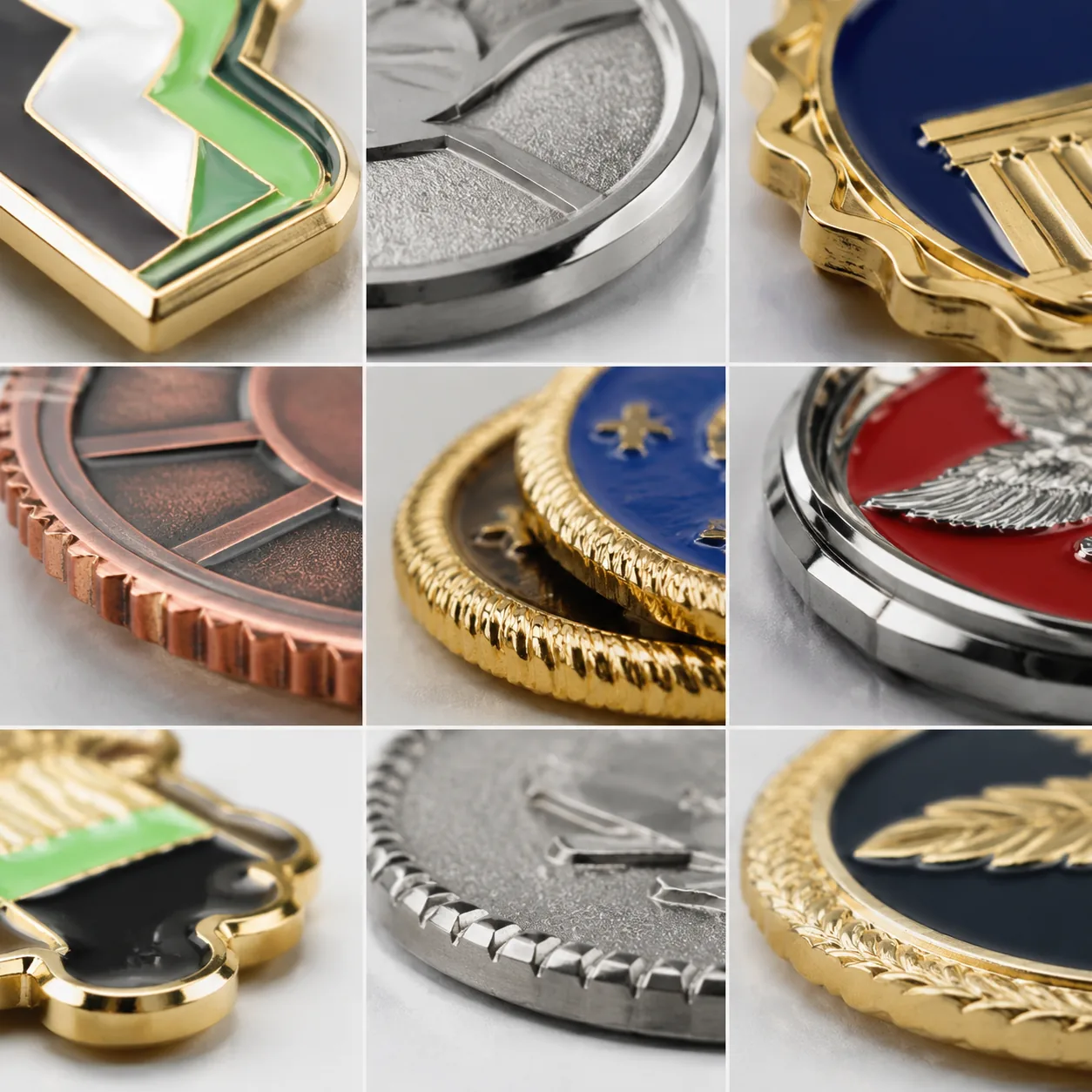
Why edge finish fails after a good-looking sample
Many complaints on custom metal giveaways are tactile, not visual. The logo is correct, the enamel matches the Pantone target, and the plating looks acceptable in photos, but the finished keychain scratches a phone case, a coin rim feels gritty, or a badge catches on fabric. For products handled at trade shows, retail counters, schools or staff events, a sharp edge is noticed within seconds.
The problem usually starts before production. Buyers specify size, plating, enamel colors and packaging, but leave the edge condition as “smooth” or “premium.” The factory then follows its standard route: stamping or casting, tumbling, polishing, plating and packing. That may be enough for a round pin, but not for thin mascot ears, star points, openwork lettering, keyring slots or heavy antique plating.
At ZheCraft in Yiwu, edge finish is treated as a separate control point for metal pins, badges, coins, keychains and magnets. It affects tool design, gate position, polishing time, plating coverage, reject rate, lead time and FOB price. The right time to set the requirement is at RFQ and artwork review, before the die or mold is opened.
Use measurable edge specs, not subjective wording
Words such as smooth, safe and high quality describe intent, but they do not give production or QC a pass/fail standard. A stronger specification defines burr height, edge radius, inspection method and product-use risk. For most zinc alloy, iron, brass and stainless promotional items, a practical limit is no raised burr above 0.05 mm on areas touched by fingers or fabric.
For exposed outside edges, specify a minimum radius where the design allows it. Pins and badges up to 50 mm wide usually need a 0.15-0.25 mm radius to feel clean without softening the artwork. Heavier challenge coins, bottle openers and zinc alloy keychains often feel better at 0.25-0.40 mm, but that radius can reduce crisp corners and increase polishing labor.
Inside corners require separate treatment. Openwork cutouts, lettering gaps and keyring holes cannot always receive the same radius as the outside perimeter because tumbling media and polishing wheels do not reach evenly. For those areas, use functional checks: no visible hanging burrs under 10x magnification and no snagging when pulled across 160 gsm coated paper or standard cotton fabric.
| Edge area | Recommended requirement | Typical tolerance | Tighten the spec when |
|---|---|---|---|
| Outer perimeter on pins and badges | Burr max 0.05 mm; radius 0.15-0.25 mm | Radius ±0.05 mm | Retail brooches, child-facing giveaways, apparel contact |
| Challenge coin rim | Burr max 0.05 mm; radius 0.25-0.40 mm | Radius ±0.08 mm | Coins are handled often or packed without capsules |
| Keyring hole or chain slot | No cutting burr; radius 0.10-0.20 mm | Hole diameter ±0.10 mm | Heavy split rings, car keys, phone charms |
| Openwork cutouts | No hanging burr under 10x; paper snag test pass | Cutout width ±0.15 mm | Fine lettering, mascot shapes, lace-like designs |
| Backside pin post area | No solder flash above 0.10 mm | Post position ±0.50 mm | Uniform badges, brooches, thin fabrics |
Match the process to the required edge
Stamped iron or brass gives the cleanest economical edge for flat enamel pins, medals and badges with simple outlines. The die shears the perimeter, then tumbling and polishing remove the shear burr. For 0.8-1.5 mm thick pins, typical FOB pricing is about USD 0.38-1.20 per piece at 1,000 pieces, depending on size, plating, colors, backing and packing.
Die-cast zinc alloy is better for 3D relief, thick keychains, bottle openers, fridge magnets and sculpted coins. The trade-off is that parting lines, gates and ejector marks need cleanup. A 45-60 mm zinc alloy keychain at 2.5-3.5 mm thickness often requires gate grinding plus hand buffing; this can add USD 0.04-0.12 per piece and 2-3 production days compared with a simple flat outline.
Photo-etched brass, iron or stainless steel suits thin parts, usually 0.3-0.8 mm, where precision matters more than rounded hand-feel. It is useful for bookmarks, name badges and lightweight charms, but it leaves a relatively square edge and may show slight undercut. Laser-cut stainless steel can deliver accurate outlines at 0.8-2.0 mm thickness, but the edge may need brushing or polishing to remove heat tint and micro-burrs.
| Process | Best edge result | Normal thickness | Main edge risk | Avoid when |
|---|---|---|---|---|
| Stamped iron or brass | Clean perimeter after tumbling and polish | 0.8-1.5 mm | Sharp points and narrow gaps | The design needs deep 3D relief |
| Die-cast zinc alloy | Rounded hand-feel after grinding and buffing | 2.0-5.0 mm | Parting line, gate mark, inside corners | The item must stay very thin and crisp |
| Photo-etched metal | Thin, precise flat shape | 0.3-0.8 mm | Square edge, slight undercut | The item must feel heavy or jewelry-like |
| Laser-cut stainless steel | Accurate outline with brushed edge | 0.8-2.0 mm | Heat tint, micro-burr | The logo needs enamel-filled recessed cells |
| Soft PVC or silicone | Naturally soft edge | 2.0-5.0 mm | Mold flash line | A metallic plated look is required |
Design artwork that can be deburred consistently
Many edge defects are designed into the product. A star badge with 1.0 mm needle-like points can be manufactured, but the points may bend, over-polish or remain sharp after plating. For public-facing metal giveaways, use a minimum outside tip width of 1.5 mm on stamped parts and 2.0 mm on die-cast zinc alloy parts. If brand guidelines require sharper geometry, classify the item as higher risk and approve a physical sample, not photos only.
Internal cutouts need enough width for tooling, polishing media and plating solution flow. On a 1.2 mm stamped iron pin, slots below 1.0 mm are difficult to deburr consistently. On a 3.0 mm zinc alloy keychain, internal cutouts should usually be at least 1.5-2.0 mm wide if the buyer expects clean plating and no rough inside walls. Very deep narrow channels can trap polishing compound and cause dark plating stains.
Do not place critical decoration at the polished edge. Leave at least 0.4 mm metal margin between enamel cells and the outer perimeter, and at least 0.6 mm for screen printing, pad printing or UV printing near a buffed edge. Normal polishing may remove 0.03-0.08 mm per side; aggressive rework can remove more and shift the finished outline outside tolerance.
- Round outside corners to at least 0.30 mm radius where artwork permits.
- Avoid spear-like points below 1.5 mm on stamped pins or 2.0 mm on cast keychains.
- Keep internal cutouts at least 1.0 mm wide for thin stamped items and 1.5-2.0 mm for thicker cast items.
- Leave 0.4-0.6 mm clearance between decoration and any polished perimeter.
- Ask the factory to mark die-cast gate positions on the artwork before mold approval.
- Use physical samples to approve edge feel on mascots, stars, openwork logos and child-facing items.
Specify deburring, polishing and plating controls together
Tumbling is efficient for simple shapes. Parts are run in a barrel or vibratory machine with media, compound and water to break burrs and smooth edges. Small stamped pins often need 30-60 minutes. Larger zinc alloy keychains, medals and bottle openers may need 60-120 minutes before hand polishing. Tumbling alone is not reliable for deep cutouts, gate marks or scalloped rims.
Hand grinding and buffing are required where machines cannot reach. They improve touch quality around gates, holes, relief borders and openwork sections, but they introduce operator variation. Over-buffing can flatten raised logos, thin enamel walls, widen holes or reduce outside dimensions beyond the agreed tolerance. For most pins and badges, a finished outline tolerance of ±0.20 mm is realistic; for larger cast coins and keychains, ±0.30 mm is more practical unless the item fits a tray or assembly.
Plating changes edge feel and should not be used to hide poor deburring. Nickel, copper, gold, silver, black nickel and antique finishes build faster on high-current edges, especially outside corners and raised rims. A common decorative plating stack is 3-8 microns total, with copper or nickel underlayer and low-cost flash gold at about 0.03-0.10 micron when a gold color is requested. For better wear resistance, a 5-8 micron nickel layer is preferred where budget allows.
Premium coins, brooches and retail items should be deburred before plating, then inspected after plating. Heavy post-plating polishing can expose base metal on corners or remove antique contrast from recessed areas. For antique brass, antique silver and black nickel, confirm whether bright edge highlights are acceptable before production starts.
| Item | Recommended route | Lead-time impact | FOB cost impact |
|---|---|---|---|
| Soft enamel pin, 25-35 mm | Tumbling plus light perimeter buffing | 0-1 day | USD 0.00-0.03/pc |
| Hard enamel pin, 25-40 mm | Flat polish plus perimeter touch check | 1-2 days | USD 0.02-0.06/pc |
| Zinc alloy keychain, 45-60 mm | Gate grinding, tumbling, hand buffing | 2-3 days | USD 0.04-0.12/pc |
| Challenge coin, 40-50 mm | Rim deburr, face protection, controlled buffing | 1-3 days | USD 0.05-0.15/pc |
| Openwork brooch, 35-55 mm | Manual cutout cleanup and fabric snag test | 2-4 days | USD 0.08-0.20/pc |
Make edge quality auditable before packing
Edge finish should be inspected during production and before packing, not only during sample review. For normal B2B promotional orders, ANSI/ASQ Z1.4 general inspection level II with AQL critical 0, major 2.5 and minor 4.0 is a practical starting point. A sharp edge that can scratch skin, cut fabric or damage packaging should be classified as major. For child-facing products or apparel-contact brooches, treat cutting edges as critical defects.
Touch inspection is useful but subjective, so pair it with simple repeatable tests. The inspector should sweep a cotton glove over the outside edge, backside, keyring hole and cutouts. Any snag is a fail for apparel-contact items. A 160 gsm paper pull test helps reveal cutting burrs; a standard cotton fabric rub test identifies edges that may damage uniforms, tote bags or lanyards.
Use magnification and measurement where needed. A 10x loupe is enough for most hanging burr checks. Calipers verify whether polishing has reduced the outline or enlarged a keyring hole. XRF can confirm plating thickness on flat accessible areas, but corners may read differently, so thickness checks must be paired with touch checks.
| Check | Tool or method | Sample size | Fail condition |
|---|---|---|---|
| Burr height | 10x loupe or microscope | AQL II sample | Raised burr above 0.05 mm on touch areas |
| Touch snag | Cotton glove and finger sweep | AQL II sample | Glove catches or edge feels cutting-sharp |
| Fabric snag | Standard cotton fabric rub | 10-20 pcs per batch or AQL sample | Thread pull, visible scratch or catching |
| Paper scratch | 160 gsm coated paper pull test | 10-20 pcs per batch or AQL sample | Paper cuts or deep scoring |
| Outline size | Caliper | AQL II sample | Outside dimension beyond agreed tolerance |
| Plating edge | Visual check plus XRF on flat areas | 3-5 pcs per finish | Burn mark, exposed base metal or severe buildup |
Budget, MOQ and lead-time trade-offs
Basic edge finishing is usually included in a standard unit price, but controlled edge finishing is not free. Extra tumbling, manual cutout cleanup, gate grinding, sample comparison and AQL inspection all add labor. On small metal giveaways, the realistic add-on is often USD 0.02-0.08 per piece. On complex openwork brooches, thick coins or heavy zinc alloy keychains, it can reach USD 0.10-0.25 per piece.
MOQ changes the economics. Many custom metal pins and keychains can start at 100 pieces, but formal edge control is relatively expensive at that quantity because tooling review, setup and inspection time are fixed. At 500-1,000 pieces, it becomes easier to absorb a defined edge plan while keeping FOB pricing stable. For repeat programs, holding a signed pre-production sample as the edge-feel reference reduces disputes on later batches.
Lead time depends on the route. A normal custom enamel pin generally needs 7-10 days for tooling and sample, then 10-18 days for mass production after approval. Openwork, 3D casting, antique plating, strict fabric-snag testing or re-polishing can add 2-5 days. Rush orders are where edge quality often suffers because polishing and inspection are the easiest steps to compress.
| Order type | Typical MOQ | Normal lead time after artwork | FOB range | Edge-control note |
|---|---|---|---|---|
| Stamped enamel pin, 25-35 mm | 100-300 pcs | 15-25 days | USD 0.38-1.20/pc | Standard control is usually enough for simple outlines |
| Openwork brooch, 35-55 mm | 300-500 pcs | 20-30 days | USD 0.90-2.80/pc | Manual cutout cleanup should be quoted separately |
| Zinc alloy keychain, 45-60 mm | 300-500 pcs | 18-30 days | USD 0.75-2.50/pc | Gate mark position and hole edge are key risks |
| Challenge coin, 40-50 mm | 100-300 pcs | 18-28 days | USD 1.20-4.50/pc | Rim feel should be checked before packing |
| Metal fridge magnet, 50-70 mm | 300-500 pcs | 18-30 days | USD 0.80-2.60/pc | Back edge must not cut magnet sheet or backing card |
RFQ clause for sharper supplier alignment
The fastest improvement is to add an edge-finish clause to the RFQ and purchase order. State the end use, edge-touch expectation, burr limit, inspection method and whether fabric snagging is unacceptable. This prevents the supplier from treating edge finish as a cosmetic preference after production is already complete.
A practical clause is: exposed touch edges must be deburred before plating; burr height max 0.05 mm; no glove snag on perimeter, cutouts or attachment holes; no fabric snag for apparel-contact items; outline tolerance ±0.20 mm for items under 50 mm unless otherwise agreed; for larger cast keychains and coins, outline tolerance ±0.30 mm unless the item fits a tray, capsule or assembly.
Send the supplier final vector artwork, expected use, packing method and any child-safety or apparel-contact requirement. Ask them to confirm the manufacturing route, polishing process, plating stack in microns, gate position, AQL level, MOQ tier, price effect and lead-time effect before tooling. ZheCraft can review those points before sampling, produce a pre-production sample and hold the approved sample as the edge-feel standard for mass production.
- Add burr height max 0.05 mm for all touch areas.
- Define radius targets: 0.15-0.25 mm for pins and 0.25-0.40 mm for coins or keychains.
- Require pre-plating deburr for plated metal items.
- Classify cutting-sharp edges as major or critical defects in AQL inspection.
- Approve a physical sample for edge feel, not only photos or videos.
- Allow 2-5 extra days for openwork, heavy casting, antique plating or strict snag testing.
Have a project? Send your artwork and target quantity and we’ll reply with a detailed quotation within 12 working hours.
Ready to get this made?
Send your sketch, target quantity and ship-date. Detailed quotation in 12 hours.



