Defect Classification for Custom Pins, Coins and Keychains
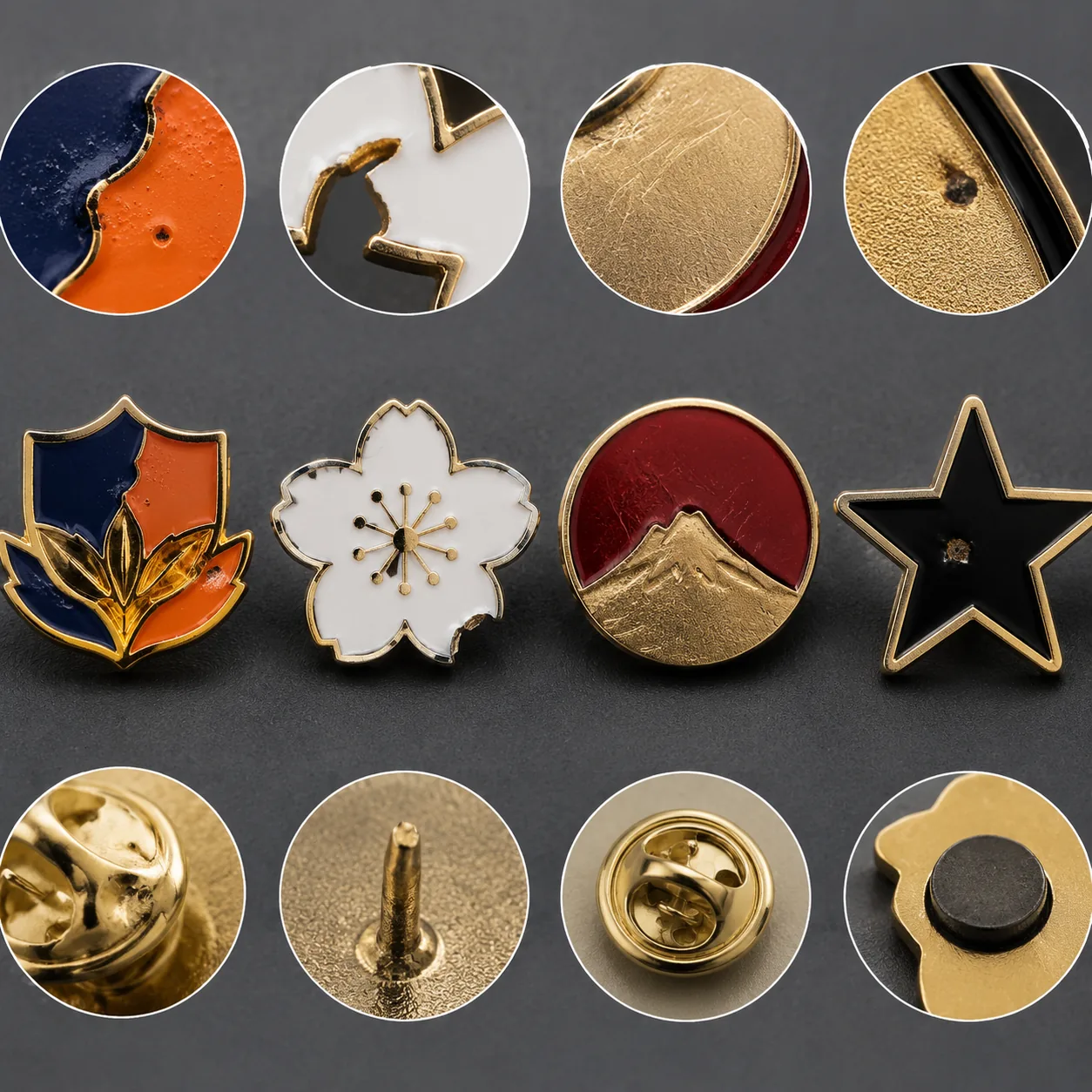
Why factories and buyers reject different defects
A buyer can approve a golden sample, pay the balance and still receive cartons the end client refuses. The dispute is rarely whether the item is generally good. It is whether a plating pit, enamel speck, bent clutch, off-center logo, weak magnet or scratched retail card is a critical, major or minor defect under the agreed inspection standard.
Custom enamel pins, brooches, keychains, fridge magnets and challenge coins are small products, but the visible surface is often the brand itself. A 0.20 mm black speck near the edge of a 30 mm giveaway pin may be acceptable. The same speck inside a white museum logo, airline badge or licensed character eye may fail. If the purchase order only says “premium quality,” the inspector has no measurable rule to apply.
The practical answer is to approve four documents together: golden sample, final artwork, tolerance sheet and defect classification sheet. These should define AQL levels, inspection distance, lighting, defect sizes, functional pull tests, packaging requirements and lot-disposition rules before mass production. That gives the factory, in-process QC, final inspector and receiving warehouse the same acceptance standard.
Set defect classes and AQL before sampling
A reliable standard separates defects into critical, major and minor. Critical defects affect safety, legal compliance or normal use and normally use AQL 0. Major defects affect appearance, function, brand acceptance or sellability and commonly use AQL 1.0 or 1.5. Minor defects are small workmanship issues that do not stop normal use and are often inspected at AQL 2.5 or 4.0.
For most B2B promotional orders, a balanced default is Critical AQL 0, Major AQL 1.5 and Minor AQL 4.0 under ANSI/ASQ Z1.4 or ISO 2859-1, general inspection level II, single normal sampling. For retail, licensing, museum, airline, luxury or VIP programs, use Major AQL 1.0 and Minor AQL 2.5. For very low-cost event giveaways at roughly USD 0.45–0.85 FOB per piece, Major AQL 2.5 and Minor AQL 4.0 may be commercially realistic if the buyer accepts small cosmetic variation.
Do not classify every visible imperfection as critical. That creates avoidable conflict because stamping, die casting, polishing, plating and enamel filling are not semiconductor processes. Reserve critical status for safety, banned materials, sharpness, exposed points, choking-risk assembly failures and non-usable conditions. Then define major and minor visual limits with numbers.
| Defect class | Typical AQL | Concrete examples | Lot action |
|---|---|---|---|
| Critical | 0 | Sharp burr above 0.10 mm on handling edge; exposed pin point through packaging; magnet or small part detaches in child-facing item; banned material or missing required safety label | Reject lot, quarantine and 100 percent sort or remake |
| Major | 1.0–1.5 | Wrong plating color; missing enamel color; unreadable logo; front scratch longer than 1.0 mm in A zone; attachment fails pull test; wrong backing card | Reject lot or rework affected units |
| Minor | 2.5–4.0 | Rear scratch under 2.0 mm; slight shade variation within approved range; one enamel speck under agreed size outside logo; small polybag wrinkle | Accept if within AQL limit |
| Observation | Not counted | Outer carton scuff; removable wax mark; fresh PVC odor that dissipates; non-selling-side polishing haze within limit | Record only unless repeated or worsening |
Define visual limits in millimeters
Inspection language must be measurable. Words such as clean, neat, obvious and luxury are too elastic. Use defect size, count, location, viewing distance and lighting. A practical visual condition for small metal promotional products is 30 cm viewing distance, 600–800 lux white light, normal corrected vision and 5–8 seconds per side. Magnification should not be used for routine cosmetic judgment unless the buyer specifies it.
For 20–45 mm enamel pins and badges, front-face defects above 0.30 mm in logos, text, faces or character details should normally be major. Defects of 0.15–0.30 mm outside key artwork can be minor if limited to one or two per piece. Missing enamel, color bleeding across metal lines, trapped dust, pinholes and plating pits should be judged more strictly when they sit inside brand marks or pale enamel.
For 38–50.8 mm challenge coins, the larger flat area makes defects easier to see. Front artwork pits, black spots, plating stains or color contamination above 0.40 mm should be major. Defects of 0.20–0.40 mm may be minor if they are outside text, portraits, QR codes, serial numbers and logo areas. Edge dents are usually major if they are visible at 30 cm or affect capsule fit. Rear-face marks can be one class lower unless the rear is also a selling face.
Zoning prevents arguments. A zone covers logos, readable text, QR codes, serial numbers, faces, mascot eyes and central artwork. B zone covers background enamel, borders and non-critical metal. C zone covers the back, hidden hardware side, inner ring and packaging-contact areas. For A zone, allow no missing enamel, no unreadable text, no scratch above 1.0 mm and no color contamination above 0.15–0.20 mm. For B zone, one or two isolated defects up to 0.30 mm may be minor. For C zone, small polish marks may be minor unless they create rust risk, sharpness or visible retail damage.
- Inspect at 30 cm, 600–800 lux white light and 5–8 seconds per side.
- Mark A, B and C zones directly on the approved artwork.
- Set maximum defect size in mm and maximum count per piece.
- Judge front, back, edge, hardware and packaging as separate areas.
- Use ruler photos for borderline examples before mass production.
- Do not use magnification unless it is written into the inspection clause.
Test function with defined loads
A product can look acceptable and still fail in use. Butterfly clutches may be loose, pin posts may break, split rings may open, magnets may detach, epoxy domes may peel, lanyard hooks may jam and brooch bars may rotate. These are normally major defects because they cause returns even when surface finish is acceptable. If the failure creates a sharp point, exposed needle or small detached part in a child-facing product, classify it as critical.
For pins and brooches, specify a post pull test of 3–5 kgf for 10 seconds for standard 8–10 mm posts. For keychains, jump rings should withstand 5–8 kgf depending on wire diameter, and split rings should not show a permanent opening gap above 0.30 mm after normal manual loading. For fridge magnets, glued ferrite or neodymium magnets should not detach under 2 kgf for small magnets and 3–5 kgf for larger badge magnets, subject to substrate strength.
Functional testing should be sampled separately from appearance inspection because some tests can damage units. For a 5,000 piece lot, 20–32 pieces taken from different cartons is a practical check size for pull, bend, magnet and clip tests. If one safety-related function fails, quarantine the lot and investigate glue cure, soldering, post welding, ring temper, adhesive area or assembly method before release.
| Product | Functional check | Typical limit | Failure class |
|---|---|---|---|
| Enamel pin | Post pull test | 3–5 kgf for 10 seconds; no detachment or wobble that affects use | Major; critical if sharp or exposed |
| Keychain | Jump ring pull test | 5–8 kgf by ring size; no permanent gap above 0.30 mm | Major |
| Fridge magnet | Magnet adhesion pull | 2–5 kgf by magnet size and glue area; no glue separation | Major |
| Challenge coin | Edge and rim touch check | No sharp burr above 0.10 mm; no rim dent affecting capsule fit | Critical or major |
| Lanyard or charm clip | Open-close cycle | 50 manual cycles without jamming, cracking or weak spring return | Major |
| Brooch | Bar pin and catch test | Catch locks; bar stays aligned; no unsafe point exposure | Major or critical |
Control tolerances, plating and finish specs
Dimensional variation comes from die wear, stamping pressure, casting shrinkage, polishing, plating buildup, enamel leveling and cooling. A tolerance that ignores the process increases scrap and price without improving customer value. A loose tolerance can cause backing cards, molded trays, capsules or retail boxes to fail.
For stamped iron or brass pins under 40 mm, a practical outer-size tolerance is ±0.20 mm and thickness tolerance is ±0.10 mm before plating. Zinc alloy die-cast keychains and 3D coins usually need ±0.30 mm on outer dimensions and ±0.15 mm on thickness because shrinkage and polishing vary more. PVC charms, soft patches and mixed-material assemblies may need ±0.50 mm unless controlled with CNC-cut fixtures or hard gauges.
Plating thickness should be specified because it affects color stability, wear resistance and cost. Decorative nickel, brass, gold-color or black nickel for indoor promotional use is commonly 3–5 microns total over the base metal. Retail or outdoor-facing programs may request 5–8 microns. If real gold is requested, define it clearly: decorative flash below 0.10 micron is very different in cost and durability from thicker precious-metal plating. Mirror plating and large flat black nickel areas should receive realistic scratch limits because they show hairline marks more readily than antique finishes.
| Product and process | Outer tolerance | Thickness tolerance | Notes |
|---|---|---|---|
| Stamped enamel pin, 20–40 mm | ±0.20 mm | ±0.10 mm | Best for flat artwork, fine metal lines and low relief |
| Die-cast zinc keychain, 35–60 mm | ±0.30 mm | ±0.15 mm | Better for 3D relief, cutouts and irregular shapes |
| Challenge coin, 38–50.8 mm | ±0.25 mm diameter | ±0.15 mm | Rim polishing and plating can shift diameter slightly |
| Soft PVC charm or patch | ±0.50 mm | ±0.30 mm | Cooling and material softness cause movement |
| Backing card slot, capsule or tray fit | Target clearance ±0.20 mm | Not applicable | Control product and packaging as one assembly |
Match strictness to MOQ, price and lead time
Inspection strictness must match the commercial reality of the order. A 100 piece executive award coin at USD 6.00–12.00 FOB per piece can support thicker plating, tighter sorting and individual inspection. A 10,000 piece event pin at USD 0.45–0.85 FOB per piece cannot carry the same cosmetic standard without higher unit price, longer lead time or a higher reject rate.
Typical MOQ tiers also matter. Enamel pins often start at 100 pieces per design, with better pricing at 300, 500 and 1,000 pieces. Metal keychains, fridge magnets and challenge coins commonly start at 100–300 pieces per design depending on mold cost. Woven patches, silicone wristbands and lanyards are usually more economical from 300–500 pieces because setup and color changes dominate small runs.
Standard custom metal promotional production is commonly 12–18 days after sample approval for 500–3,000 pieces and 18–28 days for 5,000–20,000 pieces, excluding international freight. Add 2–5 days for 100 percent front-face sorting, individual barcode scans, tray packing, mixed-set assembly or third-party inspection. Add more time if rejected units require stripping, replating or refilling enamel rather than simple hardware replacement.
| Buyer scenario | Suggested AQL | Typical FOB range | QC trade-off |
|---|---|---|---|
| Low-cost event giveaway | Critical 0, Major 2.5, Minor 4.0 | USD 0.45–0.85 for simple pins at volume | Lowest cost; accepts tiny cosmetic variation |
| Corporate brand campaign | Critical 0, Major 1.5, Minor 4.0 | USD 0.80–2.50 depending on size and packing | Balanced brand control and price |
| Retail or licensed product | Critical 0, Major 1.0, Minor 2.5 | USD 1.50–5.00+ with carding or boxes | Tighter sorting; fewer shelf rejects |
| VIP award or limited edition | Critical 0, Major 0.65–1.0, Minor 1.5–2.5 | USD 4.00–12.00+ for coins or premium sets | Best appearance; slower and more expensive |
Write the inspection clause into the RFQ
The best time to agree defect standards is before tooling, not after cartons are finished. Once goods are plated, filled and packed, rework may require stripping plating, remaking molds, refilling enamel, replacing hardware or opening every retail pack. A clear inspection clause reduces risk for both buyer and factory.
A complete RFQ should state product size, base metal, enamel type, plating color and thickness, attachment, packaging, AQL, inspection level, visual conditions, defect definitions, dimensional tolerances, functional test methods and photo examples. Also state whether inspection happens before individual packing, after packing, or both. If the order includes backing cards, capsules, retail boxes or mixed promo sets, classify wrong assembly, wrong barcode, missing insert and dirty packaging as major defects.
For a simple giveaway pin or keychain, a practical default is Critical AQL 0, Major AQL 1.5, Minor AQL 4.0, general inspection level II, 30 cm visual distance, 600–800 lux lighting and 3–5 kgf attachment testing. For retail, licensed, child-facing or VIP programs, tighten the major and minor AQLs and budget extra days for sorting. Do not request luxury inspection standards while buying at basic event-giveaway pricing.
- Attach final artwork with dimensions, color references and A/B/C zones.
- State AQL levels, inspection level and sampling standard by name.
- Define visual distance, lighting, viewing time and whether magnification is allowed.
- List pull, bend, magnet, clip and sharp-edge tests with kgf or mm limits.
- Specify plating thickness in microns and dimensional tolerances in mm.
- Confirm whether rejected lots are sorted, reworked, discounted or remade.
- Require inspection photos from multiple cartons, not only top-layer samples.
Next step: use a one-page defect sheet
Before placing the next order, build a one-page defect classification sheet instead of relying on general quality wording. Use three columns for critical, major and minor defects, then add AQL levels, zone limits, tolerance figures, functional tests and packaging checks. Keep it short enough for a factory inspector to use at the production line.
Ask the supplier to confirm any limits that are unrealistic for the process, especially very small text, mirror plating, transparent enamel, large flat black enamel areas, 3D relief, glitter fill, epoxy domes and mixed-material assemblies. A competent supplier should push back before tooling if a tolerance or cosmetic limit will drive excessive scrap. That discussion is cheaper than discovering the issue during final inspection or after the goods arrive.
Have a project? Send your artwork and target quantity and we’ll reply with a detailed quotation within 12 working hours.
Ready to get this made?
Send your sketch, target quantity and ship-date. Detailed quotation in 12 hours.



