Deburring Specs for Custom Metal Giveaways
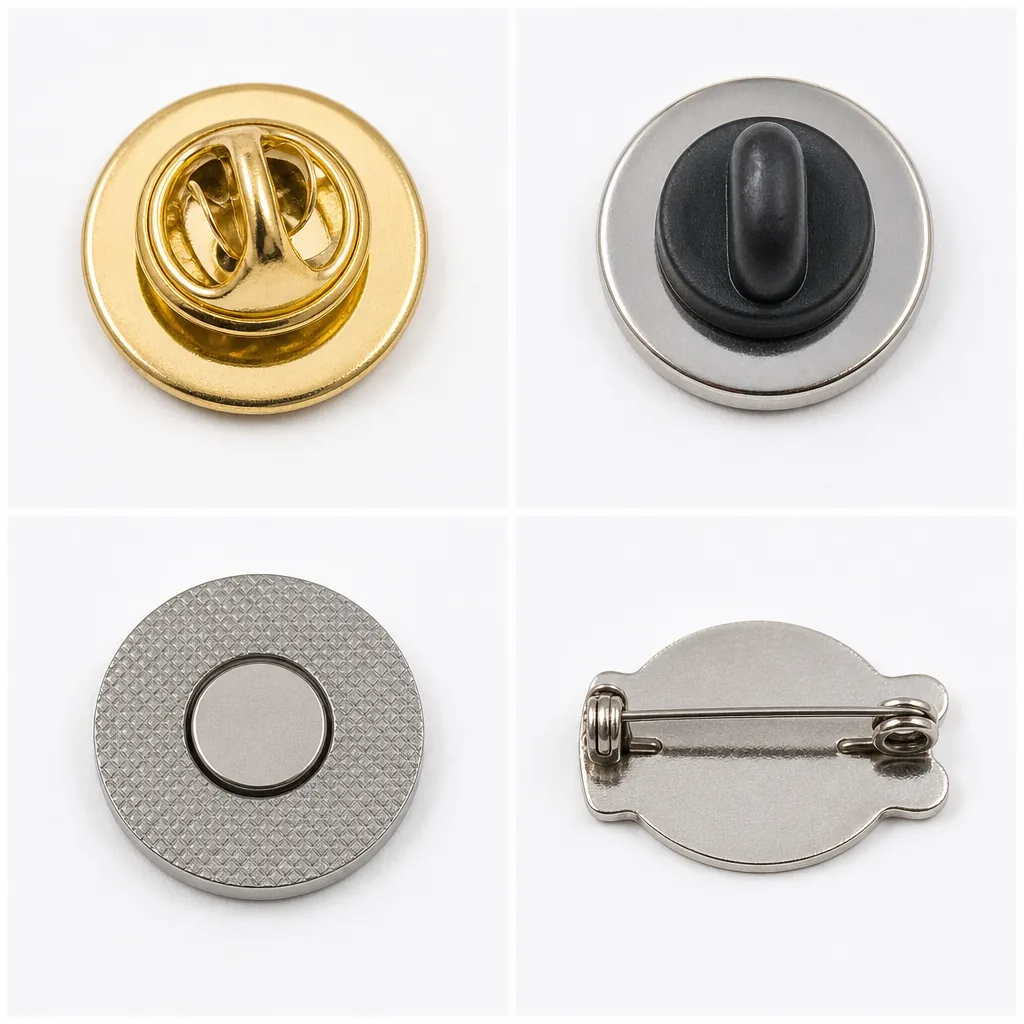
The buyer problem: a beautiful item that scratches users
A promotional keychain can pass color approval, plating approval and packaging approval, then still fail in use because the edge of the ring hole cuts a finger or the back of a badge snags fabric. This problem is common on small metal giveaways because stamping, casting, drilling, trimming and polishing all create burrs in different places. Buyers often write detailed Pantone and plating specs but leave edge safety as a vague phrase such as smooth finish.
For factories, smooth is not a measurable requirement. A 0.05 mm burr on the front outline of a lapel pin may be acceptable after plating, while a 0.15 mm burr inside a keychain hole can damage split rings and trigger returns. The right specification defines where burrs are allowed, where they are not allowed, how edges are broken, and how inspection is performed before packing.
At ZheCraft, we see edge issues most often on zinc alloy keychains with internal cutouts, iron stamped pins with narrow outlines, challenge coins with reeded edges, and brooch backs where the pin stem is soldered close to a raised detail. The fixes are not expensive if they are planned before tooling. They become expensive when the buyer discovers sharpness after plating, because re-polishing can remove color, expose base metal or change dimensions.
Where burrs come from in pins, coins and keychains
Stamped iron or brass parts create burrs on the exit side of the die. If the die clearance is too wide, the edge develops rollover on one side and a torn fracture zone on the other. For 1.2 to 1.8 mm thick pin blanks, a normal fine-blanking burr is usually under 0.05 mm after tumbling, but a worn die can push it to 0.12 mm or more.
Die-cast zinc alloy parts create flash along the parting line and around ejector-pin areas. The flash may look thin before plating, but nickel and gold plating build thickness on the sharp peak and make it feel sharper. For most custom keychains and 3D badges, we target parting-line flash under 0.08 mm before polishing and no tactile sharpness after plating.
Drilled holes, laser-cut slots and openwork shapes create the most complaints because the finger naturally touches these areas. A keychain hole of 3.0 to 4.0 mm diameter needs a clean internal radius, not just a polished front face. If the design has a narrow bridge under 1.2 mm around a hole, aggressive deburring can bend or thin the bridge, so the drawing must balance edge comfort with structural strength.
| Process | Typical Burr Location | Buyer Risk | Practical Control Spec |
|---|---|---|---|
| Iron stamping | Back edge and pierced holes | Fabric snagging, sharp badge corners | Burr height under 0.05 mm on wearable edges |
| Zinc alloy casting | Parting line and cutout walls | Finger scratch, plating peaks | Flash under 0.08 mm before polishing |
| Photo etching | Perimeter and recessed channels | Thin sharp outline, bending | Edge break 0.03 to 0.08 mm after etch |
| CNC trimming | Slot walls and drilled holes | Split-ring wear, rough touch | Internal hole chamfer 0.10 to 0.20 mm |
| Reeded coin edging | Ridge peaks | Pocket abrasion, inconsistent plating | No loose flakes; ridge peak radius visually uniform |
Edge break, radius and chamfer: what to specify
The most useful term is edge break. It means removing the sharp corner without necessarily creating a visible bevel. For enamel pins, badges and coins, a front visible edge break of 0.03 to 0.08 mm is usually enough. It softens the touch while preserving the crisp outline of the artwork.
For keychains and bottle-opener style giveaways, specify a larger chamfer or radius on contact areas. A split-ring hole should normally have a 0.10 to 0.20 mm edge break on both faces, and a bottle-opener lip may need a controlled functional edge rather than full rounding. Do not ask for all edges fully rounded unless you accept softer logo detail and slightly higher polishing variation.
For challenge coins, edge design changes the acceptable deburring method. A smooth coin edge can be barrel polished and hand finished, but a rope edge, diamond-cut edge or reeded edge needs more careful brushing so the pattern is not flattened. If the coin is 3.0 mm thick with a 45 mm diameter, allow an outside diameter tolerance of plus or minus 0.15 mm after edge finishing; tighter tolerances can raise rejection rates without improving user experience.
| Product Area | Recommended Edge Spec | Do Not Over-Specify |
|---|---|---|
| Lapel pin front outline | Edge break 0.03 to 0.08 mm; no tactile burr | Large visible chamfer on detailed silhouettes |
| Pin back perimeter | Burr under 0.05 mm; smooth against fabric | Mirror polishing if hidden by backing card |
| Keychain split-ring hole | Both faces chamfered 0.10 to 0.20 mm | Hole diameter tolerance below plus or minus 0.05 mm |
| Challenge coin smooth edge | Uniform edge radius 0.05 to 0.12 mm | Perfectly sharp coin rim after plating |
| Brooch clasp area | No sharp solder bead; hand touch approved | Heavy grinding near thin pin stem |
| Magnet metal shell edge | No burr over 0.05 mm; adhesive face flat | Polishing that rounds the adhesive seating area |
Material and plating trade-offs buyers should know
Iron is economical for stamped pins, but it is less forgiving when a design has many internal cutouts. The cutting edge of the die must be maintained, and polishing time needs to be controlled because iron rust risk increases if parts wait too long before plating. For a 30 mm soft enamel pin at 1.2 mm thickness, adding tighter burr control may add about USD 0.01 to 0.03 per piece at 1,000 pieces, mainly from extra sorting and tumbling.
Brass and copper give cleaner stamping and smoother edges, but the base metal cost is higher. They are useful for premium badges, thin photo-etched designs and pins with fine openwork. If the order is under 500 pieces, the unit price impact may be USD 0.08 to 0.20 versus iron, but the cleaner edge can reduce sample revisions on delicate designs.
Zinc alloy is strong for 3D shapes and keychains, yet its parting line must be placed intelligently. A parting line across a user-contact edge creates extra polishing work and can soften detail nearby. For zinc alloy keychains at 50 mm length and 3.0 mm thickness, normal deburring and polishing are already built into production, but internal cutouts, rotating parts or carabiner-style openings may add USD 0.03 to 0.08 per piece depending on access.
Plating also changes edge feel. Nickel layers commonly run 3 to 8 microns, with gold, silver or black nickel top layers often around 0.05 to 0.30 microns depending on finish and price target. Plating tends to build faster on high points, so a tiny burr before plating can become more noticeable after plating; deburring must happen before the main plating process, not after final color fill.
Inspection methods that work on a factory floor
A burr spec must be inspectable without laboratory equipment for every batch. The simplest method is tactile inspection with a cotton glove or lint-free cloth drawn across edges and holes. If the cloth catches or fibers remain on a contact edge, the part fails the practical sharpness test even if the burr is hard to measure.
For dimensional confirmation, use a 10x loupe and a feeler-style visual reference. On critical edges, a factory can cut and retain a known-good sample showing the acceptable edge break. For large orders, ZheCraft normally combines operator self-checking during polishing, in-process QC after plating, and final random inspection before packing.
For AQL, do not put all edge defects into one bucket. A sharp point that can scratch skin should be classified as major or critical depending on the product audience, while minor uneven polishing on a hidden back may be minor. For general B2B promotional orders, many buyers use AQL 2.5 for major defects and AQL 4.0 for minor defects; child-directed or wearable items may need tighter major inspection, such as AQL 1.0 or 1.5.
- Check front perimeter by finger touch and cotton cloth before approving the sample.
- Inspect all pierced holes, not only the outside shape.
- Confirm the back side because stamping burrs often appear there.
- Test split-ring movement through the hole for 20 open-close rotations.
- Reject loose metal flakes, plating spikes or wire-like burrs immediately.
- Keep one approved golden sample for edge feel, not only color matching.
How deburring affects lead time, MOQ and price
Standard deburring is included in normal production, but tighter edge requirements add handling time. For 100 to 300 pieces, the main cost is setup and manual finishing, so the price impact is proportionally higher. For 1,000 to 5,000 pieces, barrel tumbling, fixture polishing and clearer sorting make the cost more efficient.
A typical enamel pin order of 30 to 35 mm, iron base, 1.2 to 1.5 mm thick, 500 pieces, may run about USD 0.45 to 1.10 FOB depending on colors, plating, backing and packaging. Adding a defined hidden-side burr limit and contact-edge cloth test may add 1 to 2 production days but little unit cost. Adding hand polishing around complex openwork can add 2 to 4 days and USD 0.02 to 0.06 per piece.
For zinc alloy keychains, a 45 to 60 mm custom shape at 2.5 to 4.0 mm thickness, 500 pieces, often falls around USD 0.80 to 2.20 FOB before premium packaging. Extra internal-hole chamfering, rotating connector finishing or bottle-opener edge control may add 2 to 5 days. Rush orders should avoid very complex cutouts because the first thing factories compress under schedule pressure is manual finishing time.
| Order Type | Normal MOQ | Standard Lead Time | Extra Deburring Impact | Typical FOB Impact |
|---|---|---|---|---|
| Soft enamel pin, 30 mm | 100 pcs | 12 to 18 days | 0 to 2 days | USD 0.00 to 0.03 per pc |
| Hard enamel badge, 35 mm | 100 pcs | 15 to 22 days | 1 to 3 days | USD 0.02 to 0.05 per pc |
| Zinc alloy keychain, 55 mm | 100 pcs | 16 to 24 days | 2 to 5 days | USD 0.03 to 0.08 per pc |
| Challenge coin, 45 mm | 50 pcs | 18 to 28 days | 1 to 4 days | USD 0.04 to 0.12 per pc |
| Brooch with clasp, 40 mm | 100 pcs | 16 to 25 days | 2 to 4 days | USD 0.03 to 0.10 per pc |
When not to demand ultra-smooth edges
Ultra-smooth edges sound safe, but they can damage the design intent. A hard enamel pin with a sharp geometric silhouette may look swollen if every corner is heavily rounded. A coin with antique plating may lose contrast if aggressive polishing removes dark oxide from recessed areas.
Functional products also need careful wording. A bottle opener requires a working lip, so the spec should say no hand-cutting burrs on the grip area and controlled functional edge on opener lip. If you ask for no sharp edge anywhere, the factory may over-polish the opener and reduce function.
Budget and timing matter too. For a one-day trade show giveaway packed on backing cards, a hidden micro-burr on a non-contact back edge may not justify delaying shipment. For a school campaign, wearable brooch or retail keychain, the same burr risk matters more. The buyer’s job is to define contact zones, safety zones and cosmetic zones rather than treating the whole part equally.
RFQ wording that prevents disputes
The best RFQ gives the factory a drawing or marked artwork with edge zones. Label A zones as user-contact areas, B zones as visible cosmetic areas and C zones as hidden non-contact areas. This lets the quotation team price the actual risk instead of adding a blanket buffer or ignoring the requirement.
Use measurable language: contact edges must pass cotton cloth snag test, split-ring holes chamfered both sides 0.10 to 0.20 mm, no burr over 0.05 mm on wearable back edges, no loose flash after plating. If the product is for children, apparel or retail sale, say so before sampling. That changes inspection severity and may affect attachment choice, packaging and base metal selection.
Attach photos of unacceptable examples if you have them. A factory engineer can interpret a photo of a snagged cloth or scratched backing card faster than a long legal quality clause. ZheCraft can mark contact zones during artwork review and include edge requirements in the pre-production sample checklist, which is much easier than renegotiating standards after mass production.
- State the base metal, thickness and expected use environment.
- Mark contact holes, outer edges, clasp areas and fabric-facing surfaces.
- Specify burr height limits separately for contact and hidden areas.
- Define the tactile test, such as cotton cloth snagging or glove touch.
- Set AQL levels for major and minor edge defects.
- Require approval of edge feel on the pre-production sample.
- Keep the approved sample as the reference for mass production.
What to do next
Before sending your next RFQ, review the artwork as if you were touching the finished item, not just looking at the front face. Circle holes, cutouts, back edges, clasp solder points and any area that moves against fabric, skin or a split ring. Decide which areas need a measurable chamfer and which only need normal cosmetic finishing.
For most custom metal giveaways, a practical starting spec is contact edges free of tactile burrs, holes chamfered both sides 0.10 to 0.20 mm, wearable back burrs under 0.05 mm, and final inspection to AQL 2.5 major and AQL 4.0 minor unless the audience requires tighter control. Add 1 to 5 days to the timeline for complex cutouts or hand-finished keychain holes. Budget a small unit-cost increase rather than forcing the factory to hide the cost inside vague quality wording.
If you are preparing a pin, coin, brooch, magnet or keychain order, send the artwork, target thickness, quantity, plating finish and intended user group together. Ask the supplier to identify burr-risk areas before tooling. A good factory will not only quote the item; it will tell you where the design needs a larger bridge, cleaner hole, softer edge break or different process to avoid returns.
Have a project? Send your artwork and target quantity and we’ll reply with a detailed quotation within 12 working hours.
Ready to get this made?
Send your sketch, target quantity and ship-date. Detailed quotation in 12 hours.



