Custom PVC Patch Sourcing: RFQ to Bulk Shipment
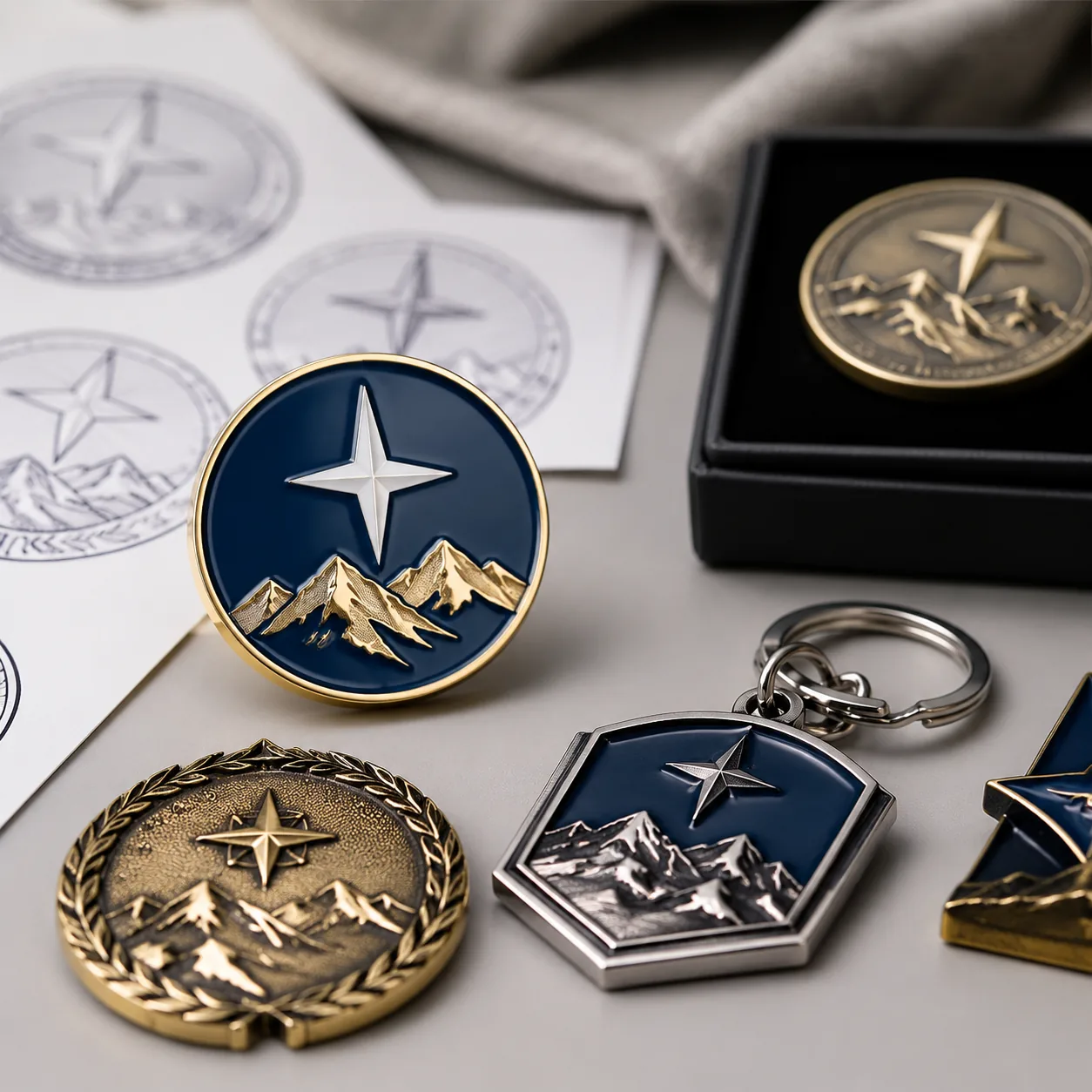
Step 1: Decide Whether PVC Fits the Application
PVC patches are the right choice when the brand needs durability, water resistance, easy cleaning, and raised detail that survives abrasion. They are common on tactical gear, workwear, outdoor uniforms, sports bags, motorcycle apparel, luggage, and youth merchandise because they hold shape better than embroidery in wet or high-wear use. They are a poor fit for photographic artwork, metallic effects, ultra-soft hand feel, and micro-text below about 3 mm in height.
A useful filter is to simplify the artwork before sourcing. If the logo relies on gradients, thin serif text, or subtle shading, move to woven, printed, or rubberized woven construction instead. If the brand wants hard edges, solid color blocks, and a wipe-clean surface, PVC is usually the better option. For retail or uniform programs, decide early; otherwise buyers end up comparing quotes for different constructions and calling it a pricing issue.
Typical custom PVC patches are 50 to 100 mm in finished size. For apparel and caps, 2.5 to 3.0 mm thickness is common; for bags, luggage, and tactical use, 3.0 to 4.0 mm is more typical. A 2D patch usually has a raised border and logo areas with recessed fill, while a 3D patch adds deeper sculpting and higher mold complexity. In production, raised lines below 0.8 mm and gaps below 0.5 mm often become weak points during molding and trimming.
Step 2: Write an RFQ That Forces Comparable Quotes
A vague RFQ produces noisy pricing. If you only send “3-inch PVC patch, quote 5,000 pieces,” one supplier may assume 2.5 mm thickness, another may quote 4.0 mm, and a third may include a smaller hook-and-loop backing without saying so. A controlled RFQ makes every supplier price the same object.
State the finished size in millimeters, tolerance, thickness, 2D or 3D construction, color count, backing, edge style, packing, quantity, target delivery date, and Incoterm. If the patch is for children, uniforms, or outdoor retail, mention the end use because material and testing expectations may change. A club patch and a commercial uniform patch should not be sourced under the same assumptions.
| RFQ item | Recommended buyer spec | Why it matters |
|---|---|---|
| Finished size | 80 x 65 mm, tolerance ±0.3 mm | Prevents quote differences based on area and trimming allowance |
| Thickness | 3.0 mm body, max 3.3 mm at raised areas | Controls flexibility, sewing behavior, and weight |
| Color count | Up to 6 solid Pantone colors, no gradients | Each added color raises mold complexity and fill risk |
| Relief | 2D raised logo and border, recessed background | Defines mold depth and sample appearance |
| Backing | Black hook Velcro, full-shape coverage | Usually adds about USD 0.12 to 0.35 per piece |
| Packing | 1 piece per OPP bag, 100 pieces per inner bag | Prevents rubbing and simplifies counting |
| Inspection | ANSI/ASQ Z1.4, general level II, AQL 2.5 major, 4.0 minor | Turns quality into a measurable acceptance rule |
Step 3: Compare Quotes Beyond Unit Price
PVC patch prices move with size, color count, relief depth, backing, and mold complexity. For a 70 to 80 mm 2D patch at 3.0 mm thickness, realistic FOB China pricing is often USD 0.55 to 1.20 at 1,000 pieces, USD 0.42 to 0.95 at 3,000 pieces, and USD 0.35 to 0.75 at 10,000 pieces. Smaller 50 mm patches may land around USD 0.30 to 0.65 at 5,000 pieces, while large 100 mm patches with Velcro and 8 colors can exceed USD 1.40 at moderate volumes.
Mold cost is usually separate. A simple 2D mold is often USD 50 to 180, while a complex 3D relief mold or large-format patch can run USD 120 to 350. If a supplier claims the mold is free, confirm whether the cost is embedded in the unit price or whether the buyer owns the tool for reorders. Visible mold pricing makes later comparisons much easier.
The cheapest quote is not always the best value. Watch for hidden changes such as lower thickness, reduced backing coverage, factory-stock colors instead of matched Pantone references, or a smaller rectangular Velcro piece replacing full-shape backing. Those substitutions may be acceptable for giveaways, but they are risky for uniforms, branded resale, or repeated production runs.
- Confirm whether the quote is FOB Ningbo, FOB Shanghai, EXW Yiwu, or another term.
- Separate mold charge, sample charge, unit price, packing cost, and freight estimate.
- Ask whether Velcro means hook only, loop only, or a matching hook-and-loop set.
- Check whether the lead time starts after artwork approval, sample approval, or deposit receipt.
- Request the exact tolerance for size, thickness, color position, and backing alignment.
Step 4: Lock the Digital Proof Before Mold Work Starts
The digital proof is the technical basis for the mold, not just a visual preview. It should show front artwork, dimensions, thickness, color callouts, relief levels, backing view, and edge treatment. A proof that only shows a flat logo without measurements creates avoidable risk because the factory has to guess at line thickness and depth.
For PVC patches, minimum raised line width should usually be at least 0.8 mm, and 1.0 mm is safer for bulk production. Minimum recessed gap between raised elements should be at least 0.5 mm, with 0.7 mm preferred on small patches or high-contrast designs. Text below 3 mm height often fills in, bends out of shape, or becomes unreadable after molding, especially in condensed fonts.
Decide the edge structure here as well. Options include fully molded PVC edges, a simulated merrow border, a fabric edge with PVC face, or a fully shape-cut PVC piece. Molded PVC edges are the most durable for outdoor use. Fabric hybrid structures can feel lighter on garments, but they add sewing and delamination checks. If the patch will be stitched directly to apparel, leave at least a 2.0 mm border without tiny raised detail so the needle does not distort the design.
For better quote consistency, require the proof to show the tolerances explicitly: finished size ±0.3 mm, thickness ±0.2 mm, and placement of any hook backing or stitching border within 1.0 mm. A clear proof also helps the factory choose the right mold gate, trim line, and curing time before any tooling is cut.
Step 5: Approve a Physical Sample With Measurable Criteria
A pre-production sample usually takes 5 to 7 working days after artwork and mold approval, or 7 to 10 working days if the patch has complex 3D relief. For first orders, the sample is the cheapest place to catch mold depth, color, or backing problems. Skipping it only makes sense for a reorder using an existing mold and a known approved spec.
Measure the sample with a caliper rather than approving by eye alone. A practical target is finished width and height within ±0.3 mm, body thickness within ±0.2 mm, backing offset within 1.0 mm, and major color zones aligned within ±0.2 mm from the raised boundary. Flex the patch 20 to 30 times by hand; white stress marks, cracking, or backing separation indicate the compound, thickness, or lamination needs revision.
Color approval must be handled realistically. PVC pigment blends do not always match coated paper Pantone chips because the surface is matte and can appear slightly translucent depending on pigment load. For brand-critical colors, approve under D65 daylight or a light booth and state whether the acceptance rule is visual match only or instrument-based Delta E. If the buyer does not define that standard, disagreements are almost guaranteed.
- Confirm the patch lies flat with no more than 2 mm corner lift on an 80 mm patch.
- Check that raised borders are continuous, with no breaks or trapped air bubbles.
- Rub the surface with a white cloth for 20 strokes to screen obvious pigment transfer.
- Test Velcro peel by attaching and removing it 10 times from the matching loop side.
- Photograph and sign the approved sample as the golden sample for bulk QC.
Step 6: Release Bulk Production With Clear Control Points
Bulk production should start only after written approval that lists the sample version, date, quantity, packing, tolerance, and delivery term. If any change was made after the first sample, request an updated photo set or revised sample before cutting bulk material. Even small changes such as a thicker border line can alter mold flow and trimming behavior.
For orders of 1,000 to 10,000 pieces, a normal bulk lead time is 10 to 18 working days after sample approval. Orders above 20,000 pieces, hook-and-loop sets, or multi-design assortments may require 18 to 28 working days because molding, trimming, sewing, and packing cannot all be compressed at once. Rush production is possible, but it increases the likelihood of color mix-ups, incomplete curing, or packing shortages.
The main control points are material mixing, first-off molded pieces, backing lamination or sewing, trimming, and final packing. Buyers should ask for first-piece checks against the approved sample before the full batch continues. In-process photos are only useful when they include measurable items such as caliper readings, backing position, carton labels, or counted bundles.
As a practical sourcing benchmark, many factories accept 100 to 299 pieces for paid sampling or club orders, 300 to 999 pieces as a low MOQ for campaign work, 1,000 to 4,999 pieces for standard B2B programs, 5,000 to 20,000 pieces for lower unit cost, and 20,000 pieces plus for project quotation. The MOQ should be written into the quote so the buyer knows whether the price is true production pricing or a small-run exception.
| Order size | Typical MOQ and lead time | Factory control focus |
|---|---|---|
| 100 to 299 pieces | Often accepted for sampling or small clubs; 12 to 18 working days after approval | Manual trimming consistency and color match |
| 300 to 999 pieces | Practical low MOQ for paid campaigns; 10 to 16 working days | Mold stability and backing alignment |
| 1,000 to 4,999 pieces | Best balance for B2B programs; 12 to 18 working days | Batch color consistency and packing accuracy |
| 5,000 to 20,000 pieces | Lower unit cost; 15 to 25 working days | Line scheduling, carton control, and AQL inspection |
| 20,000 pieces plus | Project quotation required; 20 to 35 working days | Material lot control and staged shipment planning |
Step 7: Inspect Bulk Goods Before Shipment
Final inspection should be written into the purchase order before production begins. A practical standard is ANSI/ASQ Z1.4, general inspection level II, with AQL 2.5 for major defects and 4.0 for minor defects. For higher-risk retail orders, buyers sometimes tighten to AQL 1.5 major and 2.5 minor, but that increases inspection time and sorting cost.
Major defects include wrong size outside tolerance, wrong logo, wrong backing, missing colors, cracked PVC, strong odor, detached Velcro, unsafe sharp edges, or mixed designs in one carton. Minor defects include slight flash under 0.3 mm, small surface specks away from the logo, mild color variation within the approved sample range, or tiny trimming marks on the reverse side. These definitions should be agreed before inspection, not argued after the report is issued.
Packing deserves the same attention as molding. PVC patches are flexible but can still be crushed in heavy cartons. A common export pack is 1 piece per OPP bag, 100 pieces per inner bag, and 500 to 1,000 pieces per carton depending on size and weight. A carton should usually stay under 15 kg gross weight to reduce handling damage. Labels should show PO number, SKU, quantity, gross weight, net weight, and carton number.
For premium retail programs, add a simple packaging acceptance rule: no torn polybags, no carton crush, no mixed SKUs, and no missing count sheets. If the supplier offers vacuum packing or compressed bundles to save freight, confirm that the patches will not flatten the relief or leave permanent edge deformation.
Step 8: Place the Order With Reorder Control Built In
Before you send the PO, simplify the artwork into solid colors, confirm the actual patch size on the garment or bag, and verify that PVC is still the right material. Then issue one controlled spec sheet and send the same document to every supplier. That single habit eliminates most quote confusion and makes price differences easier to explain.
For a first PVC patch order, ask for a paid sample, visible mold charge, defined tolerance, and a written AQL standard. If the patch is part of a larger kit with pins, lanyards, or keychains, ask the factory to file the approved mold, Pantone references, backing type, carton marks, and golden sample photos under one project code. Keep the order on a 25 to 40 calendar day buffer if the product must arrive before an event, because sample approval and freight both take time.
For reorders, keep the approved digital proof, signed golden sample, mold number, FOB term, and packing standard together so the next quote does not reset the project. Reorders should also confirm whether the same compound and backing are still available, because even a small material change can affect feel, weight, and delivery timing.
- Prepare artwork in vector format with Pantone callouts and actual finished size.
- State thickness, backing, color count, relief type, packing, and inspection level in the RFQ.
- Approve a physical sample against caliper measurements and the intended attachment surface.
- Keep the signed golden sample and digital proof together for reorders.
- Book bulk production with at least 25 to 40 calendar days before the event date, including sample time and freight buffer.
Have a project? Send your artwork and target quantity and we’ll reply with a detailed quotation within 12 working hours.
Ready to get this made?
Send your sketch, target quantity and ship-date. Detailed quotation in 12 hours.



