Custom Promo Spec Sheet: The 12 Lines Buyers Miss
Why spec sheets fail at line item 7
Most promo-product RFQs fail because they describe the item, not the control points. Buyers often nail the shape, artwork, and quantity, then leave the factory to guess on the details that actually drive fit, finish, and repeatability. That is where rework starts: a back thickness that changes the pin angle, a plating callout with no micron target, or a tolerance that sounds reasonable but cannot be measured on the line. A strong spec sheet works like a manufacturing contract, not a marketing brief.
For custom enamel pins, coins, keychains, badges, patches, and lanyards, the most expensive mistakes usually come from missing one small line. One omitted field can force a factory to use its default process, and defaults vary by workshop, tooling age, and plating line. If you are comparing suppliers, the best quote is not the lowest number; it is the one that answers the most control questions up front. ZheCraft sees the cleanest orders come from buyers who treat the RFQ as a technical document, not a design file dump.
Line 1 to 3: what the item is, exactly
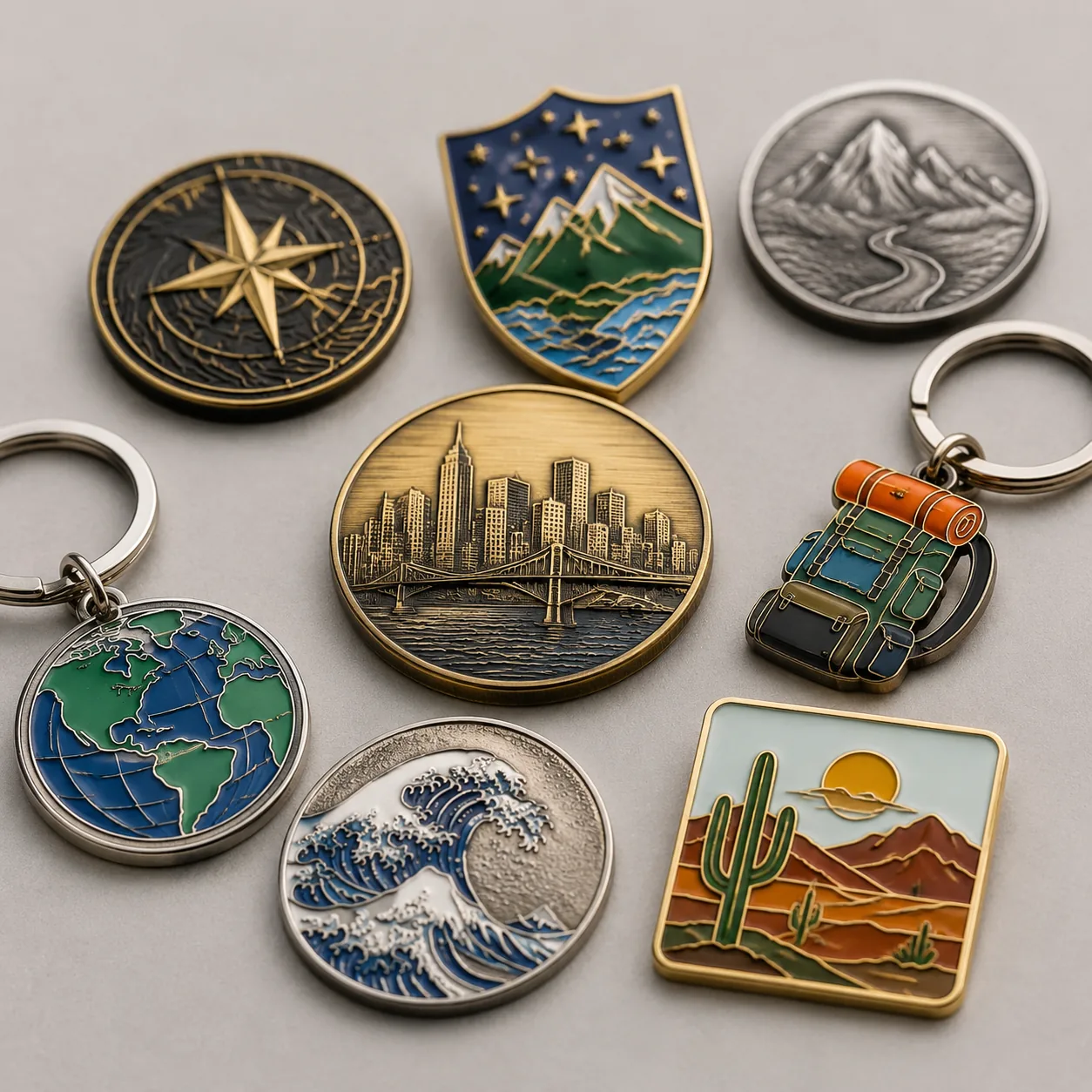
Start with the identifiers that remove ambiguity. State product type, finish family, and intended use in one sentence: for example, hard enamel lapel pin for retail packaging, die struck coin for award use, or woven patch for apparel sew-on. This helps the factory choose the right build method before quoting, which matters because stamped, cast, etched, and printed constructions have different tooling, minimum line widths, and defect risks.
Then lock the key dimensions in millimeters, not only in artwork scale. For pins and badges, specify overall size, thickness target, and the maximum tolerated variation. A realistic tolerance for most small metal promo items is ±0.2 mm on outer dimensions and ±0.1 to ±0.15 mm on thickness, but deep relief, soft edges, or epoxy can widen that. If the item includes a border, call out rim width separately; do not assume the factory will infer it from the art file.
Line 4 to 6: material and plating controls
Material and plating are where buyers usually under-specify and overpay later. Base metal should be named with enough precision to support the product: iron for cost-sensitive stamped items, zinc alloy for 3D cast parts, brass or copper for sharper detail and better polish response. If you care about weight feel or edge crispness, say so directly because those are process decisions, not aesthetic guesses.
Plating needs a thickness target and a finish definition. Common decorative plating on promo metal goods is often around 0.03 to 0.05 microns for flash effects and about 0.1 to 0.3 microns for more durable decorative layers, depending on the line and substrate. If you need higher wear resistance, say it; otherwise many suppliers will quote a visually acceptable finish that can tarnish faster than expected. For nickel-sensitive markets, specify nickel-free requirement, but also confirm whether that means no intentional nickel in the plating stack or a total migration/compliance target, because those are not the same thing.
A practical rule: if the product will be handled daily, plated, shipped retail-ready, or worn against fabric, you need a durability clause. That clause should mention corrosion expectation, scratch visibility, and whether light polishing marks are acceptable. ZheCraft typically advises buyers to pair plating finish with a sample standard photo, because verbal finish names such as antique silver, bright nickel, or matte gold can still vary across workshops and bath conditions.
Line 7 to 9: color, fill, and surface behavior
Color callouts are not complete unless they include how the color is built. For enamel pins and badges, state whether the product uses soft enamel, hard enamel, UV print, or epoxy topcoat, because each changes edge height, gloss, and color depth. If you need exact color management, provide Pantone references and accept that on metal the tolerance is visual rather than numeric; two factories can match the same swatch differently if the enamel system, curing temperature, or base color shifts.
Fill level matters more than most buyers think. If the enamel should sit flush, below the metal rim, or slightly domed, say it in the spec sheet. A common manufacturing target is flush to slightly recessed for hard enamel, while soft enamel typically sits visibly below the raised metal lines; if the spec is silent, the factory may use its standard depth and the final product can look too glossy, too shallow, or uneven under light. Surface texture should also be named: mirror polish, satin, sandblasted, brushed, or matte all change how color reads and how scratches show in use.
Line 10 to 12: hardware, function, and wear
Hardware is usually the last line on the buyer’s sheet and the first line tested in complaints. For pins, specify backing type, post count, post placement, and whether rotation control is needed. A single post is fine for tiny lightweight pins, but larger or top-heavy shapes often need two posts or a wider backer to prevent tilt; if the pin is brooch-style or intended for delicate garments, add a no-snag or fabric-protection requirement.
For keychains, magnets, lanyards, and patches, the functional hardware spec should include the load or pull expectation, attachment method, and any anti-failure feature. A keychain ring size, split-ring gauge, clasp type, and jump ring opening tolerance can decide whether the item stays together after months of use. For lanyards, specify width, weave or print method, safety breakaway, and metal hook style; for magnets, state pull force in grams or newtons and the mating surface assumptions, because a magnet that looks strong on paper can fail on painted steel or curved surfaces.
Spec table: the fields buyers should never leave blank
Use this as a line-by-line audit before you send an RFQ. If a field does not affect the product, leave it out; if it affects cost, fit, or repeatability, write it down. The point is not to over-specify every detail, but to remove the factory’s room for default assumptions.
| Spec line | What to write | Typical control range |
|---|---|---|
| Overall size | Exact mm dimension and allowed variance | ±0.2 mm on small metal items |
| Thickness | Target thickness by part | About 1.0 to 3.0 mm depending on build |
| Plating | Finish name plus thickness target | About 0.03 to 0.3 microns |
| Color | Pantone or approved sample reference | Visual match to approved master |
| Fill level | Flush, recessed, or raised | Defined against metal rim |
| Hardware | Backing, clasp, ring, hook, or magnet | Exact type and size |
| Packing | Bulk, polybag, backing card, or box | Pack spec matched to channel |
| QC level | AQL target for critical defects | Often 2.5 major, 4.0 minor |
| Artwork tolerance | Minimum line width and spacing | About 0.25 to 0.3 mm minimum |
| Surface finish | Mirror, antique, satin, matte, brushed | One finish only unless layered |
| Sample rule | Golden sample or signed reference | One physical approval sample |
| Reorder rule | Locked spec revision number | No silent revisions |
QC language that stops rework at inspection
Good spec sheets do not just describe the product; they tell the inspector what counts as pass or fail. The most useful language is measurable: plating discoloration beyond the approved sample, enamel overflow beyond the rim, burrs visible at arm’s length, misaligned printing beyond the approved register, or hardware that rotates under normal hand pressure. If you want consistency, write acceptance criteria in plain operational terms instead of generic words like good quality or excellent finish.
For many custom promo products, AQL 2.5 for major defects and 4.0 for minor defects is a common starting point, but the right level depends on the item’s use and selling price. Retail items, award pieces, and client gifts usually justify tighter controls than mass-distributed freebies. Also remember that AQL only works if the defect list is clear: a bent pin post, wrong plating tone, weak magnet, or cracked epoxy must be named separately. ZheCraft recommends attaching one photo of each critical defect class to the spec pack, because visual references reduce inspection arguments faster than text alone.
When to simplify the spec and when not to
Over-specifying can be as damaging as under-specifying. If you demand too many process details on a low-cost giveaway, you can push the quote up without improving the user experience. In that case, focus on the few lines that protect function: size, plating family, color, backing, and packaging. Simplification works when the item is disposable, low-touch, and non-collectible.
Do not simplify when the item is worn, handled repeatedly, retailed, or used as a brand standard across multiple products. Then you need locked revision control, sample sign-off, and a rule that any change in base metal, plating bath, backing, or packing must be re-approved. If the order includes multiple items in one set, the spec must also define how each piece aligns in color, thickness, and finish so one weak link does not make the whole set look mismatched. In ZheCraft’s experience, the cost of one extra approval round is usually lower than the cost of a full remake after production starts.
What to do next
Build your next RFQ as a one-page spec sheet with 12 lines: item identity, size, thickness, base metal, plating, color, fill level, surface finish, hardware, packing, QC rule, and revision control. Then attach one approved sample photo or physical sample, plus any minimum line width, tolerance, or pull-force requirement that affects production. If you are sourcing from China, ask each supplier to repeat the spec back in their own words before quoting; if they paraphrase it correctly, they probably understood it. If you want, ZheCraft can help turn your current product brief into a production-ready spec sheet for pins, coins, badges, keychains, patches, or lanyards.
Have a project? Send your artwork and target quantity and we’ll reply with a detailed quotation within 12 working hours.
Ready to get this made?
Send your sketch, target quantity and ship-date. Detailed quotation in 12 hours.



