Custom Promo Kitting for Multi-City Events: Buyer Walkthrough
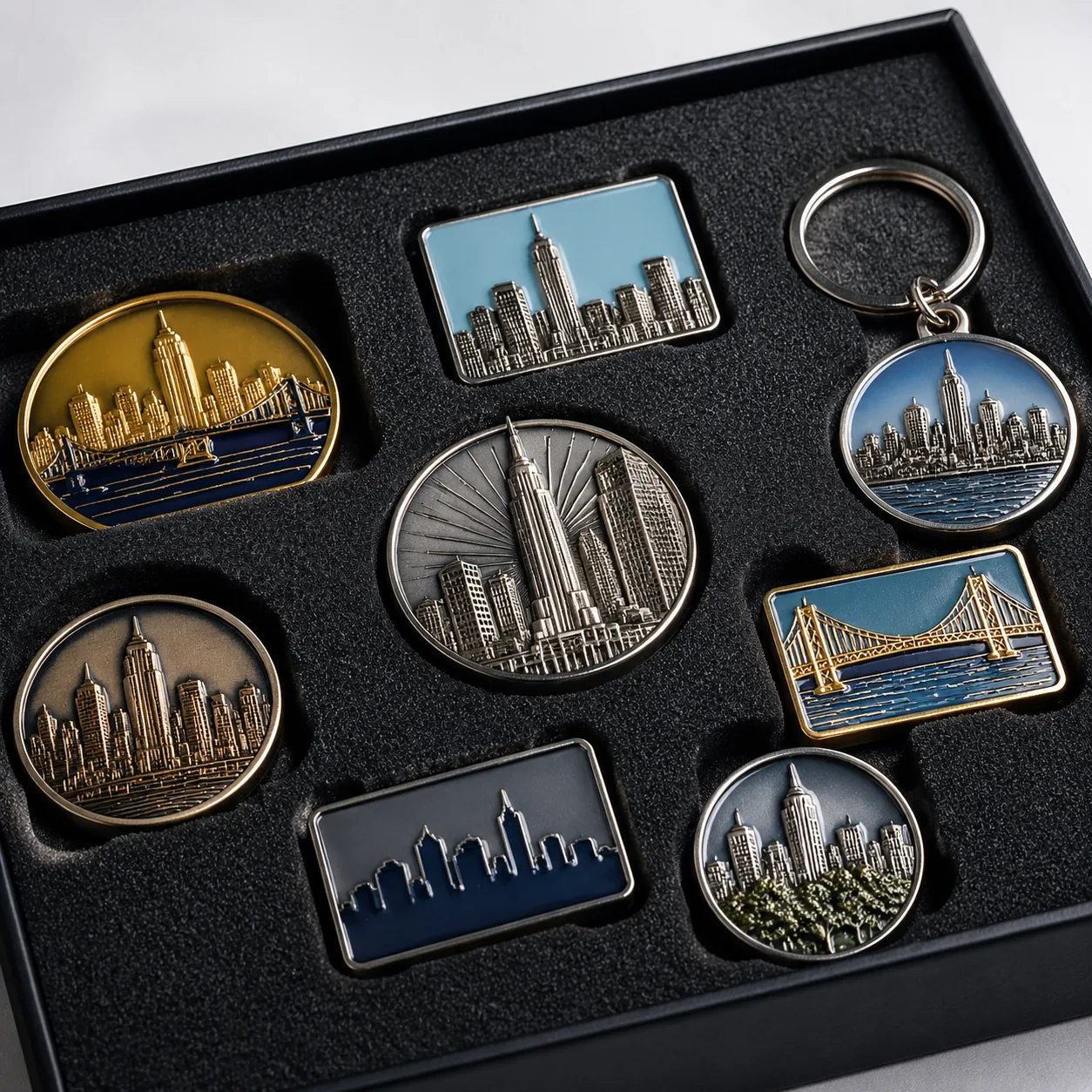
Scenario: 8,000 Kits, 12 Cities, No Count Errors
A dealer roadshow needs 8,000 attendee kits delivered to 12 cities. Each kit contains one 30 mm soft enamel pin, one 45 mm challenge coin, one 75 mm woven patch and one printed lanyard in a branded pouch. City quantities are uneven: 350 kits for one market, 1,200 for another, and 50 to 100 buffer kits held for late registrations. Local event teams cannot receive loose cartons and assemble kits on site without shortages, mixed languages or damaged presentation.
The main risk is not the individual pin, coin, patch or lanyard. Each item may pass inspection as a loose product, while the event still fails because Chicago cartons are short, Spanish inserts are packed into English-market kits, coin capsules crack during transit, or backing cards arrive bent. For multi-city events, kitting should be treated as a separate controlled production stage with its own bill of materials, pilot kit, packing instruction, AQL plan and city allocation file.
For a four-item promotional kit at this volume, final assembly normally adds 3 to 6 calendar days after all components pass incoming QC. Split-city packing adds another 1 to 2 days if carton labels and allocation files are not finalized. Freeze the city quantities before final packing starts. Reopening sealed cartons to change quantities usually requires recounting, relabeling and re-inspection, which can consume more time than the original assembly run.
Lock the Kit BOM Before Tooling
Artwork is not enough for a reliable quotation. The factory needs every physical part that will be bought, handled, inserted, labeled or counted: pouch, pin card, coin capsule, patch backing, lanyard hook, safety breakaway, badge strap, insert card, barcode label, spare parts, inner carton and master carton label. If these items are not specified, suppliers quote different assumptions and the lowest price may simply omit materials or QC labor.
A usable pin spec reads: 30 mm width, 1.5 mm iron base, soft enamel, raised metal lines not below 0.6 mm where possible, black nickel plating target 3 to 5 microns, optional epoxy dome, one 8 mm butterfly clutch and one 55 x 85 mm 300 gsm backing card. Set dimensional tolerance at ±0.2 mm for the metal outline and ±0.3 mm for pin post position. If the pin must sit centered on the card, state a visible placement tolerance such as ±2 mm from card center.
For the coin, define alloy, thickness, finish and packing early. A 45 mm zinc alloy coin at 3.0 mm thickness usually weighs 34 to 42 g depending on relief depth; brass or iron feels heavier and can increase both unit cost and freight. A practical roadshow spec is 45 mm diameter, 3.0 mm thickness, antique brass finish, two-sided 2D relief, recessed soft enamel up to four colors, edge thickness tolerance ±0.3 mm and one 50 mm clear acrylic capsule. Capsules commonly add USD 0.08 to 0.18 per kit and increase carton cube.
For the patch and lanyard, specify construction rather than only size. The patch should state woven polyester thread, 75 mm maximum width, merrowed or laser-cut edge, sew-on, hook-and-loop or iron-on backing, and size tolerance ±2 mm. The lanyard should state 20 mm width, 900 mm finished loop length, polyester webbing, one-side screen print or sublimation, metal swivel hook, optional safety breakaway and optional badge strap. A safety breakaway normally adds USD 0.03 to 0.08; double-sided print can add USD 0.05 to 0.15 depending on print method and quantity.
Approve a Pilot Kit, Not Loose Samples Only
Approve individual pre-production samples first, then approve one complete pilot kit before mass assembly. The pilot kit should use final materials: pouch, pin on backing card, coin in capsule, folded lanyard, patch, insert, external label and carton label. Require photos of the kit closed, open, front, back, inside the inner carton and inside the master carton. Keep one approved pilot at the factory and one with the buyer for reference during final inspection.
A pilot kit exposes conflicts that loose samples cannot show. A 55 x 85 mm pin card may bend inside a 120 x 180 mm pouch if the coin capsule sits on top of it. A lanyard swivel hook can scratch the acrylic capsule unless it is folded away from the coin. A merrowed patch edge can catch on a zipper pouch. A paper belly band may tear when registration staff remove kits quickly. These are packing design problems, not artwork problems.
Before mass assembly, ask the packing team to hand-pack at least 20 pilot kits using the final sequence and record average assembly time. Reject any process that depends on workers remembering an unstated orientation. A clear packing instruction should read: pouch front facing up; insert at back; pin card behind coin; coin capsule centered; lanyard folded to 90 x 70 mm with hook facing inward; patch logo-up; city label on lower right back; 50 kits per inner carton.
Sampling time must be built into the schedule. Metal pin and coin samples normally need 7 to 12 days after artwork approval because tooling, plating and enamel curing cannot be skipped. Woven patch samples usually take 5 to 7 days. Printed lanyard samples take 3 to 5 days if stock webbing is available, or 7 to 10 days if custom-dyed webbing is required. A combined pilot kit adds 2 to 3 days after all components are ready.
Quote the Finished Kit Cost
A proper RFQ separates product unit prices from tooling, sampling, assembly, labels, pouches, inner cartons and master cartons. For 8,000 kits, a factory may assign 3 to 5 assembly workers for 3 to 5 days, plus one line supervisor and one QC checker. If assembly is hidden inside the product price, the buyer cannot see whether the supplier has allowed enough labor for count control and city segregation.
The ranges below are realistic FOB China references for an 8,000-kit mid-spec order, not fixed market pricing. Plating color, enamel count, relief complexity, patch edge method, lanyard print method, raw metal cost, exchange rate and carton cube can all move the quote.
| Cost line | Typical specification | FOB range per kit |
|---|---|---|
| Soft enamel pin | 30 mm iron, 1.5 mm thick, black nickel 3–5 microns, clutch, 300 gsm card | USD 0.38–0.75 |
| Challenge coin | 45 mm zinc alloy, 3.0 mm thick, antique finish, enamel, acrylic capsule | USD 1.10–2.40 |
| Woven patch | 75 mm woven polyester, merrowed or laser-cut edge, sew-on or iron-on backing | USD 0.32–0.85 |
| Printed lanyard | 20 mm polyester, 900 mm loop, swivel hook, one-side print | USD 0.28–0.65 |
| Pouch or bag | 120 x 180 mm OPP, kraft, cotton or velvet pouch depending on presentation level | USD 0.03–0.35 |
| Assembly and labels | Four items inserted, city label applied, carton segregation controlled | USD 0.06–0.18 |
| Export packing | Inner carton, 5-ply master carton, carton label, H-taping | USD 0.03–0.10 |
For this scenario, a practical FOB budget is USD 2.20 to 5.28 per completed kit before international freight, duty and domestic delivery. Tooling and sample charges may add USD 80 to 250 for pin molds, USD 120 to 350 for coin molds and USD 30 to 80 for patch or lanyard setup. At 8,000 kits these charges are diluted; at 300 to 500 kits they materially change landed cost.
Request MOQ tiers in writing. Under 500 kits, setup and sampling dominate, and some suppliers may use stock pouch or stock webbing only. At 1,000 to 2,000 kits, unit pricing improves but coin and lanyard MOQs can still limit options. At 3,000 to 5,000 kits, custom packaging and dedicated carton labels become practical. At 5,000 to 10,000 kits, the main cost drivers shift to assembly speed, carton cube, count control and freight weight.
Build Cartons Around City Allocation
The carton plan should start from the event calendar, not the factory floor. Confirm the first event date, receiving window, city addresses, required buffer stock and whether a central 3PL will redistribute cartons. If cartons ship directly to 12 cities, each label must be readable by a receiving clerk who has never seen the purchase order.
For 8,000 kits, a workable structure is 50 kits per inner carton and 100 kits per master carton. If each finished kit measures about 130 x 190 x 28 mm and weighs 170 to 230 g, a 100-kit master carton may measure about 52 x 40 x 32 cm and weigh 18 to 25 kg. Use 5-ply export corrugated board and 48 mm or wider tape with H-taping on top and bottom. If gross weight exceeds 25 kg, reduce the pack count instead of relying on heavier tape.
Carton labels should show project code, city, carton number, total cartons for that city, SKU, kit quantity, gross weight, net weight, carton dimensions and destination address code. A label reading “Chicago, carton 3 of 12, 100 kits” is safer than a generic SKU label. Quantity tolerance should be zero per carton for event kits. Carton dimension tolerance of ±10 mm is acceptable; carton count tolerance is not.
Avoid mixed-city cartons unless the allocation makes them unavoidable. If a mixed carton is required, mark it as mixed on all sides, list exact quantities by city on the outside, and pack each city portion in a separate inner carton or sealed polybag. Never place two cities loose in the same master carton with only a paper note inside.
Inspect Components and Finished Kits
Inspection should cover both product quality and kitting accuracy. A common standard is ANSI/ASQ Z1.4, general inspection level II, with AQL 0 for critical defects, 2.5 for major defects and 4.0 for minor defects. For an 8,000-piece lot, general level II typically leads to a 200-piece sample size. Buyers with high event risk can add 100% carton count verification and tightened inspection for city labels.
Classify defects before production. Critical defects include exposed sharp pin posts, missing required safety components, wrong city allocation that creates an event shortage, or incorrect compliance marking. Major defects include a missing coin, wrong patch design, unreadable city label, wrong language insert, cracked coin capsule or lanyard hook failure. Minor defects include slight backing card scuffs, small thread tails or cosmetic plating variation within the approved sample range.
- Confirm each sampled kit contains the approved BOM in the approved packing sequence.
- Measure key dimensions: pin ±0.2 mm, coin diameter ±0.3 mm, patch ±2 mm and lanyard length ±20 mm.
- Check plating coverage against the approved finish and target thickness, typically 3 to 5 microns for decorative nickel, black nickel, brass-tone or gold-tone plating.
- Verify pin posts are capped or secured so they cannot puncture the pouch or injure the user.
- Rub-test printed lanyards for 20 dry cycles and 10 damp cycles when the lanyard will be worn outdoors.
- Drop-test one packed export carton from 60 cm on one corner, three edges and six faces when gross weight is under 25 kg.
- Reconcile sealed carton counts against the city allocation sheet before release for shipment.
Stage QC before assembly so defective components do not get hidden inside finished kits. Final QC should then inspect assembled kits, carton labels and sealed carton counts. If ZheCraft handles the full kit in-house, this two-stage process reduces the risk that one delayed or defective component is discovered only after the packing line has started.
Plan Freight and Lead Time Backward
The buyer must decide whether goods move from the factory to one central warehouse or directly to 12 destinations. Direct split shipment can save domestic handling time, but it increases documentation, labeling and shortage recovery risk. Central warehouse delivery is usually safer when the first event is more than 30 days away and the buyer has a 3PL that can receive, scan and redistribute cartons.
Air freight from China may take 3 to 7 days in transit after pickup, but export handling, booking and customs paperwork can add 1 to 3 days before departure. Express courier is faster for small runs but expensive for coin-heavy kits. Sea freight is cheaper for heavy promotional kits but often takes 25 to 40 days port to port, plus customs clearance and inland delivery. At 8,000 kits x 200 g, product weight alone is about 1,600 kg before cartons, so late air freight can exceed the value of the kitting work.
Plan backward from the first event date. For air shipment to multiple US cities, aim to finish production 18 to 25 days before the first event. For sea freight to a central US warehouse, finish production 55 to 70 days before the first event. A realistic production lead time for this four-item kit is 28 to 38 calendar days after artwork and sample approval, plus freight time. Rush orders can compress review windows, but tooling, plating, enamel curing, patch weaving and lanyard printing still have physical limits.
RFQ Checklist for Buyers
A useful RFQ has two file groups: technical files for each component and an allocation file for the kit. Technical files define dimensions, materials, finishes, tolerances, artwork placement and packaging. The allocation file defines city quantities, carton label format, delivery addresses, required delivery dates and whether buffer stock is allowed.
Ask suppliers to quote product unit price, tooling, samples, assembly, pouch, labels, inner cartons, master cartons, estimated carton dimensions, estimated gross weight and lead time as separate lines. If a supplier refuses to separate costs, comparison becomes difficult because a low price may come from omitted inspection, weaker cartons or no allocation control.
- List every kit item, including pouch, pin card, coin capsule, insert, label, spare parts and carton label.
- Define material, finish, print method, attachment, finished dimension and tolerance for each component.
- Request MOQ tiers at 500, 1,000, 3,000, 5,000 and 10,000 kits if final demand may change.
- Approve one complete pilot kit before mass assembly, not only loose product samples.
- Provide city allocation, carton label format and zero quantity tolerance per carton.
- Set inspection levels before production: critical 0, major 2.5 and minor 4.0 are a common starting point.
- Ask for FOB price, tooling cost, sample cost, estimated carton cube, gross weight and production lead time in calendar days.
A well-specified promotional kit is operational insurance. When the buyer controls the BOM, pilot kit, carton plan, allocation file and inspection standard, the factory can quote and produce against facts instead of assumptions. For mixed pins, coins, patches and lanyards, ZheCraft can combine component production and assembly, but the best result still starts with a precise kit specification rather than a folder of artwork files.
Have a project? Send your artwork and target quantity and we’ll reply with a detailed quotation within 12 working hours.
Ready to get this made?
Send your sketch, target quantity and ship-date. Detailed quotation in 12 hours.



