Custom Pins That Fail in QC: 7 Specs to Lock Down
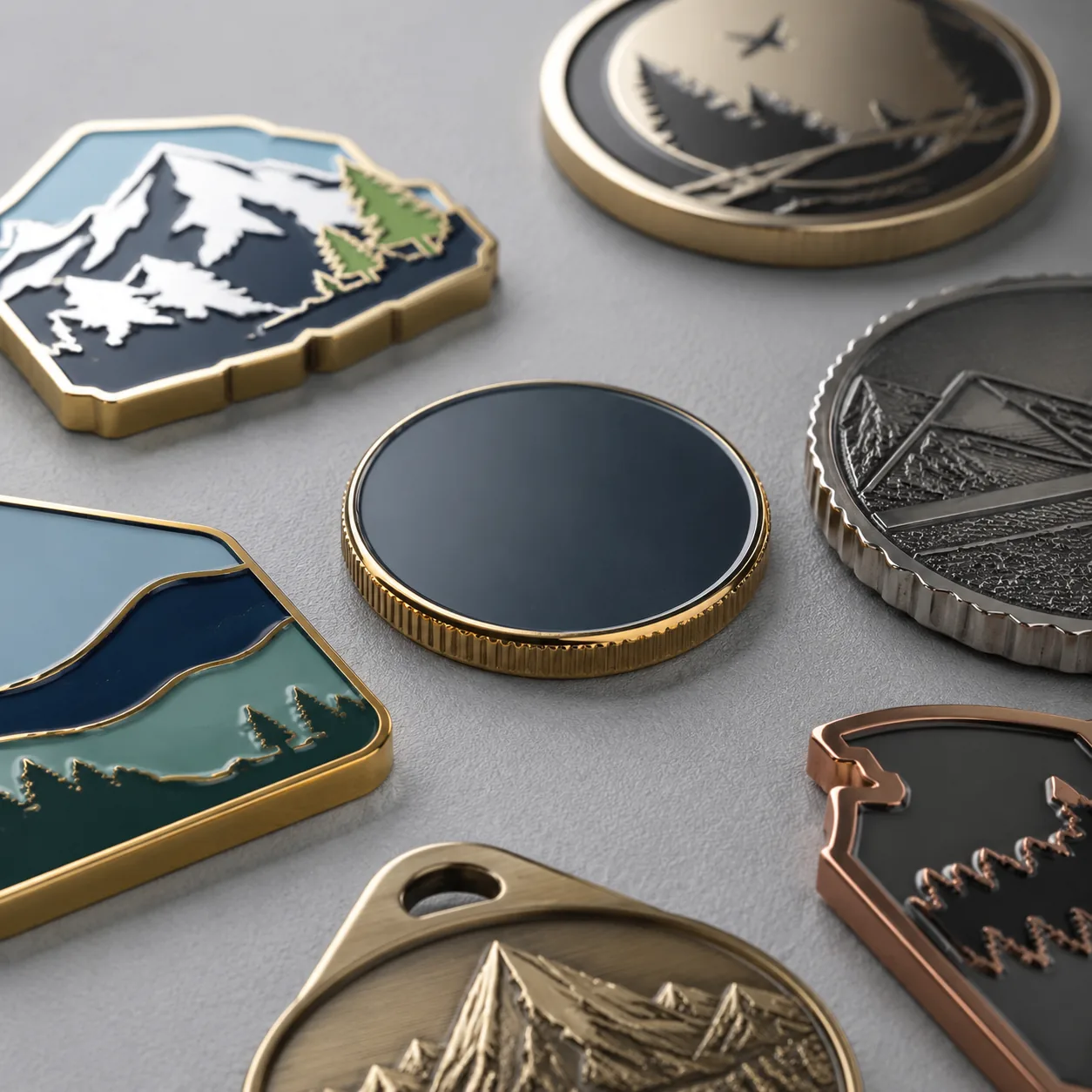
Why good artwork still fails on the factory floor
Most pin rejections do not start with bad creative. They start when a clean-looking design ignores how metal flows, how plating builds, how enamel shrinks, and how finishing changes the edge geometry. A file can look perfect on screen and still produce broken lines, weak corners, color pooling, or burrs once it is reduced to 20 to 35 mm and built in zinc alloy, iron, brass, or stainless steel. In practice, QC failures are usually spec failures, not operator mistakes.
For enamel pins, the safest orders define the production limit before tooling begins: minimum line width, recessed depth, plating finish and thickness, color target, attachment type, packing method, and sample approval rule. If those items are vague, the supplier will fill in the blanks with their own shop standard. That may be acceptable for a one-off sample, but it is often unstable in bulk and hard to enforce after the first shipment has already been approved.
A good control sheet should read like a manufacturing brief, not a marketing note. State the size in millimeters, the metal base, the enamel type, the surface finish, the back finding, the packing method, and the exact tolerance you will reject. If the factory cannot confirm a limit in writing, treat that limit as unapproved, not implied.
Failure mode 1: lines are too thin to survive tooling
The most common hard stop is linework that looks elegant in vector art but collapses in die making or mold cutting. Very fine text, hairline borders, and tiny negative spaces can blur, fill in, or disappear after casting, polishing, and plating. This is especially risky on soft enamel pins, where raised walls between colors need enough width to survive cleaning and finishing. On a 25 mm pin, lines below 0.25 mm are often too risky unless the design is extremely simple and the shop has tight CNC control.
Spec this as a production limit, not a design preference. For standard soft enamel, a safer working range is 0.30 to 0.40 mm for visible dividers and 0.45 to 0.60 mm for small text strokes. Reverse-cut text should generally be at least 1.5 mm high and 0.25 mm stroke width, with 2.0 mm being safer for legibility. If the art depends on micro-detail below those values, enlarge the pin, simplify the composition, or move to etched metal instead of filled enamel.
The same rule applies to gaps. Any isolated cavity or cutout under about 0.30 mm can close up during plating or polishing, especially on zinc alloy. For best results, require the factory proof to show actual line weights and voids, not just the artwork image. If the shop offers a minimum line width of 0.20 mm for a small pin, ask for a sample photo of the exact feature on the same base metal before approving the mold.
- Set minimum visible line width at 0.30 mm or above for standard soft enamel.
- Keep fine text at 1.5 mm high minimum; 2.0 mm is safer for retail pins.
- Avoid reverse-cut gaps below 0.30 mm on zinc alloy.
- Approve a corrected factory proof with measured line weights, not only the art file.
Failure mode 2: recessed color fills come out uneven
Uneven enamel fill is not just a cosmetic issue; it often signals poor groove geometry. If the recess is too shallow, color pools on top and leaves a weak meniscus. If the recess is too deep or the walls are too steep, the fill can sink after curing or show pinholes at the edge. Buyers often blame the paint, but the root cause is usually a mismatch between cavity depth, curing behavior, and polishing pressure. The problem is more visible on large flat areas than on small accents.
For soft enamel, specify that the color should sit about 0.15 to 0.30 mm below the raised metal rim after curing. That gives enough relief for the metal outline to stay visible without creating a sharp step that chips easily. Typical soft-enamel cavity depth is 0.60 to 0.90 mm on standard pin sizes; below 0.50 mm, the fill can look thin, and above 1.00 mm, shrinkage becomes harder to control. For hard enamel, specify full fill, level sanding, and final polish to a flush or near-flush surface with no visible sink marks. If the supplier says the piece is “hard enamel with epoxy top,” ask whether that means true hard enamel, a hybrid epoxy leveling coat, or a soft enamel piece with a clear dome; those are not interchangeable QC standards.
Useful groove guidance for typical pin sizes: small pins under 20 mm should avoid deep cavities because shrinkage shows faster at that scale, while 25 to 35 mm pins can usually tolerate more depth if the art is broad and simple. Ask for a sample under side lighting, because flat overhead light can hide low spots that will show up at packing or retail inspection. If the pin has large monochrome fields, require the supplier to show fill evenness within the same batch, not just across one sample photo.
Failure mode 3: plating looks fine in sample, then fails in bulk
Plating defects often appear after the sample is approved because the sample came from a fresh bath while bulk production ran later in a different tank condition. Tarnish, cloudy nickel, orange peel, thin edge coverage, and dark spots usually come from bath contamination, poor filtration, or weak control of immersion time and current density. This matters most on raised edges and sharp corners, where the plating layer is naturally thinnest. A clean sample does not guarantee bulk consistency unless the finish spec is written tightly.
Specify the finish and the coating target separately. Common decorative pin plating is typically in the 0.1 to 0.3 micron range for standard color finishes such as gold, nickel, black nickel, copper, or antique tones, while thicker protective coatings may be requested for higher wear resistance. If the piece will be handled frequently, packed in humid conditions, or shipped to coastal markets, ask for anti-tarnish oil, clear coat, or moisture-control packaging. Do not accept vague salt-spray claims unless the factory can name the test standard and duration; otherwise the claim has no QC value. For reference, a commercial seller should state whether the finish is checked visually only, or against an ASTM B117 or equivalent corrosion test with a defined hour rating.
The practical acceptance rule should include visual coverage and edge behavior. Require even color across the face, no bare metal on exposed high points, and no pitting visible at normal inspection distance of 30 to 40 cm under 500 to 1000 lux lighting. A reasonable bulk acceptance target is AQL 2.5 for major defects and AQL 4.0 for minor cosmetic marks if the order is retail-grade; tighter programs may require AQL 1.0 for major defects. If you need a more durable finish for daily wear, ask for a thicker plating target and a more abrasion-resistant backing plan, but expect cost to rise accordingly.
Failure mode 4: attachments rotate, sag, or damage fabric
A pin can pass visual QC and still fail in use if the backing system is wrong for the garment. Butterfly clutches are common, but they can loosen on heavier pieces and allow more movement on thin fabrics. Rubber clutches are softer but can creep under load. Magnetic backs avoid puncture damage, yet they lose holding force quickly when there is a gap or a heavy body thickness between magnets. The result is a pin that looks correct in the tray and wrong on the jacket.
For pieces above roughly 30 mm, or for pins with a high center of gravity, specify a double-post, anti-rotation, or brooch-style backing rather than a single standard clutch. For delicate apparel, define the maximum allowed fabric damage and the expected wear surface. If the product is meant for retail display rather than daily wear, a stronger decorative backing may be acceptable even if it is less comfortable. The key is to match the back finding to the use case, not the artwork.
Ask the factory to state pull-force targets where applicable. A light pin may hold adequately at 0.8 to 1.5 kgf pull resistance, while heavier pieces often need more secure hardware and better post alignment. Also define rotation tolerance: for logo pins, a post offset of 1 to 2 mm may already be visible on the garment. If the pin has an asymmetrical shape, two posts are usually the cleanest fix because they prevent twisting without relying on extra-tight clutches that can damage fabric.
| Failure mode | Better spec to lock | Typical use case | When to avoid it |
|---|---|---|---|
| Single-post rotation | Double post or anti-rotation backing | Medium pins with asymmetrical shapes | Very small, ultra-light pins where one post is enough |
| Sagging on thick garments | Brooch pin or stronger clasp system | Blazers, coats, canvas bags | Paper-thin items where clasp pressure may mark the fabric |
| Fabric damage | Magnetic back or low-damage clasp | Display items, collectors, delicate textiles | Heavy pins or outdoor use |
| Loose closure | State pull-force and fit tolerance | Retail-ready pins with repeated handling | When the supplier cannot test consistently |
Failure mode 5: color drift between sample and mass production
Color mismatch is one of the easiest failures to miss during sampling and one of the hardest to correct after production starts. Enamel colors can shift because of pigment variation, curing temperature, operator mixing, or because the supplier matched to a screen image instead of a physical standard. Even when the hue is close, the saturation may differ enough to make a logo look off-brand. This becomes more visible on large flat areas than on small details.
Make the color spec physical and measurable. Use Pantone references where possible, but send a physical master sample or approved chip if the brand color is strict. For high-visibility promo work, an acceptable tolerance is often Delta E 1.0 to 2.0 only if both sides agree in writing; otherwise the golden sample should be the controlling reference. On multi-item sets, lock the color standard across all components before tooling, because small differences between metal enamel, printing ink, and card stock are normal and should be planned for, not discovered in packing.
Also define how the color will be judged. State inspection lighting, viewing distance, and whether gloss shift is acceptable. A pin that looks correct under warm factory light can drift badly under daylight LED. If the order uses multiple fills, require the supplier to identify each color by Pantone code and confirm that the same batch will be used for the full run. For recurring orders, keep the approved master sample or a sealed color chip so the reorder does not drift when a new salesperson or production line takes over.
Failure mode 6: edges, polishing, and surface texture hide defects
Surface finish can conceal or exaggerate almost every other defect. Over-polishing can round off corners, erase texture, and make shallow details unreadable. Under-polishing leaves burrs, rough edges, and a gritty feel that buyers often call cheap even when the artwork is correct. On antique finishes, excess darkening can fill recesses too heavily and reduce contrast rather than improve it. The finish has to support the design, not fight it.
The right spec is controlled finish, not simply shiny or antique. If texture matters, define whether the surface should be mirror polish, brushed, matte, sandblasted, or a combination, and state which zones receive that treatment. For stamped or die-struck pieces, define the allowable burr size and whether corner rounding is acceptable. A practical rule is that no burr should be visible to the naked eye at 30 cm, and sharp edges should not catch a fingernail during inspection. If the design depends on a fine sandblast or stipple effect, ask for the blast grade to be held consistent between lots rather than left to the operator’s judgment.
If the design depends on texture contrast, request a photo of the pre-pack inspection under the same lighting angle the buyer will use for approval. Otherwise the sample may pass under factory light and fail in the buyer’s warehouse. For antique work, also specify the recess darkening level: light antique should preserve detail, while heavy antique can obscure small lettering and should not be used on micro-text designs. If the product uses sandblasting, define the blast grain consistently so the surface does not look patchy across batches.
Failure mode 7: packing and handling create the last defect
A surprising number of QC failures are packing failures. Pins scrape each other in bulk bags, clutch backs scuff plating, and sharp points pierce backing cards or inner polybags. By the time the shipment reaches the buyer, the metal is fine but the presentation is compromised. This is especially common in mixed-item orders where pins, coins, and keychains are packed together without separation rules or carton-level protection.
If presentation matters, write the packing spec as carefully as the product spec. Define whether each unit is individually bagged, carded, tray-packed, or bulk packed, and state the acceptable scratch rate or cosmetic tolerance before repack. For retail-ready pins, backing cards should be sized to prevent rotation inside the pack and to keep the pin face from contacting the card art. Typical individual packing uses a self-seal OPP bag of 40 to 60 microns with a card insert, while high-end retail sets may use a tray or blister pack to eliminate surface rub entirely.
For export cartons, ask for carton marks, inner quantity, moisture protection, and separation dividers so the factory does not optimize for speed at the expense of surface quality. A sensible carton spec often includes one OPP bag per pin, 50 to 100 units per inner carton depending on size, and a master carton with clear count labels and lot numbers. If the shipment is humid or sea-freighted, add desiccant and a polyethylene liner; that is cheaper than reworking tarnished stock later. For low-cost promotional jobs, uncarded bulk pack may be acceptable, but only if the buyer explicitly accepts scuff risk and the defect limit is written in advance.
What to lock before you place the order
Turn the design into a factory-readable control sheet, not just an artwork file. Include size, metal base, plating finish, enamel type, minimum line width, recessed depth, backing type, packing method, and the exact approval rule for sample versus bulk. If any item is unknown, ask the supplier to propose a default and mark it as provisional instead of letting it become an invisible assumption. That one step prevents most looks-right-but-fails-in-production problems.
A simple pre-order checklist keeps the job stable:
- Confirm the smallest line, text, and gap sizes in millimeters.
- Approve one physical golden sample before mass production.
- Write finish, backing, and packing specs directly on the PO.
- Require the factory to flag any spec that cannot be met at your size.
- Set AQL targets and reject limits for major and minor defects.
- Keep one reorder sheet so the standard does not drift on repeat orders.
A practical RFQ should also include quantity tiers and schedule expectations so the factory quotes against the same target. For many pin factories, samples take 5 to 10 days, standard mass production takes 12 to 20 days after sample approval, and rush jobs may compress to 7 to 12 days at a premium. Typical FOB pricing for basic enamel pins often starts around USD 0.35 to 0.80 per piece at 100 to 300 units, drops to roughly USD 0.18 to 0.45 at 1,000 to 3,000 units, and can fall further on large repeat runs depending on size, plating, and packaging. If the quote sits far outside those ranges, ask which spec is driving the cost before you accept the number.
If you want fewer surprises, send one complete RFQ with artwork, target size, finish, quantity, packing needs, defect limits, and the acceptance standard for color and plating. That is the point where a capable factory can tell you which details are safe, which need redesign, and which need a larger size or different build before tooling starts. The earlier the failure modes are named, the cheaper they are to fix.
Have a project? Send your artwork and target quantity and we’ll reply with a detailed quotation within 12 working hours.
Ready to get this made?
Send your sketch, target quantity and ship-date. Detailed quotation in 12 hours.



