Custom Pin Pricing and Lead Time: What Actually Changes the Quote
Why two pins with the same diameter can price very differently
Buyers often compare custom pin quotes by size and assume the millimeter number explains the difference. In production, size matters, but build method, metal thickness, plating, color count, and finishing steps usually move the quote more than a few millimeters of diameter. A 25 mm soft enamel pin with two colors and a standard butterfly clutch may sit in a completely different cost band from a 25 mm hard enamel pin with polished gold plating, printed detail, and a custom backing card.
Lead time follows the same pattern. A straightforward reorder from existing tooling can often move through the factory in 10 to 14 days after artwork approval, while a new design with fresh tooling, color confirmation, plating approval, and retail packing usually needs 18 to 28 days. If a supplier gives one flat timeline for every pin type, they are usually averaging away the real process risk.
For B2B buyers, the useful question is not “How much for a pin?” but “Which production steps are included, and which steps create delay or rework?” That is the only way to compare quotes across factories on equal terms.
The cost drivers factories actually price against
Tooling is the first major variable. A flat die-struck lapel pin may use a simple engraved mold, but 3D relief, cutouts, recessed text, and multi-level artwork increase engraving time and raise scrap risk during die casting or stamping. On a new design, tooling is usually a one-time charge separate from unit cost, often USD 35 to 120 FOB depending on complexity and mold size.
Metal and plating come next. Common plating options include nickel, gold, black nickel, antique brass, antique silver, and gunmetal. Polished finishes require more polishing time and expose surface flaws more easily, while antique finishes can hide minor texture variation. A factory may charge the same mold differently depending on finish because the reject rate and handling time change.
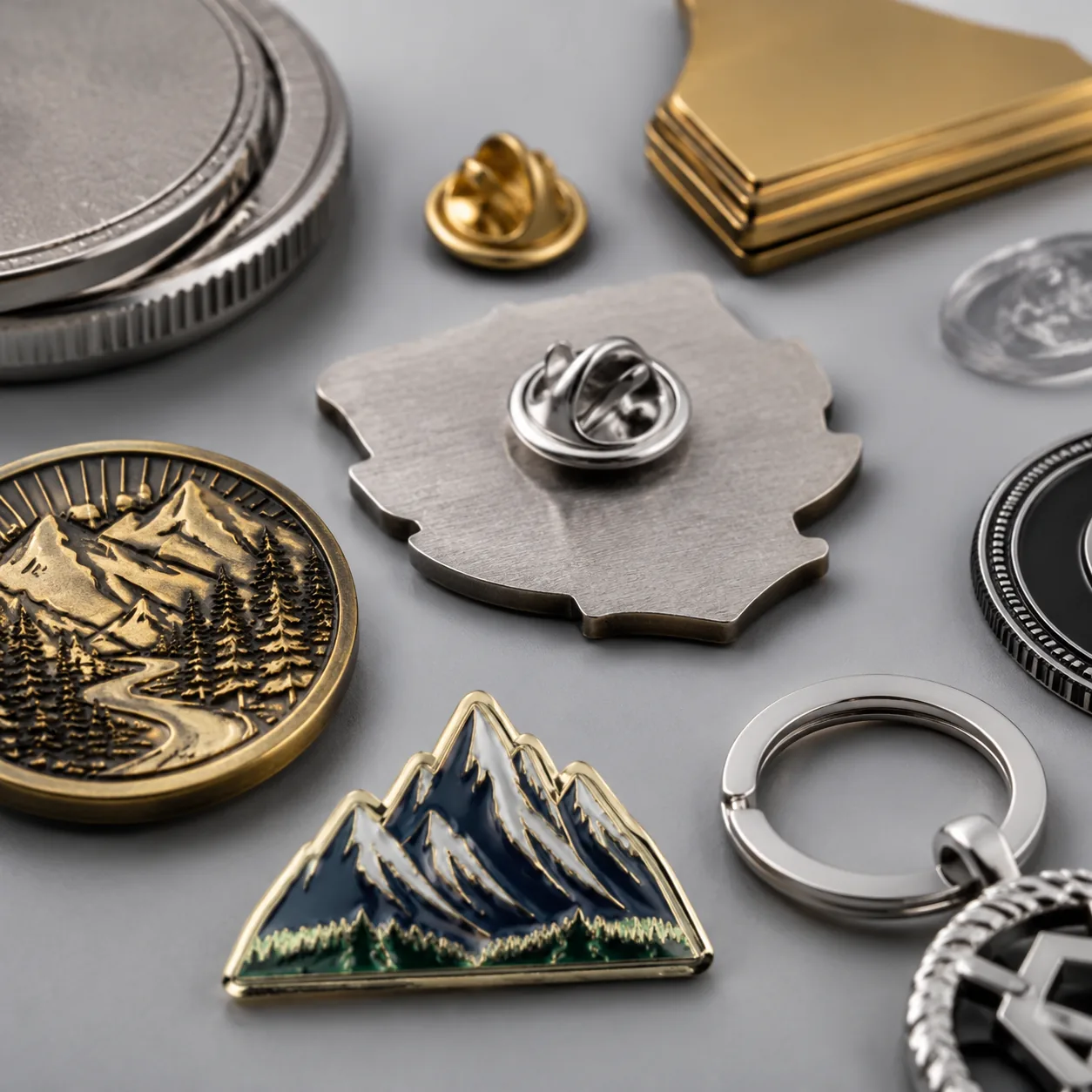
Decoration can add several process steps. Soft enamel, hard enamel, screen print, offset print, glitter, glow-in-the-dark pigment, translucent color, and epoxy dome coating each affect labor, curing, and quality control. A printed design with 4-color process art is usually faster than a pin with five separate enamel fills, but it may need tighter alignment and color proofing.
Packaging is a common hidden cost. Bulk loose packing is cheapest, while a printed backing card, individual polybag, barcode sticker, paper insert, or rigid gift box adds materials and assembly labor. For many distributor programs, packaging can add USD 0.05 to 0.85 per unit, and more if the card stock is thick or die-cut.
MOQ tiers and realistic FOB price bands
MOQ is not just a sales threshold. It is the point where setup cost, inspection, and manual labor begin to spread across enough units to lower the unit price. Below 300 pieces, the factory is still absorbing most of the molding and setup burden, so per-unit pricing rises fast. Above 1,000 pieces, the pricing curve usually flattens unless the design is unusually complex.
The ranges below are representative for standard custom enamel pins with common sizes around 20 to 35 mm. They assume FOB factory pricing, not landed cost, and they exclude international freight, duties, and payment fees.
| MOQ tier | Typical FOB price per pin | Typical mold/tooling fee | Typical lead time after approval |
|---|---|---|---|
| 100-299 pcs | USD 1.25-2.80 | USD 35-120 | 18-28 days |
| 300-499 pcs | USD 0.95-2.10 | USD 30-100 | 16-24 days |
| 500-999 pcs | USD 0.70-1.55 | USD 25-80 | 14-20 days |
| 1,000+ pcs | USD 0.48-1.20 | USD 0-60 | 10-16 days |
These are practical factory bands for standard builds, not specialty collectibles. A simple soft enamel pin with 2 to 4 colors, standard backing, and bulk packing usually falls near the lower half of the table. Hard enamel, special plating, or card packaging tends to push the same design toward the upper half or beyond it. If a quote comes in far below these ranges, check whether it is missing tooling, packaging, sample fees, or QC allowances.
How build type changes both price and schedule
The same artwork can land in very different price and timing buckets depending on how it is built. Buyers should specify the build method before asking for quotes; otherwise, vendors are effectively quoting different products.
| Build/spec | Typical FOB cost | Typical lead time | Best fit |
|---|---|---|---|
| Soft enamel, 2-4 colors, standard clutch | USD 0.55-1.25 | 10-16 days | Promotions, club merchandise, giveaways |
| Hard enamel, polished finish, 3-6 colors | USD 0.85-1.90 | 14-22 days | Corporate gifts, retail pins, premium merch |
| 3D relief or multi-level cast metal | USD 1.20-3.40 | 18-30 days | Collectibles, commemorative pieces, premium programs |
| Printed detail or epoxy dome on metal | USD 0.95-2.60 | 12-24 days | Campaign items, photo-heavy designs, display pieces |
Soft enamel is typically the fastest and most cost-efficient path when the design has clear outlines and the buyer wants volume. Hard enamel costs more because the surface is filled, cured, and polished flush, which adds handling time but creates a cleaner retail-style finish. 3D relief is the right option when depth, texture, and sculpted detail are part of the value proposition, even though it slows tooling and increases inspection time.
If your design includes tiny text, fine line art, or dense gradients, do not force it into a standard enamel build. A printed or hybrid specification may cost less than a failed enamel attempt because it avoids overfilling, bleeding, and color registration issues.
Lead time is mostly approval time until production starts
Many projects run late because the artwork is not actually final when the quote is approved. Vector cleanup, line-width corrections, Pantone confirmation, and placement changes can each add 1 to 3 business days if the buyer responds promptly. If the file is not print-ready, a factory can lose a week before a mold is even cut.
After approval, a typical new pin project follows a predictable sequence: mold making or engraving, metal forming, polishing, plating, color filling or printing, curing, QC, and packing. On a simple order, the actual production window may be only 6 to 10 days, but queue time and revisions stretch the calendar. When several SKUs share one order, batching also adds time because the factory must switch clutches, finishes, or card artwork between runs.
Peak season matters. In the months before major holidays, trade shows, and back-to-school campaigns, plating and packing queues can extend by 3 to 7 days. For event-driven orders, 20 to 25 days is a safer planning assumption unless the design is already locked and the factory has raw material on hand.
A realistic lead-time promise should name the approval date, tooling start date, production start date, QC window, and ship date separately. If a supplier only says “two weeks,” ask what happens if the proof changes or the sample is rejected.
Packaging, attachments, and finishing extras that change the quote
Small accessory choices can materially alter both unit cost and throughput. A standard butterfly clutch is usually the cheapest option. Rubber clutches, deluxe clutches, magnetic backs, double posts, brooch pins, or custom back stamps each add cost and may require extra setup or manual alignment. On some jobs, switching from a single post to two posts increases assembly time enough to add USD 0.03 to 0.12 per unit.
Packaging is even more variable. Bulk polybag packing is fastest and lowest cost, while a printed backing card or display box adds material, card printing, and manual insertion. A simple 350 gsm printed backing card may add USD 0.08 to 0.25 per unit; a rigid gift box can add USD 0.40 to 1.20 depending on size and finish. If the card art is not approved early, packing becomes the bottleneck even when pin production is complete.
Finish quality also affects reject rate. Mirror-polished plating shows scratches quickly, so QC standards are tighter. Antique plating is more forgiving, while matte finishes can scuff during packing if protective sleeves are not used. Epoxy doming protects printed graphics, but it adds curing time and slightly changes the perceived thickness of the piece, which matters when brand teams are comparing proofs.
When custom backing cards are needed, ask whether the factory prints in-house or outsources. In-house card production is usually faster for repeat programs and small runs, while outsourced printing can be cheaper at higher volume. For low-MOQ jobs, carding often costs more than the pin itself.
How to read a quote without getting misled
A usable quote separates mold cost, unit price, plating, attachments, packaging, and freight. If everything is rolled into one number, you cannot tell whether the savings come from lower labor, thinner metal, weaker plating, or simply omitted line items. The cheapest quote often becomes the most expensive once rework, air freight, or replacement stock is added.
Look for measurable quality language. For small custom pins, a reasonable production target is usually edge and alignment tolerance within about +/-0.3 mm to +/-0.5 mm, with color fill control checked against approved artwork. For inspection, many factories work to an AQL framework such as 2.5 for major defects and 4.0 for minor defects, though the exact sampling plan should be stated on the PO or quality sheet. If the supplier will not specify inspection criteria, they are leaving quality open-ended.
A serious quote should also state plating thickness or at least a finish class, especially if the order is premium or retail-facing. For example, a standard decorative plating target may be around 0.03 to 0.05 microns on a visual finish, while heavier wear-oriented programs may require a thicker plated layer or a protective topcoat. Even if the factory uses different internal standards, they should be able to define what they are promising.
- Ask for separate lines for tooling, unit price, packaging, and freight
- Confirm whether one proof sample or a pre-production sample is included
- Verify plating type, accessory type, and backing hardware
- Check tolerance, AQL, and any stated plating-thickness target
- Make all suppliers quote the same spec sheet before comparing prices
What to lock before you request a firm budget
Start with a locked spec sheet. Include size in millimeters, build type, plating finish, number of colors, attachment style, packaging format, target quantity per SKU, and whether the order is a new design or reorder. If there are multiple variants, send each one separately so the supplier does not average the cost across versions and hide the expensive configuration inside the cheaper one.
If budget is the main constraint, simplify the design first. Reducing color count, removing cutouts, choosing stock plating, and using bulk packing are the fastest ways to bring cost down without changing the core concept. If the product must feel premium, spend the budget on one visible feature, such as hard enamel, polished plating, or a better card package, and keep the rest standard.
If schedule matters more than cost, ask the factory for a line-by-line calendar with approval, tooling, plating, filling, curing, QC, and packing dates. That makes delay risk visible and helps procurement decide whether to approve a simpler build or pay for a more detailed version with a longer calendar. ZheCraft can quote both paths so buyers can compare real cost against real lead time before placing the order.
Have a project? Send your artwork and target quantity and we’ll reply with a detailed quotation within 12 working hours.
Ready to get this made?
Send your sketch, target quantity and ship-date. Detailed quotation in 12 hours.



