Custom Pin Failures That Inflate 2026 Unit Cost
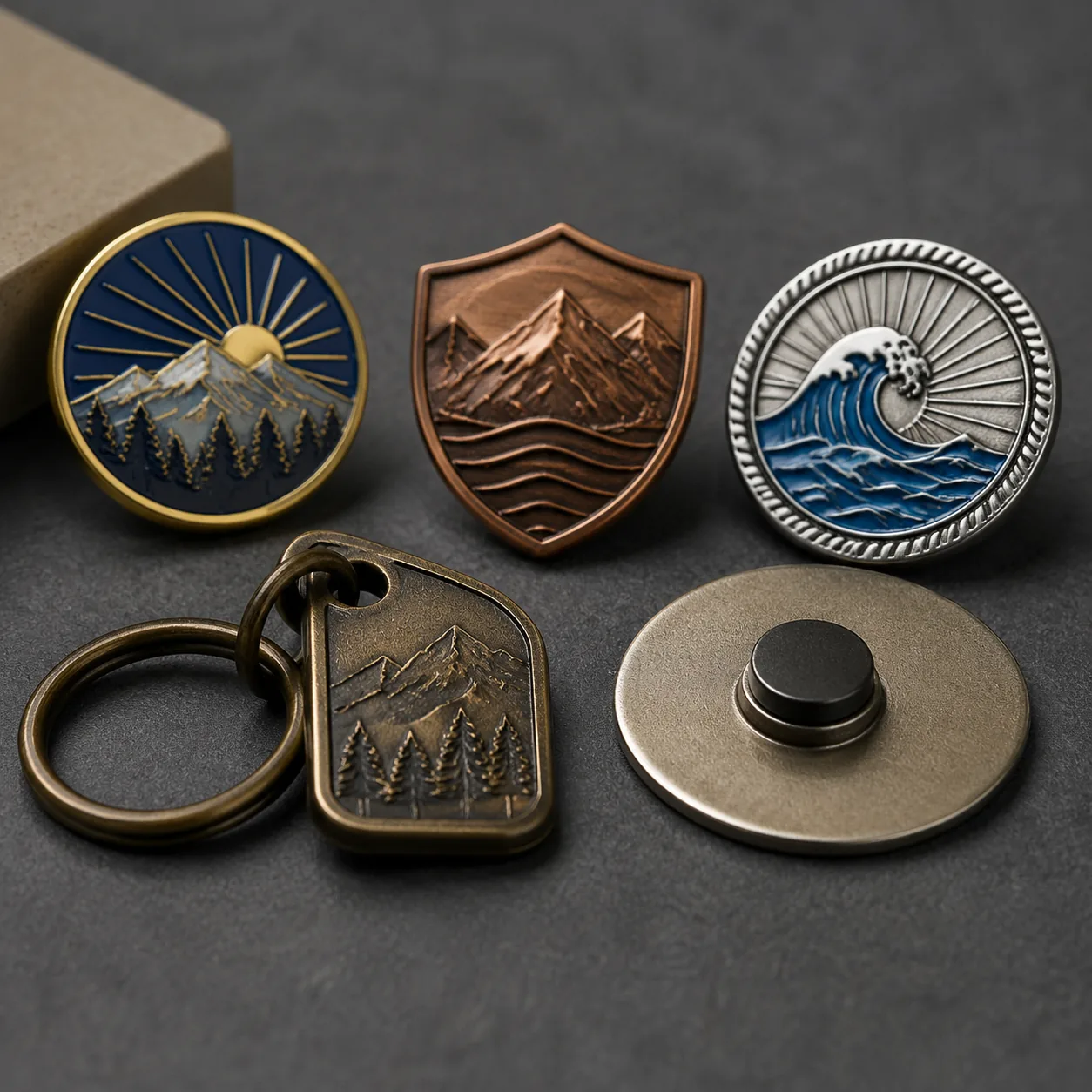
The pin that gets approved fastest often costs the most later
Most custom pin programs do not lose margin on quoted FOB alone. They lose it after approval, when a build that looked acceptable on a proof accumulates small production misses: warped bodies, inconsistent plating tone, low enamel fill, weak post attachment, card misalignment, or abrasion inside the export carton. In 2026 those misses are more expensive because launch windows are shorter, chargebacks are stricter, and rescue freight still carries a steep premium. A sourcing decision that saves only USD 0.04 to 0.10 FOB can add USD 0.35 to 1.20 landed once remake risk, split shipment fees, third-party inspection time, customer credits, and air replenishment are counted.
Across China, Vietnam, and other pin-production hubs, the recurring issue is rarely that the design is impossible. The issue is that the RFQ leaves too many variables open to factory interpretation. On custom metal pins, the highest-cost failures usually come from seven controllable areas: body construction, process-to-detail fit, plating stability, enamel quality, attachment hardware, protective packaging, and inspection rules that are too vague to enforce.
The practical fix is not to overspecify every order. It is to lock the few variables that repeatedly create claims. For most soft enamel, imitation hard enamel, die-struck, and photo-etched programs, that means measurable requirements for thickness, size tolerance, minimum line width, finish definition, post layout, fill standard, packout method, and acceptance criteria before tooling starts. Buyers who do this often pay a few cents more FOB and materially less in total landed cost.
1. Thin bodies and loose tolerances create false savings
The easiest way to win a quote is to reduce metal thickness, simplify hardware, or leave tolerances undefined. That is also how many pin programs become unstable. On a 30 to 35 mm soft enamel pin, dropping body thickness from 1.5 mm to 1.2 mm may save only USD 0.03 to 0.07 FOB, but the thinner body is more likely to distort during stamping, post soldering, polishing, and transit. If only 2% to 4% of the lot arrives with bent outlines, rocking profiles, or weakened post zones, the saving disappears.
For stamped iron or brass pins, a workable commercial standard is 1.2 to 1.5 mm for compact shapes up to 30 mm, and 1.5 to 1.8 mm for wider shapes, internal cutouts, danglers, or two-post layouts. At 40 to 50 mm, 1.5 mm should be treated as the floor; 1.8 mm is safer for irregular silhouettes, asymmetrical top-heavy art, or long horizontal forms. A realistic thickness tolerance is ±0.15 mm. Finished-size tolerance is usually ±0.25 mm on standard die-struck outlines and ±0.30 mm on irregular or multi-part assemblies. If the pin must fit a foam insert, blister cavity, or uniform-program template, size tolerance should be written on the PO rather than assumed.
Detail limits matter as much as thickness. On stamped construction, raised metal lines below 0.20 mm and recessed enamel cells below 0.50 to 0.60 mm sharply increase ridge weakness, color bleed, and touch-up labor. Fine lettering under 4 pt equivalent, halftone textures, or isolated color islands are often better suited to photo-etched brass at 0.8 to 1.0 mm. That switch can add roughly 5 to 8 sampling days and USD 0.05 to 0.12 FOB, but it often cuts rejects by several percentage points and prevents repeat-tool arguments later.
| Spec area | Low-risk buyer spec | Typical failure if omitted | 2026 FOB effect |
|---|---|---|---|
| Body thickness | 1.5 mm ±0.15 mm for a 30 to 40 mm stamped pin | Warping, weak weld zone, edge distortion | Usually adds USD 0.03 to 0.08 versus 1.2 mm |
| Finished size | ±0.25 mm standard; ±0.30 mm irregular or multi-part | Misfit on backing card, foam insert, or display tray | Minimal unit impact, high rework avoidance |
| Minimum detail | Metal line 0.20 mm minimum; enamel cell 0.60 mm preferred | Color bleed, weak ridges, high touch-up labor | Can cut rejects by 2 to 6 percentage points |
| Post layout | Two posts above 32 mm unless shape is compact and balanced | Rotation, sagging, bent-post complaints | Adds about USD 0.03 to 0.06 |
| Side profile approval | Approved edge/profile before tool release | Factory optimizes to lowest metal use, not stability | No meaningful unit increase |
2. Wrong process selection turns artwork complexity into scrap
Many pin failures start before tooling, when the chosen process does not match the artwork. Die-struck soft enamel works well for bold shapes, readable borders, and medium-detail fills. It works poorly for micro text, dense line art, or multiple isolated islands that require repeated hand filling. Buyers often compare only unit price, but process mismatch quietly raises defect rate, sorting time, and remake probability.
As a practical guide, stamped soft enamel is the commercial default for 20 to 45 mm pins with 1 to 6 colors and minimum metal lines around 0.20 mm. Imitation hard enamel suits premium retail when a flatter face and higher scratch resistance matter; expect a typical adder of USD 0.08 to 0.20 per piece and 2 to 4 extra production days because of additional fill and polishing steps. Photo-etched brass is better for fine detail, tight lettering, and cleaner line repeatability, but usually runs 0.8 to 1.0 mm thick and can add 5 to 10 calendar days including sample approval. Zinc alloy die casting becomes more suitable above roughly 45 mm, for 3D relief, deep undercuts, or openwork shapes that would be unstable in stamped iron.
A concrete example: a 38 mm badge with a mascot, 7 color breaks, and text strokes near 0.15 mm may quote attractively as soft enamel iron, but that build often produces overflow, thin ridges, and manual touch-up variation. Rebuilding the same design as photo-etched brass or simplifying the art to 5 color areas and 0.25 mm minimum lines typically improves first-pass yield far more than negotiating another USD 0.02 off the original quote.
3. Plating that looks acceptable on day 0 can fail by week 4
Plating defects are expensive because they often appear after unpacking, carding, or a few weeks in storage. Buyers frequently approve finish by color alone, but the real variables are polishing consistency, base-metal cleanliness, porosity, coating thickness, and storage protection. Decorative pin plating is not jewelry grade unless the order explicitly says so, so a PO that says only gold or black nickel leaves too much risk in the system.
For promotional pins, common decorative finishes such as nickel, imitation gold, imitation silver, copper, and black nickel are typically around 0.03 to 0.05 micron. That is normal commercial plating for event, gift, and short-cycle retail use, but it is not strong protection against tarnish in humid storage, coastal distribution, or frequent wear. If better cosmetic stability is required, the order should add support controls: individual sealed polybags, low-humidity carton storage, anti-tarnish paper where compatible, and clear e-coat or lacquer if the finish allows it. As a process-control screen, many buyers specify neutral salt spray testing at 24 hours for standard decorative finishes and 48 hours for higher-humidity programs. This is not a wear guarantee, but it is a useful filter for weak lots before shipment.
Reorders fail here as often as first orders. Bright gold, imitation gold, matte gold, antique gold, and dyed antique gold are different finishes with different color cast and wear behavior. If the approved sample is not tied to a finish name, plated sample photo, and factory reorder code, the next lot can arrive visibly different even when the supplier believes it matched the PO. In licensed merchandise and brand-retail channels, that mismatch is commonly treated as a major defect, not normal variation.
The cost to tighten plating control is modest. Better finish definition, anti-tarnish protection, or individual bagging usually adds only USD 0.02 to 0.06 FOB. A finish mismatch discovered after carding or retail allocation can trigger resorting, delayed launch, or markdowns that cost several times more per unit.
4. Enamel variation becomes obvious the moment units are lined up
Most enamel failures are not dramatic. They are low-fill pockets, pinholes, dust inclusions, splash-over at borders, under-cured color, or uneven gloss that becomes obvious once 50 or 500 units are viewed together. At the factory table they may pass at arm's length. In museum retail, fandom merchandise, corporate gifting, and licensed programs, they are often the first defects buyers notice.
For soft enamel, a workable standard is fill depth approximately 0.05 to 0.10 mm below the raised metal ridge, with no exposed base metal in intended color areas and no obvious splash-over visible from 30 cm under neutral indoor light of roughly 500 to 1000 lux. For imitation hard enamel, buyers should specify a flat polished face, smooth metal-to-fill transition, and no visible front-face pits, sink marks, or crater edges at 30 cm. Pantone matching should also be treated realistically: on custom pins, slight lot-to-lot variation occurs, but the approved sample should define the acceptable family and any no-substitute colors, especially for corporate brand tones.
Artwork has a direct effect on defect rate. Isolated fill cells under 0.60 mm, long narrow channels, and crowded text close to borders sharply increase hand-fill variation and touch-up time. In 2026 labor conditions, it is costly to assume a factory can repair every small cavity cleanly. On complex designs, widening one line to 0.25 mm, deleting one tiny color island, or combining two similar shades often lowers reject rate more effectively than trying to push unit price down another cent or two.
The process should match the sales channel. Soft enamel with normal cosmetic variation is often acceptable for event giveaways or campaign use. For collector items, resale, or premium gift-store placement, front-face cosmetic rules should be tightened during sampling because once the lot is plated and filled, cosmetic recovery becomes slow and expensive.
5. Weak posts, wrong clutches, and vague magnet specs create field failures
A pin can pass outgoing inspection and still fail in use because the attachment spec was too loose. Common issues are single-post rotation on wide shapes, weak solder on thin bodies, butterfly clutches that release too easily, and magnets with inadequate holding force for the actual substrate. These failures generate the most friction because they surface after delivery, when replacement cost is highest and evidence is harder to trace.
For pins above roughly 32 mm in width or height, two posts are usually the safer standard unless the shape is compact and balanced. Standard post diameter is commonly 0.9 to 1.2 mm. Where the pin must align with a printed backing card, EVA insert, or clamshell cavity, post-location tolerance should normally be held to ±1.0 mm. On long, offset, or top-heavy designs, post spacing should appear on the approved art file, not be left to factory judgment.
Clutch choice should match actual use. Standard butterfly clutches are acceptable for low-cost events and bulk promotions. For resale, daily wear, uniforms, or premium gifting, rubber clutches, jewelry clutches, or locking backs usually reduce downstream loss enough to justify the upgrade. Typical 2026 FOB adders are about USD 0.01 to 0.03 for rubber clutches, USD 0.03 to 0.08 for jewelry clutches, USD 0.05 to 0.12 for locking backs, and USD 0.08 to 0.25 for magnet sets depending on magnet size and pair count.
Magnets need the clearest specification. A set that holds through a light T-shirt may fail on a blazer, tote panel, or rigid gift-box wall. Buyers should require substrate guidance and, on important programs, a simple pull-and-twist verification during in-line QC on the actual material or a close equivalent. That adds little paperwork and prevents a frequent source of post-delivery complaints.
- Use one post only for compact shapes under about 25 mm with low rotation risk
- Use two posts for shapes above 32 mm, off-center layouts, or top-heavy silhouettes
- State clutch type by exact name and finish, not only "standard back"
- Set post-location tolerance at ±1.0 mm when card or insert alignment matters
- Require pull-and-twist checks for posts or magnets during in-line QC
6. Packaging is part of quality control, not a separate afterthought
Pins are easy to manufacture correctly and easy to ship badly. Decorative plating, polished raised metal, chains, and sharp cutouts all scuff, snag, or deform when packed too tightly. Many buyers treat packaging as a separate line item, then discover that the damage occurred after production, inside the export carton. That is costly because the supplier may argue that the product itself met specification before packout.
For simple soft enamel pins in bulk promotional use, one piece per polybag is often sufficient. For polished imitation hard enamel, multi-piece sets, double-post pins, danglers, or retail presentation programs, that is often not enough. Card mounting, tissue or glassine separation, EVA tray, blister cavity, or compartment inner-box packing can add roughly USD 0.05 to 0.30 FOB per unit depending on format, but those methods prevent scratches, bent posts, tangled chains, and crushed clutches that would otherwise require rework after receipt.
Inner-pack density matters as much as unit pack type. A common low-cost standard is 50 pieces per bag and 500 pieces per export carton, but that compression can be too aggressive for larger pins or premium finishes. If the face is highly polished or the item includes moving parts, specify reduced inner-pack count, directional packing, or partitioned trays. For e-commerce programs, packout should be reviewed against parcel handling rather than palletized ocean freight alone. A pin that survives a master-carton drop can still arrive scuffed after single-parcel dispatch.
7. Clear AQL rules, realistic lead times, and MOQ tiers prevent repeat cost
When a shipment is challenged, the decisive document is not the sample photo. It is the agreed inspection rule. Without AQL levels, defect definitions, reference samples, and measurable tolerances, every claim becomes subjective. That slows settlement, weakens recovery leverage, and often ends in a partial credit instead of a clear accept-or-reject decision.
For most commercial custom pin programs, AQL 2.5 for major defects and 4.0 for minor defects is workable, with critical defects at zero acceptance. Major defects typically include wrong plating family, wrong approved color family, exposed base metal on the visible face, broken or missing attachment hardware, size outside stated tolerance, missing component, or post solder failure under normal handling. Minor defects typically include light backside scratches, polishing marks not visible from the front at 30 cm, or slight backside discoloration that does not affect use. Premium retail and licensed programs should tighten earlier by moving front-face enamel pits, visible plating mismatch, or obvious card misalignment into the major category.
Lead times should also be written realistically. Standard pre-production samples usually take 7 to 12 calendar days after artwork approval and deposit. Mass production commonly runs 10 to 18 days depending on quantity, process, and packaging complexity. Photo-etching, custom backer cards, retail gift boxes, or plating changes can push total production to 18 to 25 days before transit. If a third-party inspection is required, add 1 to 3 days. If a remake would miss a launch, the RFQ should require in-line photos or an interim approval checkpoint rather than relying only on final inspection.
MOQ structure matters because the unit-cost curve is not linear. On a typical 30 mm soft enamel iron pin with 4 colors, 1 butterfly clutch, and 1 piece per polybag, the sharpest FOB drop is usually between 100 and 500 pieces, then a smaller drop from 500 to 1,000, with pricing flattening from about 3,000 upward. As a rough 2026 FOB guide, 100 pieces often lands around USD 0.85 to 1.40 each, 300 pieces around USD 0.58 to 0.95, 500 pieces around USD 0.48 to 0.82, 1,000 pieces around USD 0.38 to 0.68, and 5,000 pieces around USD 0.26 to 0.49. Brass, imitation hard enamel, custom carding, locking backs, magnets, or premium packout typically add USD 0.08 to 0.35 per piece depending on size and format.
Before releasing any order, lock the specification in writing: process type, base metal, finished size, thickness, plating name, finish reference, enamel standard, post layout, clutch type, packaging method, sample reference, AQL rule, and lead time. Add approved photos showing front, back, side profile, and final packout. The most useful corrective action is simple: take the last order that created claims, identify the exact failure mode that generated cost, and rewrite that issue as a measurable requirement on the next RFQ. That is how buyers stop paying for the same manufacturing mistake twice.
Have a project? Send your artwork and target quantity and we’ll reply with a detailed quotation within 12 working hours.
Ready to get this made?
Send your sketch, target quantity and ship-date. Detailed quotation in 12 hours.



