Custom Pin Costs and Lead Times by Order Size
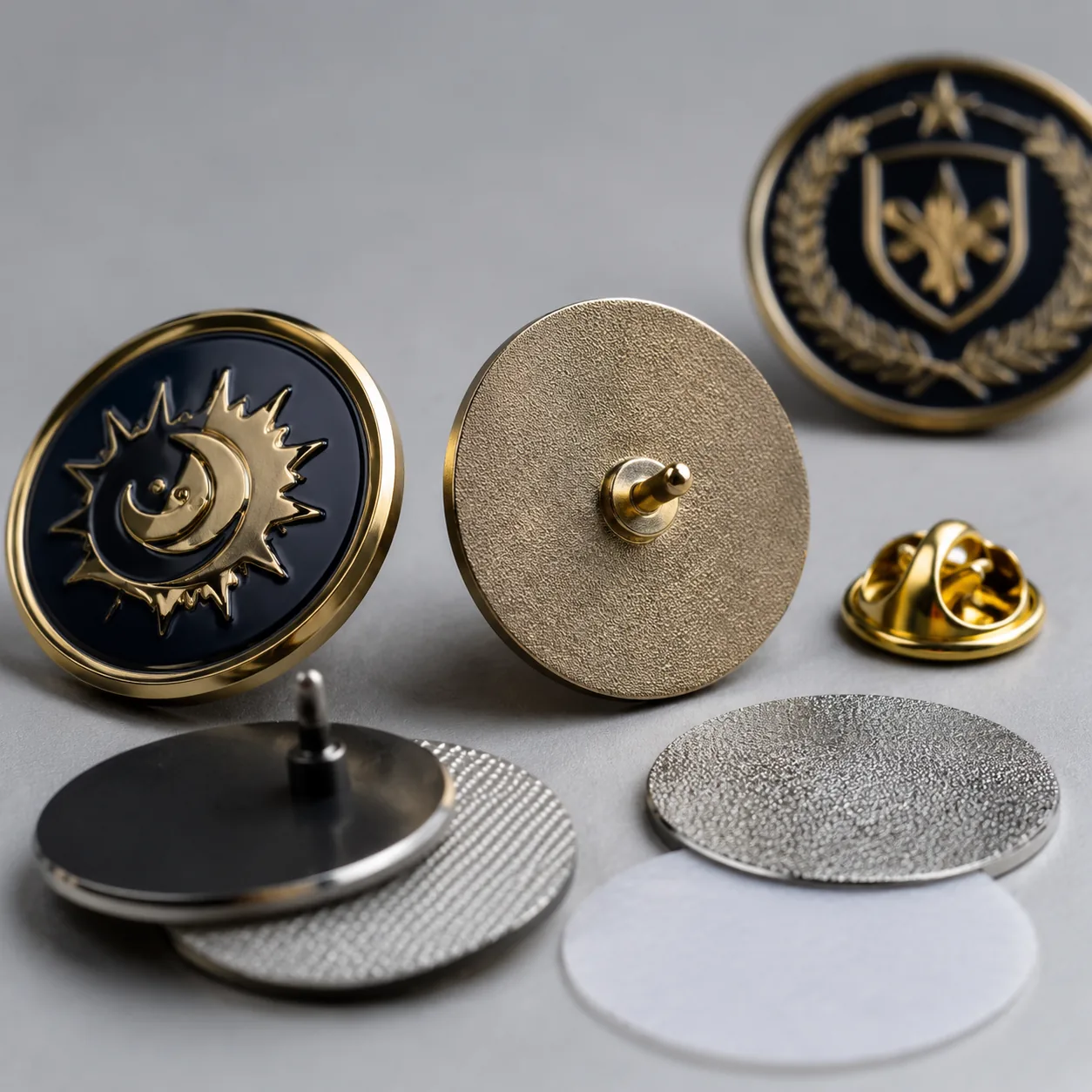
Why the same pin can cost $0.38 or $2.10
Two custom pins can look nearly identical in artwork and still price very differently once a factory quotes the actual build. A 25 mm soft enamel pin with one color, black nickel plating, and a standard butterfly clutch often sits near the low end of the market. A 35 mm hard enamel pin with cutouts, dual plating, and a printed backing card moves into a much higher labor and finishing band. The biggest pricing mistake is comparing a single total without separating unit price, tooling, samples, packing, and freight.
For standard custom lapel pins, a realistic FOB China range is often $0.35 to $1.80 per piece, with premium or sculptural builds reaching higher. Tooling is usually separate: a simple zinc alloy mold is commonly $40 to $120, while deeper relief, multi-level artwork, or oversized designs can run $120 to $300+. The most reliable savings usually come from simplifying the build before artwork is approved, not from trying to shave a few cents off an already complex spec.
As a practical benchmark, many factories build enamel pins with a finished thickness around 1.2 to 1.5 mm, while heavier cast or 3D styles may run 1.6 to 2.2 mm. Small decorative pins can be kept within about ±0.3 mm on overall size if the die and polishing are controlled, but thin cutouts and micro text require tighter process discipline and more scrap allowance. If a supplier cannot explain what is driving the quote, the pricing is probably padded for uncertainty rather than tied to production reality.
The four cost drivers that move the quote fastest
Most pin quotes are driven by four variables: metal area, process time, rejection risk, and packing. Larger surface area increases alloy usage, polishing time, and plating bath load. Fine linework, recessed text, and mixed finishes increase inspection time. Packaging adds labor, especially when each unit needs a card insert, pouch, or barcode label. If you want a lower price without damaging the product, simplify the build rather than asking the factory to “optimize” it later.
- Increase cost: larger diameter or height, especially above 35 mm
- Increase cost: 5+ enamel colors or mixed fill types
- Increase cost: hard enamel with flush polishing and edge leveling
- Increase cost: antique plating, dual plating, or sandblasted texture
- Increase cost: epoxy dome, glitter, glow, or transparent fills
- Lower cost: one plating color, one-side artwork, standard clutch back
A 25 mm stamped soft enamel pin usually uses about 1.2 to 1.6 mm zinc alloy thickness and a straightforward die-struck cavity. A 40 mm badge with cutouts and a backstamp needs more metal, more polishing, and more handling. Decorative electroplating is often specified around 0.03 to 0.10 microns for appearance layers, but the exact build depends on finish, chemistry, and whether the factory is using nickel, brass, black nickel, antique silver, or dual plating. If the quote does not distinguish between the metal base, finish, and enamel process, it is not yet an apples-to-apples comparison.
MOQ tiers: what changes at 100, 300, and 1,000 pieces
MOQ is not just a sales number; it determines how setup and inspection time are amortized. At 100 pieces, the unit price stays high because mold prep, artwork review, plating setup, and color matching are spread across very few parts. At 300 pieces, the unit price usually drops enough to matter. At 1,000 pieces, factories can usually run more stable batches, reduce line changeovers, and offer better packing options without forcing extra labor onto every unit.
| MOQ tier | Typical FOB unit range | Common tooling/sample setup | Best for | Trade-off |
|---|---|---|---|---|
| 100 pcs | $0.85-$2.10 | Tooling $40-$120; sample $25-$60 | Pilot runs, internal approvals, small events | Highest per-piece cost, limited negotiation room |
| 300 pcs | $0.55-$1.45 | Tooling $50-$150; sample $20-$50 | Promotions, distributor orders, seasonal launches | Still sensitive to artwork complexity |
| 1,000 pcs | $0.35-$1.00 | Tooling $60-$200; sample $15-$40 | Retail, resale, repeat SKUs, larger campaigns | More cash tied up, more inventory risk |
| 5,000+ pcs | $0.25-$0.70 | Tooling $80-$300+; sample often waived or credited | National promos, licensed programs, ongoing demand | Longer queue time, stricter spec control |
The minimum useful MOQ is not always the cheapest MOQ. If you expect a reorder, it is often smarter to pay slightly more for a 300-piece first run with locked tooling and archived color references than to split the job into several tiny batches with inconsistent plating. For buyers with uncertain demand, MOQ should be set by launch risk and reorder confidence, not by the first number a salesperson gives you.
A good sourcing benchmark is to ask for tiered pricing at 100, 300, and 1,000 pieces on the exact same spec. That exposes the real curve between setup-heavy and run-efficient production. If the 300-piece tier drops by more than about 20% from the 100-piece tier, the job is mostly setup-driven. If the 1,000-piece tier barely improves, the design is probably labor-intensive and needs simplification before you chase larger quantities.
Lead time: where the days go
A normal custom pin timeline is usually 12 to 25 days after artwork approval, depending on process and quantity. A typical breakdown is 1 to 3 days for file check and quote confirmation, 3 to 7 days for mold making and first sample, 5 to 12 days for production, and 1 to 3 days for final packing and outbound booking. If the job includes unusual plating, moving parts, or tight color matching, add time for correction loops.
Rush orders are possible, but they are never free. A factory can compress production by prioritizing your job, switching lines, or skipping parallel batching, but the usual cost is a rush surcharge of about 10% to 30% and a higher chance of minor cosmetic variation. If the delivery window matters more than savings, ask for both standard and expedited timelines on the same spec sheet so the trade-off is visible before you approve the PO.
The fastest jobs are usually simple soft enamel or printed epoxy pins with one finish, limited color count, and no special packing. The slowest are hard enamel with tight flush polishing, dual plating, custom backstamps, or layered attachments. As a rule, every extra process step adds one of two things: queue time or inspection time. Buyers often underestimate both.
Spec choices that change both price and timeline
Some specifications hurt cost far more than buyers expect because they create extra handwork, not just extra material. Hard enamel, for example, requires filling slightly above the metal edge and then polishing flush, which adds cycle time and makes micro details harder to preserve. Soft enamel is usually cheaper and faster, but the recessed enamel surface is more exposed to wear, so it is not always the right choice for premium retail or high-touch corporate gifting.
- Use soft enamel when the design has bold lines and you want lower cost
- Use hard enamel when the buyer expects a smoother, jewelry-like surface
- Avoid transparent enamel if exact color consistency is critical
- Use one plating finish if the design does not need contrast accents
- Avoid cutouts under 1.0 mm unless you accept breakage risk
- Use standard butterfly or rubber clutches unless the back is visible
Artwork tolerances matter too. A practical target for enamel pins is a minimum line width of 0.2 to 0.3 mm, with text ideally no smaller than about 4 pt if you want clean fills and readable edges. For ultra-small copy, many factories prefer 5 pt or larger because plating buildup and enamel meniscus can blur the interior of letters. Open spaces narrower than 0.4 mm often create fill or polish issues, especially on hard enamel. The tighter the detail and the smaller the internal spaces, the more you should expect the factory to charge for setup risk and inspection time.
If you need a premium look, ask whether the factory can hold a color consistency target against a Pantone reference rather than a vague “match it closely” instruction. Many suppliers will quote a visual match only, which is fine for giveaways but risky for brand-critical collections. When brand color accuracy matters, specify the reference, acceptable deviation, and whether a pre-production sample is required before mass production.
Price drivers by build type
Not every pin is priced the same way, even when the outer dimensions match. Stamped soft enamel is usually the lowest-cost route because the cavities are straightforward and the fill process is efficient. Hard enamel adds polishing and inspection time, while cast 3D pieces add sculpting complexity and slower finishing. If a buyer asks for a sculptural look inside a giveaway budget, the factory must either simplify the geometry or the price will rise quickly.
| Build type | Typical FOB range | Typical lead time | When it fits |
|---|---|---|---|
| Stamped soft enamel | $0.35-$1.10 | 12-18 days | Giveaways, events, simple branding |
| Hard enamel | $0.55-$1.80 | 15-25 days | Retail, premium gifts, polished look |
| 3D cast pin | $0.90-$2.80 | 18-30 days | Mascots, sculptural logos, collectibles |
| Printed epoxy pin | $0.45-$1.30 | 10-18 days | Full-color art, fine gradients, faster turn |
Printed epoxy can be a useful cost-control option when artwork is too detailed for die striking, but it is not a perfect substitute. The surface is smooth and colorful, yet it can feel less premium than metal-relief fills and may be more vulnerable to edge wear if coating thickness or curing is inconsistent. If your brand wants tactile metal weight, do not switch to print just to save a few cents. For many buyers, the best compromise is to reserve printed epoxy for intricate promotional artwork and keep hard or soft enamel for hero SKUs.
3D cast pins deserve special caution because their pricing is often misunderstood. The model may look simple on screen, but sculpting, mold cut, polishing, and plating of raised surfaces can add days and drive scrap higher than a flat enamel design. If your concept relies on depth, ask the factory whether the relief can be reduced to 0.3 to 0.6 mm steps instead of full sculptural contours. That alone can cut cost without losing the visual story.
Packaging and freight: the hidden part of landed cost
Many buyers focus on unit price and ignore packaging until the PO is already approved. A simple polybag is the cheapest option, while a paper backing card, velvet pouch, or blister card adds material, labor, and packing time. For small pins, packaging can add roughly $0.03 to $0.60 per unit, which looks minor until you multiply it by a large campaign or a low-margin distributor order.
Freight is the other hidden lever. A 1,000-piece pin order may be only a few kilograms net weight, but carton volume, export packing, and consolidation timing can still move the shipping bill more than the product bill on small orders. If delivery is not urgent, grouping pins with keychains, magnets, or patches in a mixed promo set can reduce per-item freight cost, but only if carton dimensions, labels, and pack counts are locked early enough to avoid rework.
For landed cost planning, the practical question is not whether freight is “cheap” but whether it is predictable. Air freight on a small order can exceed the ex-factory value, while ocean consolidation may save money but add 7 to 14 extra days before departure and more variability in transit. If you are comparing suppliers, ask whether their FOB quote includes export cartons and standard master packing, and whether the packing count is 100, 200, or 500 pieces per carton.
What to ask for before you approve the PO
The cleanest way to control cost and schedule is to force the quote into a comparable format before you issue the purchase order. Ask the supplier to separate tooling, sample, unit price, packing, and freight, and to state the exact lead time from artwork approval rather than from the date of inquiry. You should also request the plating finish, enamel type, backing type, and approved tolerance on each critical dimension so there is no room for post-order interpretation.
- Ask for FOB unit price, mold fee, sample fee, and packing fee separately
- Confirm lead time in days after artwork approval and sample approval
- Lock size tolerance, usually within ±0.3 mm for small pins
- Specify plating finish and whether dual plating is allowed
- Confirm the attachment type and any anti-rotation feature
- Request a pre-production sample when the order is above your risk threshold
If your supplier cannot explain why one SKU is 40% more expensive than another, that is a warning sign. A good factory should be able to point to measurable causes such as larger metal area, tighter polishing requirements, extra enamel colors, special coatings, or more intensive packing labor. A disciplined RFQ should also ask for defect tolerance guidance, such as whether the factory works to AQL 2.5 for critical visual defects and AQL 4.0 for minor cosmetic marks, or another agreed inspection standard.
For quality control, keep the acceptance criteria simple and measurable. Define the approved artwork, Pantone references, plating finish, enamel fill style, and whether minor pinholes or micro-scratches are acceptable under normal inspection lighting. This matters because some factories will otherwise treat “good enough” differently from your team. The more specific the approval path, the fewer surprises you will have at shipment.
What to do next
Start with one line of defense: clean up the spec sheet before comparing quotes. Put size, thickness, plating, color count, attachment, packaging, target delivery date, and acceptance tolerance into one document, then ask for pricing at 100, 300, and 1,000 pieces so you can see the real cost curve. If you already have artwork, ask the factory to flag any features that will increase cost or delay production, especially micro text, cutouts, layered plating, or special coatings.
If the order is time-sensitive, decide now whether you want the cheapest acceptable pin or the most predictable delivery. Those are not always the same choice, and the correct answer depends on launch date, margin, and how much inventory risk you can absorb. For buyers sourcing from China, the fastest path to a reliable order is usually a tight RFQ, one approved sample, and a final spec lock before mass production begins.
In practice, the best procurement outcome is a pin spec that a factory can quote without guessing. When the artwork, finish, attachment, and packing method are all locked early, you get cleaner pricing, fewer revisions, and a shorter path from sample to shipment. That is what turns a vague pin idea into a repeatable purchase order.
Have a project? Send your artwork and target quantity and we’ll reply with a detailed quotation within 12 working hours.
Ready to get this made?
Send your sketch, target quantity and ship-date. Detailed quotation in 12 hours.



