Custom Patch Pricing: Cost Drivers, MOQ Tiers and Lead-Time Ranges
Why Patch Quotes Vary So Widely
A buyer may ask for “5,000 logo patches” and receive FOB China prices from USD 0.16 to USD 1.40 per piece. That spread is rarely explained by margin alone. It usually reflects different assumptions about patch type, finished size, embroidery coverage, backing, border method, packing, sampling and inspection level.
The commercial risk is not overpaying by USD 0.03 per patch. The larger risk is quoting a distributor, apparel brand or event organizer before construction and lead time are fixed. A patch that performs on a denim jacket may curl on a thin jersey. A quote based on 50 percent embroidery coverage will not hold if the final artwork needs full thread coverage, hook-and-loop backing and a heat-cut silhouette.
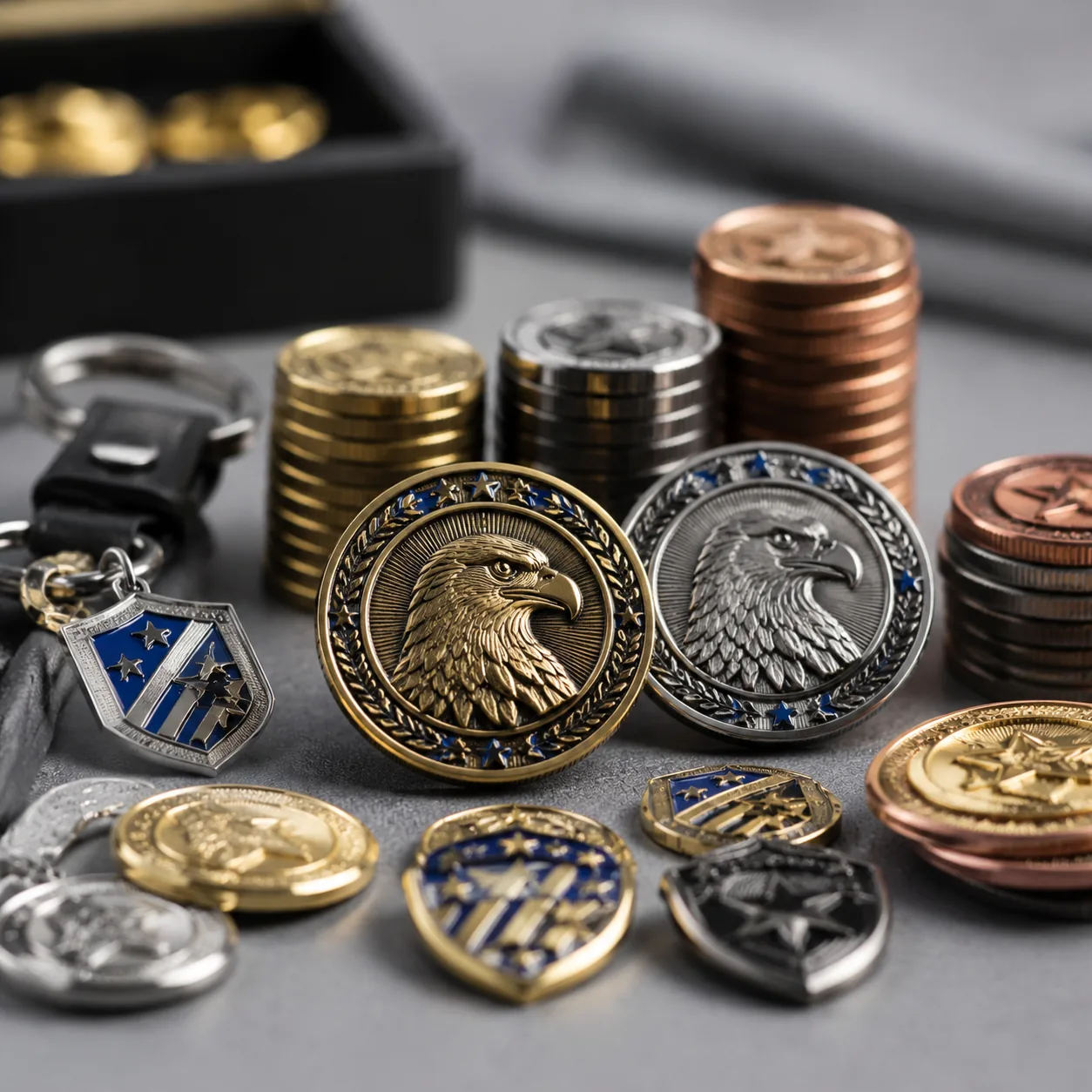
For mixed promotional programs, patches are often treated as the simple item beside metal pins, coins, keychains or lanyards. They are simple only when the buyer controls the main variables early: process, size, coverage, backing, border, MOQ, packing, approval route and acceptable quality standard.
FOB Price Benchmarks by Patch Type
Patch pricing starts with the production process. Embroidered patches are usually the lowest-cost option for uniforms, clubs and general promotion. Woven patches cost more at small volumes but reproduce small lettering and tight line art more cleanly. Soft PVC patches require tooling, but they are durable for tactical, outdoor, luggage and workwear applications. Chenille patches suit varsity and fashion programs but are bulkier and slower to make.
The ranges below are planning figures for a 75 mm patch, standard individual OPP bag, no retail card, FOB China. They are not final quotes. Artwork complexity, thread changes, backing, border shape and packaging can move the unit price by 20 to 60 percent. For PVC, assume 2D soft PVC, up to 4 molded colors, 2.5 to 3.0 mm thickness and one recessed sew channel or flat back.
| Patch type and base spec | MOQ 100 pcs | MOQ 500 pcs | MOQ 1,000 pcs | MOQ 5,000 pcs | Bulk lead time after approval |
|---|---|---|---|---|---|
| Embroidered, 75 mm, 70-75% coverage | USD 0.65-1.15 | USD 0.32-0.58 | USD 0.24-0.42 | USD 0.16-0.28 | 10-16 working days |
| Embroidered, 75 mm, 95-100% coverage | USD 0.85-1.45 | USD 0.42-0.72 | USD 0.32-0.52 | USD 0.22-0.36 | 12-18 working days |
| Woven, 75 mm, heat-cut edge | USD 0.95-1.65 | USD 0.48-0.85 | USD 0.36-0.62 | USD 0.24-0.42 | 12-20 working days |
| Soft PVC, 75 mm, 2D, 4 colors | USD 1.35-2.40 | USD 0.78-1.35 | USD 0.58-0.98 | USD 0.38-0.68 | 15-24 working days |
| Chenille, 75 mm, felt base | USD 1.20-2.20 | USD 0.72-1.30 | USD 0.55-0.95 | USD 0.42-0.75 | 14-22 working days |
Check whether sample and tooling charges are included. Embroidered and woven sample setup is commonly USD 35-80 per design. PVC molds usually cost USD 80-180 for common 60-90 mm designs and can exceed USD 250 for large 3D relief, layered molds or very fine recessed details.
Size, Coverage and Detail Limits
Patch size does not price in a straight line. A 100 mm circle has about 78 percent more surface area than a 75 mm circle, but handling, trimming and packing time may be similar. This is why larger patches benefit more from volume than very small patches: material and machine time matter more as the surface area increases.
Embroidery coverage is one of the most important cost drivers. A twill-base patch with 50-75 percent coverage uses less thread, runs faster and stays lighter. A near full-coverage patch gives stronger color but adds stitch time, thread consumption and puckering risk, especially on thin bases. As a planning rule, increasing from 75 percent to full coverage can add USD 0.08-0.18 per piece at 1,000 pieces for a 75 mm patch.
Practical artwork limits should be set before sampling. Embroidered details generally need 0.8 mm minimum line width, 1.0 mm minimum gap between filled areas and 2.0-2.5 mm minimum block letter height. Woven patches can often hold 0.4-0.6 mm lines and 1.2-1.5 mm letters, but the surface is flatter and less dimensional. Soft PVC raised lines are normally safer at 0.6-0.8 mm minimum, with 0.3 mm color registration tolerance on small raised areas.
If the logo includes gradients, photo effects, tiny sponsor names or shadowing, do not force embroidery. A woven patch, sublimated print patch or printed woven label may deliver cleaner artwork at a lower landed cost.
Backing, Border and Application Costs
Backing affects unit cost, application method, return risk and sometimes the garment production route. No backing is cheapest when a garment factory will sew patches directly onto uniforms or apparel. Iron-on backing adds a heat-activated adhesive film and normally costs USD 0.03-0.10 per piece for a 75 mm patch, but it is not reliable on waterproof nylon, silicone-treated fabric, heavy stretch knits or garments exposed to industrial washing.
Hook-and-loop backing is common for tactical, workwear, school and event staff patches. Hook-only backing may add USD 0.08-0.20 per piece. A matched hook-and-loop set can add USD 0.12-0.35 because both sides must be cut, stitched and packed. Peel-and-stick adhesive is suitable for temporary events or packaging inserts, not permanent fabric use.
| Option | Typical added cost | Lead-time effect | Key specification note |
|---|---|---|---|
| Iron-on backing | USD 0.03-0.10 per pc | Usually 0-1 added day | Confirm heat press temperature, pressure and dwell time |
| Hook backing only | USD 0.08-0.20 per pc | Adds 1-2 days on small runs | State whether loop side is excluded |
| Hook and loop set | USD 0.12-0.35 per pc | Adds 2-4 days | Specify matched shape or square loop panel |
| Adhesive backing | USD 0.04-0.12 per pc | Usually 0-1 added day | Use for temporary attachment only |
| Merrowed border | Often included on standard shapes | Fastest for circles, ovals and rectangles | Not suitable for sharp internal corners |
| Heat-cut or laser-cut border | USD 0.02-0.08 per pc | Adds 1-3 days for complex shapes | Allow ±1.0 mm outer tolerance |
Border choice controls both edge durability and shape freedom. Merrowed borders are strong and clean on standard shapes, but they cannot follow sharp corners or narrow silhouettes. Heat-cut borders allow custom outlines, but protrusions below 2.0 mm wide are weak and may distort. For patches up to 100 mm, a normal finished-size tolerance is ±1.0 mm; larger patches often require ±1.5 mm.
MOQ Tiers and What Gets Cheaper
MOQ is not only a factory rule. It reflects setup time, digitizing, thread changes, cutting, backing preparation, inspection and packing. Practical custom patch MOQs often start at 100 pieces for standard embroidered or woven patches. PVC usually becomes more sensible at 300-500 pieces because tooling is fixed whether the buyer orders 100 or 5,000 units.
The biggest price drop normally occurs from 100 to 500 pieces because setup cost is spread across more units. The next meaningful drop is from 500 to 1,000 pieces, especially for woven and PVC patches. After 5,000 pieces, savings still exist, but they depend more on production batching, raw material purchasing, packing efficiency and whether multiple designs can share one production window.
- Use 100 pieces for paid samples, club orders, influencer drops or internal approval runs where speed matters more than unit price.
- Use 500 pieces when preparing a realistic distributor quote and spreading sample or mold cost over a moderate order.
- Use 1,000 pieces for launch kits, uniform programs or event merchandise where reorder specifications should be stable.
- Use 5,000 pieces or more when carton packing, barcode labels, AQL inspection and freight mode need to be optimized before quoting.
- Avoid very low-volume PVC orders if the mold charge makes the landed unit cost uncompetitive; compare woven or embroidered alternatives.
- Separate SKUs by design, size and backing because 1,000 total patches across 10 designs will not price like one 1,000-piece design.
Sampling and Production Timeline
A reliable lead time has several gates. Artwork review normally takes 1-2 working days when the buyer supplies vector AI, PDF, EPS or SVG files with Pantone references and a finished size in millimeters. If the factory must redraw a low-resolution JPG, simplify fine text or separate colors from a photo, add 1-3 working days before sampling.
Sample production usually takes 4-7 working days for embroidered and woven patches, 6-10 working days for PVC and 7-12 working days for chenille or multilayer constructions. Express sample transit commonly takes 3-6 calendar days depending on destination and customs clearance. Photo approval saves time, but it is weaker for judging edge stiffness, backing feel, thread sheen and PVC flexibility.
| Stage | Embroidered or woven | PVC | Common delay trigger |
|---|---|---|---|
| Artwork check and digital proof | 1-2 working days | 1-2 working days | Missing Pantone numbers, unclear size or non-vector logo |
| Sample setup and production | 4-7 working days | 6-10 working days | Small text, gradient effects or relief changes |
| Sample courier transit | 3-6 calendar days | 3-6 calendar days | Remote destination or customs hold |
| Buyer review and approval | 1-5 working days | 1-5 working days | Brand owner or multiple stakeholder approval |
| Bulk production | 10-18 working days | 15-24 working days | High coverage, hook backing or many SKUs |
| Final QC and packing | 1-3 working days | 2-4 working days | Barcode labels, retail cards or mixed assortments |
For a normal 1,000-piece embroidered order with physical sample approval, plan 22-35 calendar days from first usable artwork to FOB shipment. For PVC, plan 28-45 calendar days. Rush orders are possible when the buyer accepts photo approval, standard backing, limited SKUs and no retail packaging, but production queues and color-change time still set a practical floor.
Quality Standards Buyers Should Specify
Low patch prices often omit inspection detail. A basic factory check may remove obvious defects, but it may not follow a defined sampling plan. For promotional and uniform orders, a practical standard is AQL 2.5 for major defects and AQL 4.0 for minor defects, with zero tolerance for critical defects such as unsafe sharp attachments, wrong backing, contamination or mixed designs in sealed retail packs.
For embroidered and woven patches, inspection should cover finished size, thread color, loose threads, skipped stitches, edge fray, backing adhesion, heat-press performance and quantity per inner bag. Common size tolerance is ±1.0 mm up to 100 mm and ±1.5 mm above 100 mm. Thread should be matched against approved thread cards or Pantone targets, but buyers should understand that thread, twill, PVC and printed paper do not reflect color identically.
For PVC patches, add checks for thickness, surface bubbles, color bleeding, relief height, attachment alignment and flexibility. A typical thickness tolerance is ±0.3 mm for 2D PVC. Raised and recessed color registration should normally stay within ±0.3 mm on visible details. If the patch will be used outdoors, ask about UV resistance, phthalate compliance and colorfastness before mold approval, not after bulk production.
Packing, Freight and RFQ Checklist
The FOB unit price is only one part of landed cost. Individual OPP bags usually add USD 0.01-0.03 per piece. Barcode stickers add USD 0.01-0.04. Printed backing cards add USD 0.04-0.15 depending on paper weight, print colors and card MOQ. Retail header bags, hang holes and SKU labels should be priced before the buyer quotes a retail program.
Patch freight can be underestimated because small items become dense. A 75 mm embroidered patch may weigh 6-12 g depending on coverage and backing. A 75 mm PVC patch may weigh 18-35 g, so air freight becomes material on 5,000-piece orders. Ask for carton dimensions, gross weight and units per carton before approving the proforma invoice. A practical carton target is below 15 kg gross weight, with inner bags of 50 or 100 pieces for warehouse counting.
A strong RFQ makes assumptions visible. State whether the patch is a giveaway, a uniform component or a retail item; this controls process, backing, inspection, packing and sample route. If the patch must match enamel pins, lanyards, woven labels or printed cards, send those references in the same request so color and finish decisions are not made separately.
- Provide vector artwork and Pantone references, or state that factory color matching is acceptable.
- Specify finished size in millimeters, such as 75 mm wide, with ±1.0 mm tolerance.
- Request separate pricing for embroidered, woven and PVC if the best construction is not yet fixed.
- Define backing as no backing, sew-on, iron-on, hook only, hook and loop set or adhesive.
- Confirm whether sample cost, PVC mold cost, courier charge and bank fees are included or separate.
- Ask for FOB unit prices at 100, 500, 1,000 and 5,000 pieces by design, not only total order quantity.
- State bulk lead time in working days after sample approval and set inspection terms such as AQL 2.5 major and AQL 4.0 minor.
The most reliable patch quote is not the shortest one. It is the quote that states the construction, tolerances, approval path, packing, MOQ tiers and production window clearly enough for a buyer to quote the next customer without later discovering that the cheapest option was based on the wrong patch.
Have a project? Send your artwork and target quantity and we’ll reply with a detailed quotation within 12 working hours.
Ready to get this made?
Send your sketch, target quantity and ship-date. Detailed quotation in 12 hours.



