Custom Patch Backings: Specs That Prevent Field Failures
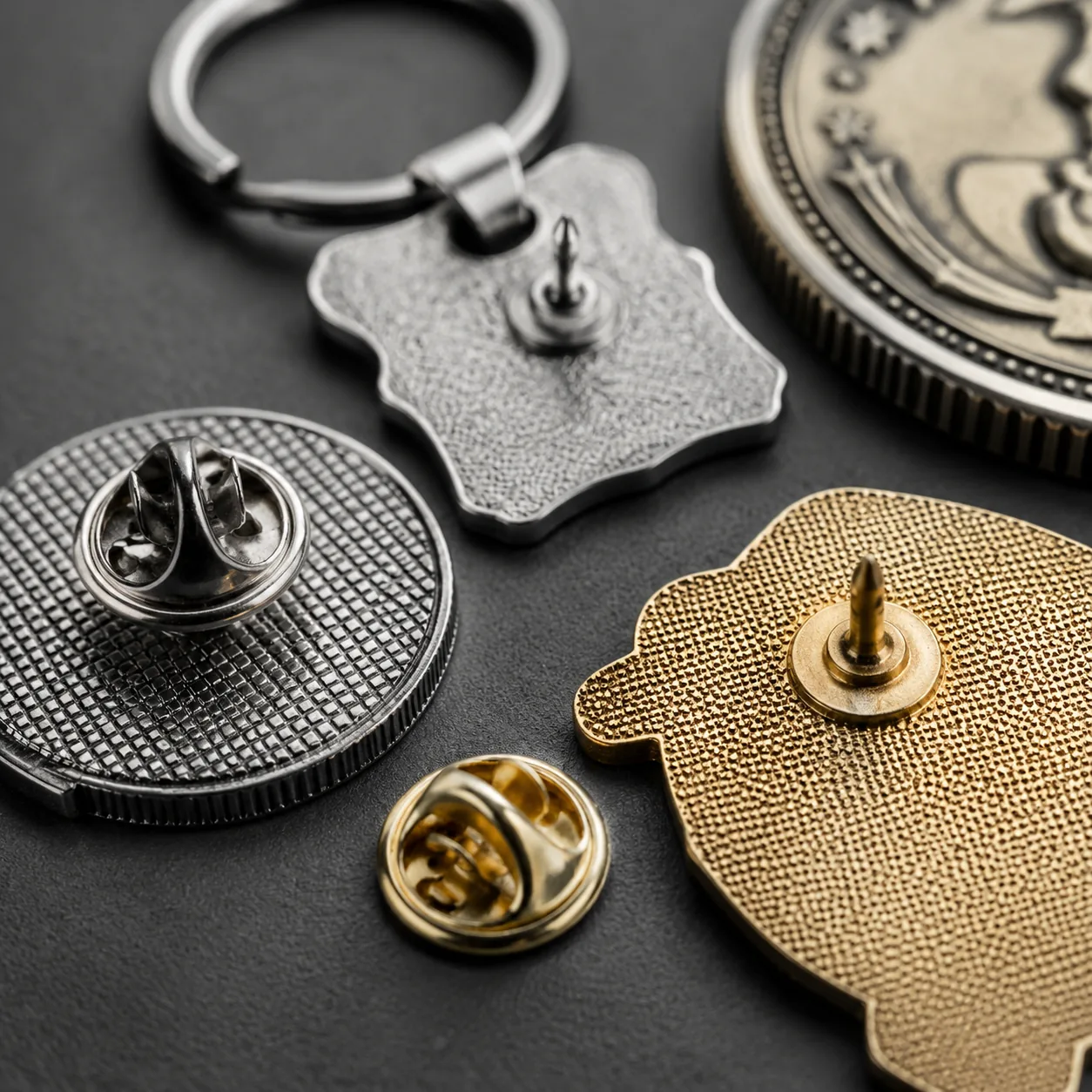
Why good-looking patches still fail in the field
A patch can pass artwork approval, thread color approval, and packing inspection, then fail after delivery because the backing was treated as a minor option. The usual claims are operational, not decorative: iron-on patches lift after one wash, hook-and-loop patches curl at the corners, adhesive patches leave residue, or sew-on patches feel too rigid on lightweight fabric. These failures usually come from backing selection, lamination, heat-press conditions, or missing application tests.
For B2B buyers, backing should be locked before sampling because it changes total thickness, edge stiffness, garment compatibility, carton weight, sewing labor, and unit cost. A 75 mm embroidered patch with dense thread coverage and hook backing can be more than 3.0 mm thick; the same artwork as a woven sew-on badge may be under 1.0 mm. That difference matters on caps, sleeve pockets, tactical panels, children’s apparel, and retail cards.
The figures below are practical sourcing ranges for embroidered, woven, chenille, and PVC patches from Yiwu and nearby supply chains. Exact values still depend on artwork size, thread coverage, border type, backing brand, packing method, and whether the buyer supplies the final garment fabric for testing.
Choose the backing by use case, not habit
Sew-on backing is the most reliable choice for workwear, uniforms, caps, bags, and any patch expected to survive repeated washing. It has no heat-activated film, so it remains flexible and lets the garment factory control stitch type and seam path. The trade-off is sewing labor. On small orders, sewing cost can exceed the patch cost, especially on curved cap panels or thick bags.
Iron-on backing uses hot-melt adhesive film laminated to the reverse side, typically 80 to 160 microns before pressing. It is suitable for retail badges, school patches, hobby use, and light cotton garments. It should not be the only attachment method for DWR-coated softshell, rainwear, fleece, elastic sportswear, leather, silicone-treated fabric, or garments washed above 40 degrees Celsius. For washable apparel, iron-on plus perimeter stitching is safer than iron-on alone.
Hook-and-loop backing is used for removable patches on tactical vests, security uniforms, bags, flight suits, and event staff apparel. It adds bulk, cost, and an extra QC step because the hook side, loop side, and patch construction all need inspection. Self-adhesive backing is different: it is a temporary pressure-sensitive adhesive for packaging, notebooks, product displays, or event kits. It is not a washable garment attachment method.
| Backing type | Best use | Typical added thickness | Typical FOB add-on | Avoid when |
|---|---|---|---|---|
| Sew-on | Workwear, caps, uniforms, canvas bags | 0.0 to 0.2 mm | USD 0.00 to 0.03 per pc | Buyer needs no-sew consumer application |
| Iron-on hot melt | Retail patches, school badges, cotton twill | 0.08 to 0.16 mm | USD 0.03 to 0.08 per pc | Fabric is coated, elastic, textured, or heat-sensitive |
| Hook-and-loop | Tactical patches, removable name badges | 1.8 to 3.2 mm | USD 0.12 to 0.45 per pc | Low-profile retail presentation is required |
| Self-adhesive | Temporary promo, packaging, display boards | 0.10 to 0.25 mm | USD 0.04 to 0.12 per pc | Patch must survive washing, sweat, or abrasion |
| Plastic backing sheet | Flatter embroidered reverse, added body | 0.15 to 0.30 mm | USD 0.02 to 0.06 per pc | Soft hand feel is more important than structure |
RFQ specifications that remove backing ambiguity
A usable RFQ should name the backing material, final application surface, and performance target. Writing “iron-on backing” is not enough. Low-temperature film, standard garment film, and higher-bond industrial film have different press windows and different risks. For most embroidered patches on cotton twill, a practical starting specification is 150 degrees Celsius, 15 seconds, medium pressure, then 24 hours conditioning before peel or wash evaluation.
For hook-and-loop patches, specify whether the quote includes hook side only, loop side only, or both sides as a matched set. Many disputes start because the buyer expects both sides, while the factory quotes only hook attached to the patch. For removable uniform patches, a clear specification is: hook side stitched to patch, loop side supplied loose, loop cut 2 to 3 mm larger than the patch outline so the garment factory has a stitching allowance.
For sew-on patches, define border type and sewing clearance. A merrowed border normally adds 2.5 to 4.0 mm edge width and works best on circles, rectangles, shields, and simple shapes. A laser-cut border is better for irregular artwork but can feel sharper if the base fabric is stiff. Dimensional tolerance should be stated as plus or minus 0.8 mm for simple shapes under 100 mm and plus or minus 1.2 mm for irregular or oversized shapes.
- State the final surface: cotton twill, polyester cap, nylon bag, softshell jacket, PVC pouch, paper card, or coated plastic.
- Specify backing grade: sew-on only, standard hot melt, low-temperature film, stitched hook, hook-and-loop set, or removable pressure-sensitive adhesive.
- Define finished thickness tolerance: usually plus or minus 0.3 mm for embroidered patches and plus or minus 0.2 mm for woven patches.
- Confirm backing position tolerance: plus or minus 1.0 mm under 100 mm patch size and plus or minus 1.5 mm for larger patches.
- Clarify packing: backing parts applied to each patch, paired in the same polybag, or bulk packed by size and color.
- Request consumer heat-press instructions on retail packaging when patches are sold for home application.
Iron-on backing: heat, peel, and wash targets
Iron-on failure normally comes from the wrong adhesive for the fabric, under-pressing during application, or approving a loose sample without wash testing. A showroom sample pressed onto cotton may look acceptable, while the same film bonds poorly to polyester softshell with water-repellent treatment. The test fabric should match the buyer’s real garment fabric, including coating, dye finish, and stretch.
For approval, ask for one loose patch and one applied swatch. After 24 hours, check corner lift and peel strength. A practical peel target for cotton twill is at least 6 N per 25 mm using a 180-degree pull. On difficult synthetics, 3 to 5 N per 25 mm may be the realistic range, but that should be treated as a warning that perimeter stitching is recommended. Any patch that can be lifted cleanly by a fingernail after cooling is not ready for production.
Wash testing should match the product risk. For promotional patches, three wash cycles at 40 degrees Celsius with air drying will catch most weak films. For workwear or school uniforms, use five cycles at 40 to 60 degrees Celsius and inspect for edge lift above 2 mm, bubbling, adhesive bleed, fabric staining, curling, or uneven shrinkage. If mass production is approved without an applied-swatch test, the buyer is effectively accepting the backing supplier’s claim without proof.
| Test item | Practical approval target | Reject or review if |
|---|---|---|
| Heat press window | 140 to 160 degrees Celsius, 12 to 18 seconds, medium pressure | Requires over 180 degrees Celsius for common garments |
| Corner lift after cooling | No lift above 1 mm after 24 hours | Any corner peels easily by fingernail |
| Peel strength on cotton twill | 6 N per 25 mm or higher | Below 4 N per 25 mm for washable use |
| Wash test | 3 cycles at 40 degrees Celsius for promo; 5 cycles at 40 to 60 degrees Celsius for uniforms | Edge lift over 2 mm, bubbling, bleed, or staining |
| Dimensional change | Within plus or minus 2 percent after wash | Patch cups, curls, or shrinks unevenly |
Hook-and-loop specs for removable badges
Hook-and-loop backing has two separate quality questions: how well the hook is attached to the patch, and how well the hook and loop engage during use. Low-density hook tape can lose grip quickly when exposed to lint, mud, or repeated removal. Higher-density hook costs more but reduces complaints for police, military-style, outdoor, security, and team applications.
For a 75 mm round embroidered patch, hook backing commonly adds USD 0.18 to 0.32 FOB per piece at 500 to 2,000 pieces. If both hook and loop are supplied, the add-on often rises to USD 0.25 to 0.50. Large back patches over 150 mm can add USD 0.60 to 1.50 depending on shape, hook quality, and whether the loop panel is packed separately. Lead time normally increases by 1 to 3 days because hook material must be die-cut or laser-cut and stitched accurately.
The hook backing should be set back 1.0 to 1.5 mm from the patch edge to avoid scratchy exposed corners. For embroidered patches larger than 80 mm or used outdoors, stitched hook is more reliable than glue-only lamination. For PVC patches, hook is often heat-pressed into a recessed back or sewn through a compatible backing layer. If the patch will be removed daily, specify at least 100 open-close cycles and inspect for reduced grip, edge curl, and hook delamination.
- Specify hook attached to patch and loop supplied separately unless the garment already has loop panels.
- Use black hook-and-loop for tactical gear; use white or color-matched loop only when appearance is more important than dirt visibility.
- Set hook material back 1.0 to 1.5 mm from the patch edge to reduce snagging and skin irritation.
- Require stitched hook backing on embroidered patches larger than 80 mm or used outdoors.
- Check engagement after 100 cycles, not only on a new sample.
MOQ, lead time, and FOB planning ranges
Backing decisions look small on the drawing but affect the purchase order. For embroidered patches, a common MOQ is 100 to 300 pieces per design for sew-on, 300 pieces for iron-on, and 500 pieces for custom hook-and-loop shapes when the hook tape requires die cutting. For woven patches, practical MOQ is usually 300 to 500 pieces because loom setup, cutting, and border finishing dominate cost. PVC patches with new molds usually start at 300 to 500 pieces, depending on mold size and color count.
For planning, a 75 mm embroidered patch with up to 75 percent thread coverage often falls at USD 0.35 to 0.85 FOB at 500 pieces for sew-on, USD 0.40 to 0.95 with iron-on, and USD 0.55 to 1.25 with hook attached. Woven patches of similar size are commonly USD 0.45 to 1.05 with iron-on. PVC patches are higher, often USD 0.95 to 1.80 with hook backing at 500 pieces, because mold, layer depth, and color filling add cost.
Sampling usually takes 5 to 8 days for embroidered and woven patches, and 7 to 10 days for PVC patches with a new mold. Mass production is commonly 10 to 18 days after sample approval for 500 to 5,000 embroidered or woven pieces, and 14 to 22 days for PVC. Add 2 to 5 days for matched hook-and-loop sets, individual barcoded bags, retail cards, or applied-swatch testing. Rush orders are possible, but skipping backing tests to save two days often creates a more expensive claim later.
| Order scenario | Practical MOQ | Sample lead time | Mass lead time | Typical FOB range |
|---|---|---|---|---|
| 75 mm embroidered, sew-on | 100 to 300 pcs | 5 to 7 days | 10 to 14 days | USD 0.35 to 0.85 |
| 75 mm embroidered, iron-on | 300 pcs | 5 to 8 days | 10 to 16 days | USD 0.40 to 0.95 |
| 75 mm embroidered, stitched hook | 500 pcs | 6 to 9 days | 12 to 18 days | USD 0.55 to 1.25 |
| 75 mm woven, iron-on | 300 to 500 pcs | 6 to 8 days | 12 to 18 days | USD 0.45 to 1.05 |
| 75 mm PVC, hook backing | 300 to 500 pcs | 7 to 10 days | 14 to 22 days | USD 0.95 to 1.80 |
Inspection points before shipment release
Patch backing inspection should combine appearance, measurement, and functional checks. For general promotional orders, AQL 2.5 for major defects and AQL 4.0 for minor defects is a practical baseline. For uniform, outdoor, or safety-related programs, use AQL 1.5 for major defects and add a pull, peel, or cycle check from production cartons, not only from the top carton or showroom sample.
Major defects include wrong backing type, missing loop side when ordered, adhesive contamination on the front, hook backing peeling, exposed sharp hook corners, iron-on film covering a required sewing channel, or backing offset outside tolerance. Minor defects include slight backing wrinkles, loose reverse threads, small release-paper scuffs, or minor hook material offset within the approved limit.
Set tolerances before production starts. Finished size should normally stay within plus or minus 0.8 mm for simple shapes under 100 mm and plus or minus 1.2 mm for irregular shapes. Backing offset should be within plus or minus 1.0 mm under 100 mm patch size and plus or minus 1.5 mm for larger patches. Finished thickness variation should stay within plus or minus 0.3 mm for embroidered patches, while hook-and-loop pair thickness should be checked against garment pocket clearance, helmet panels, or existing uniform loop fields.
- Confirm backing type, color, and construction against the approved sample and purchase order.
- Measure finished size, total thickness, border width, and backing offset from random cartons.
- Check iron-on film for bubbles, missing areas, contamination, and excessive edge overhang.
- For hook-and-loop, verify hook side, loop side, color, setback, attachment strength, and 100-cycle engagement when required.
- For adhesive patches, inspect release paper cut, easy-peel corner, residue risk, and adhesion on the stated surface.
- Record carton count, polybag count, mixed-size packing, and any replacement quantity before shipment release.
What buyers should send before quotation
Before requesting quotes, decide whether the patch is permanent, removable, or temporary. If it is permanent and washable, choose sew-on or iron-on plus sewing. If it is removable, choose hook-and-loop. If it is a short event decoration, pressure-sensitive adhesive may be enough. This single decision prevents most late-stage disputes.
Send suppliers the patch size, artwork, backing type, application surface, wash expectation, packing method, target order quantity, and inspection standard. For iron-on or adhesive programs, ask for one loose sample and one applied sample on the real substrate. For hook-and-loop programs, confirm whether both sides are included and how they are packed. A quote is incomplete if the supplier cannot state heat-press window, backing thickness, size tolerance, MOQ, sample lead time, mass lead time, and the basic QC method.
For mixed promotional programs that include patches, pins, keychains, coins, or lanyards, keep the backing specification in the same control sheet as colors, packaging, carton marks, and shipment schedule. Approve the backing on the same day as the front design. Waiting until mass production starts turns a simple technical choice into a preventable delivery risk.
Have a project? Send your artwork and target quantity and we’ll reply with a detailed quotation within 12 working hours.
Ready to get this made?
Send your sketch, target quantity and ship-date. Detailed quotation in 12 hours.



