Custom Metal Promo Spec Sheet: What to Lock Before Quoting
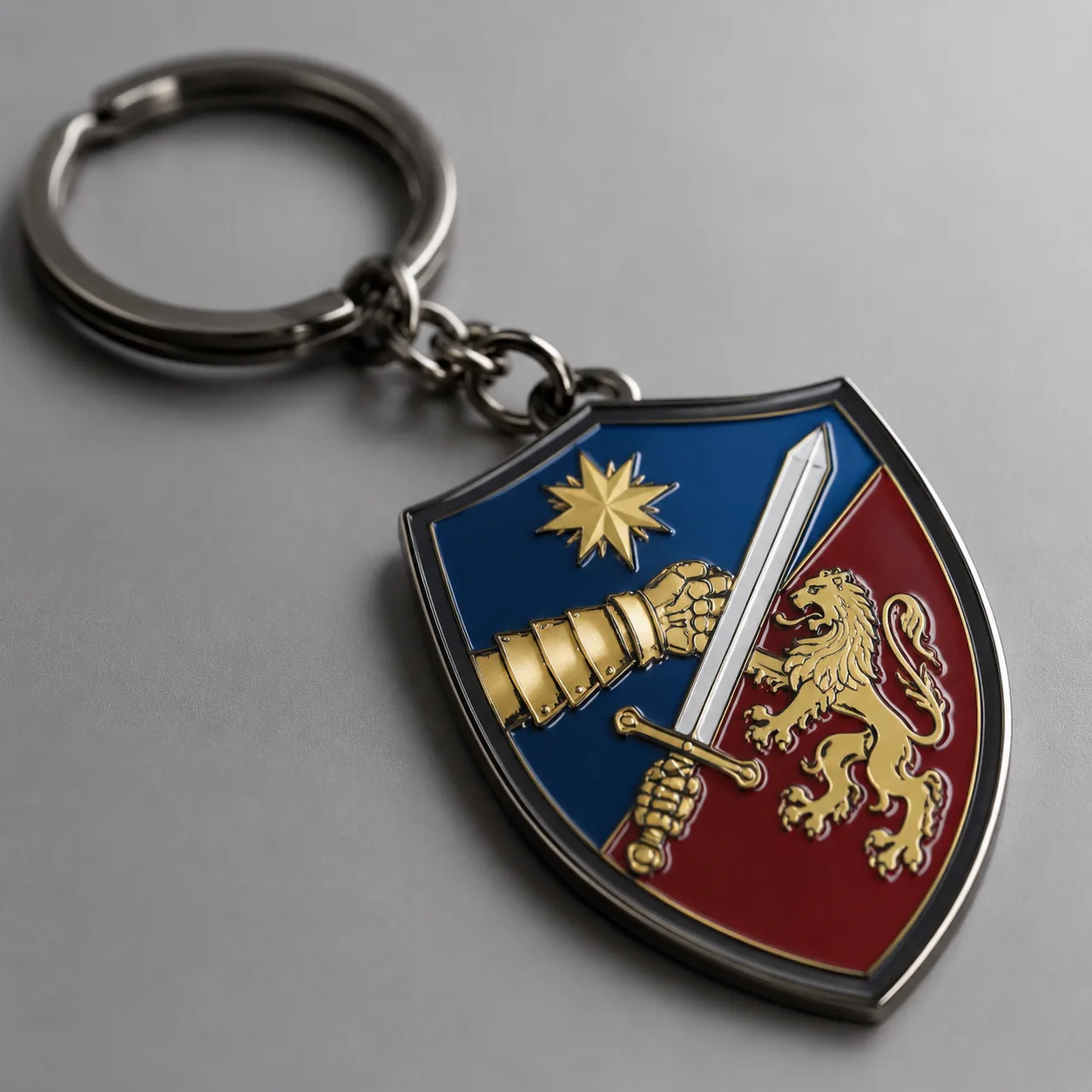
Start With the Drawing, Not the Price
Buyers usually ask for a quote too early, before the factory knows what to price. That is how you end up comparing numbers that look similar but hide very different assumptions on thickness, plating, finish, attachment, and inspection standard. For custom metal promo products, the drawing is the commercial contract: if it is vague, the quote is vague, and the risk moves to production.
The fastest way to reduce rework is to treat every line on the spec sheet as a decision. Dimensions, base metal, decoration method, and back hardware all affect tooling, yield, and lead time. ZheCraft typically sees the cleanest orders when buyers submit a dimensioned vector file, the intended use case, a target finish, and a sample acceptance standard together.
- State the final product type first: pin, badge, coin, keychain, magnet, patch accessory, or lanyard hardware.
- Attach a flat artwork file and a dimensioned spec sketch with finished size in mm.
- Declare the use case: indoor giveaway, retail shelf, uniform wear, mail pack, or outdoor exposure.
- Tell the factory whether reorder matching matters more than lowest unit price.
- Separate must-have specs from nice-to-have options so quotation trade-offs are clear.
Dimensions, Thickness, and Tolerances
Finished size drives mold layout, metal fill, weight, and even plating appearance. A 25 mm badge and a 25 mm coin are not priced the same if one carries a raised rim, a recessed enamel field, or a moving part. For most small metal giveaways, finished size tolerance of +/-0.3 mm is workable; for multi-piece sets or fitted accessories, tighten to +/-0.2 mm only if the design and tooling support it.
Thickness should be specified as a finished thickness, not only as a raw sheet thickness. Typical ranges are 0.8-1.2 mm for lightweight pins, 1.5-2.0 mm for sturdier badges and key fobs, and 2.5-3.5 mm for challenge coins or heavy medallion-style items. If the item will be worn on clothing, excessive thickness can create drag and sag; if it will be handled as a keepsake, too-thin construction feels cheap and bends easier in transit.
| Spec line | Practical buyer note | ||||||
|---|---|---|---|---|---|---|---|
| Finished size | Use mm, not approximate artwork scale; lock the outer edge. | Thickness | State finished thickness and whether embossing adds visible depth. | Tolerance | Use +/-0.3 mm for standard items; tighten only when necessary. | Weight | Helpful for gift sets and mail costs; specify target grams if important. |
Base Metal and Build Method
Base metal choice changes cost, crispness, corrosion risk, and how cleanly fine details survive production. Brass is usually the best all-round option for small detailed metal products because it holds detail well and plates cleanly; iron can reduce cost on simpler shapes but may be less forgiving on sharp relief; zinc alloy is better when 3D relief, thickness, or irregular shaping matters. Stainless steel is useful for a harder, cooler feel, but it is not the cheapest path and can be less flexible for deep embossing.
Build method matters just as much as material. Stamped metal is efficient for flat or shallow-relief items and usually gives the sharpest edges at good volumes. Die-cast or spin-cast style structures are better when the part has depth, undercuts, or sculptural surfaces, but they can soften tiny text and increase mold complexity. If the design depends on very small lettering below 0.8 mm stroke width, ask whether stamping or engraving will preserve readability better than casting.
| Option | Best for | Trade-off |
|---|---|---|
| Brass | Fine detail, clean plating, premium feel | Higher cost than iron |
| Iron | Simple badges and high-volume giveaways | More limited on fine detailing |
| Zinc alloy | 3D forms, thicker bodies, complex shapes | Mold cost and slightly softer detail |
| Stainless steel | Hard-wearing, modern finish | Less forgiving for deep relief |
Plating, Color, and Surface Finish
Plating is where many orders fail visually even when dimensions are correct. If you want a bright polished look, specify the plating family first: gold, nickel, black nickel, antique brass, antique silver, matte silver, or custom paint plus clear coat. For common promotional metal products, plating thickness around 0.1-0.3 microns may be enough for appearance, but more demanding outdoor or handling-heavy applications often need thicker systems and better pre-treatment to avoid early tarnish.
Surface finish should be written as a finish standard, not a mood word. Say polished, matte, sandblasted, antique, brushed, or textured, and clarify which surfaces get which treatment. For example, a badge can be polished on raised areas and matte in recessed fields; that detail changes both appearance and pricing. If color matching is involved, specify Pantone references, but also state whether slight batch variation is acceptable because plated metal and enamel do not behave like printed paper.
| Finish type | Good choice when | Watch out for |
|---|---|---|
| Polished plating | Corporate gifts, retail look | Finger marks and glare |
| Matte or brushed | Modern, understated branding | Can hide very fine contrast |
| Antique finish | Vintage themes, depth in relief | Dark recesses can vary batch to batch |
| Black nickel | High contrast, premium dark look | Scratches can show on edges |
Enamel, Printing, and Fill Control
If the item uses enamel or printed color, the spec must define fill depth, surface level, and edge definition. For soft enamel, the colored area usually sits slightly below the raised metal line, which gives a tactile look and works well for bold art; for hard enamel or polished fill, the surface is ground flatter after filling, creating a smoother top surface. Either way, the buyer should state whether a flush finish is required, because a semi-level fill is not the same as a fully polished hard enamel surface.
Minimum line width and color separation are critical. A practical rule is to keep metal lines above 0.25-0.3 mm if you want stable production, and avoid tiny isolated color islands that can flood during fill. If transparent enamel, glitter, glow, or UV-reactive effects are involved, call that out on the artwork revision and ask for a pre-production sample, because special pigments often change curing behavior and visual density.
- Declare whether color must sit recessed, flush, or domed.
- Ask for a hard-edge metal border between adjacent colors.
- Avoid gradients unless the process is print-based or intentionally blended.
- Confirm whether the final surface can show minor pinholes or requires cosmetic perfection.
- Request a sample under normal room light, not only studio light.
Back Hardware, Mounting, and Wear Risk
Back hardware is not an accessory detail; it determines return rate. A butterfly clutch may be fine for light pins on jackets, but it is often weak for larger badges, keychains, or items that will be handled repeatedly. Magnetic backs protect fabric and are useful for uniforms and retail try-ons, but they can be too weak for thicker garments and are not suitable where secure retention matters more than garment safety.
The spec should name the attachment type, quantity, and position. For pins and badges, that means whether you need one post, two posts for anti-rotation, a brooch clasp, safety pin, or magnetic plate. For keychains and badges with moving parts, define ring style, chain length, swivel quality, and any load expectation. ZheCraft often advises buyers to match the attachment to the heaviest likely use condition, not the ideal one, because real users pull, twist, and drop these items.
| Attachment | Best for | Not ideal for |
|---|---|---|
| Butterfly clutch | Light pins, low cost | Large or heavy items |
| Rubber clutch | General promo use, softer grip | High-security wear |
| Magnetic back | Uniforms, delicate fabrics | Heavy motion or thick clothing |
| Safety pin or brooch clasp | Brooch-style or fabric-safe use | Very thin lightweight items |
Sampling, Inspection, and Acceptance Rules
A sample is only useful if the acceptance rules are already written. The golden sample should confirm size, metal color, fill color, finish sheen, attachment type, and packaging style before mass production starts. If the factory agrees to a sample but the buyer does not state what counts as acceptable variation, the mass run can still become a dispute even when it matches the sample reasonably well.
For quality control, define what gets checked visually and what gets measured. Typical production acceptance for standard custom metal giveaways uses AQL-based inspection on appearance, size, attachment function, and packing count, with special attention to plating defects, bubbles, color bleed, burrs, and bent hardware. If the order is for a distributor or brand launch, ask the supplier to hold a retained sample from the approved batch so future reorders can match the same standard.
- Approve one physical or photo-confirmed golden sample before mass production.
- State whether minor polishing marks are acceptable on the back side.
- Define which defects are rejectable: color bleed, burrs, sharp edges, or loose hardware.
- Ask for pre-shipment photos of random packed units and carton labels.
- Confirm AQL levels or a written equivalent inspection standard.
What to Do Next
If you want a quote that can actually be compared across suppliers, send the factory a single spec pack: dimensioned artwork, finished size, thickness, base metal, finish, attachment, packaging, and sample standard. That removes most hidden assumptions and makes the first quote far more useful. For multi-item programs, keep the spec language consistent across pins, coins, badges, and keychains so the factory can reuse tooling logic and avoid mismatch between items.
The best next step is to lock the non-negotiables first and leave cosmetic options for a second pass. Decide what cannot change on reorder, what can vary by a small tolerance, and what should be priced as an alternate. If you are sourcing from China, that split saves time in quoting and reduces the chance of needing a revised sample cycle after the order is already approved.
Have a project? Send your artwork and target quantity and we’ll reply with a detailed quotation within 12 working hours.
Ready to get this made?
Send your sketch, target quantity and ship-date. Detailed quotation in 12 hours.



