Custom Metal Giveaway Pricing and Lead Times: A Buyer Breakdown
Why one quote is never enough for custom metal giveaways
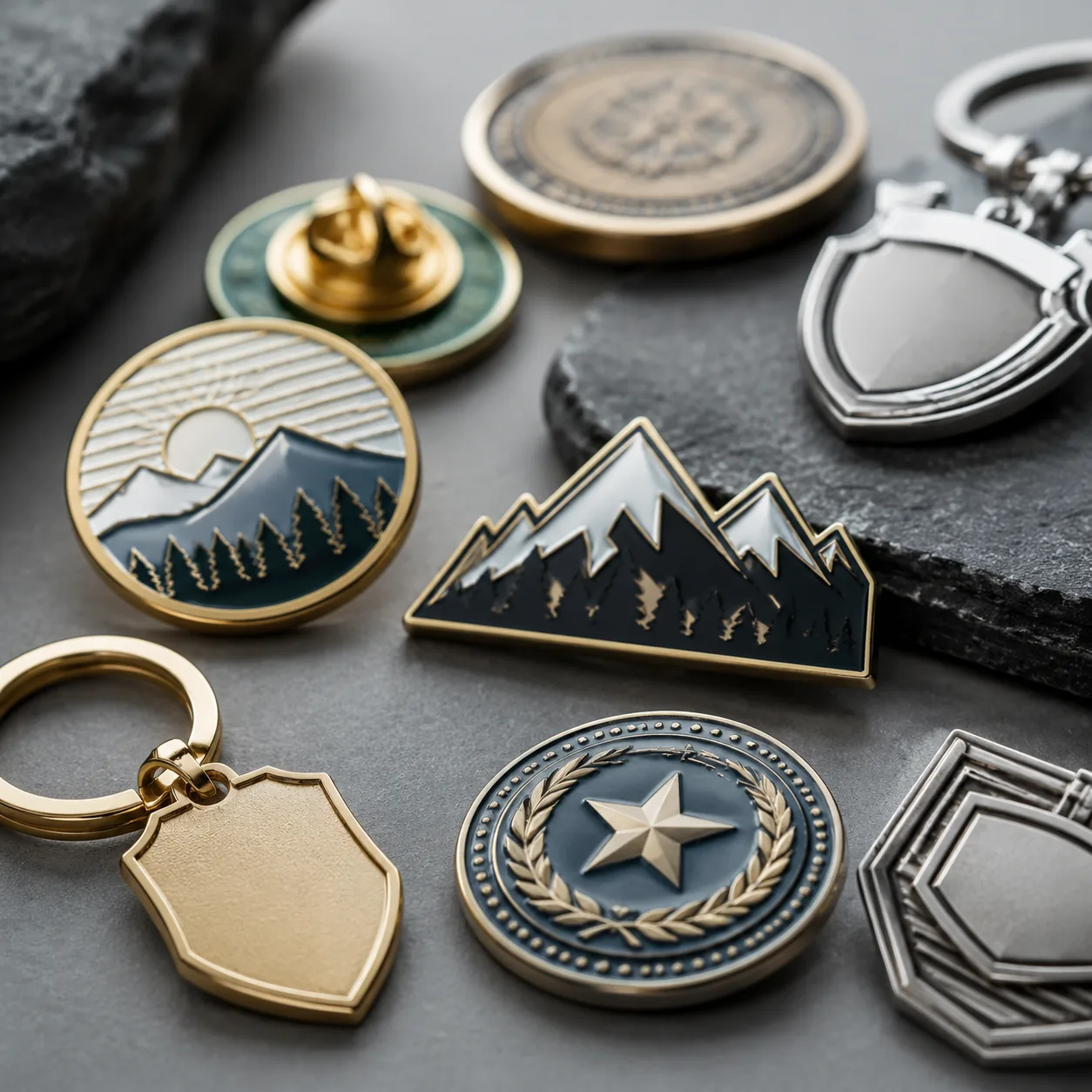
Buyers usually ask for one number: price per piece. That is the wrong starting point for custom metal giveaways. A pin, coin, keychain, badge, or magnet can look nearly identical across suppliers and still vary by 2x to 4x once you change size, metal thickness, plating system, fill method, accessory hardware, packaging, or test requirements. Lead time moves just as sharply. A straightforward soft enamel pin can be ready in 14 to 20 working days after artwork approval, while a 3D die-cast coin with epoxy and individual gift boxing can take 25 to 40 working days.
The correct comparison is spec-to-spec, not quote-to-quote. The main cost drivers are tooling, metal consumption, decoration labor, finishing time, and packing. The main schedule drivers are design approval, die or mold making, sampling, plating queue, assembly, and inspection. Buyers who define the full spec before requesting quotes usually avoid re-quotes, schedule slips, and the common problem of discovering an extra charge only after artwork is approved.
This breakdown is for B2B buyers sourcing custom metal promo products for gifting, campaigns, retail add-ons, onboarding kits, and event handouts. It covers pins, badges, coins, keychains, magnets, and similar small-format metal items where FOB China pricing and factory lead time matter most.
What actually drives unit price: the six cost levers
For most metal giveaways, the unit price is shaped by six levers: size, thickness, construction method, decoration complexity, finishing, and packaging. Material cost matters, but in low- and mid-volume orders, labor and setup usually matter more. A small change in process can move cost more than a small change in size.
Stamped items generally cost less than cast or 3D-relief items because stamping uses simpler dies and less polishing. Soft enamel is usually cheaper than hard enamel because hard enamel needs extra polishing and a flatter, more refined surface. Accessories also matter: a butterfly clutch is cheap, a magnetic back or deluxe jewelry clutch is not. On the packaging side, a plain polybag is low cost, while a printed backing card, velvet pouch, or rigid gift box can add more to a low-MOQ order than the metal item itself.
- Size and thickness: each extra millimeter raises metal weight and polishing time
- Construction: stamped, die-cast, etched, photo-printed, or layered assembly
- Decoration: soft enamel, hard enamel, screen print, laser engraving, epoxy dome, or no-fill antique finish
- Plating: nickel, gold, black nickel, antique brass, antique silver, matte black, or dual-tone
- Accessories: butterfly clutch, rubber clutch, magnet back, split ring, lobster clasp, safety pin, or brooch fitting
- Packaging: backing card, OPP bag, polybag, velvet pouch, paper box, window box, or molded insert
A useful rule for buying is that each added feature should justify itself in the end use. If the item will be worn once, a premium finish may not pay back. If it will be photographed, collected, or presented to executives, the cost of better plating, tighter polishing, and stronger hardware is usually justified.
FOB price tiers by MOQ: realistic ranges buyers can use
MOQ changes unit price because setup cost is spread across fewer or more pieces. At 100 pieces, the buyer is paying for die setup, color matching, manual handling, and inspection overhead. At 500 or 1,000 pieces, the same work is amortized more efficiently. That is why the jump from 100 to 500 pieces often creates the biggest price improvement.
The table below gives practical FOB China ranges for common custom metal giveaway types. These are working ranges, not fixed offers. Exact pricing depends on dimensions, thickness, number of colors, finish, and packing. When comparing suppliers, keep every variable identical: same size, same plating, same hardware, same artwork, same packing standard.
| Product / MOQ tier | Typical FOB range per piece (USD) | Typical spec assumptions |
|---|---|---|
| Simple metal pin, 100-300 pcs | 0.45-1.20 | Stamped soft enamel, 1-4 colors, 25-35 mm, butterfly clutch |
| Simple metal pin, 500-1,000 pcs | 0.22-0.75 | Same spec, more efficient setup and plating run |
| Challenge coin, 100-300 pcs | 1.20-3.80 | 2D, 1.5-2.0 in, standard antique finish, single or double side |
| Challenge coin, 500-1,000 pcs | 0.75-2.50 | Better unit economics at 1.75-2.0 in and moderate relief |
| Keychain or badge, 100-300 pcs | 0.70-2.40 | Metal body plus ring, clasp, or badge fitting |
| Fridge magnet, 100-500 pcs | 0.55-1.80 | Metal or magnetic substrate, basic printed or relief face |
| Woven/embroidered patch, 100-500 pcs | 0.35-1.10 | Merrow border or laser-cut edge, standard backing |
| Lanyard or mixed promo item, 100-500 pcs | 0.40-1.30 | Depends on print method, clip, buckle, and accessory set |
For distributor programs, ask for three quantity breaks in every RFQ: 100, 500, and 1,000 pieces. This reveals whether the supplier’s cost curve is driven by setup, labor, or material. In many cases, moving from 300 to 500 pieces lowers unit price enough to justify a slightly larger first order, especially if the item will be reordered or used across multiple campaigns.
If the item is a premium piece rather than a giveaway, add separate lines for mold cost, sample cost, and packaging. A quote that hides packaging inside the unit price may look cheaper than it is. Clear separation is the only reliable way to compare factories on equal terms.
Lead time depends on process route, not product name
A buyer often asks, “How long for pins?” or “How long for coins?” That question is too broad. Lead time depends on the route: artwork finalization, die or mold making, sample approval, surface finishing, assembly, inspection, and packing. A factory may have the production capacity to finish an order quickly, but one delayed approval round can erase that advantage.
Working days matter more than calendar days. A promise of 15 days may mean 15 working days after confirmation, not 15 total days from inquiry. Holidays, plating queue time, and customer-side delay all affect the final ship date. If your launch date is fixed, plan for one sample round and one internal approval cycle before mass production starts.
| Process route | Sample time | Mass production time | Typical total lead time |
|---|---|---|---|
| Soft enamel pin, standard shape | 4-7 days | 8-12 days | 14-20 working days |
| Hard enamel pin, polished finish | 5-8 days | 10-15 days | 18-25 working days |
| 2D challenge coin, standard size | 5-8 days | 12-18 days | 20-30 working days |
| 3D coin or heavy-relief badge | 6-10 days | 14-22 days | 25-40 working days |
| Custom keychain with accessory assembly | 4-7 days | 10-16 days | 18-28 working days |
| Fridge magnet with printed insert | 3-6 days | 7-12 days | 12-20 working days |
| Lanyard or patch, standard production | 3-5 days | 6-10 days | 10-18 working days |
The fastest projects are the ones with stable artwork and simple build steps. The slowest projects are the ones that need multiple revisions, special surface effects, unusual backing hardware, or compliance checks. If a supplier mentions “sample approval not included,” take that seriously: the clock may start only after you sign off on a physical or digital proof.
The hidden spec details that change quotes after approval
Many orders become more expensive after the first quote because the original RFQ omitted one or more technical details. The most common omissions are plating finish, edge-polish level, enamel count, backside treatment, and packaging standard. Small changes can trigger significant rework. For example, adding a printed back mark to a coin, changing from butterfly clutch to magnetic back, or switching from a simple polybag to a printed backing card changes both labor and material.
Tolerance and fit matter as much as decoration. When multiple parts must align inside a set or box, the factory may need tighter dimensional control and extra sorting. That adds cost even if each individual piece is simple. Buyers should state size tolerance, surface expectations, and attachment orientation before sampling begins.
- Plating thickness: decorative finishes are often controlled around 0.03-0.05 microns of visible top layer over a base process, but buyers should ask for the exact plating stack, not just the color name
- Color count: each additional enamel color adds fill, cure, and cleanup steps
- Special effects: glitter, glow, transparent enamel, epoxy dome, and soft rubber inserts each add handling time
- Hardware: magnetic backs, safety pins, brooch pins, and upgraded clutches cost more than standard butterfly backs
- Packaging: backing cards, pouches, and rigid boxes can add more than the base metal item on low-MOQ orders
- Artwork complexity: fine lines, tiny text, and tight relief require slower polishing and higher scrap control
If you need more consistency, ask the supplier for a golden sample or pre-production sample before bulk runs. That adds time up front, but it lowers the risk of broad rework and helps define acceptance criteria for mass production.
How MOQ changes your cost curve and risk profile
MOQ is not just a factory policy; it is a cost-balancing tool. At 100 to 200 pieces, setup cost and QC overhead are spread across very few units, so the per-piece price looks high. At 500 to 1,000 pieces, tooling, communication, and inspection are amortized more efficiently, and the unit economics improve quickly.
The trade-off is inventory risk. If the event date is uncertain or the design may change, a lower MOQ protects cash flow. If the item is part of a repeat campaign, the higher MOQ often delivers lower total cost over the program life. The key is to match the MOQ to the commercial risk, not just the purchase budget.
| MOQ tier | Best for | Typical trade-off |
|---|---|---|
| 100-200 pcs | Pilot programs, executive gifts, niche events | Highest unit cost, lowest inventory risk |
| 300-500 pcs | Distributor testing, regional campaigns | Balanced price and flexibility |
| 1,000 pcs | National promotions, repeat programs | Best unit economics, more cash tied up |
| 3,000+ pcs | Retail, franchise, or ongoing club use | Lowest unit cost, needs stable forecast |
For multi-SKU programs, it can be smarter to share one mold family or one production cycle across variants instead of forcing each design into a separate order. For example, a pin series can keep the same size, plating, and attachment while changing only the center artwork. That lowers setup waste, simplifies reorder planning, and helps maintain a consistent look across the program.
How to choose lower cost versus better build quality
Not every project should chase the cheapest FOB price. For employee recognition gifts, donor coins, VIP kits, or sales-enablement packs, finish quality and handling feel matter more than saving a few cents. A cheaper item may be acceptable for a one-day handout, but it can look thin or underfinished in a display box or customer-facing package.
Choose a lower-cost build when the item is disposable in function, short-lived in use, or distributed in high volume with limited brand scrutiny. Choose a higher-spec build when the item will be photographed, collected, worn often, or compared against a premium competitor. Hard enamel, heavier coin stock, better plating, and more durable hardware usually make sense when the product is part of brand perception.
The best value is not the absolute cheapest spec. It is the cheapest spec that survives the real use case. If the item will be mailed internationally, carried in a pocket, or worn on business clothing, stronger attachments and better surface finish can reduce replacement cost and complaints later.
A practical quote template buyers can send today
The cleanest RFQs remove ambiguity. Ask suppliers to quote unit price by quantity, mold or die cost, sample cost, packaging cost, and lead time separately. That makes comparison easier and shows where margin is being added. It also reduces the risk of a surprise charge after sample approval.
Before you request quotes, use the checklist below to lock the spec. A complete RFQ often removes one revision round from the schedule and makes pricing more stable from the start.
- Exact item type and dimensions in mm or inches
- Quantity tiers: 100, 300, 500, 1,000
- Construction method: stamped, die-cast, etched, printed, or layered
- Plating finish and any special surface effects
- Attachment type and packaging requirement
- Artwork file, Pantone references, and text copy
- Target ship date and whether dates are working days or calendar days
- Need for sample, golden sample, or pre-production sample
- Any compliance requirement such as nickel-free, lead-free, or child-safe use
If you are sourcing multiple item types for one campaign, consolidate them into one spec sheet so the supplier can see where shared packaging, shared plating, or shared color standards can reduce cost. That is the fastest route to a reliable quotation, a realistic lead time, and fewer post-approval changes.
Have a project? Send your artwork and target quantity and we’ll reply with a detailed quotation within 12 working hours.
Ready to get this made?
Send your sketch, target quantity and ship-date. Detailed quotation in 12 hours.



