Custom Lapel Pin Cost and Lead-Time Breakdown for Buyers
Why pin quotes diverge so much
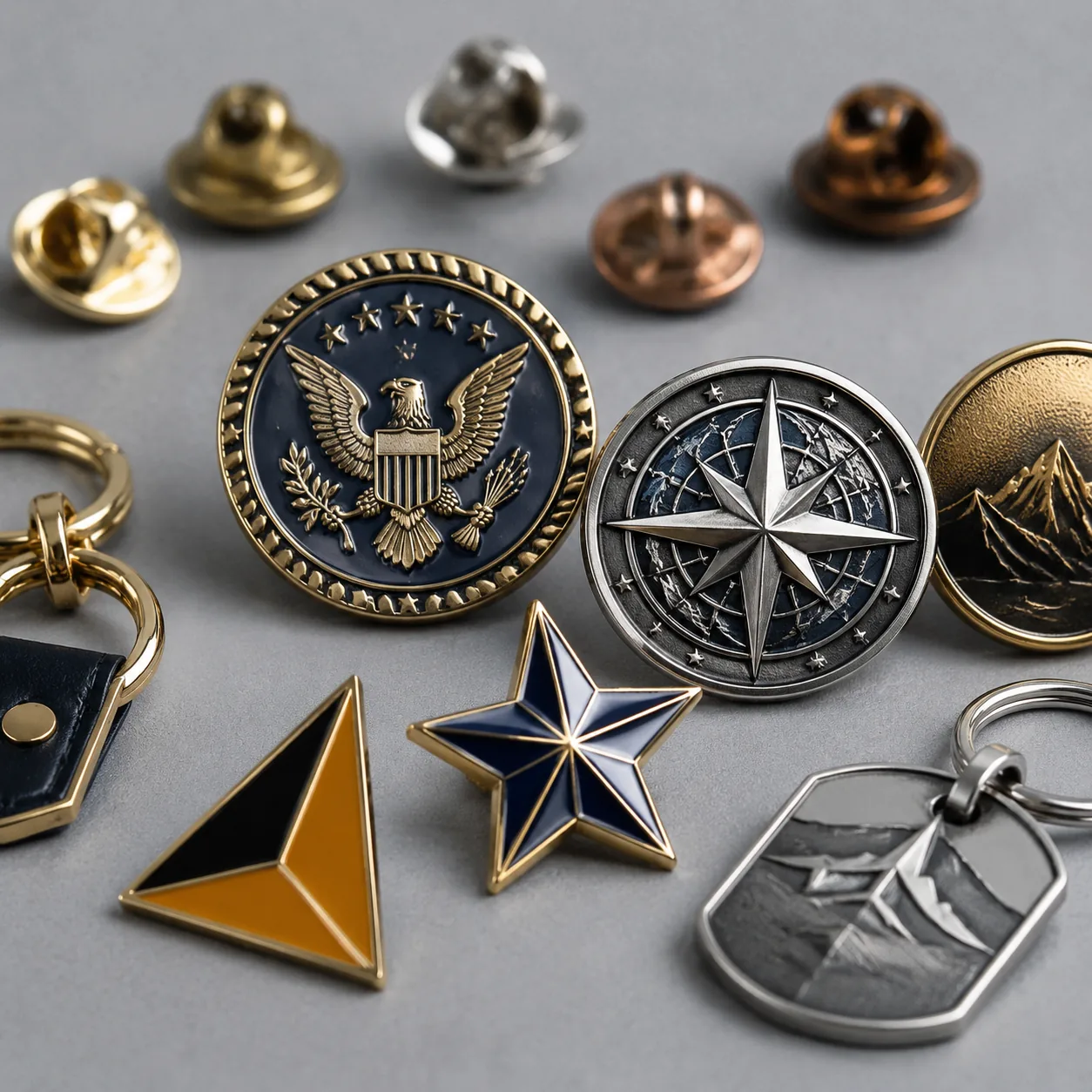
Two custom lapel pin quotes can look close on paper and still land in different cost bands because a pin is priced from several variables at once: size, construction, plating, color count, attachment, packaging, and order quantity. A 25 mm soft enamel pin with a single butterfly clutch, standard gold plating, and bulk pack is a different job from a 40 mm hard enamel pin with a custom back card and polished edge. The first quote may look cheaper, but the second carries more handwork, more finishing steps, and a higher reject risk.
Lead time moves the same way. A supplier can quote a low unit price and still be expensive if the order misses the production window, needs artwork corrections, or adds a second sample round. Buyers should evaluate price and schedule together: the tighter the deadline and the lower the MOQ, the more every spec choice changes the final outcome. For lapel pins, a one-step change in finish or packaging can matter more than a small change in quantity.
The main cost drivers buyers should compare
Custom pin pricing usually comes from five cost blocks: tooling, metal and thickness, surface finishing, color application, and packing. Tooling is the one-time die or mold fee. For standard 2D lapel pins, a realistic tooling range is usually USD 40 to USD 120 per design for simple shapes, and USD 80 to USD 180 for larger or more detailed outlines. Very small or highly intricate designs can sit outside that range because the die needs more hand work and more polishing time.
Metal choice matters too. Iron is usually the lowest-cost substrate for flat promotional pins. Brass is preferred when a buyer wants cleaner edges, sharper recessed lines, or a more premium plated look. Zinc alloy is more common for 3D pieces, deep relief, or thicker forms, but casting and finishing usually push the unit price higher. Typical thickness is 1.0 to 1.2 mm for low-cost promo work, 1.2 to 1.5 mm for standard retail-quality pins, and 1.5 to 2.0 mm for heavier premium pieces.
Plating and fill drive the visible finish. Common plating options include bright gold, bright nickel, black nickel, antique gold, and antique silver. Standard decorative plating is often specified at roughly 0.03 to 0.05 microns for appearance-based work; premium buyers sometimes ask for tighter bath control, but more important than the micron number is consistent color tone and coverage across the batch. Soft enamel, hard enamel, printed details, epoxy domes, sandblasting, cut-outs, and glitter or translucent fills all add labor, inspection time, or reject risk. Packaging is the last major lever: bulk polybag is the lowest-cost option, while a backing card, velvet pouch, or rigid gift box can add USD 0.05 to USD 1.50+ per piece depending on print and insert complexity.
MOQ tiers and how they change unit cost
MOQ is not just a purchasing policy. It changes how the factory allocates setup time, polishing, filling, and QC across the batch. For lapel pins, practical MOQ tiers usually fall into four bands: 50 to 99 pieces for prototype-like orders, 100 to 299 pieces for low-volume promotions, 300 to 999 pieces for standard production, and 1,000+ pieces for the best unit economics. Some factories will quote lower quantities, but they often do so with limited plating choices, fewer packaging options, or a higher per-piece price to cover setup cost.
The price curve is steepest between the smallest tiers. A 100-piece order can easily cost 30% to 80% more per unit than a 500-piece order with the same design because the die, proofing, line setup, and QC are spread across fewer pieces. Once the order moves into the 500 to 1,000 piece range, the unit price tends to flatten, and the biggest changes come from artwork complexity rather than quantity alone. Buyers should also watch for over-discounting: a price that is too low may mean thinner plating, less inspection time, or a supplier planning to recover margin later through add-ons.
Typical cost and lead-time bands
The ranges below are planning ranges, not fixed market prices. Final FOB pricing depends on shape, size, colors, plating, fill method, and packing. Still, these bands are useful for early budgeting and RFQ comparison, especially when several suppliers are quoting the same artwork.
| Spec band | Typical MOQ | FOB price range per piece | Tooling fee | Typical lead time |
|---|---|---|---|---|
| Simple 2D soft enamel, 20–25 mm, 1–3 colors, butterfly clutch | 50–100 pcs | USD 0.70–1.40 | USD 40–80 | 10–14 days |
| Standard 2D soft enamel, 25–35 mm, 3–5 colors, polished edge | 100–300 pcs | USD 0.55–1.10 | USD 50–100 | 12–18 days |
| Hard enamel, 30–40 mm, 5+ colors, smooth top surface | 300–500 pcs | USD 0.90–2.10 | USD 60–120 | 15–22 days |
| Complex shape, dual plating, print or epoxy, premium packaging | 500–1,000+ pcs | USD 1.30–3.50 | USD 80–180 | 18–28 days |
These ranges assume normal production conditions, one proof cycle, and standard shipment from the factory. If the design includes micro text, tight cut-outs, mixed plating, translucent color, or custom backing cards, lead time often extends by 3 to 7 days. Rush orders are possible, but the factory has less room for rework, so both cost and defect risk rise. For international buyers, the more realistic planning metric is proof approval plus production days plus export buffer, not just the factory’s quoted completion date.
What actually happens inside the factory
A pin’s FOB price reflects more than raw metal. The factory pays for die making, cutting or casting, deburring, polishing, color filling, plating, inspection, and packing. On a small run, setup and handling can dominate the economics. On a larger run, labor content becomes more visible in the unit price, especially when pieces need hand filling or repeated polishing passes.
Soft enamel is usually cheaper because the recessed color sits below the raised metal lines and does not require a fully flush surface. Hard enamel is more labor-intensive because it is filled, baked, polished, and often repolished until the top is level. That extra process creates a smoother, more jewelry-like finish, but it also adds time and increases the chance of scrap on intricate designs. For giveaway campaigns, soft enamel is usually the better value. For corporate gifts, retail pieces, or collector-style pins, hard enamel can justify the extra cost.
A practical tolerance set for standard lapel pins is often around ±0.3 mm on overall size, with hole position and attachment location typically controlled within ±0.2 to ±0.3 mm so clutches sit correctly. Visible defects such as scratches, pits, sharp burrs, color overflow, or misaligned plating should be treated as rejects. For premium projects, buyers may ask for a clearer rule on enamel fill height, surface flatness, and color consistency across the lot. Those requirements should be stated before production begins, not after the bulk run is finished.
A common quality reference for buyers is AQL 2.5 for major defects and AQL 4.0 for minor defects on general promotional work. For retail or branded merchandise, some buyers tighten the standard to AQL 1.5 for major defects, especially when the order includes presentation packaging. If the pin uses a magnetic back, double clutch, or soft rubber clutch, ask the supplier to confirm pull strength and fit before bulk production starts.
Sample timing and approval control
Sampling is where schedules most often slip. A normal artwork proof can usually be turned in 1 to 2 days. A physical pre-production sample generally takes about 5 to 7 days after proof approval for a standard design, and 7 to 10 days if the pin uses special plating, unusual fill, or complex casting. If the buyer changes size, wording, attachment, or finish after the sample is approved, the order usually needs to be re-queued and the schedule resets.
Approval works best when each checkpoint is explicit. Buyers should lock down outline, size, colors, plating, attachment, and packaging before the sample is released. After that, the golden sample should be retained as the reference standard for bulk production. A simple approval chain works well: artwork proof, physical or photo sample, sample sign-off, then bulk run. Each step reduces the chance of costly rework later, especially when the order has a hard launch date.
If the delivery date is fixed, build backward from the ship date, not from the sample date. A standard order may need 2 to 4 days for internal packing and export handoff after production ends, and international transit can add another 3 to 10 days depending on lane and service level. A quote that ignores this buffer can look fast while still missing the buyer’s real deadline.
How to write an RFQ that gets comparable quotes
The more specific the RFQ, the less the supplier has to assume. Vague requests like “metal pin, good quality” usually produce wide quote spreads because each factory prices different thicknesses, plating levels, and packaging assumptions. If the buyer wants accurate pricing, the RFQ should read like a production brief, not a concept note.
- State the exact size in millimeters, not just small or medium.
- Specify 2D or 3D construction and whether raised metal lines are required.
- List Pantone references for every color and note matte, glossy, or translucent intent.
- Confirm plating type and expected finish quality, and ask whether the factory uses bright, antique, or black nickel/gold options.
- Define the attachment type, backing card, and whether each piece is individually packed.
- Set acceptance targets for edge quality, enamel fill, and visible scratches under normal light.
- Ask for MOQ, tooling fee, sample fee, and production lead time as separate line items.
For quality control, many buyers also ask for an AQL plan before production starts. A common baseline for promotional pins is AQL 2.5 for major defects and 4.0 for minor defects, though premium buyers often tighten the standard. If the order is going into retail or a branded kit, it is worth stating the inspection standard for plating uniformity, pin clasp fit, and color matching across the batch. That reduces disagreement after shipment and gives the supplier a clearer target before mass production begins.
When the cheapest quote becomes the most expensive
The lowest quote is not always the lowest total cost. A supplier may underprice the unit cost and recover margin through revised proofs, extra sample charges, split shipments, thin plating, or loose inspection. Another common trap is comparing a factory-direct quote with a trader quote without checking whether tooling, packaging, domestic freight, and export handling are included. A quote that looks 15% cheaper can become more expensive once those items are added back in.
Buyers should also be cautious with very low MOQ and very fast lead-time combinations. Those offers can be legitimate for a simple standard shape, but they often assume a simpler finish, reduced inspection time, or reuse of existing tooling. If the pins are tied to a launch, trade show, or retail delivery window, a few cents saved per unit is rarely worth a late shipment or a batch with weak clutches, uneven fill, or plating variation. The right comparison is total landed cost plus schedule risk, not unit price alone.
A practical rule: if a quote is far below the cluster, ask what was removed from the spec. Most hidden gaps are easy to spot—thinner metal, fewer polishing passes, no sample fee, no packaging, or a longer effective lead time. The best buyer lever is not pushing for the absolute lowest price; it is making every supplier quote the same spec so the differences are real.
What to do next
Start by deciding the spec tier you actually need: simple giveaway, standard corporate promo, or premium gift. Then request at least three quotes using the same artwork, same size, same plating, same attachment, and same packing so the comparison is real. If the design is still being developed, a 100 to 300 piece test run is often the safest way to balance cost, lead time, and design risk before scaling to a larger order.
For the cleanest quote, send one RFQ sheet with artwork, dimensions, color count, plating, attachment, packing, target quantity, and delivery deadline. That gives the factory enough information to price tooling, estimate production days, and flag design risks before you commit. It also makes the quote easier to audit, which matters when you are comparing suppliers across different price structures and lead-time promises.
If the order is strategic, request a sample photo against a ruler, a written defect standard, and a production schedule with checkpoints. Those three items often do more to protect cost and delivery than a long list of vague quality promises.
Have a project? Send your artwork and target quantity and we’ll reply with a detailed quotation within 12 working hours.
Ready to get this made?
Send your sketch, target quantity and ship-date. Detailed quotation in 12 hours.



