Custom Fridge Magnet Cost and Lead-Time Breakdown
Why fridge magnet quotes vary so much
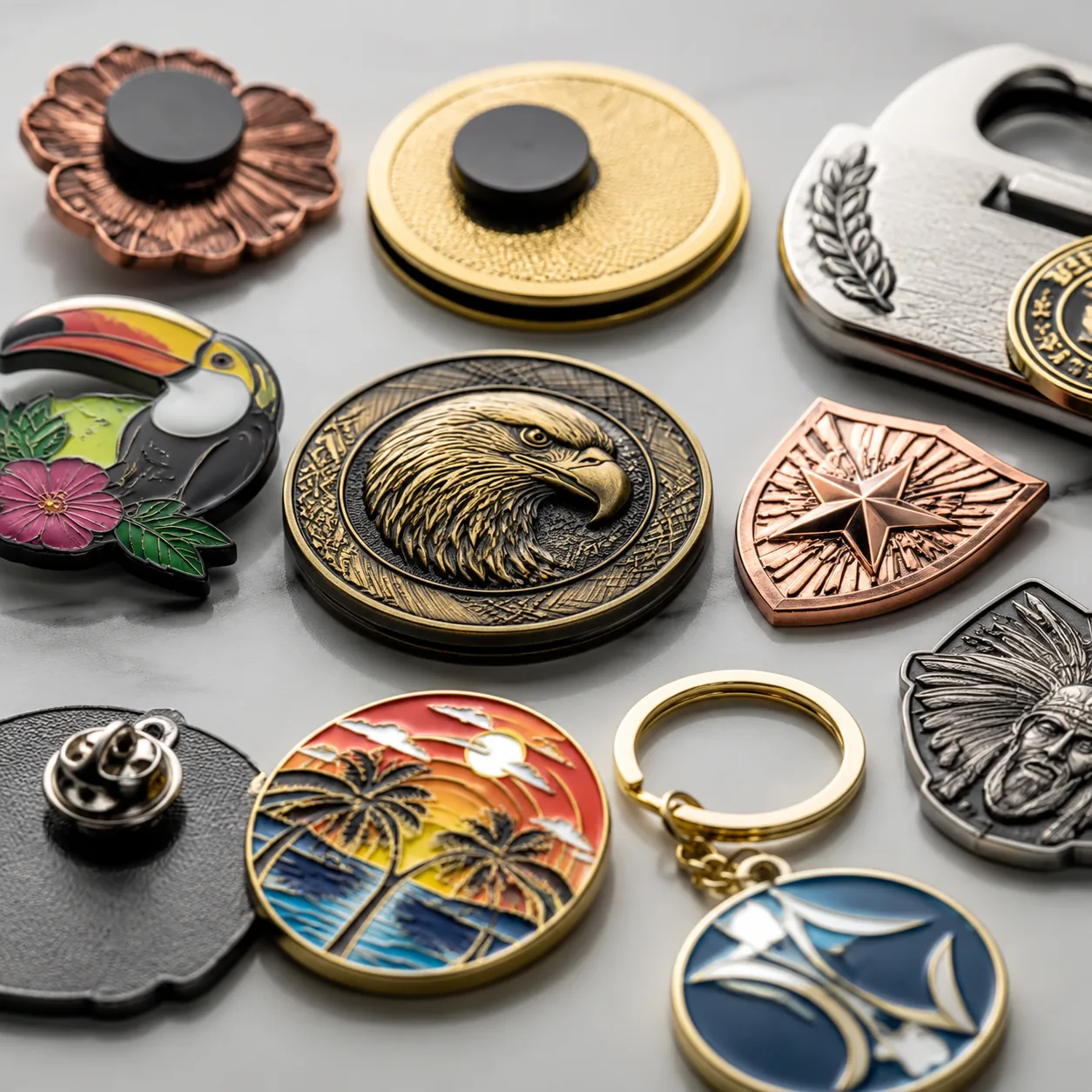
Custom fridge magnet pricing is driven by more than the magnet itself. A quote changes with substrate, print method, magnet grade, finish, shape complexity, packing, and how much manual assembly the design needs. A 50 mm epoxy dome magnet on 0.5 mm steel with a ferrite backing is a different manufacturing job from a 75 mm soft-PVC magnet with a paper insert and card mount, even if both are sold as simple promo items.
Lead time moves for the same reason. A flat printed magnet can be produced with one print pass and one die-cut step, while a molded PVC or metal-backed magnet needs tooling, curing, trimming, inspection, and usually secondary packing. For export buyers, the real cost is landed cost plus calendar risk: a design that looks cheap on paper can become expensive once sampling, revisions, carton optimization, and freight booking are included.
The fastest way to compare suppliers is to compare identical specifications. If one factory quotes a 2.0 mm thick magnet with bulk packing and another quotes a 1.5 mm version with a carded retail pack, the unit price is not directly comparable. The same applies to finish claims: epoxy, matte lamination, soft-touch film, and UV varnish can all seem cosmetic, but they change curing time, rejection rate, and packing labor.
For RFQs, the most useful details are the ones that remove guesswork: exact diameter or length/width in millimeters, thickness in mm, print method, backing material, finish, packing format, and target quantity tiers. When those are missing, factories pad risk into the price or quote a conservative process that is slower and more expensive than necessary.
The main cost drivers, in plain terms
Most magnet pricing comes down to five variables: base material, artwork complexity, magnet material, finish, and packing. Flat printed paper or PET-laminated magnets are the lowest-cost route. Molded PVC, soft-rubber magnets, and die-struck metal magnets sit higher because they need tooling and more handling. Thickness also matters: moving from 1.0 mm to 2.0 mm on a metal-backed piece typically raises material and handling cost by about 10% to 20%, depending on size and magnet coverage.
Artwork has a bigger effect than many buyers expect. Full-bleed CMYK printing on a flat magnet is efficient, but spot-color matching, white ink underlay, metallic ink, embossing, or epoxy dome coating all add setup and curing time. Irregular shapes also raise scrap loss. A clean rectangle or circle uses the sheet efficiently; a silhouette cut around a logo can waste 15% to 35% more material depending on nesting. That waste shows up directly in the unit price.
Magnet strength and construction also matter. A thin flexible ferrite sheet is fine for decorative fridge use, but if the item is meant to hold a note, postcard, or sample card, the factory may need a thicker magnetic backing or a metal reinforcement plate. That changes not only cost, but also acceptable tolerance on flatness and pull force. In sourcing terms, the more functional the magnet becomes, the more closely it behaves like a small engineered component rather than a novelty gift.
Practical cost drivers often hide in details that buyers overlook. Standard 4-color process with no spot colors is cheaper than a design that needs 2 PMS matches plus white ink. A simple round 60 mm magnet nests efficiently on a sheet; a custom silhouette may consume 20% to 30% more material. If the design includes a steel insert, a printed liner, and retail carding, the labor content can exceed the raw material cost on small orders.
- Keep the shape simple if the order is under 1,000 pcs.
- Use flat printing when tactile effects are not required.
- Specify backing type, thickness, and finish before requesting quotes.
- Ask whether packing is loose bulk, polybagged, or card-mounted.
- Confirm whether tooling is one-time or reusable for reorders.
MOQ tiers that actually change the unit price
Factories price magnets in tiers because setup cost is spread across fewer units at low quantities. For printed paper or laminated flat magnets, a workable MOQ is often 100 to 300 pcs, but the best FOB pricing usually begins at 1,000 pcs. For molded PVC, soft-rubber, or metal-backed designs, practical MOQ starts closer to 300 to 500 pcs because the tooling, assembly, and inspection burden is higher. If a factory accepts 100 pcs on a molded item, expect a meaningful premium per unit.
As a reference for FOB China pricing, simple printed flat magnets often land around USD 0.18 to 0.45 each at 500 pcs, then drop to about USD 0.10 to 0.28 at 1,000 to 3,000 pcs. Molded PVC magnets usually sit around USD 0.35 to 1.20 each at 300 to 1,000 pcs, depending on size, number of colors, and whether there is layered construction. Metal or epoxy-dome styles can range from USD 0.25 to 0.95 each for basic versions and higher for premium finishes or custom packaging.
The important point is that the lowest tier is not the best comparison point unless your real order quantity is that small. A quote at 300 pcs may include setup cost that disappears at 3,000 pcs. That is why buyers should ask for tiered pricing at 300, 1,000, and 3,000 pcs in the same RFQ. If the supplier only offers one quantity, you cannot tell whether the price is genuinely competitive or just padded for risk.
A realistic procurement check is to compare not only unit price, but also one-time charges. Typical tooling for a simple PVC magnet may be USD 80 to 250, while a more detailed multi-piece mold can run USD 300 to 800. For flat printed magnets, plate or die charges may be modest or waived on repeats, but die-cut tooling for a custom outline can still add USD 40 to 150 depending on size and complexity.
| Magnet type | Typical MOQ | FOB price range (USD) | Typical size range | Typical use case |
|---|---|---|---|---|
| Printed paper / laminated flat magnet | 100-300 pcs | 0.10-0.45 | 50-90 mm | Mailers, giveaways, campaign promos |
| Molded PVC magnet | 300-500 pcs | 0.35-1.20 | 40-80 mm | Character shapes, retail promos |
| Metal-backed printed magnet | 500-1,000 pcs | 0.20-0.80 | 45-100 mm | Corporate sets, premium giveaways |
| Epoxy dome magnet | 500-1,000 pcs | 0.25-0.95 | 30-75 mm | Durable branded souvenirs |
| Soft magnetic memo clip / hybrid | 300-800 pcs | 0.60-1.80 | 60-120 mm | Retail add-ons, office gifts |
Lead time by build method and approval path
Lead time depends less on the factory’s internal schedule than on how many decisions are unresolved before production starts. Flat printed magnets can move quickly because they use standard print and die-cut equipment: 2 to 4 days for prepress and file proofing, 3 to 6 days for samples, and 7 to 12 days for mass production is realistic when the artwork is final. If the order includes custom shape cutting, lamination, or a magnetic sheet bonded to another substrate, add another 2 to 4 days.
Molded PVC, layered metal, or mixed-material magnets take longer. A reasonable range is 5 to 8 days for tooling confirmation or sample preparation, 7 to 12 days for sampling, and 12 to 25 days for mass production, depending on curing, plating, assembly, and inspection. If the product needs a hard epoxy lens, add curing time and a higher rejection threshold for bubbles, dust, or edge overflow. Those process controls protect appearance, but they also extend the schedule.
Packaging can become the hidden delay. Loose bulk packing is fast, but individual polybags, backing cards, printed sleeves, or barcode labels can add 3 to 7 days. If revisions are requested after sample approval, the schedule typically resets by 2 to 5 working days for print changes and 5 to 10 working days for tooling changes. For seasonal campaigns, the safe planning buffer is 20% to 30% above the quoted production window.
Shipping also changes the calendar. FOB production may finish on time, yet booking a vessel, consolidating cartons, and clearing export paperwork can add 3 to 10 days depending on port congestion and carrier cutoffs. For air freight orders, the physical production may be fast enough, but packing density and carton weight can raise the landed cost enough to change the sourcing decision.
| Step | Flat printed magnet | PVC or metal-backed magnet | Risk if delayed |
|---|---|---|---|
| Artwork confirmation | 1-2 days | 1-3 days | Late start on tooling or print file setup |
| Sampling | 3-6 days | 7-12 days | Missed approval window |
| Mass production | 7-12 days | 12-25 days | Ship date slips beyond campaign date |
| Packing / carton finalization | 1-3 days | 3-7 days | Incorrect retail-ready presentation |
| Export booking | 2-5 days | 2-5 days | Higher freight cost or missed sailing |
What finishes cost more, and why
Finish choice is one of the easiest ways to overspend on a magnet that does not need a premium appearance. Epoxy dome coating protects the print and gives a glossy lens effect, but it adds a curing step and commonly increases unit cost by 10% to 25%. Matte lamination is usually cheaper and works well for a clean corporate look, but it does not hide edge wear or registration issues as effectively on small graphics. If the design includes thin text, small logos, or multiple print layers, a glossy dome may actually make defects more visible.
For metal-backed magnets, plating and surface treatment can also shift pricing. Nickel plating is usually the baseline, while black nickel, antique brass, antique copper, or satin finishes raise cost because color consistency and rejection criteria are tighter. Buyers should ask whether the finish is purely decorative or must also meet abrasion and corrosion expectations. For export programs, a normal cosmetic standard may be acceptable, but if the product will be handled frequently in retail, the factory should be told the target inspection level up front.
A useful sourcing rule is to tie finish to use case. Decorative souvenirs can usually use epoxy, UV print, or plated metal with standard cosmetic inspection. Functional memo magnets should prioritize flatness, pull force, and durable lamination. If the customer cannot explain why a finish is needed, the finish is probably not adding enough value to justify the cost.
Concrete finish comparisons help buyers avoid overbuying. A 60 mm flat magnet with gloss lamination may be sufficient for a campaign mailer. The same graphic with epoxy dome, soft-touch film, and custom carding can double the decoration cost without improving utility. For products that will be handled daily, the more valuable upgrade is often scratch resistance, not a premium visual effect.
How packing changes landed cost
Packing affects not only presentation but also labor, carton size, and freight weight. Loose bulk is the cheapest format and is acceptable when the magnets are inserted into another package later or distributed in-house. Individual polybags add labor and material, while backing cards or printed sleeves can raise unit cost by roughly USD 0.03 to 0.20, depending on board thickness, print coverage, and whether the insert is die-cut or folded.
The freight impact can be larger than the packing charge itself. A magnet order that ships efficiently at 2,000 pcs per carton in bulk may drop to 800 pcs per carton when individually bagged and carded. That change increases cubic volume, may require a larger carton count, and can push a shipment into a higher air freight charge bracket. For buyers shipping by express or air, pack-out is often the best place to save money without changing the product design.
Retail-ready packing also affects inspection. Polybags should be consistent in thickness, sealing quality, and label placement. Printed inserts should have a clear tolerance for color variation and cutting alignment. If the order includes barcodes or SKU labels, ask for an AQL target for appearance and packing accuracy; many buyers use AQL 2.5 for major defects and AQL 4.0 for minor defects on promotional goods, though the exact target should match the buyer’s own QC standard.
Carton design matters as well. A 5-ply export carton with inner dividers may cost more than a plain master carton, but it can reduce scuffing, corner crush, and mixed-SKU sorting errors. For magnets sold in sets, the extra packing step often pays for itself by reducing complaint risk and rework at destination.
Spec choices that prevent surprise charges
The fastest way to avoid back-and-forth pricing is to define the magnet like a production engineer would. Provide exact dimensions in millimeters, thickness in millimeters, artwork method, backing material, finish, and packing format. If the supplier has to guess the magnet pull, the substrate weight, or whether the item is purely decorative, they will build risk into the price. Ambiguous specs also lead to sample delays because the factory must choose a process before it can quote accurately.
A good RFQ should state tolerance and inspection targets. For flat items, size tolerance of plus or minus 0.5 mm is common on simple die-cut shapes, while more complex molded items may allow plus or minus 1.0 mm depending on geometry. If the product includes assembly, ask for fit tolerance, color tolerance, and an agreed AQL level for major and minor defects. If the magnet is supposed to hold a card, also specify the target pull force or holding use case, because “strong enough” is not a manufacturing specification.
For functional magnets, include a measurable requirement. If the item is supposed to hold one A4 sheet on a standard steel refrigerator door, say so. If it must hold a postcard or a 50 g memo card, specify that. Buyers who define the load case give the factory a real basis for choosing ferrite thickness, steel reinforcement, and contact area instead of relying on generic strength claims.
- State exact size tolerance, ideally within plus or minus 0.5 mm for flat items.
- Specify whether the magnet is decorative fridge-use or functional hold-strength.
- Confirm if the design requires full-color print, PMS matching, or both.
- Ask for sample approval rules before mass production starts.
- Request FOB price separately from packing and freight.
- Check whether tooling is reusable for repeat orders.
What to do next if you need a quote now
Send one clean RFQ with final artwork, size, thickness, finish, packing, and target quantities at 300, 1,000, and 3,000 pcs. Ask for FOB pricing, sample cost, sample lead time, mass production lead time, and whether tooling or plates are reusable on reorder. If the supplier cannot separate product price from packing price, ask them to break it out before you compare quotes. Without that split, you cannot tell whether the product is genuinely competitive or simply low-priced because packing has been underquoted.
For buyers working to a fixed launch date, the safest move is to approve one sample path and freeze the spec before asking for a production slot. ZheCraft can quote flat printed, molded PVC, and metal-backed magnet builds, but the best result comes when the order is aligned to the actual use case: mailer insert, retail souvenir, or premium corporate gift. If you want fewer surprises, treat the first quote as a spec check, not a final answer.
Have a project? Send your artwork and target quantity and we’ll reply with a detailed quotation within 12 working hours.
Ready to get this made?
Send your sketch, target quantity and ship-date. Detailed quotation in 12 hours.



