How to Design Custom Baseball & Softball Trading Pins (Specs, Upgrades & Timing)
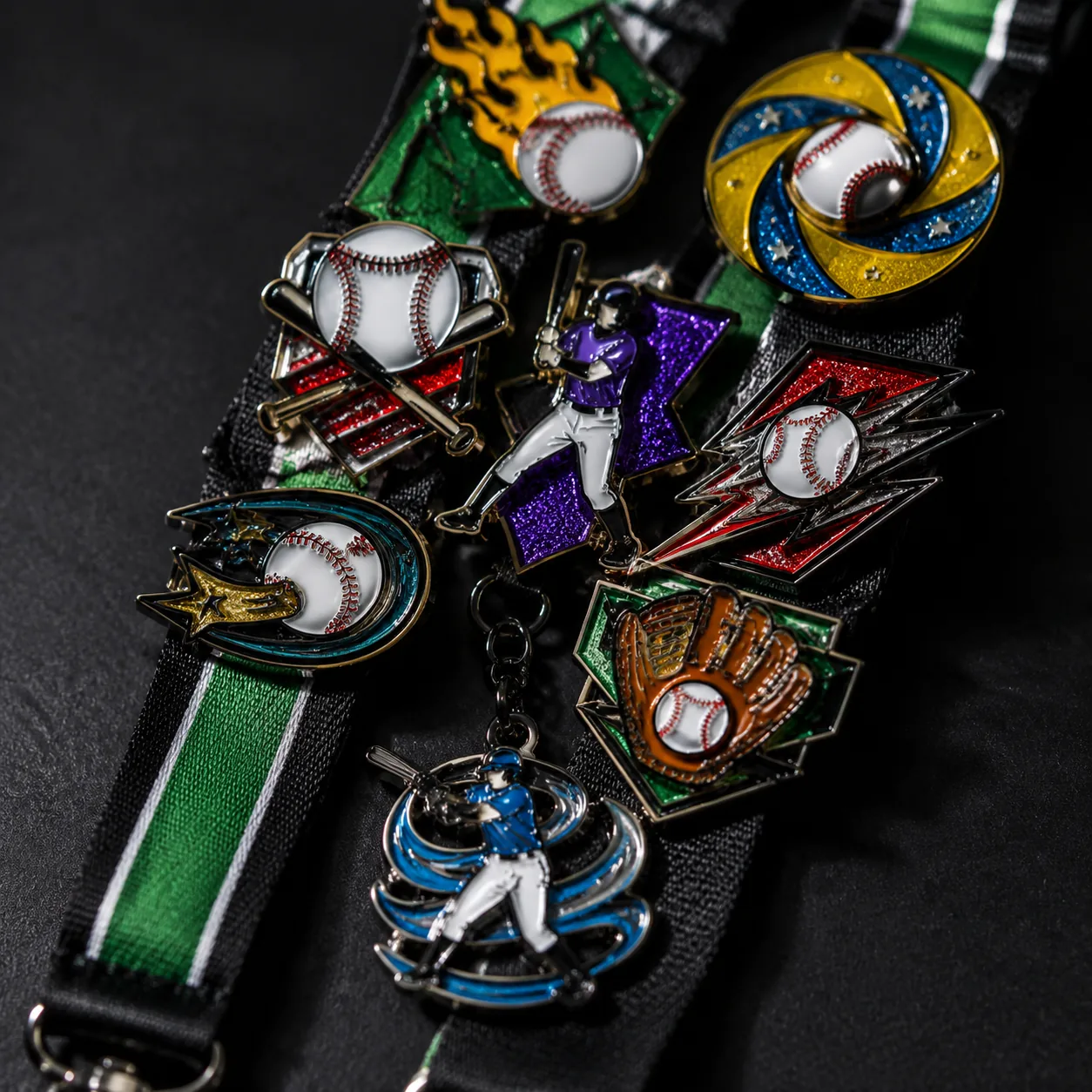
Pin trading is its own tradition at youth baseball and softball tournaments. Teams design a pin for the season, then players swap them with opponents between games — so the goal isn’t a subtle lapel pin, it’s a pin that other kids actively want on their lanyard. This guide covers how to design a custom trading pin that stands out, what the popular upgrades actually do, and how to budget and time the order.
What makes a trading pin different from a regular pin
A trading pin is a soft-enamel pin built bigger and bolder than a corporate lapel pin. Where a lapel pin is 0.75–1 inch and understated, a trading pin runs 1.5–2.5 inches with thick metal lines, saturated color, and often a moving or hanging element. The whole point is visibility and “trade value” on a crowded lanyard, so design choices that would be too loud for a business pin are exactly right here.
Start with size, shape and the team mark
Most teams center the design on a mascot or a state/city silhouette with the team name and year. Bigger is better up to a point: 1.75 inch is the sweet spot for value vs cost, 2 inch+ reads as a “premium” pin that trades up. Custom die-cut shapes (a pennant, a home plate, a mascot outline) cost no more than a circle because the die is cut to your art either way — so don’t default to a round pin.
Color: soft enamel, glitter and dyed-black lines
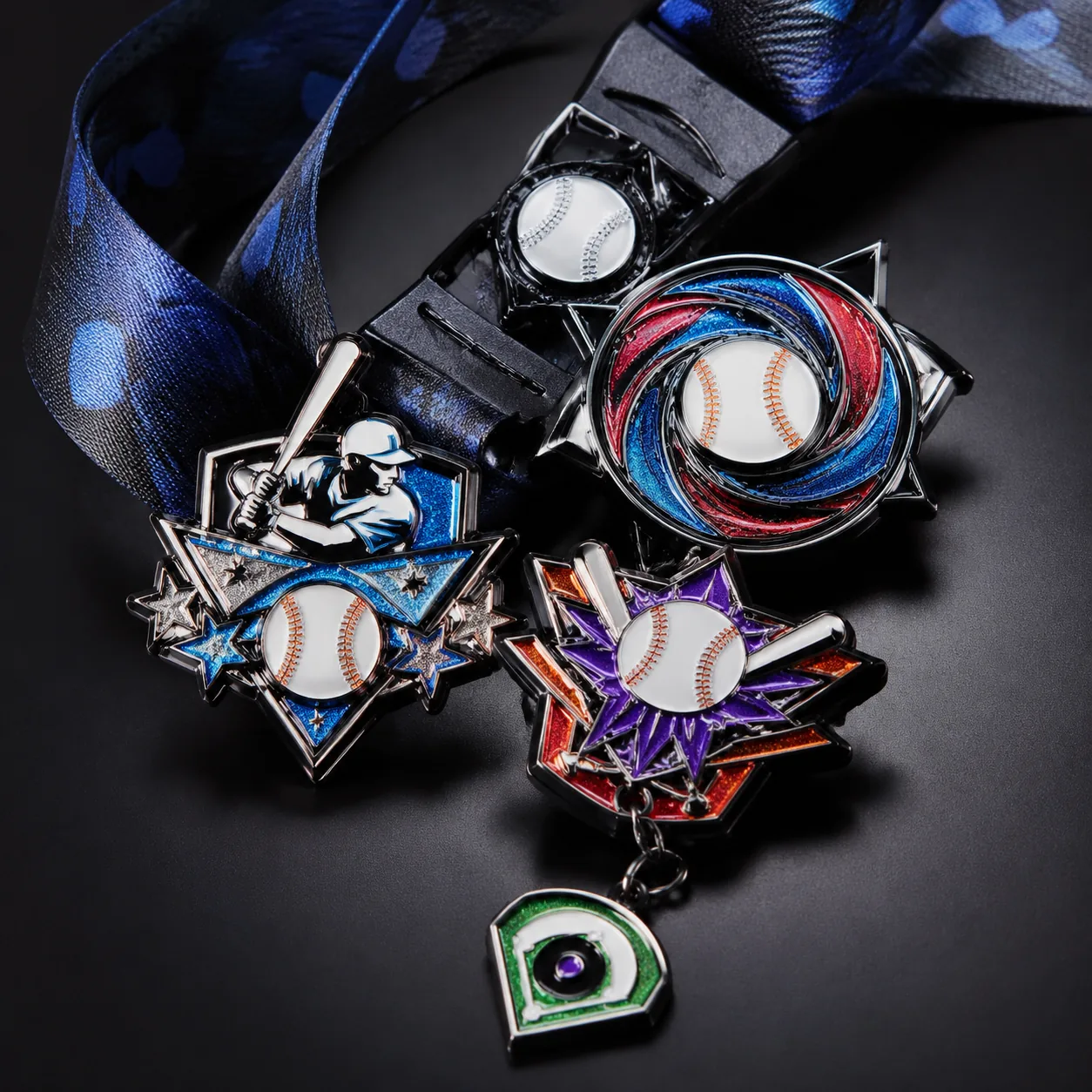
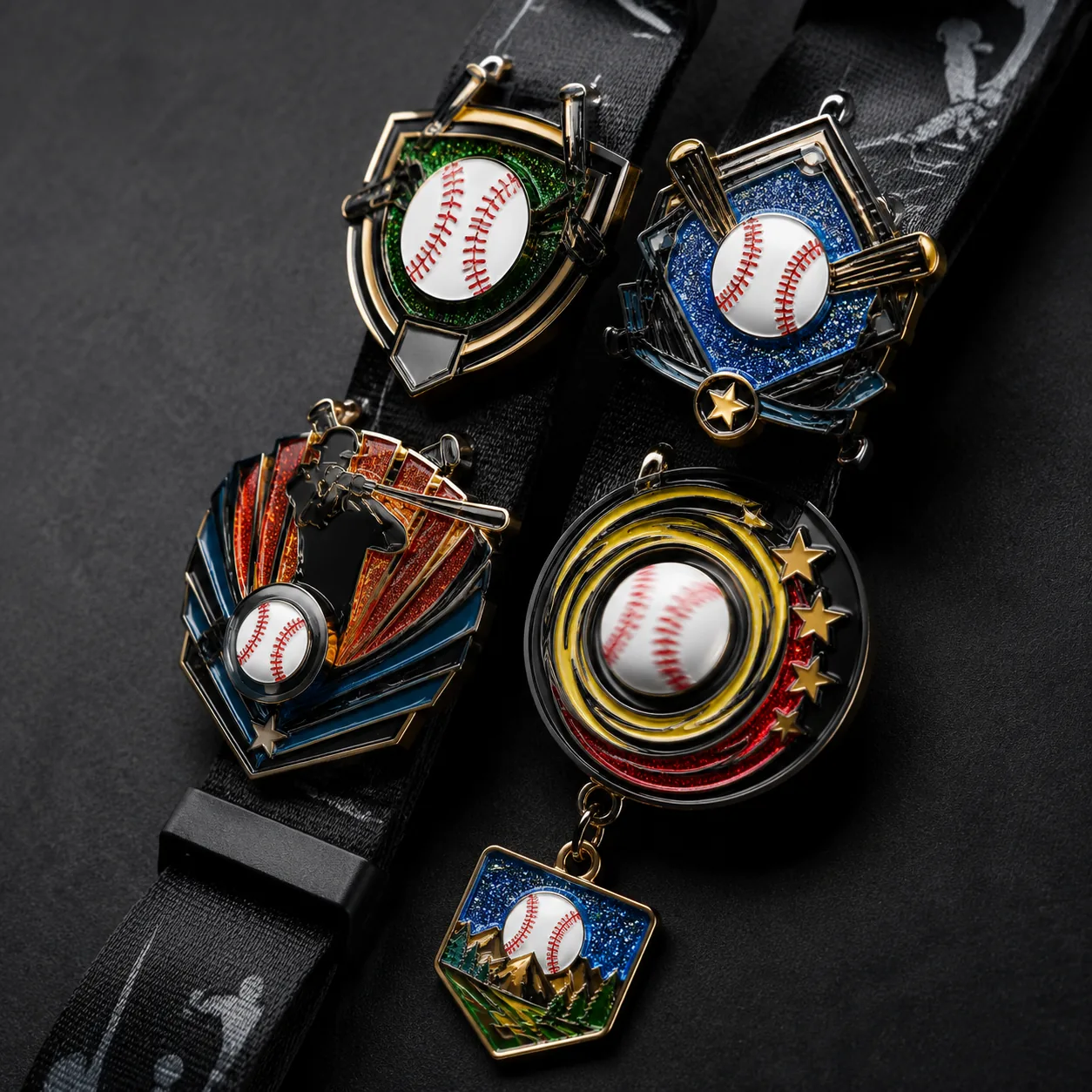
Soft enamel is the standard for trading pins: recessed color wells with raised metal lines, which photographs vividly and costs less than hard enamel. Two cheap tricks dramatically increase perceived value: glitter enamel (mixed into the paste for sparkle) and dyed-black metal lines instead of plated gold/silver. Black lines make bright colors pop and are a trading-pin signature look.
The upgrades that win the trade
Every upgrade below attaches to the same base pin, so you can mix and match. This is where a team pin becomes “the one everyone wants”:
| Upgrade | What it does | Relative cost |
|---|---|---|
| Glitter enamel | Sparkle mixed into color wells | $ |
| Spinner | A center element that physically spins | $$ |
| Slider | A piece that slides along a track | $$ |
| Dangler | A smaller pin hanging below the main pin | $$ |
| Bobble-head | Spring-mounted head that wobbles | $$$ |
| Glow-in-the-dark | Charges in light, glows at night games | $ |
| Blinker (LED) | Flashing lights for night play | $$$ |
| Stained-glass cutout | Translucent enamel with no backing | $$ |
A common winning combo: a 1.75 inch die-cut mascot in soft enamel with dyed-black lines, glitter on the jersey, and a small baseball dangler underneath. It looks far more expensive than its roughly $1.20–1.80 per-pin cost at a few hundred pieces.
Quantities, budget and the trade math
Plan for more than your roster. Each player trades several pins per tournament, so a 12-player team usually orders 100–300 pins for a season of trading. Our MOQ is 100 pieces, and the per-pin price drops sharply with volume because the steel die cost is fixed — the second hundred is much cheaper than the first. Budgeting $200–500 for a season of trading pins is typical for a travel team.
Timeline: order before the season (and well before Cooperstown)
Timing is the one thing teams get wrong. Sampling takes 5–7 days and bulk production about 15–22 days, plus shipping — so for a season opener or a big destination tournament (Cooperstown, Disney-area events), order at least 5–6 weeks out. Send finished artwork early; die engraving can’t start until the design is locked. Rush production is available when the schedule is tight, at a surcharge.
Ready to start? Send your team logo, target size and quantity and we’ll turn around a free design proof and a quote within 12 hours. See the full trading pins options, or browse all our custom pin types.
Ready to get this made?
Send your sketch, target quantity and ship-date. Detailed quotation in 12 hours.