Choosing the Right Promo Product for a 500-Piece Event Kit
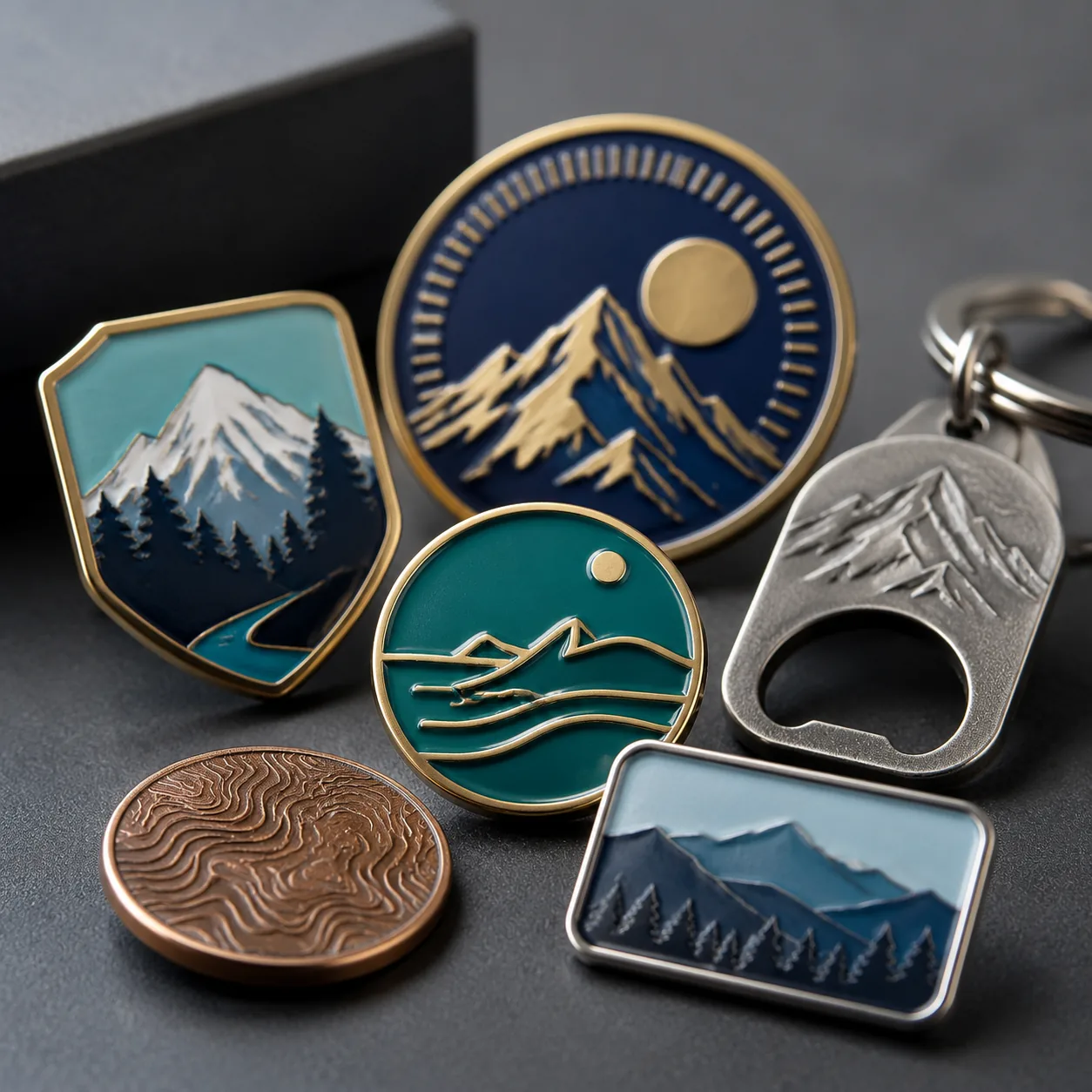
The order looked simple until the kit got real
A marketing team sends a common brief: one event kit, one budget, one ship date, and six stakeholders with different priorities. Sales wants something memorable, operations wants fewer SKUs, finance wants predictable landed cost, and the brand team wants colors that do not drift across items. That is where many promo programs fail: the item choice is made before the pack-out, decoration limits, and factory routing are understood.
The right answer is rarely the fanciest item. For a 500-piece kit, the best product is the one that can survive decoration, packing, and transit with the least risk of rework. If the item needs tight color matching, small parts, or mixed materials, the hidden cost is usually not unit price but sampling cycles and approval delays.
Start with the event use case, not the product
Before comparing pins, keychains, magnets, patches, or lanyards, define how the recipient will actually use the item. A registration desk giveaway has very different requirements from a VIP gift box or a retail-style welcome pack. Items that are carried all day should be flat, lightweight, and safe on clothing or bags; items meant for desks can be heavier and more decorative.
For example, a conference badge companion usually needs low thickness, secure attachment, and fast packing. A commemorative item for a sponsor box can tolerate more weight and a more premium finish, but it may require better carton protection. If the item must be mailed, the outer dimensions and combined gross weight matter as much as the decoration method.
- Ask whether the item is worn, carried, displayed, mailed, or stored.
- Confirm whether the recipient must open packaging by hand at the event.
- Decide if the item must match a brand palette exactly or only stay in the same color family.
- Check if the item will be handled by children, outdoor users, or a general adult audience.
- Set the target landed cost before choosing the decoration format.
A quick comparison of the usual contenders
Once the use case is clear, compare the format against the production realities. The cheapest quote can still be the wrong format if it needs special tooling, fragile attachments, or a decoration process that slows packing. For a 500-piece run, the most useful comparison is usually not prestige but how each item behaves at the factory, in carton packing, and at handoff.
The table below is the kind of internal comparison we use when a buyer is deciding between a small set of eligible formats. Ranges are typical FOB Shenzhen/Yiwu for simple custom work at 500 pcs, and they move with size, finish, and packaging. They are useful for screening, not for final budgeting.
| Item type | Typical FOB USD/unit | Typical lead time | Main risk |
|---|---|---|---|
| Soft enamel pin, 30–35 mm | 0.35–1.20 | 12–20 days | Color fill and plating mismatch |
| Die-struck keychain, 35–45 mm | 0.70–2.20 | 15–25 days | Weight and edge finish |
| Fridge magnet, 40–60 mm | 0.60–2.50 | 12–22 days | Magnet pull and flatness |
| Embroidered patch, 70–90 mm | 0.45–1.80 | 10–18 days | Border shape and stitch density |
| Polyester lanyard, 15–20 mm x 900 mm | 0.35–1.10 | 8–15 days | Print alignment and hardware choice |
What the factory needs before quoting accurately
Factories quote faster and more accurately when the buyer gives the minimum viable spec set. For a simple promo item, that usually means artwork, size, material, finish, attachment, and packaging. If any of those are vague, the quote may look attractive but will not survive sampling, especially when the item has multiple components or mixed finishes.
A practical request should include dimensional tolerance, plating or print method, and packing format. For metal items, a normal dimensional tolerance of plus or minus 0.3 mm is often acceptable on small pieces, while larger bodies may need plus or minus 0.5 mm if the design is simple. For enamel items, common finish expectations might include nickel, black nickel, gold, or antique brass plating in roughly 0.03–0.05 microns for flash processes or higher build where specified by the factory, but the buyer should ask what the supplier actually controls and measures.
| Spec area | Good buyer input | Why it matters |
|---|---|---|
| Size | Finished size in mm with tolerance | Prevents artwork-to-tool mismatch |
| Decoration | Soft enamel, hard enamel, print, embroidery, or emboss | Determines tooling and labor |
| Plating/finish | Color and surface target | Controls appearance and corrosion risk |
| Backing/attachment | Butterfly clutch, rubber, magnet, pin back, split ring | Affects use, safety, and return risk |
| Packaging | Bulk bag, polybag, backing card, box | Drives packing labor and carton count |
When one kit needs more than one product
Many buyers try to force one item to do everything. That is usually how budgets get blown up. A better approach is to assign roles inside the kit: one hero item for brand memory, one functional item for daily use, and one low-cost filler only if it supports the story.
For a 500-piece event kit, a common structure is a premium metal piece plus a practical carrier item. For example, a lapel pin can handle branding and collectability, while a lanyard or patch handles daily visibility. If the budget is tight, a single well-specified item is safer than three weak items that all need separate approvals, packing, and freight calculations.
- Use one hero item when brand recall matters most.
- Use one functional item when the gift must be carried or worn.
- Use multiple items only if each one has a clear role.
- Avoid combining items with very different lead times unless the schedule is flexible.
- Keep mixed kits to standard pack-out sizes to reduce manual counting errors.
How to avoid surprise costs in sampling and pack-out
The quote is not the full cost. Buyers often discover added charges during sample revision, carton changes, or packaging assembly. The most common surprises are extra tooling for shape changes, re-sampling after artwork fixes, and manual labor for odd pack counts or insert placement.
If the product includes a card, insert, or retail-style box, ask whether the factory can do assembly in-house or whether it will be outsourced. In-house pack-out is usually faster and more controlled, but it still needs a clear packing standard. For example, a backing card with one item per bag may be straightforward, while a mixed kit with two inserts and a ribbon tie can double the handling time per unit.
- Confirm whether tool fees are one-time or partially refundable at reorder.
- Ask whether sample charges are credited against mass production.
- Specify carton count, master carton size, and label format before approval.
- Clarify whether the quoted price includes assembly, polybags, and inner boxes.
- Check if any item in the kit has a separate minimum order quantity.
Quality gates that matter before mass production
For a 500-piece order, you do not need laboratory-level complexity, but you do need three simple gates: a signed sample, a clear acceptance standard, and a shipment check against that standard. If the factory skips any of those, the order becomes a judgment call when defects appear. That is the point where buyers lose leverage.
For metal promo items, a reasonable factory-level inspection target is often AQL 2.5 for major defects and 4.0 for minor defects, unless the item is unusually visible or brand-sensitive. On printed items, check registration, color density, and edge trim. On enamel or cast items, inspect fill level, burrs, plating consistency, and attachment strength; a pull test or manual tug test is often enough for small giveaway hardware if the spec is stated clearly.
| Check point | Acceptable target | Reject trigger |
|---|---|---|
| Color | Matches approved sample within agreed tolerance | Obvious shift from brand tone or multi-piece mismatch |
| Edge finish | Smooth to touch, no sharp burrs | Visible burrs or cutting risk |
| Attachment | No rotation, no loose hardware | Clutch slips or ring opens easily |
| Packaging | Correct count, clean packing, correct insert | Wrong quantity or damaged presentation |
| Logo detail | Readable at normal viewing distance | Blurred lines or filled-in text |
The best choice when the deadline is fixed
If the event date is locked, the safest choice is usually the format with the fewest process steps. For many buyers that means a standard-sized metal pin, patch, or lanyard rather than a multi-material novelty item. Simpler products are easier to sample, easier to inspect, and less likely to fail during pack-out or transit.
The trade-off is obvious: simpler items may feel less premium. That is why the decision should be based on the event objective. If the goal is mass distribution, speed and consistency beat complexity. If the goal is a small VIP run, a more detailed product can be worth the extra sampling and freight time as long as the buyer accepts the added risk.
What to do next
If you are planning a 500-piece promo kit, start by writing one page that answers four questions: who receives it, how it will be used, what the target landed cost is, and when it must arrive. Then compare two or three formats against the same spec sheet instead of asking each supplier to quote a different idea. That keeps quotes comparable and exposes where the real risk sits.
At ZheCraft, we usually help buyers narrow the format first, then lock the measurable specs: size in millimeters, finish, attachment, packing, and inspection target. If you already know the event date and audience, we can turn that into a production-ready spec set before sampling starts, which saves time and avoids redesign after quote approval.
Have a project? Send your artwork and target quantity and we’ll reply with a detailed quotation within 12 working hours.
Ready to get this made?
Send your sketch, target quantity and ship-date. Detailed quotation in 12 hours.



