China vs Nearshore for Custom Metal Promo in 2026
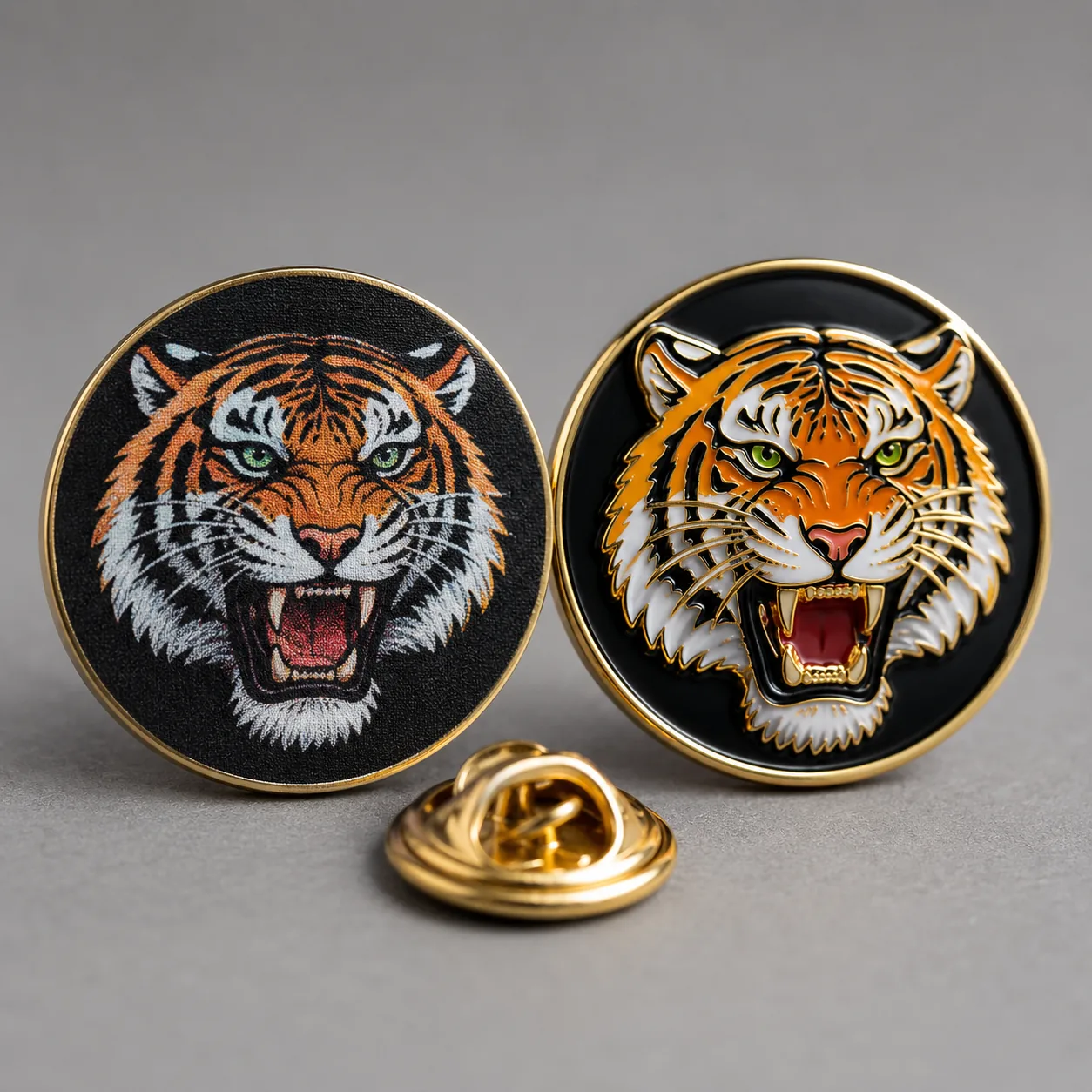
Why 2026 sourcing decisions must be based on landed cost, defect risk, and spec fit
By 2026, the question is not whether China can manufacture custom metal promo well. It can, particularly for lapel pins, challenge coins, medals, keychains, magnets, patches, and bundled promo sets. The real decision is whether China’s lower FOB price still wins after freight, tariff exposure, brokerage, payment costs, sample revisions, and the commercial cost of missing a launch, event, or award date.
Simple unit-price comparisons are usually misleading. A 1.25 in soft enamel iron pin at 300 pieces behaves very differently from a 2.0 in die-struck brass coin at 3,000 pieces, or a 2.25 in zinc alloy bottle-opener keychain packed with a printed backing card, suffocation-warning polybag, and barcode label. Tooling amortization, plating thickness, attachment hardware, edge polishing, carding labor, and shipment weight can move total cost more than an apparent $0.20 to $0.50 factory-price advantage.
China still leads on process depth, finish variety, mixed-SKU handling, and repeatability on decorative metal parts. Nearshore suppliers in Mexico, Turkey, and selected Eastern European markets become more competitive when transit time is critical, order complexity is low, or the buyer wants to reduce exposure to duty changes and emergency air freight. The only useful comparison is a normalized one: same Incoterm, same AQL, same plating spec, same packaging, same approval path, and the same in-hands date.
2026 benchmark pricing and process assumptions: compare on equal terms
| Product spec | China factory range | Nearshore factory range | Main gap drivers |
|---|---|---|---|
| Soft enamel iron pin, 1.25 in, 1.5 mm, 4 spot colors, 1 post, butterfly clutch, polybag, 300 pcs | FOB $0.42-$0.78; MOQ 100-200; tooling $35-$65; pre-pro sample 4-6 days; production 10-15 days | Ex-works $0.95-$1.80; MOQ 200-500; tooling $45-$85; sample 5-8 days; production 12-20 days | Die amortization, enamel fill labor, plating-line utilization |
| Hard enamel brass pin, 1.25 in, 1.5 mm, 4 colors, polished face, 300 pcs | FOB $0.78-$1.35; MOQ 100-200; tooling $45-$80; sample 5-7 days; production 14-20 days | Ex-works $1.60-$2.80; MOQ 200-500; tooling $60-$95; sample 6-9 days; production 15-25 days | Brass cost, stone/polish yield, slower finishing cycle |
| Die-struck challenge coin, 1.75 in, brass, antique nickel, 3.0 mm, 500 pcs | FOB $1.45-$2.60; MOQ 100-200; tooling $70-$150; sample 5-7 days; production 12-18 days | Ex-works $2.80-$4.80; MOQ 200-500; tooling $90-$180; sample 6-10 days; production 14-24 days | Metal weight, die cost, edge finishing capacity |
| Challenge coin, 2.0 in, 3.5 mm, soft enamel 2 sides, rope edge, 1,000 pcs | FOB $2.10-$3.80; MOQ 200; tooling $90-$180; sample 6-8 days; production 15-22 days | Ex-works $3.90-$6.20; MOQ 300-500; tooling $120-$220; sample 7-10 days; production 18-28 days | Second-side fill, edge detail, polishing labor |
| Zinc alloy keychain, 2.0 in, 3D front, split ring + short chain, epoxy logo, 500 pcs | FOB $1.05-$1.95; MOQ 100-300; mold $80-$180; sample 5-7 days; production 12-18 days | Ex-works $2.10-$3.90; MOQ 250-500; mold $110-$220; sample 6-10 days; production 14-25 days | Casting, hand grinding, hardware sourcing |
| PVC patch with hook backing, 3.0 in, 500 pcs | FOB $0.60-$1.20; MOQ 100-200; mold $30-$60; sample 4-6 days; production 10-15 days | Ex-works $1.10-$2.10; MOQ 200-500; mold $40-$75; sample 5-8 days; production 12-20 days | Mold utilization, backing attachment labor |
| Sublimation lanyard, 20 mm x 900 mm, safety breakaway, swivel hook, 1,000 pcs | FOB $0.48-$0.95; MOQ 300-500; sample 3-5 days; production 7-12 days | Ex-works $0.90-$1.60; MOQ 500-1,000; sample 4-6 days; production 10-18 days | Webbing cost, sewing labor, hardware procurement |
| Typical decorative metal tolerances | Overall ±0.15 mm to ±0.25 mm; hole dia. ±0.10 mm to ±0.15 mm; post location ±0.30 mm to ±0.50 mm | Overall ±0.20 mm to ±0.30 mm; hole dia. ±0.12 mm to ±0.18 mm; post location ±0.40 mm to ±0.60 mm | Tool wear control, fixturing, in-process checks |
| Typical decorative plating thickness buyers can reliably specify | Nickel, black nickel, imitation gold 0.03-0.08 microns standard; 0.10-0.15 microns by premium request, usually +5% to +12% | Usually similar decorative range; premium thickness often requires longer queue, surcharge, or higher minimum lot | Bath control, line volume, process documentation |
| Common inspection standard for promo items | AQL 2.5 major / 4.0 minor standard; premium programs can tighten to 1.0 / 2.5 | AQL 2.5 / 4.0 common; some smaller shops still default to workmanship-only checks unless buyer specifies AQL | QC staffing, buyer discipline, sampling method |
These ranges assume normal decorative quality, not jewelry plating or retail gift-box presentation. They also assume artwork is production-ready. If a quote includes redraw work, extensive 3D sculpting, unusual attachments, or carding sourced from another vendor, the practical lead time usually extends by 2 to 6 days.
Pins and badges: China keeps the clearest edge on fine detail, finish control, and mixed-SKU execution
Pins are still the category where China’s structural advantage is easiest to see. If the order combines multiple finishes, custom backstamps, two clutch styles, backing cards, or several SKUs under one PO, established Chinese factories usually have a deeper in-house process stack. A 5,000-piece distributor program split across three designs, with gold and black nickel plating, two attachment types, SKU-specific cards, and final assortment, is typically easier for a mature China supplier to run with fewer handoff errors.
The technical edge shows up in line definition and consistency. On soft enamel and die-struck pins, capable China plants can often hold raised metal lines at roughly 0.20 to 0.25 mm minimum, recessed text around 0.25 to 0.30 mm, and cleaner enamel walls in small cells. Hard enamel jobs generally need slightly more conservative artwork because firing and polishing can soften very fine separations. In practice, logos with hairline outlines, small ® marks, or tight adjacent colors are more likely to reproduce cleanly in China when the factory runs decorative metal every day.
This does not mean nearshore cannot make good pins. It means the buyer must check how the quote was built. Lower nearshore pricing sometimes assumes lighter plating, less edge polish, standard rather than heavy-gauge clutches, or looser workmanship acceptance around post alignment, enamel surface flatness, and backside scuffing. On a simple rush spec such as a 1.0 in iron soft enamel pin, standard nickel, one post, and no carding, nearshore can be competitive. On a branded pin where the face quality matters, the gap usually reopens.
Color control is another area where buyers often overestimate what the PO can accomplish. Decorative enamel systems are process-dependent and should not be treated like offset print with exact lab-match expectations. A stronger instruction is to approve a physical color chip or sealed sample, specify the dominant viewing distance, and state whether slight lot-to-lot variation is acceptable on reorders placed 6 to 12 months apart. That reduces disputes more effectively than writing 'Pantone match' alone.
Coins, medals, and cast keychains: freight weight matters, but process breadth still usually favors China
Challenge coins, medals, and zinc alloy keychains push more cost into metal weight and finishing labor. A 2.0 in brass coin at 3.5 mm thick commonly weighs about 70 to 90 g depending on relief depth, rim width, and edge style. At 500 pieces, net product weight alone is often 35 to 45 kg before cartons and inserts. At 1,000 pieces, the shipment can move into a range where planned air freight adds meaningfully to landed cost and emergency air can erase most factory-price savings.
Even in heavier categories, tooling economics usually still favor China. Typical die charges remain around $35 to $80 for standard stamped pin tooling, $70 to $150 for many coin dies, and $80 to $180 for common zinc alloy molds. Deep 3D relief, cutouts, spinner centers, bottle-opener reverses, or multi-part assemblies push those numbers higher. Because Chinese factories spread die-making and maintenance costs across higher throughput, they usually quote lower setup and are more likely to retain usable tool files and replacement capability for reorder programs.
China retakes a stronger lead as soon as the coin or cast part adds process complexity: dual plating, cutouts, spinner centers, laser numbering, translucent color fills, glow enamel, bottle-opener backs, or mixed antique-plus-polished effects. Those features depend on coordinated stamping or casting, grinding, plating, fill, assembly, and final inspection. Nearshore suppliers can certainly quote them, but the workflow is more often fragmented across subcontractors, which increases variation and slows correction loops.
Nearshore deserves serious consideration when the specification is simple and the deadline is unforgiving: for example, a plain antique-finish coin with no color, no edge pattern, quantity 150 to 300 pieces, and a hard ceremony date in less than three weeks. In those cases, break-even is usually driven by four variables: die cost, unit weight, freight mode, and the internal cost of a late delivery.
Landed cost modeling: normalize Incoterms, freight, duties, and correction-loop risk
The most common sourcing error is comparing ex-works from one supplier with FOB from another, or comparing a factory quote with a delivered domestic quote without normalizing assumptions. For 2026 buying, model at least three scenarios for any custom metal order: planned ocean or consolidation, planned air, and emergency air. China often remains cheaper under the first two. Nearshore becomes competitive when timing is compressed enough that transit certainty and faster remake cycles outweigh unit economics.
Use realistic line items. For a typical China order into the US, add tooling, pre-production sample courier, wire or card fees, customs brokerage, duty where applicable, domestic final-mile delivery, and at least one possible correction loop if the first sample misses spec. A small sample correction can add 3 to 7 days. A production remake can add 10 to 20 days plus freight. Those are not edge cases; they are part of the sourcing math.
MOQ pressure also distorts comparisons. If the campaign needs 350 pieces but the effective economical run is 1,000 pieces, the excess is real cost for dated, logo-specific, or client-branded promo. Nearshore may reduce that inventory risk. But many nearshore shops charge more for labor-heavy services such as barcode labeling, retail carding, SKU assortment, and drop-ready pack-out that Chinese plants often quote more routinely.
A decision-grade RFQ therefore needs more than price. At minimum, request quote validity in days, Incoterm, tooling, sample timeline, production days from artwork approval, carton count, estimated net and gross weight, carton dimensions, packaging assumptions, and any surcharge for split shipment, mixed plating, or mixed attachments. Without those fields, unit price is not enough to choose a supplier.
Quality control: measurable workmanship standards matter more than easier communication
Nearshore sourcing can improve time-zone overlap, artwork clarification speed, and native-language communication. Those are real advantages, especially when the buyer’s drawing pack is weak. But easier communication does not automatically produce better metal parts. In this category, many failures are specification failures: weak jump rings, underfilled enamel, plating that wears too quickly, rough edges, off-center posts, poor adhesive cure on magnets, or inconsistent antique finish between lots.
Both China and nearshore suppliers should be held to the same measurable QC criteria. Define the AQL by lot size and list reject criteria for plating pits, visible scratches, enamel voids, color contamination, burrs, sharp edges, attachment alignment, missing accessories, and print defects on backing cards. If the supplier cannot state the standard numerically, the buyer is still purchasing uncertainty.
For most promo programs, AQL 2.5 major / 4.0 minor remains the practical market norm. Premium retail-adjacent programs often tighten to AQL 1.0 / 2.5 with a sealed master sample for appearance. On stamped badges, overall dimensions within ±0.20 mm are realistic on many designs, while post location at ±0.50 mm is a common control point. For butterfly clutches, a pull-retention check on a small sample set is reasonable; for glued magnets, buyers should define a no-detachment standard after 24-hour cure and basic drop or handling simulation.
Plating thickness should be written into the PO whenever appearance life matters. Decorative nickel, black nickel, and imitation gold commonly run 0.03 to 0.08 microns. For products that will be sold, heavily handled, or stored longer before distribution, 0.10 to 0.15 microns is often worth the 5% to 12% surcharge. It does not make the part jewelry-grade, but it reduces premature wear on raised polished areas and high-contact edges.
Where nearshore actually wins in 2026, and where it usually does not
Nearshore wins most often on low-complexity, date-critical orders where transit certainty has direct commercial value. Typical examples are a one-design rush pin for a conference, a plain antique coin for an award ceremony, or a modest keychain run for a regional promotion where the order size is too small to absorb a correction loop plus international freight risk. In these cases, saving 5 to 10 calendar days can be worth more than saving $0.40 to $1.50 per unit.
Nearshore can also be attractive when the buyer expects multiple artwork iterations before signoff, or when packaging and counts may change late in the process. Faster sample turnaround and shorter replacement transit can reduce disruption even when factory pricing is higher. This is especially true for domestic distributors serving event clients who revise headcounts, names, or carding after approval would ideally be frozen.
Where nearshore usually does not win is on complexity. Multi-SKU programs, mixed plating, custom attachments, sequential pack-out, coordinated bundles across pins, coins, and lanyards, or premium-detail requirements still tend to favor China. The more a project depends on stable plating, daily production experience, and efficient hand assembly, the harder it is for a smaller nearshore supply base to match both price and repeatability.
Practical break-even rules and the RFQ checklist buyers should use
At 100 to 300 pieces, the decision is highly sensitive to tooling, setup, and freight mode. Nearshore can make sense for simple no-color badges, plain antique coins, or uncomplicated keychains needed quickly. Once the product adds multiple colors, cutouts, epoxy domes, custom packaging, or matching across several SKUs, China often regains the advantage because the setup is already optimized for that type of custom work.
At 500 to 2,000 pieces, China is usually the stronger economic choice for pins, coins, keychains, patches, magnets, and lanyards, even after normal duty and freight assumptions. Above 3,000 pieces, China remains clearly cheaper on lightweight items such as pins, patches, and lanyards. The main exception is heavy metal product under compressed air timelines, where a split strategy can work: source an urgent first tranche nearshore, then source the balance from China.
- Normalize every quote to the same Incoterm, AQL, plating thickness, packaging method, and in-hands date.
- Request MOQ tiers at 100, 300, 500, 1,000, and 3,000 pieces so the price curve is visible.
- Ask for sample lead time and production lead time in days from final artwork approval, not from deposit date alone.
- Require carton count, gross weight, and packed dimensions so parcel, air, and ocean options can be modeled early.
- Specify critical tolerances, post location limits, and reject criteria for enamel voids, burrs, plating pits, scratches, and print defects.
- Confirm whether carding, barcoding, assortment, and final inspection are done in-house or subcontracted.
- For reorder programs, ask how long tooling is retained, whether dies are maintained, and whether repeat lots are matched to a sealed approval sample.
The most reliable next step is a controlled RFQ sent to one qualified China supplier and one qualified nearshore supplier using the same drawing pack, Pantone callouts, packaging spec, AQL target, and delivery deadline. Then model three outcomes: normal schedule, tight schedule, and emergency schedule. If landed numbers are close, decide on complexity, correction-loop tolerance, and repeatability rather than instinct. For many 2026 buyers, the rational structure is dual-track: China for engineered, repeatable core programs and nearshore only for true rush replenishment or low-complexity, date-critical runs.
Have a project? Send your artwork and target quantity and we’ll reply with a detailed quotation within 12 working hours.
Ready to get this made?
Send your sketch, target quantity and ship-date. Detailed quotation in 12 hours.



