Buying a Mixed Promo Set Without Spec Drift
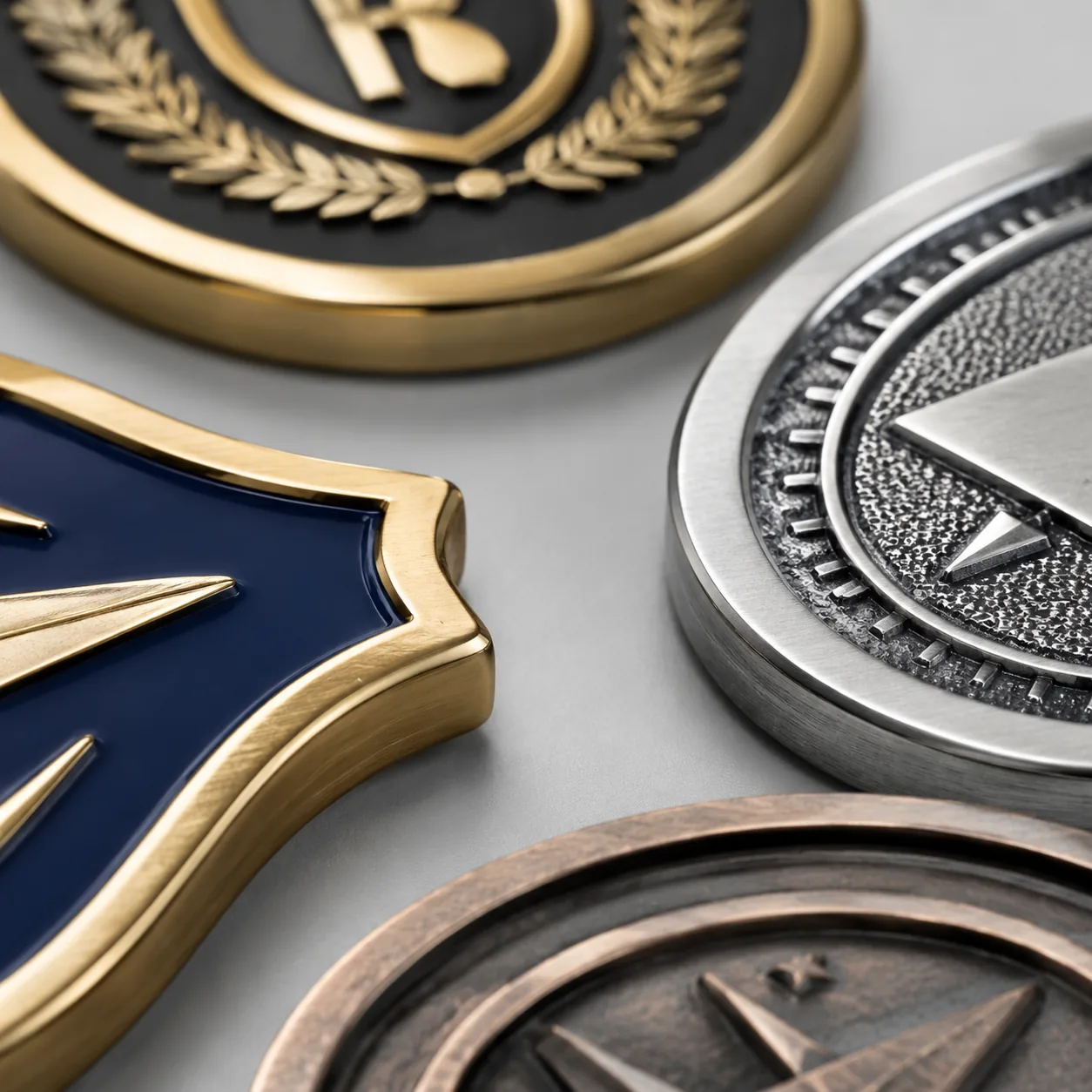
Start with the campaign as one system
The most common failure in a mixed promo set is not decoration quality. It is spec drift between the marketing brief and the factory order. A brand team may want pins, coins, keychains and lanyards that feel like one collection, but each SKU can get quoted with different assumptions for color, plating, thickness, tolerance, attachment and packaging. The result is a set that looks unified in a deck and inconsistent in hand.
The safer approach is to write the order as one system. Define one master color reference, one finish family, one approval sequence and one packaging logic, then allow each product to vary only where the material requires it. For a launch kit, event pack or recognition program, controlled variation is usually better than forcing identical specs across dissimilar items. ZheCraft sees fewer sample loops when buyers treat the set as one production program instead of four isolated products.
A practical example helps. A 4-item set for a trade-show launch might include a 30 mm enamel lapel pin, a 40 mm challenge coin, a 45 mm metal keychain and a 20 mm woven or printed lanyard. Those items should share the same logo logic and visual tone, but they do not need identical shine, exact surface behavior or the same manufacturing method. The goal is coherent branding, not fake uniformity.
Build the visual hierarchy before quoting
Decide which item carries the detail and which items carry the brand signal. In most mixed sets, the pin or coin should be the hero item, the keychain should carry a simplified mark, and the lanyard should use the broadest shapes and fewest colors. If every item tries to show every detail, the smallest product becomes the limiting factor and the whole program drops to the lowest common denominator.
A useful rule is to define one hero SKU, one secondary SKU and two support SKUs. Hero pieces can support tighter line work, usually around 0.8 to 1.0 mm minimum metal line width for die-struck parts, with more premium plating such as 0.3 to 0.5 micron decorative gold or nickel over a proper base. Support pieces should be optimized for legibility and durability, not for maximum visual complexity. For example, a lanyard print should prioritize bold shapes and contrast over fine typography.
The next question is whether the set must match exactly or only coordinate. Exact matching means the same Pantone targets, same finish family, same packaging and same level of gloss, which increases cost and sample time. Coordinated matching allows controlled variation: for example, a soft enamel pin with polished nickel, a zinc alloy coin with antique silver, a PVC keychain with printed color fills, and a woven lanyard using the closest achievable thread match. That is usually the right answer unless the set is for executive gifting or a premium retail display.
For artwork simplification, assume the smallest usable logo size is 25 to 28 mm for clean legibility on metal, and about 8 to 12 mm text height for readable lanyard repeats. If the full logo cannot survive at those sizes, make a reduced lockup for the smaller items instead of shrinking the same artwork everywhere. This is the cheapest way to prevent unreadable details and silhouette loss later in production.
Lock color, size and tolerance in one master spec
A mixed set should be quoted from a single visual system sheet. That sheet needs final artwork files, Pantone references, finish notes, edge treatment, and the intended use case for each item. If the coin is for executive gifting and the lanyard is for mass event distribution, they should not share identical cost assumptions or finishing rules.
Color is the biggest source of hidden mismatch. For enamel and print, specify Pantone Solid Coated references and allow a realistic tolerance of about Delta E 2 to 3 for enamel or printed graphics. Textile items usually drift more than metal, so for woven or sublimated lanyards the acceptance rule should be visual match against a target swatch, not a strict numeric lock. A good brief names one exact target and one acceptable fallback: exact on the hero item, close on the secondary item, and visually aligned on utility items.
The same logic applies to dimension. A pin at 30 mm, a coin at 40 mm, a keychain at 45 mm and a lanyard repeat at 320 to 450 mm are not unrelated numbers; they are part of the same scaling system. If the layout breaks below 25 mm, simplify the art first and only then reduce the size. Shrinking a crowded layout is usually what creates missing text, muddy fills and weak borders.
Tolerance should be written by item type, not as one blanket note. Small die-struck metal parts commonly hold outer-size tolerances of about ±0.3 to ±0.5 mm, while soft goods like lanyards can vary more in finished length, often ±10 to ±20 mm depending on cut and sewing method. Attachment position matters more than total length when clips, split rings and buckles must align inside the final pack. If a keychain loop or lanyard clip is off-center, the set will feel inconsistent even if the dimensions are technically within range.
| Item | Typical spec range | Best role in set | Common risk |
|---|---|---|---|
| Lapel pin | 25-35 mm; 1.2-1.8 mm thick; 0.3-0.5 micron plating | Hero logo item | Too much detail at small size |
| Challenge coin | 38-45 mm; 2.0-3.5 mm thick; antique or polished finish | Premium keepsake | Overcrowded reverse side |
| Keychain | 35-50 mm; 2.0-4.0 mm total thickness | Daily-use carry item | Hardware mismatch or weak ring |
| Lanyard | 15-20 mm width; 900-950 mm finished length | High-visibility utility piece | Color drift in print or weave |
Choose materials and finishes by function, not by status
Material selection in a coordinated set is about consistency under use, not prestige alone. Metal items usually run on brass, iron or zinc alloy depending on relief depth, weight and tooling complexity. Brass is better for fine detail and cleaner plating. Zinc alloy is better for larger 3D forms and deeper relief. If the buyer wants a premium feel without a runaway budget, a brass hero pin plus a zinc alloy coin is often a smarter combination than forcing both items into the same expensive spec.
Finish family matters more than exact product type. A polished gold pin and a polished gold coin can still look mismatched if one is mirror-bright and the other is satin. Decide whether the set is polished, antique, matte or textured, then keep all metal pieces inside that family. ZheCraft usually recommends limiting special effects to one hero piece so the set does not look overdesigned or visually noisy.
Mixed media should be coordinated, not artificially equalized. Polyester lanyards hold bright print well but will never have metallic reflectivity. PVC keychains can deliver bold color blocks and soft edges, but they will never behave like a hard enamel pin. The right expectation is aligned shape, color and tone, not identical surface behavior.
A realistic four-piece program usually lands in these ranges: a brass or iron pin at 1.2 to 1.8 mm thickness, a zinc alloy coin at 2.5 to 3.5 mm thickness, a PVC or metal keychain at 2.0 to 4.0 mm total thickness, and a polyester lanyard at 15 to 20 mm width. A lanyard commonly finishes around 900 to 950 mm in circumference depending on wear style and clip setup. If the keychain includes a lobster clasp, bottle opener or swivel hardware, confirm the hardware grade early because it affects both price and lead time.
Common acceptance targets by process are straightforward. Decorative plating on value promo items often sits around 0.3 to 0.5 micron. More wear-resistant programs may specify 0.8 to 1.0 micron on exposed faces if budget allows. Metal badges and coins should also be checked for edge consistency, filled-color flushness and any burrs or sharp points, especially on pocket-carry items.
Quote the program, not four disconnected SKUs
A coordinated set should be quoted with shared assumptions for artwork prep, setup and packaging, even when the production methods differ. Otherwise you get four isolated quotes that look competitive but hide different parts of the real cost. Ask every supplier to state tooling, plating, color count, attachment, packaging and freight assumptions in the same format so the comparison is real.
For China sourcing, a small mixed set often lands in practical FOB ranges like these: enamel pins at roughly USD 0.45 to 1.80 each depending on size and complexity; challenge coins at USD 1.20 to 4.50 each; metal keychains at USD 0.80 to 3.20 each; and lanyards at USD 0.25 to 1.20 each. These are normal production ranges for standard promo quality, not retail-luxury work. If a quote falls far below them, inspect what is missing: plating thickness, mold cost, artwork cleanup, packaging, or freight.
MOQ tiers usually differ by item. Pins and keychains often start around 100 to 300 pcs per design. Coins often start around 200 to 500 pcs. Lanyards frequently start around 100 to 300 pcs depending on whether they are printed, woven or sublimated. If one SKU has a higher MOQ, the factory should be able to explain whether the constraint is die setup, webbing length, hardware sourcing or color-change labor. If the answer is vague, the quote is probably incomplete.
Lead time should be written at program level, not per SKU. A realistic mixed order may need 3 to 5 days for artwork confirmation, 7 to 12 days for sampling, and 15 to 25 days for mass production after sample approval. Add time for custom backer cards, gift boxes, laser engraving, multi-step plating or hardware that is not in stock. The slowest SKU controls the ship date for the full set, so the schedule must be built around the bottleneck, not the average.
For comparison, ask for one line per item plus one line for shared services. Shared services usually include art cleanup, mold or die setup, print setup and final kitting. This makes it easier to see whether a low unit price is real or just a quote that shifted cost into hidden extras. A factory that can break out its assumptions cleanly is usually easier to work with during sampling too.
Use one sample ladder and one QC standard
The fastest way to lose control is to approve one item quickly and let the others drift. A better method is a unified sample ladder: digital mockup, pre-production sample and final set assembly check. That lets you compare logo weight, finish tone, size balance and color accuracy across the whole program before mass production starts.
Quality control should be defined once, then applied across the set where practical. AQL 2.5 is common for general appearance defects, while critical failures such as missing attachments, broken clasps, wrong colors or wrong artwork should be treated as zero-tolerance defects. On metal items, ask for plating thickness verification by spec. Decorative items often sit at 0.3 to 0.5 micron, while heavier-use promo programs can request 0.8 to 1.0 micron on exposed faces if the cost supports it.
Do not approve from screen alone. Review all samples together under neutral light, ideally 4000K to 6500K. A coin that looks correct by itself may read too dark next to a bright enamel pin, and a lanyard print that seems fine on its own may still drift once it is placed beside the rest of the set. Side-by-side physical approval catches problems that single-item photography hides.
The hardware check matters as much as color. Split rings, lobster clasps, snap hooks and buckle points should pass a simple pull test matched to the use case. For lightweight event giveaways, a 3 to 5 kg pull resistance is often enough. For heavier carry items or bottle-opener keychains, specify a higher threshold and ask the factory to confirm it in writing. If the set includes a lanyard with a detachable buckle, verify both the connection strength and the release action, not just one of them.
- Check all samples under the same light source before approval.
- Measure critical dimensions against one master reference file.
- Confirm Pantone targets and note acceptable drift by material.
- Test hardware pull strength on keychain rings and lanyard clips.
- Verify that packaging fits the full set without crushing attachments.
Package for presentation without adding avoidable risk
Packaging is part of the product in a mixed set because the box, tray or card often controls the first visual impression. If each item ships separately in random bags, the set loses cohesion even when the products are well made. A coordinated backing card, insert tray or gift box can make mixed materials feel like one program and can also protect finishes during transit.
The trade-off is cost and assembly time. A simple polybag is cheapest, but it offers poor presentation and limited scratch protection. A printed backing card, EVA tray or custom gift box improves perceived value and reduces handling damage, but it typically adds about USD 0.10 to 1.50 per set depending on size, print coverage and insert complexity. For short-lived giveaways, avoid overpackaging; for VIP gifts or sales incentives, packaging often pays back in presentation quality and fewer damages.
Shipping cartons should be planned so heavy metal items do not press against softer pieces like PVC or printed lanyards. Keep SKUs separated in inner bags, then assemble at the final packaging stage. That reduces scuffing, keeps counts clean and makes warehouse verification easier when the order lands. It also gives the factory a clearer path for rework if one piece fails inspection.
If the order is retail-adjacent, specify carton compression and drop expectations in the brief. For higher-value programs, a simple foam or EVA insert can reduce surface abrasion more effectively than making the outer carton heavier. The goal is not maximum packaging strength; it is protection matched to the actual shipping route and handling cycle.
What to send before the PO
If you are buying a mixed promo set, the next step is to write one master spec sheet and attach item-specific callouts under it. Start with shared rules: Pantone references, finish family, quality level, packaging style, ship date and tolerance standard for each product group. Then add per-item dimensions, thickness, plating, attachments and artwork simplification notes so no supplier has to guess.
Before you place the order, ask for one consolidated quote, one combined sample review and one final assembly check. That is the shortest route to getting a set that looks unified in hand, not just in render. A clean process also makes reorders easier because the set architecture, color rules and packaging logic are already locked.
A strong procurement file for a mixed promo set usually includes the following: exact artwork files, approved Pantone targets, item-by-item size ranges, plating and finish notes, attachment requirements, MOQ assumptions, sampling schedule, acceptance criteria and packaging instructions. Once those are fixed, the factory can repeat the set without interpretive gaps. That is what turns a one-off promo order into a stable procurement program rather than a recurring spec problem.
Have a project? Send your artwork and target quantity and we’ll reply with a detailed quotation within 12 working hours.
Ready to get this made?
Send your sketch, target quantity and ship-date. Detailed quotation in 12 hours.



