Breakaway, Buckle or Hook? Lanyard Hardware Decisions
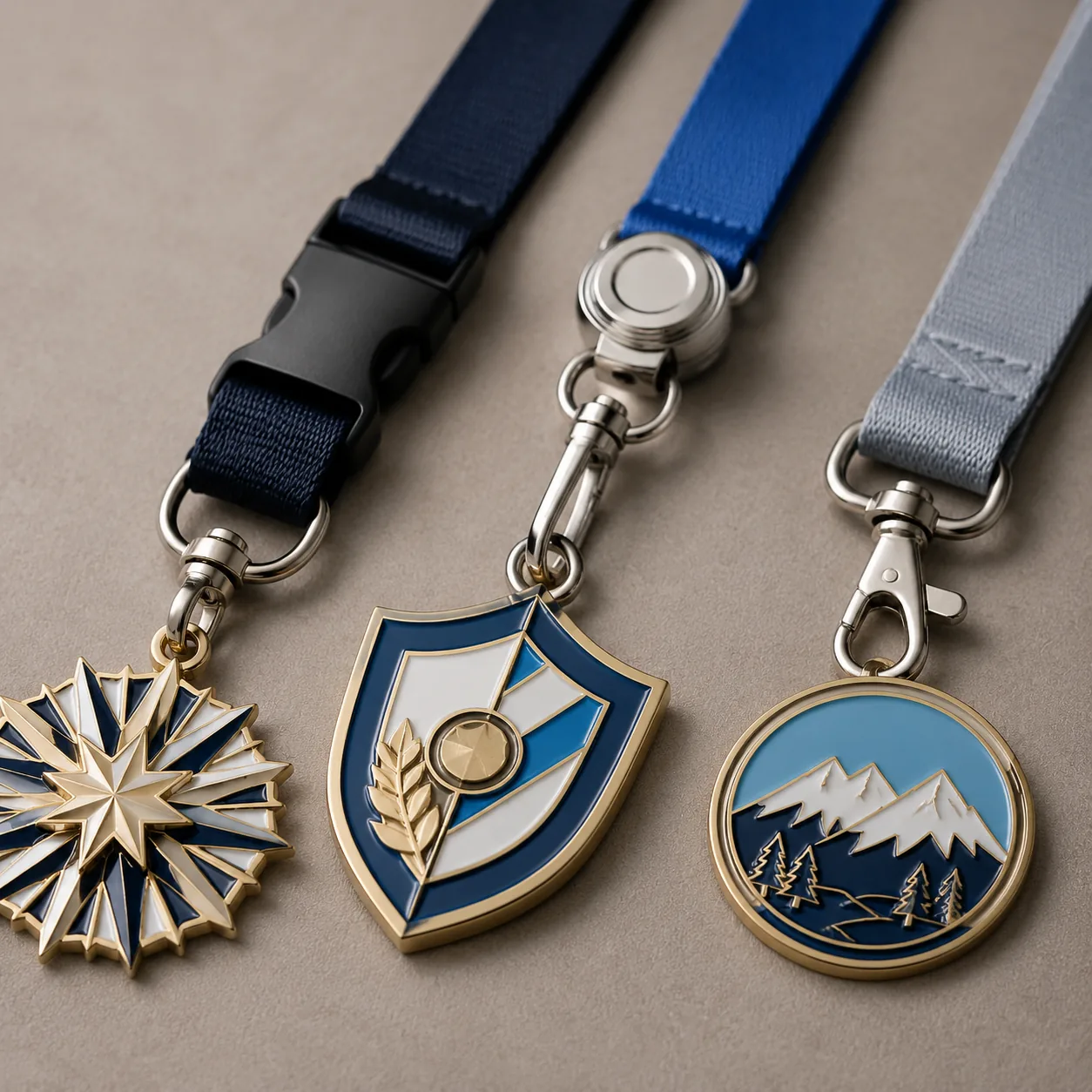
Start with the Failure Mode, Not the Clip
Lanyard hardware usually fails in front of users, not during the quotation stage. A badge drops at registration, a safety officer rejects non-breakaway cords, a QR code twists away from the scanner, or a VIP pass hangs too high for photography. The artwork may be correct, but the order still fails because the hook, buckle or holder was chosen after proof approval.
Lock the hardware before confirming the digital proof. Hardware changes finished drop length, printable area, sewing position, metal-detector suitability, child-safety risk, carton volume and unit cost. Moving from a basic J-hook to a detachable buckle plus swivel hook can lower the badge by 25 to 70 mm and may require a new bartack or ultrasonic weld position.
Define the failure you cannot accept, then choose the simplest hardware set that controls it. A one-day conference badge may only need a J-hook. A school security credential may need a tested breakaway, low-snag plastic fitting and controlled release force. A staff ID used daily may need a buckle and a higher-cycle swivel hook. Extra parts add cost, lead time and inspection points, so do not specify premium accessories unless they solve a real use problem.
Specify Breakaway Release Before Other Hardware
Breakaway connectors are the first decision when lanyards may be pulled, caught, worn by children, used in schools, worn near light equipment or issued to public-facing staff. Typical adult event specifications call for release at 3 to 5 kgf on the finished lanyard. Youth programs often target 2 to 4 kgf and avoid heavy metal near the neck. The force must be tested on the assembled lanyard because tape thickness, sewing angle, connector fit and moisture all affect release behavior.
Do not use a breakaway when the suspended item must remain attached, such as facility keys, access fobs, hand tools or production tokens. In those cases, use a non-breakaway strap, wrist strap or tool-rated tether and manage the safety risk separately. Breakaways are also poor matches for badge stacks above about 80 g unless the final assembly passes shake, drop and pull checks without nuisance release.
Common breakaways for 10, 15, 20 and 25 mm lanyards are molded from POM, PP or ABS. POM generally gives better snap consistency and fatigue resistance than very low-cost PP. Standard colors are black, white and clear. Pantone-matched resin is possible, but expect 3,000 to 5,000 pcs MOQ and visible shade tolerance around ΔE 2 to 4 unless the buyer approves a wider limit by sample. For strict brand programs, neutral black or white hardware is often safer than custom plastic.
- State the release force on the PO, for example 3 to 5 kgf for adult events or 2 to 4 kgf for youth use.
- Confirm whether the rule comes from law, venue policy, school requirements, buyer standards or risk assessment.
- Avoid breakaways for keys, tools or loads above 80 g unless the complete assembly is tested.
- Specify connector material, width, color and back-neck position on the technical drawing.
- Request pull-test results on assembled lanyards, not loose connectors only.
Choose Fixed or Detachable Badge Control
A fixed hook is cheaper and cleaner when attendees display one badge for a short event. A detachable buckle is useful when the lower section must be removed for scanning, access control, meal coupons, backstage checks, hotel keys or retail staff ID. A standard plastic side-release buckle usually adds USD 0.03 to 0.08 FOB per unit and 8 to 18 mm of plastic length. Premium buckles, custom colors and low-profile designs cost more and often require sampling.
Match buckle width to tape width. Common sizes are 10, 15, 20 and 25 mm. A 20 mm lanyard should normally use a 20 mm buckle; using a 15 mm buckle can pinch the tape, wrinkle sublimation fabric and reduce weld consistency. If the lower section carries a rigid card, badge reel or medal, confirm latch retention after repeated removal, not just on a new sample. For daily staff use, request at least 500 open-close cycles without latch failure or visible cracking.
If the badge must face forward, do not rely on the buckle alone. Use a swivel hook, two-hole badge holder, double-ended lanyard or anti-twist clip. For turnstile readers, the card should sit flat between mid-chest and lower sternum. For handheld scanners, twist is less critical, but the QR code still needs a repeatable height and stable angle.
| Use Case | Recommended Setup | Avoid |
|---|---|---|
| One-day conference badge | 15 or 20 mm tape with fixed J-hook or oval hook | Detachable buckle unless removal is required |
| Security or staff ID | Breakaway, detachable buckle and tested swivel hook | Thin plastic hook for daily-use cards |
| School or youth event | Low-force breakaway with lightweight plastic clip or approved badge reel | Heavy lobster hook near the neck |
| Exhibition QR scanning | Detachable buckle, swivel hook and sample-confirmed badge drop | Short lanyard that holds the QR code near the chin |
| Keys or access fob | Non-breakaway strap with lobster hook, split ring or key ring | Low-force safety connector |
| Medal or acrylic pass | Swivel snap hook or double-ended attachment with pull test | Open J-hook under side load |
Match Hook Type to Load, Motion and Finish
The hook controls retention, badge angle and perceived quality. Metal J-hooks are low cost, fast to assemble and suitable for paper badges in PVC sleeves below about 30 g. Their open profile is not ideal for thick PVC cards, acrylic tags or punched metal medals because side pull can work the hole out of the hook.
Oval hooks retain better than a simple J-hook while staying inexpensive. Lobster hooks add a spring gate and are better for keys, fobs, medals and rigid cards. Typical promotional lobster hooks use iron or zinc alloy with nickel, black nickel, gunmetal or painted plating. Wire or casting thickness commonly ranges from 1.8 to 3.0 mm. For humid outdoor events, specify 5 to 8 microns plating and a 24-hour neutral salt spray target for standard promotional use. Ask for 48 to 72 hours only when the material, finish and budget support it.
Bulldog clips work for unpunched paper badges, but they can crease soft card stock and rotate easily. Swivel snap hooks reduce twisting, but low-grade swivels loosen under daily movement. For corporate ID, request a 500 to 1,000 cycle swivel and gate check plus a static pull test on the assembled hook and tape. For non-breakaway event lanyards, 8 to 12 kgf static pull is a common promotional target. Safety lanyards must be tested to release, not to resist maximum load.
| Hardware | Typical FOB Add-On | Best Load Range | Main Inspection Risk |
|---|---|---|---|
| Metal J-hook | USD 0.015 to 0.035 | PVC badge sleeve below 30 g | Open hook can slip from thick or stretched holes |
| Oval hook | USD 0.020 to 0.045 | Badge sleeve below 40 g | Shape varies by supplier and may rotate |
| Lobster hook | USD 0.040 to 0.120 | Cards, keys or fobs up to 80 g | Weak gate spring or thin plating |
| Bulldog clip | USD 0.035 to 0.080 | Unpunched paper badge below 25 g | Can crease paper and turn sideways |
| Swivel snap hook | USD 0.050 to 0.150 | ID card or medal below 100 g | Swivel joint needs cycle testing |
| Plastic hook | USD 0.015 to 0.040 | Light badge below 20 g | Can crack in cold or under side pull |
Confirm Badge Holder and Drop Length Together
Badge holder size changes how the lanyard wears. A standard CR80 card is 86 by 54 mm, but the holder is larger. A vertical clear PVC holder for that card is often about 100 by 82 mm outside size; a horizontal holder may be about 110 by 90 mm. Event badges commonly measure 100 by 140 mm, 105 by 148 mm or larger. If a 900 mm finished-circumference lanyard carries a large horizontal holder, the badge can sit too high on tall wearers and twist against clothing.
For adult events, 900 mm finished circumference before accessories is a common starting point, equal to roughly 450 mm folded length from back neck to hook. Adjust by 20 to 50 mm after checking badge size, attendee profile, clothing and scanner position. For children, shorter lengths are common, but removing the breakaway to reduce cost is a poor trade-off.
PVC holder thickness is usually specified per layer. Short indoor events often use 0.18 to 0.25 mm clear PVC. Repeated-use holders feel better at 0.30 to 0.35 mm but cost more and increase carton volume. Confirm top-loading, side-loading or resealable zipper style; slot and round-hole position; and whether the insert must fit without curling. Outside-size tolerance of ±2 mm and slot-position tolerance of ±1.5 mm are realistic for most welded PVC holders.
- Confirm card or insert size before quoting the holder and lanyard length.
- Specify vertical or horizontal orientation, loading side, zipper seal and slot style.
- Check finished badge drop on a worn sample, not only on a flat table.
- Use 0.18 to 0.25 mm PVC for short events and 0.30 mm or above for repeated use.
- Require clean welded edges, no sharp corners and outside dimensions within ±2 mm.
Budget MOQ, Lead Time and FOB Tiers
Hardware complexity affects lead time as much as printing method. A plain polyester lanyard with one metal hook can often run at 500 pcs MOQ and ship in 7 to 12 days after artwork approval, depending on factory load. Add sublimation, breakaway, detachable buckle and swivel hook, and the same order usually moves to 12 to 18 days. Custom plastic colors, special plating, nickel-free hardware or mixed attendee versions can push practical lead time to 16 to 25 days.
Standard black or white breakaways usually keep MOQ at 500 to 1,000 pcs. Pantone-matched molded plastic often requires 3,000 to 5,000 pcs because resin color setup and injection changeover are inefficient for small lots. Non-standard metal finishes, matte black plating and certified nickel-free components may also require higher minimums or pre-production sourcing before the factory will confirm mass production.
For early budgeting, a complete 20 mm polyester lanyard with one-color screen print and J-hook commonly falls around USD 0.28 to 0.55 FOB at 1,000 pcs. A 20 mm sublimation lanyard with breakaway, buckle and swivel hook is more often USD 0.55 to 1.10 FOB before badge holders, badge reels, individual polybags or third-party inspection. At 5,000 pcs, unit prices often fall 8% to 18% if hardware is standard. At 500 pcs, expect a 10% to 25% premium versus 1,000 pcs because setup and packing labor are spread over fewer units.
| Configuration | Practical MOQ | Lead Time After Approval | FOB Range at 1,000 pcs |
|---|---|---|---|
| 20 mm polyester, screen print, J-hook | 500 pcs | 7 to 12 days | USD 0.28 to 0.55 |
| 20 mm sublimation, breakaway, J-hook | 500 to 1,000 pcs | 9 to 14 days | USD 0.42 to 0.75 |
| 20 mm sublimation, breakaway, buckle, swivel hook | 1,000 pcs | 12 to 18 days | USD 0.55 to 1.10 |
| Woven or jacquard lanyard with metal hook | 1,000 pcs | 14 to 22 days | USD 0.70 to 1.35 |
| Custom plastic color hardware set | 3,000 to 5,000 pcs | 16 to 25 days | USD 0.65 to 1.30 plus setup |
| PVC holder added to event set | 500 to 1,000 pcs | Add 2 to 5 days if not stocked | Add USD 0.08 to 0.28 |
Put Tolerances and AQL into the PO
Lanyards are assembled by cutting, sewing, heat pressing, ultrasonic welding, riveting or metal crimping. Normal variation is acceptable only when it is defined before production. For common 10 to 25 mm tape, webbing width tolerance of ±1 mm is practical. Finished folded length tolerance of ±10 mm is common. Logo-to-seam tolerance of ±3 mm is realistic if artwork leaves enough clearance.
Keep artwork away from stress points. Allow at least 20 to 30 mm between important logos and sewn, welded or heat-cut ends. On sublimation lanyards, expect slight color variation between fabric lots and transfer batches. For brand-critical programs, approve a fabric swatch or pre-production sample under the buyer’s lighting conditions, not only under factory office lighting.
For metal fittings, specify base material and finish if appearance, allergy risk or corrosion matters. Low-cost hooks are often iron with nickel plating. Zinc alloy enables shaped parts but is heavier. Stainless steel is stronger and more corrosion-resistant, but it is less common in promotional lanyards and costs more. If nickel-free is required, state the applicable restriction and request compatible hardware rather than assuming shiny silver hardware is compliant.
Inspection must include function. For normal B2B promotional orders, ANSI/ASQ Z1.4 general inspection level II with AQL critical 0, major 2.5 and minor 4.0 is a reasonable starting point. Critical defects include sharp burrs, missing breakaways, broken hooks, detached fittings, wrong hardware on a safety order or any defect that changes safe use.
- Webbing width: ±1 mm for common 10, 15, 20 and 25 mm tapes.
- Finished folded length: ±10 mm unless a tighter range is sampled and approved.
- Sewing or weld position: ±3 mm, with no loose thread that affects strength.
- Metal plating: 5 to 8 microns for better standard promotional hooks.
- Non-breakaway pull test: commonly 8 to 12 kgf on assembled tape and hook.
- Breakaway pull test: pass within the specified release range on finished samples.
- Inspection plan: critical 0, major 2.5 and minor 4.0 for most promotional shipments.
Approve the Sample as a Complete System
Approve the lanyard as a wearing system, not as separate parts. Attach the real badge, PVC holder, access card, medal or key and wear it for several minutes. Check badge height, twisting, scanner readability, release force, print visibility and whether the hook scratches the badge surface. A desk photo does not reveal these issues.
Request a pre-production sample for custom hardware color, detachable buckles, badge reels, heavy attachments, nickel-free requirements or strict safety rules. For repeat orders using standard components, a photo sample may be acceptable, but first-time buyers should handle at least one physical assembled sample. When the order includes matching pins, coins, PVC cards or badge holders, test the full kit together so weight and movement are realistic.
At shipment inspection, open cartons from different parts of the lot and verify hardware mix by version. Mistakes happen when attendee, staff and VIP lanyards share similar tape artwork but use different clips. Inner bags should be labeled by version, for example staff: buckle plus swivel hook and attendee: J-hook only. This prevents sorting at the venue and makes carton-level inspection faster.
A hardware-first RFQ should define wearer profile, suspended load, badge size, release force, hook type, finished circumference, print method, packing and inspection level. A strong default for many events is 20 mm polyester, 900 mm finished circumference, standard black breakaway, detachable buckle only when removal is needed, and swivel hook when the card must face forward. Ask for one assembled sample, pull-test confirmation, AQL plan, carton packing details and FOB pricing at 500, 1,000, 3,000 and 5,000 pcs before mass production.
Have a project? Send your artwork and target quantity and we’ll reply with a detailed quotation within 12 working hours.
Ready to get this made?
Send your sketch, target quantity and ship-date. Detailed quotation in 12 hours.



