Best Custom Keychain Types for B2B Buyers in 2026: A Spec-Driven Shortlist
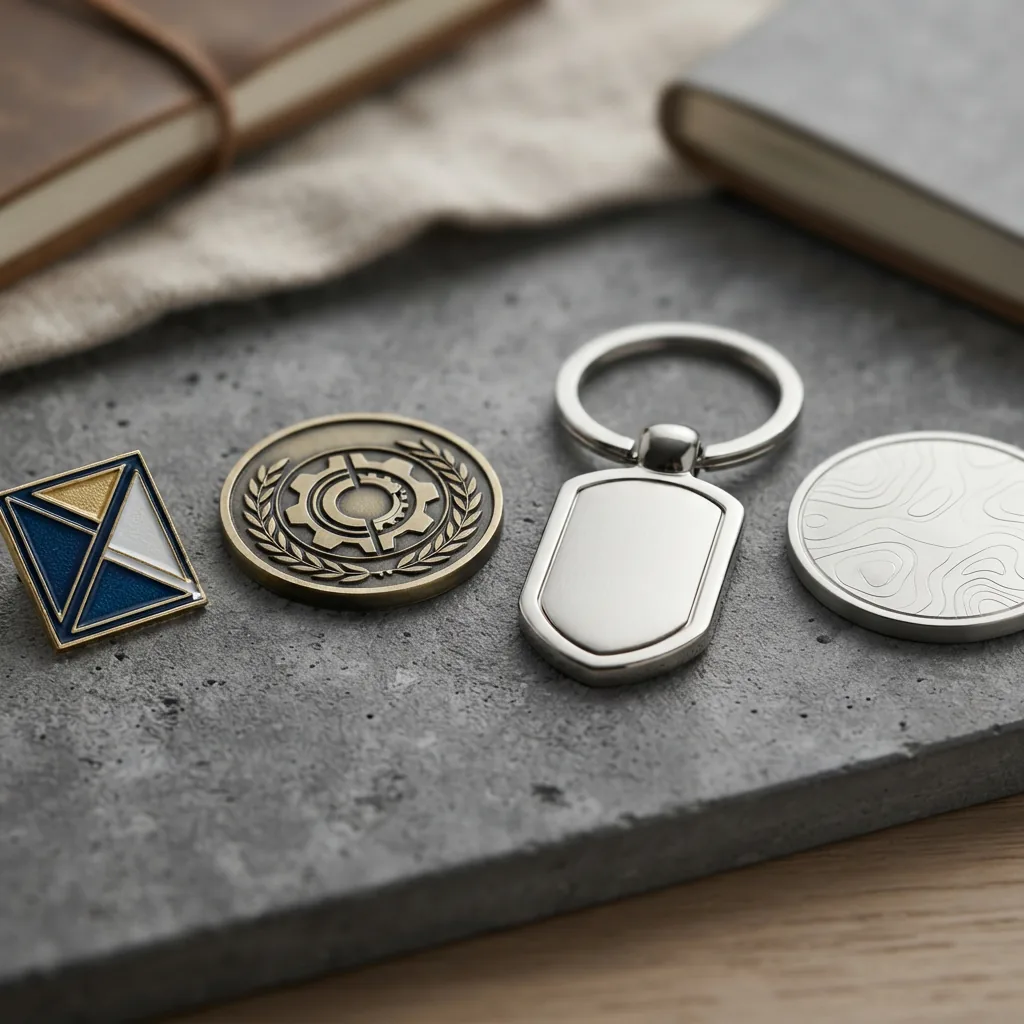
Why B2B Buyers Need a 2026 Keychain Ranking
Using the same keychain construction every year is low risk, but it often produces the wrong cost-to-performance mix. In 2026, import buyers are facing more volatile finishing costs, tighter retailer compliance requirements, and more channel-specific performance demands. A 5,000-piece event giveaway can tolerate lower plating thickness and lighter hardware than a year-round retail SKU or a marine aftermarket accessory. The gap between "looks good in the sample" and "survives 12 months in daily use" is where claims usually start.
This shortlist compares six common custom keychain types used by B2B buyers: die-cast zinc alloy, brass, stainless steel, acrylic, soft PVC, and genuine leather with metal hardware. The comparison is built around RFQ metrics that matter in sourcing: realistic MOQ tiers, tooling or setup cost, FOB unit pricing at 500 and 5,000 pieces, lead time in calendar days after PPS approval, normal thickness windows, achievable detail limits, and likely failure modes. Pricing assumes a custom keychain about 45-50 mm wide, one 25 mm split ring, standard polybag packing, export master carton packing, and baseline incoming/final inspection at AQL 2.5 major / 4.0 minor unless otherwise specified.
Scoring Method and Technical Baseline
The ranking uses five procurement-facing criteria on a 1-5 scale, with 5 as the strongest result: MOQ flexibility, FOB cost, lead time, durability, and design capability. MOQ means the quantity where a supplier can quote without an oversized setup burden. Cost means normal FOB China pricing for a medium-size custom design with standard hardware and no premium box, air rush, or unusually complex assembly. Lead time is measured from approved pre-production sample or golden sample to cargo-ready status.
To keep comparisons realistic, the technical baseline is narrow. Metal keychains are typically 2.5-3.5 mm thick for promo and 3.0-4.0 mm for retail. Acrylic is usually 3.0 mm for low-cost promo and 4.0-5.0 mm for retail or souvenir programs. Soft PVC is commonly 4.0-8.0 mm depending on relief levels. Leather straps are usually 2.0-3.2 mm before folding, with finished loop thickness around 4.5-6.5 mm at the fold. Typical dimensional tolerance is +/-0.15 to +/-0.25 mm on cast or stamped metal outline, +/-0.10 to +/-0.20 mm on metal thickness, +/-0.20 mm on laser-cut acrylic, and roughly +/-0.30 mm on molded PVC due to shrink variation.
Finish thickness is one of the most underwritten durability variables. Decorative nickel plating below 3 microns often wears through quickly on raised edges. For daily-use plated metal keychains, 5-8 microns total nickel-equivalent protective layer is a safer commercial minimum. For outdoor or high-contact programs, buyers often specify 8-10 microns plus 24-48 hours neutral salt spray, although decorative plating is still not equal to a true corrosion-engineered finish. Where corrosion resistance matters more than mirror brightness, passivated stainless, e-coat, or PVD usually outperforms thin bright plating. Baseline visual QC should also call out no sharp burrs, no exposed base metal on visible areas, no warped hardware, and no visible defects at 30 cm under normal indoor lighting.
2026 Ranking Table: Cost, MOQ, and Lead Time
| Keychain Type | Typical MOQ (pcs) | Tooling / Setup (USD) | FOB at 500 pcs (USD) | FOB at 5,000 pcs (USD) | Typical Lead Time After PPS (days) | Durability (1-5) | Best Use Case |
|---|---|---|---|---|---|---|---|
| Die-Cast Zinc Alloy | 100-300 | $80-$220 mold | $1.05-$1.75 | $0.48-$0.85 | 18-28 | 4 | Mainstream promo, club merch, mid-price retail |
| Brass | 200-500 | $120-$280 die | $1.70-$2.80 | $0.90-$1.45 | 22-32 | 5 | Premium gifts, medallion styles, hospitality |
| Stainless Steel 304/316 | 300-500 | $60-$180 fixture/program | $1.95-$3.20 | $1.05-$1.80 | 18-30 | 5 | Outdoor, industrial, marine, long-life use |
| Acrylic PMMA | 200-500 | $20-$80 art/setup | $0.68-$1.18 | $0.30-$0.58 | 10-18 | 2 | Low-cost events, QR/full-color graphics |
| Soft PVC | 500-1,000 | $120-$350 mold | $0.58-$0.98 | $0.24-$0.48 | 18-25 | 3 | Mascots, novelty shapes, youth branding |
| Genuine Leather + Metal Hardware | 300-500 | $30-$120 die/cut | $2.20-$3.90 | $1.35-$2.40 | 25-38 | 3 | Automotive, executive gifts, lifestyle brands |
For buyers comparing quotations, one caution matters: unit cost only becomes comparable when hardware, packing, and finish assumptions are aligned. A zinc keychain quoted with a 1.6 mm wire split ring, thin flash plating, and bulk packing can look cheaper than stainless until the spec is normalized to 2.0 mm ring wire, individual polybag, and matched inspection criteria.
Material-by-Material Performance: Where Each Type Wins and Fails
Die-cast zinc alloy remains the best all-around option for most B2B programs because it combines strong design freedom with acceptable MOQ and broad price competitiveness. Most suppliers use Zamak 3 or Zamak 5 at 2.5-3.5 mm thickness. It supports soft enamel, imitation hard enamel, epoxy dome, antique finishes, and moderate 3D relief. Recessed line widths of about 0.25-0.30 mm and raised line widths of 0.30-0.35 mm are normally achievable on clean tooling. Zinc is also good for cutouts and integrated loop forms. Its weak points are plating wear, porosity risk on poor casting, and bending or breakage at thin projections. Unsupported tabs should usually stay above 1.2-1.5 mm width, and long narrow bodies under 2.0 mm thickness should be avoided.
Brass ranks above zinc when edge sharpness, weight, and premium feel matter more than cost. Typical grades include C26000 and C26800, usually stamped or die-struck rather than cast for flatter, coin-like faces. Brass polishes cleaner than zinc and usually gives better readability on small debossed text, often around 0.20-0.25 mm line width on well-controlled flat designs. That makes it a strong fit for hotel key tags, paid membership medallions, automotive handover gifts, and commemorative retail pieces. The trade-off is longer process time and higher unit cost. Buyers should also specify whether the finish is bright nickel, gold tone, antique brass, clear lacquer, or e-coat, because unlacquered brass will tarnish quickly in storage and handling.
Stainless steel is the longest-life option when plating wear is unacceptable. SUS304 is standard for most industrial, utility, and outdoor promo use. SUS316 is worth the premium when the product will see frequent chloride exposure such as boating, coastal tourism, or marine service kits. Stainless keychains are usually laser cut, etched, stamped, or brushed rather than deeply sculpted, so they are structurally durable but less suitable for dramatic 3D relief. Major dimensions can often hold around +/-0.10 mm on laser-cut flat forms, but practical minimum line width is closer to 0.30-0.40 mm once etching, deburring, and finishing are included. To avoid sharpness complaints, internal cutouts and small islands should be reviewed carefully, especially on designs with narrow bridges.
Acrylic is the fastest route for full-color artwork and QR-based campaigns. Most factories use PMMA sheet in clear, frosted, or opaque form, then laser cut and UV print or screen print. Reverse printing behind clear acrylic is usually more durable than front printing because the image is protected from abrasion. Standard thickness is 3.0 mm for giveaway programs and 4.0-5.0 mm for retail or souvenir use. Acrylic is attractive when the artwork contains gradients, photography, or multi-color logos that would be expensive in enamel. Its limitations are scratch resistance and impact behavior. PMMA typically shows around 2H-3H pencil hardness, can craze if exposed to aggressive solvents, and chips at sharp corners. For daily-use retail programs, a corner radius of at least 1.5-2.0 mm and a minimum hole edge distance of 3.0 mm help reduce cracking.
Soft PVC is the low-cost novelty option for bright, irregular shapes and cartoon branding. Most suppliers target 60-75 Shore A hardness and use molded 2D or 2.5D construction in 4.0-8.0 mm finished thickness. At 5,000 pieces and above, the FOB economics are often strong, especially for simple two- to four-color designs. The trade-offs are lower premium feel, slower aging performance, and more risk at thin appendages. Thin limbs, ears, or tails under about 2.0 mm width can tear. Dust pickup, tackiness, and color migration become more likely if formulation control is weak or the product is stored in heat for long periods. For child-oriented or regulated markets, the RFQ should explicitly require phthalate limits and applicable REACH or CPSIA conformity.
Genuine leather works best as a premium strap or folded loop paired with zinc, brass, or stainless hardware. Full-grain and top-grain cowhide in the 2.0-3.0 mm range are common for better programs; split or corrected-grain leather lowers cost but also lowers premium feel. Leather gives a softer presentation for executive gifting, hotel programs, and automotive delivery packs, but it introduces variability in grain, color, scars, and edge quality. Buyers should specify edge treatment clearly: raw burnished edge, folded edge, or painted edge. Edge paint can look clean, but it is also one of the first points of rework if adhesion is poor or fold radii are too tight.
Real Cost Drivers Beyond Unit Price
The cheapest quoted material is not always the cheapest finished program. Molded zinc usually becomes efficient from about 1,000 pieces upward because mold cost is modest and unit cost drops quickly with volume. Brass and stainless often carry higher processing cost per piece even when tooling is simple because polishing, brushing, etching, or passivation are labor and process intensive. Acrylic has the lowest entry barrier for prototypes because setup may be limited to artwork prep and cutting files. PVC can look inexpensive on FOB unit price, but mold cost and higher MOQ make it less attractive for testing small programs. Leather often has low hard tooling cost but high labor content and more material yield loss.
Hardware and packing are frequent hidden deltas. Upgrading a split ring from 25 mm OD x 1.6 mm wire to 25 mm OD x 2.0 mm wire can add only a few cents, but it materially improves field performance on heavier metal bodies above roughly 28-35 g. Adding a swivel clasp, velvet pouch, paper card, or barcode label can shift total program cost more than changing from zinc to brass on some small runs. If the product will hang at retail, call out card stock, hole style, barcode placement, and polybag suffocation warning requirements in the RFQ so suppliers do not quote against different packaging assumptions.
Lead Times Buyers Should Actually Plan For
Acrylic is usually the fastest production route because it avoids die-cast mold polishing, plating queues, and curing cycles. For uncomplicated designs, 10-18 calendar days after PPS is realistic. Zinc and PVC typically run 18-28 days depending on mold readiness, cavity count, color count, enamel fill, and plating load. Brass often runs 22-32 days because stamping, edge polishing, lacquer curing, and inspection are harder to compress. Stainless is stable on flat, simple forms, but brushing masks, etched graphics, selective print, and mixed hardware can extend production into the upper end of the 18-30 day range. Leather is often slowest at 25-38 days because cutting, skiving, folding, stitching or riveting, edge finishing, and assembly are labor heavy.
Pre-production time before the factory lead time should not be ignored. Artwork proofing usually takes 2-4 days. Sample making typically takes 3-7 days for acrylic, 5-10 days for molded or struck products, and 7-12 days for leather assemblies with custom hardware. Courier transit and internal approval can add another 2-5 days. In practice, a realistic planning window for a custom import order is often 30-45 days before vessel departure, and 45-60 days is safer if retailer approval or compliance testing is required.
Best Material by Use Case
- Trade-show giveaways under $0.60 FOB at 5,000 pcs: choose 3.0-4.0 mm acrylic for full-color logos, QR codes, or campaign art; choose soft PVC for mascot shapes and soft-touch feel.
- Mid-volume retail merchandise: choose die-cast zinc at 2.5-3.0 mm thickness with soft enamel or antique finish, 5-8 micron plating, and a 25 mm split ring in 1.8-2.0 mm wire.
- Executive, hospitality, or membership gifts: choose stamped brass for heavier medallion-style presentation, or leather plus branded metal hardware for a lifestyle look.
- Outdoor, industrial, utility, or marine programs: choose SUS304 as baseline and upgrade to SUS316 for regular salt or chloride exposure.
- Artwork with fine raised or recessed detail: choose brass or zinc; avoid stainless if the design depends on sculpted relief or deep cavities.
- Fast-turn event orders with photo graphics: choose 4.0 mm clear acrylic with reverse UV print, white backup layer, and protective film left on until final packing.
- Child-oriented campaigns: use PVC only when compliance language is explicit and the design avoids detachable small parts, thin appendages, and sharp metal attachments.
RFQ Checklist: Specs That Prevent Rework and Claims
Material choice is only the first line of the specification. The RFQ should define substrate grade, overall size in millimeters, finished thickness, artwork process, finish or coating thickness, hardware type, attachment method, packing method, inspection level, and carton standard. For split rings, 25 mm outer diameter is common, but wire diameter should be matched to weight. A light acrylic piece may be fine at 1.6 mm wire; a heavier cast metal body should normally move to 1.8 or 2.0 mm. If lobster clasps or snap hooks are used, call out spring function, finish match, and minimum pull performance.
- Material spec: Zamak 3/Zamak 5, C260/C268 brass, SUS304/SUS316, PMMA, PVC hardness range, or leather grade.
- Size and tolerance: overall width/height, thickness, hole size, and allowable tolerance by process.
- Finish spec: plating color, plating thickness in microns, brushed or mirror area, lacquer, e-coat, or PVD where applicable.
- Graphic spec: Pantone references, enamel type, reverse print vs front print, epoxy dome yes/no, and text minimum size.
- Hardware spec: ring OD, wire diameter, clasp type, rivet type, and finish match to body.
- QC spec: AQL level, visual distance, burr standard, no exposed base metal, no print voids, no acrylic corner cracks, no PVC contamination, no leather edge paint peeling.
- Test spec where needed: 1.2-1.5 m drop test, 3M tape adhesion for print, 5-10 kg pull test for ring joints, and 24-48 hour neutral salt spray for plated metal.
If the order is retail-facing or gift-grade, many buyers tighten inspection to AQL 1.5 major / 2.5 minor instead of standard promo-product tolerance. Color approval should be tied to a signed pre-production sample or golden sample, because exact Pantone matching is not always realistic after enamel curing, leather dyeing, or antique finishing. For larger orders, keep a signed golden sample at both buyer and factory side and reference it directly in the purchase order.
Bottom Line: Best Choice by Procurement Priority
For most B2B buyers, die-cast zinc alloy remains the best default because it gives the strongest balance of MOQ flexibility, design freedom, perceived value, and cost efficiency. Brass is the upgrade when weight, polish, and fine detail justify a higher FOB. Stainless steel is the best long-life option for harsh-use environments. Acrylic wins on speed and full-color graphics, PVC on low-cost novelty silhouettes, and leather on premium presentation where natural material supports the brand story.
The most practical sourcing move is to quote two materials against the same drawing, hardware, packaging, AQL, and test terms. Compare zinc versus stainless for industrial branding, or brass versus leather for hospitality gifting. That exposes the real commercial trade-off instead of letting suppliers quote against different assumptions. Buyers who specify size, thickness, tolerance, micron finish, hardware gauge, quantity tier, sample deadline, and FOB target up front usually get cleaner first-round pricing, fewer revision loops, and a finished keychain that fits its channel on the first order.
Have a project? Send your artwork and target quantity and we’ll reply with a detailed quotation within 12 working hours.
Ready to get this made?
Send your sketch, target quantity and ship-date. Detailed quotation in 12 hours.



