Assortment Packing Specs for Multi-SKU Promo Orders
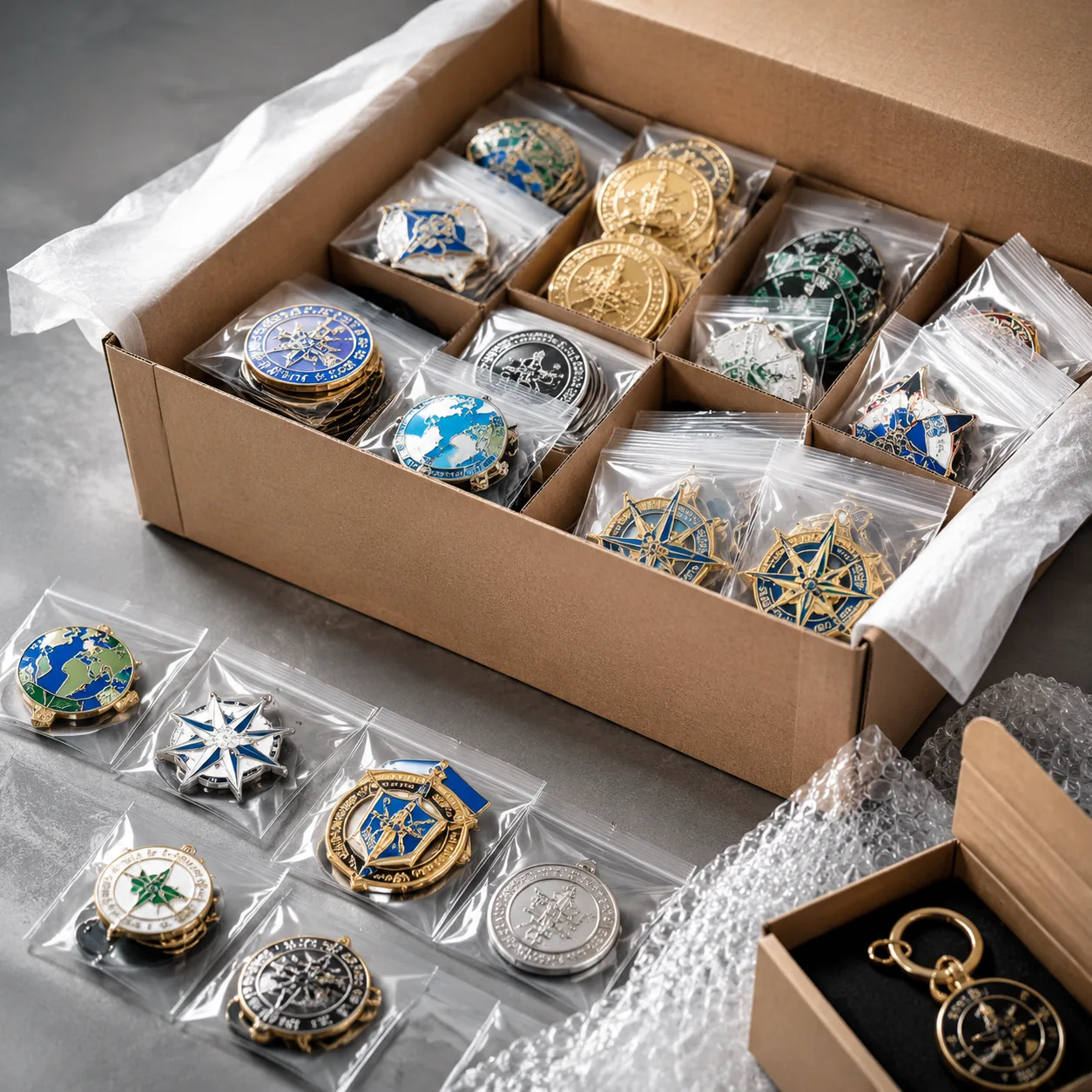
Specify the Mix Before Production, Not After Packing
Multi-SKU promotional orders usually fail at the handoff between finished goods and packing, not at the point of manufacture. The factory may produce acceptable enamel pins, coins, patches, keychains, magnets, or lanyards, but the shipment becomes expensive if the wrong designs are placed in each kit, store carton, retail display, or event pack. A buyer may approve 12 pin designs at 500 pieces each, while the real delivery requirement is 250 retail sets containing one of each design plus 3,000 loose replenishment units split by SKU. If that logic is not written before production, the result is manual sorting, relabeling, delayed dispatch, or replacement shipments.
Assortment packing should be treated as a production specification. It affects counting after plating, enamel fill, polishing, sewing, heat cutting, carding, barcode labeling, and final inspection. At ZheCraft, we prefer to freeze the assortment matrix before mass production starts so the Yiwu packing team can prepare trays, inner labels, scanner checks, carton marks, and audit samples around the actual delivery requirement.
This guide is for B2B buyers ordering mixed promotional products: 6 to 30 SKU pin launches, challenge coin drops, lanyard color assortments, patch collections, magnet sets, dealer kits, or event table packs. The objective is simple: ship the correct quantity by SKU, place the correct items inside each sealed unit, and make every carton identifiable without forcing the receiving team to open and recount everything.
Define the Pack Unit Before the Carton Count
The first decision is the pack unit, also called the selling unit or handling unit. For a retail pin, the unit may be one 30 mm hard enamel pin on one 55 x 85 mm backing card in one 40 to 60 micron OPP bag. For a VIP event kit, it may be one 20 mm woven lanyard, one 38 mm badge, one 70 mm PVC patch, and one zinc alloy keychain inside a 160 x 220 mm, 100 micron PE zip bag. For store replenishment, the unit may be 50 identical pieces in one labeled inner box.
Do not start with “500 pieces per carton.” Start with what one recipient, one store, one sales rep, or one event table must receive. Once the pack unit is fixed, the supplier can calculate inner carton size, outer carton count, gross weight, label sequence, and labor time. For small metal products with backing cards, master cartons should normally stay below 15 kg gross weight to reduce crushed cards and courier damage. For lanyards and textile patches, 18 to 20 kg can be acceptable if double-wall cartons are used.
Separate manufacturing tolerance from packing tolerance. For custom metal and textile promotional products, a production quantity tolerance of +/-3% is common unless the purchase order says otherwise. Assortment packing should not use that tolerance. A sealed kit, destination carton, or store pack should match the approved matrix exactly, with zero tolerance for missing SKUs, wrong SKUs, or substituted designs unless the buyer has approved a written short-ship or over-ship line.
| Pack Type | Typical Unit Spec | Best Use | Typical FOB Packing Add-On |
|---|---|---|---|
| Single retail unit | 1 item on 300-400 gsm card, 40-60 micron OPP bag | Pins, small magnets, brooches | USD 0.03-0.12 per unit |
| Same-SKU inner pack | 25, 50, or 100 identical pieces in labeled inner box | Warehouse receiving, store replenishment | USD 0.01-0.05 per unit |
| Mixed set bag | 2-8 SKUs in 80-120 micron PE zip bag, optional barcode | Event kits, launch packs, dealer gifts | USD 0.10-0.45 per set |
| Display-ready bundle | 6-24 carded units in tray, sleeve, or counter box | Retail counters, museum shops | USD 0.30-1.50 per bundle |
| Destination carton | Store-specific SKU mix with carton label and packing list | Multi-location distribution | USD 0.06-0.22 per unit |
| Rigid gift set | Paper box, EVA or paperboard insert, sleeve, barcode label | Premium coins, awards, VIP kits | USD 0.80-3.80 per set |
Build the Assortment Matrix Like a BOM
A strong assortment matrix works like a bill of materials. Use one row per destination pack or kit and one column per SKU. Each SKU should include product type, artwork revision, size, material, finish, attachment, packaging, and quantity. A useful line might read: SKU PIN-05-BN, hard enamel pin, 30 mm, zinc alloy, black nickel plating, 3 to 5 micron nickel underlayer with 0.08 to 0.15 micron black nickel top finish, two butterfly clutches, 100 pieces for Store A and 60 pieces for Store B.
Do not rely on design names alone. Names such as Dragon, Dragon Gold, Dragon V2, and Dragon Alt are easy to confuse at a packing table. Use short printed codes on the work order, inner label, barcode file, and carton label, such as DRG-BN-30, COIN-45-ANTG, or LNY-20-RED. If barcodes are required, specify the format, label size, and data source. Code 128 is common for internal SKU labels; EAN-13 or UPC-A may be required for retail; Amazon FNSKU should not be replaced by a supplier’s internal code.
For mixed-product kits, add physical identifiers because similar artwork can appear on different products. A 38 mm pin and a 40 mm magnet may look similar once bagged, but their backs, weights, and retail uses are different. A woven patch and an embroidered patch may share the same logo but have different border thickness, thread texture, and merrowed edge height. Thumbnail artwork helps the packing team, but the controlling specification should be SKU data, not a design nickname.
- Assign one unique SKU to every artwork, size, material, finish, attachment, and packaging combination.
- State the exact pack unit: single piece, inner box, kit bag, display tray, or destination carton.
- List quantities by destination and SKU, not only total order quantity.
- Specify label size, barcode type, human-readable text, label placement, and scan requirement.
- Freeze the matrix before final inspection; late mix changes usually add 1-4 working days.
- Request photos of one trial-packed unit, one inner pack, and one master carton label before bulk packing.
Set Inspection Rules for Quantity and Mix Accuracy
Appearance inspection and assortment inspection are different controls. For cosmetic checks on pins, coins, keychains, and magnets, many buyers use ANSI/ASQ Z1.4 general inspection level II with AQL 2.5 for major defects and AQL 4.0 for minor defects. Assortment accuracy should be stricter because one wrong SKU can make a sealed kit unusable. For sealed mixed sets, use AQL 1.0 for mix accuracy at minimum, or require 100% packing-line verification plus a second random audit before carton sealing.
Define defect classes in the packing specification. Critical defects include wrong SKU inside a sealed kit, missing item, mixed customer brands in one carton, wrong destination label, or an incorrect barcode that routes goods to the wrong warehouse. Major defects include incorrect inner quantity, unreadable barcode, damaged retail card, wrong insert color, or wrong carton count. Minor defects include a skewed bag seal, label placement shift within +/-5 mm, or carton marks printed 2 to 3 mm off center while still readable.
Do not accept approximate counts on small metal items. Pins, coins, and keychains can be weight-counted only after the unit weight is verified against a physical count. A 30 mm zinc alloy pin may vary by 0.5 to 1.5 g depending on enamel area, post length, plating, and clutch type. That variation can hide shortages in a mixed order if the carton is judged only by gross weight. For destination cartons, require a signed carton list showing carton number, destination, SKU, packed quantity, net weight, and gross weight.
Match Packaging Materials to Product Risk
The cheapest bag is not always the lowest-cost choice after transit damage is considered. A 40 micron OPP bag is acceptable for a single backing-carded pin, but it can tear around a 50 mm challenge coin or a heavy bottle-opener keychain. For mixed kits containing metal parts, use 80 to 120 micron PE zip bags, individual tissue wrapping, or separate compartments to prevent abrasion. For premium sets, 300 to 400 gsm paper sleeves, molded pulp trays, or rigid paper boxes may justify the extra freight volume.
Backing cards should match item weight and attachment geometry. One 25 to 35 mm enamel pin is usually stable on 300 gsm art card. Two pins, a brooch over 45 mm, or a keychain on card should use 350 to 400 gsm to reduce bending. Pin post hole tolerance should be +/-1 mm, and the distance from punched hole to card edge should be at least 8 mm to prevent tearing during retail handling. If hang holes are required, specify euro slot or round hole dimensions and whether the bag must also be hangable.
Avoid packing plated or polished metal face-to-face. Gold flash at 0.05 to 0.10 micron, black nickel at 0.08 to 0.15 micron, polished nickel, and antique brass lacquer can all show rub marks if loose pieces move during transit. Individual bags or tissue separation are recommended for mirror-finish coins, epoxy-domed keychains, soft enamel with raised metal, and high-gloss magnets. Bulk packing is suitable only for low-cost giveaways where minor surface scuffing is commercially acceptable.
Price MOQ and Lead Time Realistically
Assortment packing adds labor, materials, labeling, and inspection time. It is not only the cost of a bag. A simple clear OPP bag may add USD 0.01 to 0.03 FOB per unit. A printed backing card plus bag usually adds USD 0.05 to 0.18 depending on card size, paper weight, and print quantity. A mixed kit with 3 to 6 components can add USD 0.12 to 0.55 per set if manual sorting, barcode scanning, and destination labels are required. Rigid boxes, EVA inserts, or molded pulp trays commonly add USD 0.80 to 3.80 per set before freight impact.
Lead time also changes. A standard enamel pin order at 500 to 1,000 pieces per design may need 18 to 25 days after artwork and pre-production sample approval. A multi-SKU order with destination cartons normally needs 22 to 32 days because packing cannot start until all SKUs are complete and inspected. Printed cards, retail inserts, or barcode labels add 3 to 7 days for proofing and printing. If the shipment moves by air, allow at least 2 working days after packing for carton audit, export carton relabeling if needed, and document checking.
MOQ depends on both product and packaging. Custom metal pins can often start at 100 pieces per design, but printed backing cards become more economical at 500 to 1,000 cards per artwork. Custom color boxes usually make sense from 500 sets upward. Molded EVA or plastic inserts are generally better above 1,000 sets because tooling, knife molds, or setup charges are spread across more units. For low-volume launches, stock bags, generic labels, and printed carton lists are often more practical than custom packaging that costs more than the item.
Label Cartons for Fast Receiving
A receiving team should be able to route cartons without opening every box. At minimum, each carton label should show PO number, carton number, total cartons, destination, kit code or SKU list, packed quantity, net weight, gross weight, and carton dimensions. A common master carton for carded pins is about 35 x 25 x 25 cm. Lanyards often use 45 x 35 x 35 cm cartons. Mixed kits should be carton-tested after one packed carton is weighed because inserts, zip bags, and retail cards increase volume quickly.
Use sequential carton numbering by destination, not by random packing order. For example: Store A carton 1 of 3, Store A carton 2 of 3, Store A carton 3 of 3, then Store B carton 1 of 2. If a carton contains mixed kits, print the kit code and total set quantity on the outer mark. If it contains loose replenishment stock, print each SKU and quantity or attach a packing list in a document pouch. For third-party warehouses, avoid exposing confidential artwork names on the outer carton; use controlled SKU codes instead.
Carton strength should match the product weight. Single-wall cartons may be acceptable for light patches or lanyards below 10 kg. For metal products above 12 kg per carton, double-wall K=A or K=K board is safer. Specify 48 to 60 mm tape with H-seal taping on top and bottom. For sea freight or long warehouse storage, add 5 g to 10 g desiccant per carton for paper packaging, but keep desiccant away from direct contact with plated metal surfaces.
Use Simpler Packing When the Mix Is Still Moving
Complex assortment packing is not always the right answer. If destination quantities may change after production, it is safer to ship same-SKU inner packs and let the buyer’s domestic warehouse allocate stock. If several artwork approvals are late, destination kitting can delay the entire shipment because one missing SKU stops every mixed set. If the products are fragile, high-gloss, or heavy, repeated handling during kitting can increase scratch risk unless every item is individually protected first.
For low-budget giveaway orders, the cost of perfect packing may exceed the value of the convenience. A 20,000 piece campaign pin at USD 0.38 FOB may not justify USD 0.12 per unit in sorting, retail bagging, and destination labeling if volunteers will distribute the pins loose at an event. A better specification would be same-SKU inner bags of 100 pieces, clear inner labels, and a carton map showing SKU and quantity by carton.
The practical compromise is phased packing. Pack most goods by SKU at the factory, then assemble only VIP kits, influencer boxes, or launch bundles as mixed sets. This keeps the majority of units low-cost while giving the marketing team the presentation packs it needs. Before issuing the RFQ, send a one-page packing brief with the pack unit, SKU matrix, label requirements, inspection standard, and destination list. Ask the supplier to confirm packing cost, added lead time in days, MOQ constraints, and mix-check method in writing. The safest instruction is direct: manufacture to the approved sample, pack to the approved matrix, and do not seal cartons until the assortment has been checked against the carton list.
Have a project? Send your artwork and target quantity and we’ll reply with a detailed quotation within 12 working hours.
Ready to get this made?
Send your sketch, target quantity and ship-date. Detailed quotation in 12 hours.



