AQL Inspection Specs for Custom Pins, Coins and Keychains
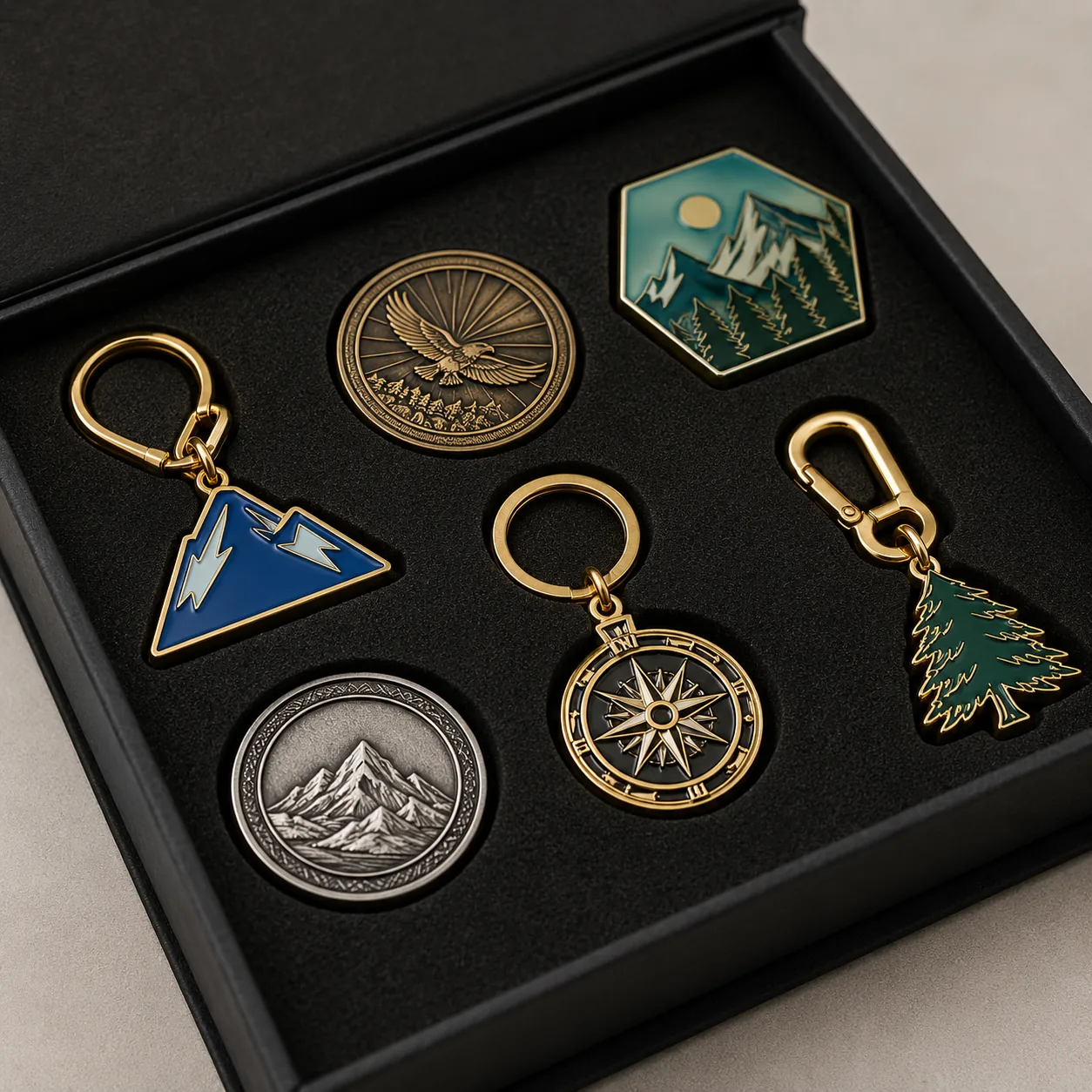
Why photo approval is not a shipment inspection
Most failed custom metal orders are not 100 percent defective. The harder problem is mixed quality inside an otherwise good shipment: 150 to 250 pieces in a 5,000 piece lot with weak plating, loose pin posts, rotated backing cards, epoxy bubbles over a logo, or keychain jump rings that are not fully closed. Six attractive photos from the top cartons may prove that some pieces look right, but they do not prove the lot meets the buyer’s agreed quality level.
For B2B buyers, the control point is a written inspection specification, not a request for “strict QC.” The purchase order should state the sampling standard, AQL levels, defect classes, measurement methods, functional tests, packaging checks and evidence required in the report. This matters for enamel pins, challenge coins, brooches, metal keychains, fridge magnets, patches and lanyards because each product combines appearance, hardware function, dimensional accuracy and packing discipline.
At ZheCraft, custom metal projects are checked during production and again before carton release, but buyer specifications still decide the inspection standard. If the order only says “inspect before shipment,” the factory, third-party inspector and brand owner may classify the same defect differently. A 0.4 mm enamel overflow on the back of a pin may be acceptable; the same overflow across a mascot’s eye may be a major defect. The following framework turns subjective quality language into inspectable rules.
Set AQL levels by risk, order size and sales channel
AQL means Acceptable Quality Limit. It is a statistical sampling rule for deciding whether a lot passes or fails; it is not a promise that the end customer will accept defects. For most custom metal promotional products, the practical default is ISO 2859-1 single sampling, normal inspection, general inspection level II. Special inspection levels may be used for destructive tests, but they should not replace visual and packing checks on a representative sample.
For standard promotional pins, coins and keychains, a common starting point is AQL 0 for critical defects, AQL 1.5 for major defects and AQL 4.0 for minor defects. For retail, licensed merchandise, aviation, government, alcohol, sports league, school, charity or child-facing programs, many buyers tighten major defects to AQL 1.0 or 0.65. For internal giveaways where small cosmetic variation is acceptable, AQL 2.5 for major and 4.0 for minor may be commercially reasonable.
Do not set every defect at AQL 0 unless the order can absorb higher inspection cost, sorting time and possible rework. AQL 0 is appropriate for safety, legal and brand-breaking issues: exposed sharp burrs, detached magnets, broken posts, wrong logo, incorrect QR code, missing warning label, non-compliant nickel finish, or mixed licensed artwork. It is usually unrealistic for tiny polishing waves, faint back-side marks or carton scuffs that do not affect saleability.
| Finished quantity | General II sample size | AQL 0 critical | AQL 1.5 major | AQL 4.0 minor |
|---|---|---|---|---|
| 500 pcs | 50 pcs | Accept 0, reject 1 | Accept 2, reject 3 | Accept 5, reject 6 |
| 1,200 pcs | 80 pcs | Accept 0, reject 1 | Accept 3, reject 4 | Accept 7, reject 8 |
| 3,000 pcs | 125 pcs | Accept 0, reject 1 | Accept 5, reject 6 | Accept 10, reject 11 |
| 8,000 pcs | 200 pcs | Accept 0, reject 1 | Accept 7, reject 8 | Accept 14, reject 15 |
| 20,000 pcs | 315 pcs | Accept 0, reject 1 | Accept 10, reject 11 | Accept 21, reject 22 |
Inspection cost and timing should be quoted with the RFQ when the quality plan is stricter than standard. As a reference, common factory MOQs are 100 pcs for simple enamel pins, 300 pcs for challenge coins, 500 pcs for metal keychains with custom molds, and 1,000 pcs for lanyards or woven patches. Typical FOB China unit ranges vary by size and finish: USD 0.35–1.20 for 25–35 mm soft enamel pins, USD 1.20–3.80 for 40–50 mm challenge coins, USD 0.70–2.20 for die-cast keychains, and USD 0.25–0.90 for simple PVC or embroidered patches. Tight AQL, 100 percent sorting, retail carding or serialized packing can add USD 0.03–0.18 per piece and 1–4 working days.
Classify defects before cartons are opened
Defect classification is the most important part of the inspection appendix. A factory may treat a 0.3 mm plating dot as minor because the product still functions. A brand manager may treat the same dot on a character’s face as major because it damages the design. The PO should define critical, major and minor defects with examples that match the product, artwork and selling channel.
Critical defects are safety, legal or brand-breaking failures. Examples include sharp edges that cut skin, pin posts that detach under light pull, loose magnets that can be swallowed, incorrect trademark, wrong QR code destination, restricted symbol used without approval, missing choking warning for child-facing items, or nickel content failure when nickel-free was specified. These defects require automatic lot failure, 100 percent sorting of the affected feature, or documented corrective action before release.
Major defects make the item unsellable or likely to generate returns. For pins, coins and keychains, this includes wrong Pantone color beyond about Delta E 3.0 on a flat enamel area, plating peel, front-face scratches longer than 3 mm in the logo area, missing enamel, wrong attachment, epoxy bubbles above 1.0 mm over text, off-center printing above 0.5 mm on small logos, wrong metal finish, or size outside approved tolerance. Minor defects are visible but do not strongly affect use: back-side scratches under 5 mm, faint polishing haze, tiny plating specks outside the focal area, card corner dents under 3 mm, or slight shade variation on non-critical surfaces.
- Define critical defects as automatic failure or mandatory sorting, not negotiable issues.
- Mark logo faces, character faces, QR codes and readable text as high-visibility zones.
- Set separate limits for front face, back face, edge, attachment and packaging.
- Use millimeter limits for scratches, bubbles, stains, dents, overflow and print shift.
- Attach approved sample photos showing acceptable and unacceptable borderline defects.
- State whether defects are counted per piece, per face, per SKU or per packed set.
Measure dimensions, plating and color with stated tolerances
Custom metal products need dimensional checks because small deviations change appearance, fit and function. For die-struck or die-cast enamel pins, common tolerances are ±0.20 mm for overall size under 30 mm, ±0.30 mm for 30–60 mm items, and ±0.50 mm for larger coins, badges or ornaments. Thickness is commonly held to ±0.20 mm for pins and keychain charms, and ±0.30 mm for challenge coins. If the item must fit a tray, blister card, coin capsule or magnetic recess, tighten these limits before tooling.
Attachment dimensions should be functional, not approximate. A standard pin post is usually 0.9–1.1 mm in diameter and 7–8 mm long for butterfly clutches. Post angle should be within 5 degrees unless the design requires another position. Split rings for keychains are commonly 25 mm or 30 mm outside diameter, with 1.8–2.2 mm wire for standard promotional use. Jump ring gaps above 0.2 mm should be classified as major if the charm can detach.
Plating and coating requirements also need measurable targets. Decorative flash plating on zinc alloy or brass promotional items is often 0.05–0.15 microns for gold tone and 0.10–0.30 microns for nickel, black nickel or antique finishes, depending on price tier and finish. These are decorative layers, not outdoor corrosion systems. If corrosion resistance matters, specify a test, such as 24 hours neutral salt spray for standard indoor promotional items or 48–72 hours for higher-end retail programs, with no red rust, peeling or obvious blistering on the inspected face.
| Feature | Recommended tolerance or target | Tool or method | Tighten when |
|---|---|---|---|
| Overall size under 30 mm | ±0.20 mm | Digital caliper, 0.01 mm resolution | Fitted trays, paired pins, retail sets |
| Overall size 30–60 mm | ±0.30 mm | Digital caliper | Challenge coins, aligned badge sets |
| Pin or charm thickness | ±0.20 mm | Digital caliper | Heavy pins, magnets, coin capsules |
| Pin post angle | Within 5 degrees | Angle gauge or fixture | Brooches, dual-post pins, bag pins |
| Enamel color | Delta E ≤3.0 target | Colorimeter or Pantone light booth | Licensed brand colors |
| Epoxy dome | 0.6–1.2 mm above highest metal line | Caliper, visual check | Text, QR codes, retail domes |
| Plating thickness | 0.05–0.30 microns typical decorative range | XRF where required | Retail or corrosion-sensitive orders |
Verify hardware function with simple load tests
Hardware failures create more complaints than small cosmetic variation because end users notice them immediately. A good-looking lapel pin with a weak post becomes unusable. A keychain connector that opens by hand can lose the charm within days. A fridge magnet that slides down a refrigerator door undermines the campaign even if the printing is accurate.
For pins, include a pull test on samples from each lot or SKU. A standard promotional pin post should withstand 2.0–3.0 kgf axial pull for 10 seconds without detaching. Oversized badges above 40 mm, bag pins, brooches and heavier die-cast items often need 3.0–5.0 kgf, but that may require thicker base metal, a larger solder pad, dual posts or a different attachment. Butterfly clutches should be attached and removed three times without losing grip or scratching the plated post excessively.
For keychains, check connector closure, split ring recovery and hook movement. A 25 mm split ring should not permanently open after a 1.0 kg load for 10 seconds in normal promotional use; premium retail keychains may require 2.0 kg or more. Swivel hooks should rotate freely without grinding, plating flakes or sharp burrs at the gate. Lobster clasps should open and close five times on inspected samples without sticking.
For magnets, define the test surface and holding requirement. A small fridge magnet may be acceptable if it holds its own weight plus 100 g on a clean vertical painted steel plate for 60 seconds. A magnetic badge or name tag should be tested on the intended garment thickness, such as 1.0–1.5 mm shirt fabric or 2.0–3.0 mm jacket fabric, because steel plate tests alone do not reflect field use.
- Test pull strength before final packing, not after cartons are sealed.
- Check clutches, rubber caps and safety backs for fit, color and retention.
- Confirm magnetic products on the intended surface or fabric thickness.
- Reject jump rings with visible gaps above 0.2 mm on load-bearing connectors.
- Record failed load-test pieces separately from normal visual defects.
Control visual inspection by zones, lighting and distance
Visual inspection should be controlled but realistic. A practical standard is 600–800 lux white light, viewing distance of 30–40 cm, and inspection time of 5–10 seconds per face. If a mark cannot be seen at that distance without magnification and is outside the logo, face, text or QR area, it is usually minor or acceptable for mass promotional goods. Magnification should be reserved for defined checks such as QR readability, epoxy bubbles, plating pinholes or printed microtext.
The front face deserves stricter rules than the back. On a pin, coin or keychain front, scratches over 3 mm in the logo area, enamel contamination, obvious color bleed, dents on text, missing plating, off-register printing above 0.5 mm, or visible dust trapped under epoxy should be major. On the back, light polishing marks under 5 mm, small shade variation, or shallow tooling marks may be minor unless the backstamp is part of the retail value.
If patches or lanyards are included in the same shipment, use separate textile rules. Embroidered patches need thread color checks, merrow border width, heat-cut edge burns, backing adhesion and loose threads longer than 3 mm. Woven labels and lanyards need width tolerance, usually ±1 mm on 15, 20 or 25 mm webbing, print position tolerance around ±2 mm, and hardware pull strength suitable for the clip or safety breakaway.
Inspect packing before it becomes a logistics defect
Packing defects rarely appear in glamour photos, but they cause expensive distributor problems. Wrong SKU labels, mixed designs in one inner box, reversed backing cards, missing barcodes, weak cartons or incorrect export marks can stop fulfillment even when the products themselves pass. Packing should be inspected as its own checkpoint with count, labeling, carton strength and presentation requirements.
For individual polybags, standard thickness is usually 0.03–0.05 mm for pins and light keychains. Heavy coins, sharp edges or retail-grade presentation may require 0.06–0.08 mm bags or tissue protection. Backing cards should hold tight visual tolerances: card size ±1 mm, pin placement ±2 mm, and visible rotation under 2 degrees for centered single pins. If hang holes are used, test that the packed item hangs flat and does not tear the card under its own weight.
Master cartons should be checked for count, gross weight, dimensions, carton marks and sealing. A practical carton weight limit is 12–15 kg for pins and keychains, lower if the buyer’s warehouse has manual handling restrictions. Heavy challenge coins or magnet orders should use five-layer corrugated cartons with inner boxes or dividers; three-layer cartons are usually suitable only for lighter small pins with protective inner packing.
| Packing item | Inspection requirement | Common rejection point |
|---|---|---|
| Backing card | Card size ±1 mm; pin position ±2 mm; rotation under 2 degrees | Wrong card, covered logo, rotated pin |
| Polybag | 0.03–0.05 mm standard; thicker for heavy or sharp items | Split bag, adhesive strip touching enamel |
| Inner box | One SKU/design per box with count label | Mixed variants, missing count, poor separation |
| Barcode label | Scan 5–10 labels per lot or per SKU | Wrong SKU mapping, unscannable code |
| Master carton | 12–15 kg target max; correct marks and tape seal | Weak carton, wrong export mark, poor closure |
Require reports that settle disputes quickly
A useful inspection report is not a folder of random photos. It should state the PO number, SKU list, finished quantity, carton quantity, sampling standard, inspected sample size, selected carton numbers, defect count by class, measurement data, functional test results and clear close-ups of failures. The report should also show pass/fail conclusions against the agreed AQL table, not only subjective comments.
For custom products, include comparison photos against the approved pre-production sample or golden sample. Use the same angle, lighting and distance when possible. If color is critical, photograph the golden sample and production piece together under controlled lighting, but do not rely on phone photos when the PO specifies Pantone or Delta E limits. Use a light booth or colorimeter reading for dispute-prone brand colors.
Normal production lead time for a 1,000–5,000 piece custom pin, coin or keychain order is usually 12–20 working days after artwork, mold and sample approval. Add 1–2 days for final inspection and normal corrective sorting. Retail carding, serialized QR codes, mixed sets, custom magnets, multiple SKUs or 100 percent screening can add 2–4 working days. Rush schedules can work, but only if defect rules, approval authority and rework decisions are agreed before mass production starts.
Before your next order enters production, request three documents: approved artwork with tolerances, pre-production sample approval, and a final inspection checklist. Review whether the checklist covers the real risks: color, plating, post strength, magnet hold, connector gaps, packaging count, barcode accuracy and carton marks. If it does not, revise the checklist before production rather than negotiating quality after the shipment has left the factory.
- Use AQL 0 for critical, 1.5 for major and 4.0 for minor unless risk requires tighter levels.
- Attach defect photos and define front, back, edge, hardware and packaging zones.
- Confirm tolerances for size, thickness, enamel, epoxy, plating and color.
- Require pull, fit, magnet and connector tests on sampled pieces before carton sealing.
- Specify carton selection method and require defect counts by class in the report.
- Quote stricter inspection, sorting and retail packing at RFQ stage, not after production.
Have a project? Send your artwork and target quantity and we’ll reply with a detailed quotation within 12 working hours.
Ready to get this made?
Send your sketch, target quantity and ship-date. Detailed quotation in 12 hours.



