AQL for Custom Pins and Keychains: Buyer Specs That Hold
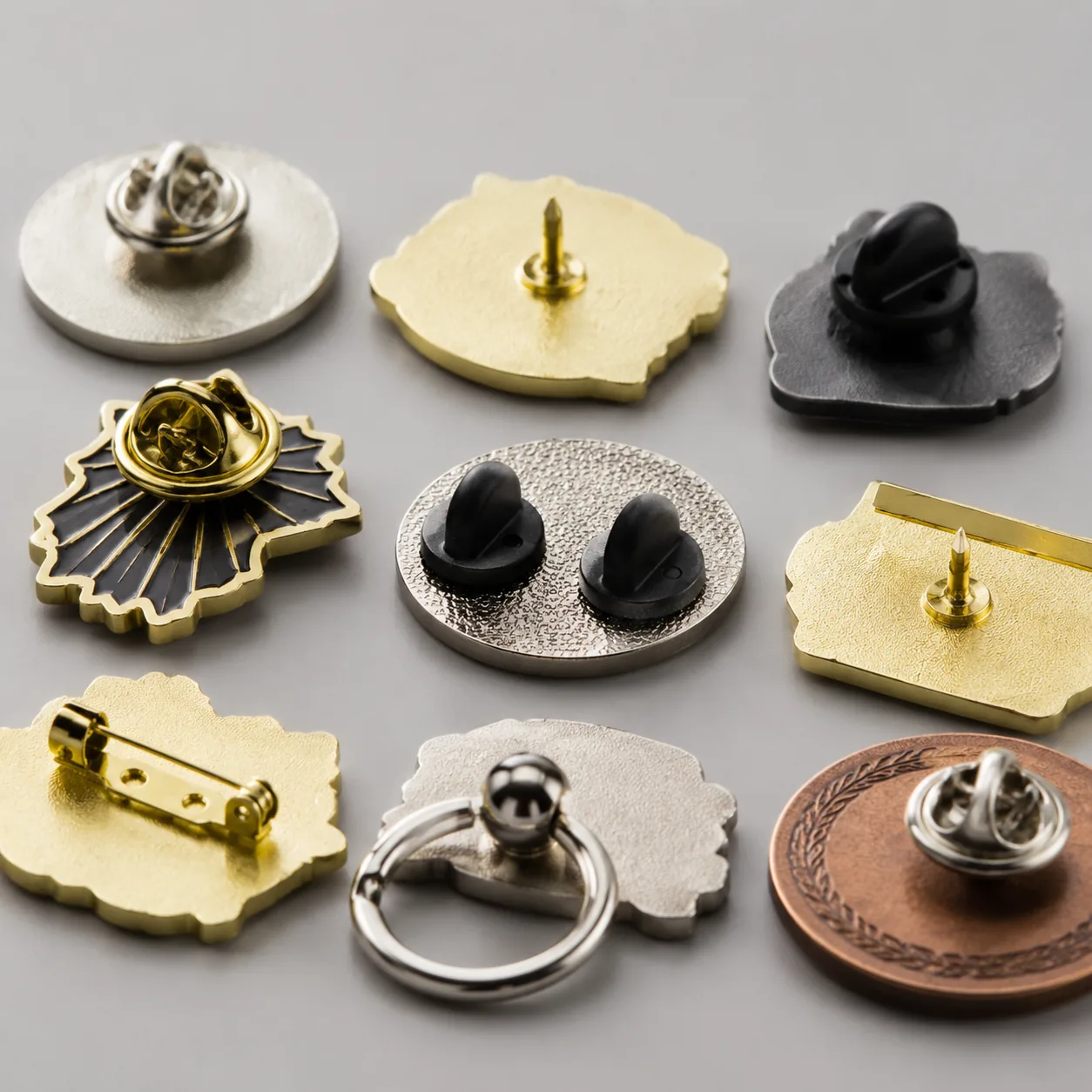
Why approved samples do not prevent shipment disputes
An approved pre-production sample confirms the target appearance: artwork, dimensions, base metal, plating tone, enamel style, attachment choice and pack-out concept. It does not tell the factory or inspector how bulk goods will be accepted. Most disputes start after mass production because the sample shows what the item should resemble, but the PO never defines how many defects are allowed in a lot, which defects are critical versus major versus minor, what sample size will be checked, or whether each SKU is judged separately.
For custom enamel pins, die-struck badges, zinc alloy keychains, magnets and challenge coins, the missing control is usually an AQL-based inspection appendix tied to the purchase order. Without it, routine questions become subjective: Is a 0.20 mm enamel void on the front acceptable? Is a 0.25 mm print shift on 0.50 mm line art a major defect? Can a jump-ring closure gap of 0.30 mm pass? Is a back-side plating stain acceptable if the front face is clean? Once those limits are written, inspection shifts from argument to measurement.
That distinction matters because replacement lead time is rarely cheap. A missed trade-show date, school fundraiser, store launch or vessel cutoff often costs more than the goods. On a low-value custom metal item, the buyer needs an acceptance rule for appearance, function, count, assortment accuracy, barcode and carton marking before tooling release or mass production—not after the shipment is taped shut.
When a formal AQL plan is worth the effort
A formal AQL plan is usually justified once the order reaches 1,000 pieces, contains two or more SKUs, or includes functional hardware such as butterfly clutches, deluxe clutches, split rings, swivels, hinges, rivets, spinners or multi-part magnet sets. It is also the better choice for finishes with wider process variation, including glitter fill, transparent enamel, imitation hard enamel, epoxy domes, antique plating, black nickel, screen printing and nickel-free plating.
A light final check may still be enough for a low-risk order: for example, 300 die-struck iron pins for internal staff use, packed loose in bulk, no retail card, no fixed event date. By contrast, 5,000 soft enamel keychains on printed backing cards with UPC labels, desiccant, 50-piece inner packs and export cartons should not rely on a casual spot check. That PO has multiple failure points: front cosmetics, weak assemblies, count shortages, barcode mismatches, mixed designs and carton marking errors.
- Use formal AQL once the PO reaches 1,000 pcs or more
- Use it for mixed-SKU orders, retail carding, gift sets or barcode-controlled shipments
- Use it when hardware function matters: posts, clutches, rings, swivels, rivets, magnets or moving parts
- Use it when replacement lead time would miss a launch, event date or vessel cutoff
- Use simplified final checks only for small, low-risk, easy-to-replace orders
MOQ economics usually support this approach. Prototype or pilot runs often start at 100-300 pcs per design, simple production commonly begins around 500 pcs, and standard export price breaks usually appear at 1,000, 2,500 and 5,000 pcs. At those volumes, a third-party final random inspection fee is normally far lower than air replacement, local 100 percent sorting or retailer chargebacks.
Commercial baselines: AQL levels, sample sizes and buyer benchmarks
For most custom pins, badges, keychains and magnets, the practical baseline is ANSI/ASQ Z1.4 or ISO 2859-1, Normal Inspection, General Inspection Level II. A widely workable starting point is Critical 0.0, Major 2.5 and Minor 4.0. This is tight enough for branded promotional metal goods but realistic for semi-manual operations such as polishing, plating, enamel filling, printing and hand assembly.
Two buyer errors are common. The first is borrowing an electronics-grade standard that is too strict for decorative metal goods, which causes avoidable rejections over normal handmade variation. The second is using vague language such as 'good quality only' or 'no obvious defects.' Inspectors cannot execute vague language consistently. The better standard is zero tolerance for safety, legal and complete function failures, moderate control over front-side cosmetic issues, and defined tolerance for small reverse-side or packaging imperfections.
| Inspection item | Practical buyer spec |
|---|---|
| Standard | ANSI/ASQ Z1.4 or ISO 2859-1 |
| Inspection mode | Normal inspection, General Level II |
| Critical AQL | 0.0 |
| Major AQL | 2.5 |
| Minor AQL | 4.0 |
| Lot size 1,201-3,200 pcs | Code letter K, sample size 125 pcs |
| Lot size 3,201-10,000 pcs | Code letter L, sample size 200 pcs |
| Viewing condition | 30-40 cm, 600-1,000 lux, neutral white light |
| Functional checks | 100% attachment presence check; sampled pull, twist, fit and count verification |
| Carton quantity rule | No shortage on sampled cartons; shipment target variance 0, max +/-0.5% only if pre-approved |
For licensed merchandise, museum stores, corporate gift boxes or collector programs, many buyers tighten major defects to AQL 1.5 while keeping critical at 0.0. For campaign handouts or event giveaways, 2.5/4.0 usually fits the process and price better. As a market guide at 3,000 pcs FOB: a 25-35 mm soft enamel iron pin commonly lands around USD 0.28-0.65; a 45-60 mm zinc alloy keychain with one attachment point often runs USD 0.60-1.20; a 38-45 mm challenge coin is often USD 0.75-1.80 depending on thickness, cutouts, epoxy, edge detailing and pack-out.
Defect classes inspectors can apply consistently
Critical defects are safety risks, legal failures or complete functional breakdowns. On pins and keychains, that includes sharp burrs likely to cut skin during normal handling, broken pin points, detached hardware inside a sealed retail pack, cracked magnet housings exposing fragments, or failure against a specified nickel-release or restricted-substances requirement. If the PO calls for EN1811-related nickel-release control, REACH compliance or a buyer-specific RSL, that requirement stays at zero tolerance.
Major defects make the item unsellable, unfit for branded use or clearly outside the approved standard at first view. Typical examples are wrong artwork, wrong outline, incorrect plating color, obvious Pantone family mismatch, front-side underfill, exposed base metal on the front, unreadable text, misregistered print, weak clutch retention, detached jump rings, loose swivels, wrong backing card, mixed SKUs in the same retail set or missing barcode labels.
Minor defects are small workmanship issues that do not affect use and are not obvious in normal handling. Examples include light polish haze on the back, a small reverse-side scratch, slight antique-tone variation within an approved range, or backing-card centering drift of 1-2 mm when the logo, barcode and legal copy remain legible. The line between major and minor should always be defined by size, location, visibility distance and function—not adjectives such as 'slight' or 'acceptable.'
| Defect class | Typical examples for custom metal promo items |
|---|---|
| Critical | Sharp burr, broken point, failed nickel-free requirement, detached hardware in sealed pack, cracked exposed magnet |
| Major | Wrong logo or finish, visible front scratch over limit, front enamel void over spec, print shift beyond tolerance, weak clutch, loose ring, unreadable text |
| Minor | Small back scratch, reverse plating mark, tiny non-key-area speck, slight card-centering issue, light back-side polish haze |
Numeric tolerances that belong on the inspection sheet
The strongest QC briefs replace vague wording with measurable limits. For front appearance, many buyers specify no exposed base metal visible at 30-40 cm, no front enamel void above 0.20 mm on items up to 45 mm, and no front scratch longer than 3.0 mm or deep enough to break plating or enamel. For pieces above 45 mm, a void limit of 0.25-0.30 mm may be commercially realistic if the defect is outside a key logo zone. For print, a workable rule is registration within +/-0.20 mm where line width is 0.40 mm or greater; for finer micro text, legibility under standard viewing is more practical than an aggressive dimensional callout.
Epoxy-domed products need their own criteria. A practical rule is smooth and even dome coverage, no dents deeper than 0.15 mm, no overflow onto the metal border, no fish-eye, and no trapped black speck or fiber visible at 30 cm. Transparent or glitter fills should be approved against a range sample, not a single absolute chip, because batch-to-batch variation is normal across multiple plating and color runs.
Hardware needs both assembly and function limits. A jump-ring closure gap is commonly limited to 0.20-0.30 mm depending on wire gauge and product weight. Split rings should be fully formed, closed and recover after manual use. Pin post position is often held to +/-1.0 mm unless backing-card alignment or a fixture hole requires tighter control. A practical clutch test is five attach-remove cycles with no visible deformation and no accidental drop-off during normal handling. Swivels should rotate smoothly through full travel without binding, and riveted spinners should not show axial play large enough to rattle visibly.
Dimensional tolerance should match the process. Stamped iron or brass pins commonly hold overall size to +/-0.20 mm to +/-0.30 mm on smaller regular shapes, and up to +/-0.50 mm on larger irregular outlines. Decorative thickness tolerance is often +/-0.15 mm to +/-0.25 mm. For plating, bright nickel on promotional goods is often around 0.03-0.05 microns as a decorative top coat, usually over a copper underplate that improves surface smoothness before nickel, gold-tone or black nickel finish. If salt-spray performance, color stability or shelf life matters, ask for the plating build in writing; if not, visual approval is usually more commercial than lab verification on low-cost promotional items.
- Define visual inspection at 30-40 cm under 600-1,000 lux neutral white light
- Set numeric limits for scratches, voids, dents, print shift, ring gaps and card centering
- Use size tolerances that match process capability, usually +/-0.20 mm to +/-0.50 mm by part size
- Specify plating thickness only when corrosion, color stability or compliance risk justifies it
- Separate cosmetic scoring from function scoring so defect classification stays consistent
How to inspect mixed SKUs, assortments and gift sets
AQL becomes more complex when one shipment includes several pin designs, matching keychains, magnets, patches or gift sets. A common mistake is treating the entire shipment as one undifferentiated lot. That hides risk because a fine-line collector pin, a plain die-struck badge and a swivel keychain do not fail in the same way or at the same rate.
A better method is to inspect by SKU first, then by saleable unit. Loose-product inspection should verify front appearance, reverse finish, attachment integrity, dimensions and count by design. Packaging inspection should then verify the commercial unit: correct item mix, backing-card orientation, UPC or EAN label, suffocation warning, insert card, gift box fit, inner-pack quantity and outer-carton marks. If the end customer buys a four-piece set, then set completeness and correct component matching are major quality points, not minor pack-out details.
Sample allocation should follow risk, not equal division. On a 6-SKU shipment of 4,800 pcs inspected at code letter L, the buyer may keep the 200-piece total sample but weight it toward the highest-risk SKUs. For example, the hero logo pin with fine print may receive 70 checks, the swivel keychain 60, the magnet 30, and the remaining 40 spread across simpler filler items. That method gives better coverage of the SKUs most likely to trigger claims.
PO checklist: what to lock before tooling and mass production
Inspection only protects the buyer if the acceptance criteria are frozen before tooling release or, at the latest, before bulk production starts. Sending a defect list after goods are packed creates conflict, not leverage. The best document is short enough for the factory floor and specific enough that a third-party inspector can execute it without interpretation.
- Product name, SKU, revision date and linked artwork file version
- Material and process: iron, brass or zinc alloy; soft enamel, imitation hard enamel, die-struck or printed
- Size and thickness, for example 32 mm overall and 1.5 mm body thickness
- Attachment details: post location, clutch type, split-ring size, jump-ring wire diameter or magnet structure
- Finish details: bright gold, nickel, black nickel, antique finish or nickel-free requirement
- Packaging details: polybag, backing card, gift box, inner-pack quantity, carton count and carton marks
- Defect sheet with product-specific critical, major and minor examples plus numeric limits
- Sampling level, lot basis and AQL values written directly on the PO or QC appendix
- Approved sample ID, approval date and confirmed packaging revision
- Failure disposition rule: rework, 100% sort, re-inspection, replacement batch or commercial credit
Commercial terms should align with the QC standard. Typical lead times are 7-10 calendar days for a pre-production sample after artwork approval, 12-18 days for standard bulk pin production, and 15-25 days for more complex keychains with multiple components or retail gift packing. Common MOQs are 100 pcs for sample-like pilot runs, 300-500 pcs for basic production and 1,000 pcs or more for stronger FOB pricing. If the buyer requires tighter cosmetic sorting, individual protective film, extra pull testing or reserve time for possible rework before vessel cutoff, those controls should be costed and scheduled in advance.
What fails on inspection day—and how to prevent it
The most common inspection failure is not bad product but bad reference control. The inspector may be working from an outdated PDF, old plating chip or superseded card layout while the factory follows the latest chat instruction. That mismatch leads to inconsistent judgment on color, hardware placement, barcode and pack-out. One controlled spec pack with current artwork, approved sample photos, packaging layout, AQL settings and defect definitions removes most of that noise.
The second failure is over-checking front cosmetics while under-checking function. A shipment may be argued over a few visible scratches yet still pass with weak split rings, loose rivets, slipping clutches or marginal magnet adhesion—the defects most likely to create end-user complaints. A useful QC brief tells the inspector what to count, compare, pull, twist, fit, measure and photograph, not only what to look at.
The third failure is commercial misalignment between price and tolerance. If the order is bought at the low end of the market—such as FOB USD 0.28-0.65 for a standard soft enamel pin or USD 0.60-1.20 for a zinc alloy keychain at 3,000 pcs—the acceptance strategy must fit the process and budget. Tighter standards are possible, but they usually add sorting labor, polishing time, in-line QC and rework exposure. In practice, stricter post-production sorting often adds 3-7 days, while replacement plating or full reassembly can extend lead time by 7-14 more days.
The practical solution is simple: add a one-page Inspection Acceptance Standard to every PO. Start with General Inspection Level II and AQL 0.0/2.5/4.0 unless your licensing or retail environment needs 0.0/1.5/2.5. Then list 10-15 product-specific defects with numeric limits across front side, reverse side, hardware and packaging. Finally, define the remedy path before production starts. When the inspection report arrives 24-48 hours before vessel cutoff, the fastest buyer is usually the one who already decided whether the response is rework, 100 percent sorting, replacement or credit.
Have a project? Send your artwork and target quantity and we’ll reply with a detailed quotation within 12 working hours.
Ready to get this made?
Send your sketch, target quantity and ship-date. Detailed quotation in 12 hours.



