AQL for Custom Pins and Keychains: Buyer Limits That Work
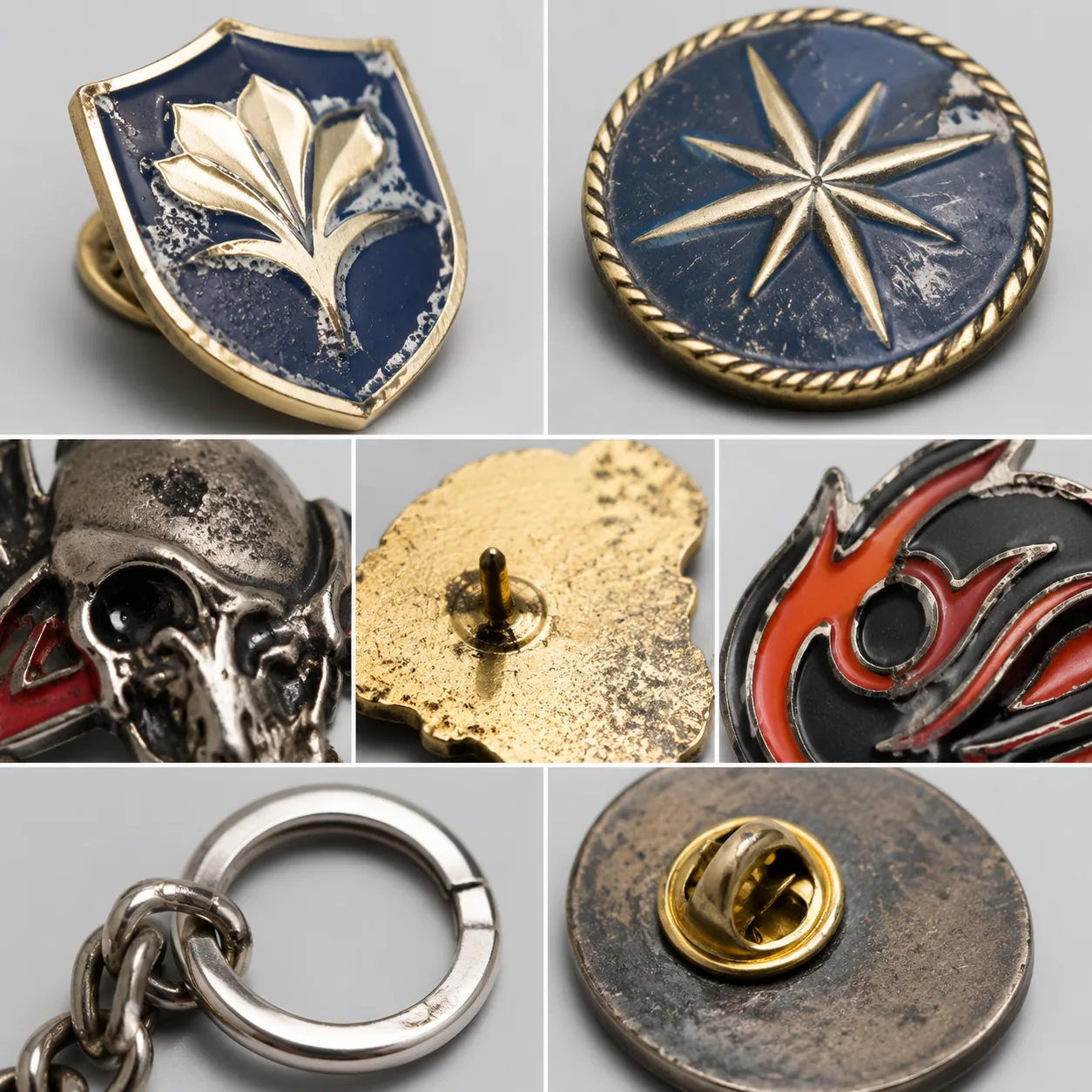
Why souvenir metal goods pass factory QC but still fail in market
Most disputes on custom pins, badges, keychains and magnets are not caused by the absence of inspection. They happen because the buyer approved artwork, plating tone and a pre-production sample, but never translated those approvals into measurable lot-acceptance rules. A shipment of 5,000 soft enamel pins can pass an internal factory review and still create returns if 2.2% have visible dust in epoxy, 1.4% have weak butterfly clutches, 0.9% show print shift on backing cards and several inner bags contain mixed SKUs. Without written defect classes, AQL limits, viewing conditions and test methods, the supplier and buyer are judging the same lot by different standards.
The practical fix is to treat these items as controlled consumer goods, not casual souvenirs. That means defining critical, major and minor defects; selecting a sampling plan; and setting numeric limits for appearance, dimensions, hardware security, count accuracy and retail pack-out before mass production starts. In practice, buyers that issue a one- to two-page QC appendix with the RFQ and PO usually reduce disputes because the acceptance rule is decided before tooling, plating and assembly costs are locked in.
The goal is not a zero-defect slogan. The goal is a standard strict enough to protect a brand, but realistic for factories running MOQs of 300 to 500 pieces and repeat lots up to 20,000 pieces. For most custom metal programs, the highest commercial risks are front-face appearance, attachment security, count accuracy, SKU separation, barcode correctness and retail presentation. A small backside polishing swirl should not be weighted the same as a loose clasp, wrong finish or visible enamel void in the logo area.
AQL baselines by product type, retail risk and FOB level
For most custom metal promotional products, a workable baseline is AQL 0 for critical defects, 1.5 for major defects and 2.5 or 4.0 for minor defects. Use the tighter minor limit for retail, licensed, museum, subscription-box or collector items where the front face is closely examined and returns are expensive. Use minor 4.0 only for low-cost giveaway programs, usually bulk-packed and priced around USD 0.35 to 0.90 FOB per piece, where slight rear-side cosmetic variation does not affect use or brand perception.
General Inspection Level II is the normal choice for final random inspection. Upgrade to Level III for first orders, mirror-polish hard enamel, moving hardware, mixed-SKU retail sets, low unit counts with high resale value, or artwork with fine printed detail. Level I is reasonable only on repeat orders where tooling, plating, attachment, dimensions and pack-out are unchanged and the supplier has passed several prior lots without corrective action. Even then, critical defects stay at zero and function checks should not be relaxed.
Commercial context matters. Soft enamel iron pins at 25 to 40 mm commonly start at MOQ 300 to 500 pieces, with FOB pricing around USD 0.45 to 1.20 depending on size, number of colors, epoxy, attachment and plating. Hard enamel badges at similar sizes often run USD 0.90 to 2.50 FOB because polishing, color finish and reject sorting are more demanding. Zinc alloy keychains with jump ring, split ring, swivel or lobster clasp commonly range from USD 1.10 to 3.80 FOB at MOQ 300 to 1,000 pieces. Once the item value exceeds roughly USD 1.50 FOB or includes premium retail packaging, buyers usually benefit from tightening major defects to AQL 1.0 and adding more function checks.
| Order Type | Typical MOQ / FOB | Suggested AQL | Inspection Note |
|---|---|---|---|
| Soft enamel pins, 1,000-10,000 pcs | MOQ 300-500; USD 0.45-1.20 FOB | Critical 0, Major 1.5, Minor 2.5 | Level II final inspection; verify clutch retention, post straightness, enamel fill and count accuracy |
| Hard enamel badges for resale | MOQ 300-500; USD 0.90-2.50 FOB | Critical 0, Major 1.0, Minor 2.5 | Use approved golden sample; inspect under controlled light for polish, flatness and visible surface defects |
| Zinc alloy keychains with swivel or clasp | MOQ 300-1,000; USD 1.10-3.80 FOB | Critical 0, Major 1.0, Minor 2.5 | Check ring closure gap, clasp spring return, swivel rotation and rubbing damage between parts |
| Bulk giveaway items in polybags | MOQ 500+; USD 0.35-0.90 FOB | Critical 0, Major 1.5, Minor 4.0 | Treat hidden backside swirl or tiny rear pits as minor unless they affect function |
| Mixed sets with backing cards and barcode labels | MOQ varies; bundled FOB by contents | Critical 0, Major 1.0, Minor 2.5 | Inspect product, count, card orientation, barcode readability and SKU separation as one pack-out unit |
Defect classes buyers and factories can apply consistently
Critical defects should be limited to safety, compliance, legal labeling or complete function failures. For custom metal items, that includes sharp burrs likely to cut skin in normal handling, detached magnets on products intended for children, wrong SKU inside branded retail packaging, missing legally required warning or country-of-origin label where specified, failed nickel-release or lead-content claims when those claims were contract requirements, or a clasp or pin component that creates a direct handling hazard. Critical defects should always be accepted at zero.
Major defects are the issues most likely to trigger customer rejection, marketplace complaints or brand damage. Examples include missing butterfly clutches, loose jump rings, split rings with visible opening, clasp springs that do not return, front-face enamel voids visible at 30 cm, plating peel exposing base metal on visible areas, scratches across text or logo zones, obviously wrong plating family, wrong backing card in a retail set, or print misregistration above 0.15 to 0.20 mm. Dimensional failures should also be major: a practical starting point is more than plus or minus 0.30 mm on stamped parts under 40 mm and more than plus or minus 0.50 mm on larger or cast shapes.
Minor defects are imperfections that do not affect safe use, function or normal brand perception. Examples include light backside polishing swirl, a rear plating pit under about 0.20 mm, a small paint speck under 0.15 mm in a low-visibility corner, slight enamel shade drift that still matches the approved sample family, or a faint rear die line not visible in ordinary use. If every tiny backside mark is classified as major, the usual result is delayed shipment, excessive sorting cost or a higher unit price hidden inside future quotations.
- Critical defects: sharp cutting edge, detached magnet, wrong SKU packed, failed specified nickel or lead claim, missing required warning or origin label
- Major defects: missing attachment, loose ring or clasp, front-face enamel void, print misregistration over 0.20 mm, plating peel on visible area, wrong finish, wrong backing card or quantity error in retail set
- Minor defects: light backside scratch, tiny rear plating pit, slight approved shade drift, small dust mark in a hidden area, faint rear polishing swirl
Numeric limits that prevent subjective arguments
Terms such as good quality, clean finish and no obvious defects create disputes because they are not measurable. Replace them with a defined visual standard. A practical default is inspection at 30 cm viewing distance, under white light of about 800 to 1,200 lux, with normal unaided vision, for 3 to 5 seconds per piece, with the decorated front face treated as the primary cosmetic surface. If a flaw is visible only at 10 cm or under magnification, it normally should not be graded major unless it affects safety, fit, barcode readability or function.
Dimensional tolerance should follow the manufacturing process. Stamped iron or brass parts can usually hold overall dimensions within plus or minus 0.25 to 0.35 mm. Die-cast zinc alloy parts with irregular outlines are more realistically controlled at plus or minus 0.40 to 0.60 mm. Thickness is commonly controlled to plus or minus 0.10 mm for stamped parts in the 1.2 to 1.8 mm range and plus or minus 0.15 mm for thicker cast parts. Demanding plus or minus 0.05 mm on a standard souvenir pin usually adds arguments without improving field performance.
For graphics, screen or UV print registration should usually stay within 0.15 to 0.20 mm. Tighten that to 0.10 to 0.15 mm where text is below 1.0 mm letter height, where QR codes must scan from retail packs, or where serial numbers and fine border lines are present. For enamel, specify visual match to Pantone coated reference and, more importantly, to an approved physical sample. Exact instrument color match across enamel, printed cards, PVC accessories and fabric is usually unrealistic because different substrates reflect light differently.
Decorative plating on pins and keychains is normally cosmetic, not true outdoor corrosion protection. Nickel, black nickel, imitation gold and gunmetal decorative layers are commonly around 0.03 to 0.10 microns. If the product must survive six to twelve months of boxed storage, humid transit or premium retail display, specify an anti-tarnish topcoat and a simple durability standard. A workable example is no visible plating loss after 20 dry rubs with a white cotton cloth on a low-friction area, and no peeling after a standard tape adhesion check on a flat visible surface.
| Spec Area | Workable Buyer Standard | When to Tighten |
|---|---|---|
| Visual inspection | 30 cm distance, 3-5 seconds, 800-1,200 lux, front face priority | Retail, licensed art, collector editions, glossy finishes |
| Overall size tolerance | ±0.25-0.35 mm stamped; ±0.40-0.60 mm cast | Interlocking sets, fitted inserts, close-fit trays |
| Thickness tolerance | ±0.10 mm stamped; ±0.15 mm cast | Where fit, weight or magnetic pull matters |
| Print registration | Within 0.15-0.20 mm | Tiny text, QR code, serial number or narrow borders |
| Decorative plating thickness | About 0.03-0.10 microns to approved sample | Long storage, humid climate, premium finish expectations |
| Count and pack-out | Carton quantity variance 0; inner pack quantity variance 0 | Mixed-SKU programs, retail launch orders, marketplace fulfillment |
Product-specific checkpoints for pins, keychains, magnets and badges
Different products fail in different ways, so the inspection plan should follow the product risk. Soft enamel pins most often fail on underfilled enamel, front scratches, bent posts, weak butterfly clutches, epoxy bubbles and inconsistent color fill between cavities. Hard enamel badges need tighter control of polished flatness, edge smoothness, plating consistency and color cleanliness because glossy surfaces reveal defects much faster under direct light.
Metal keychains need more function testing than lapel pins because they are pulled, twisted and dropped in daily use. Inspect split-ring closure, jump-ring gap, swivel rotation, clasp spring return, rivet tightness and edge finishing. A useful field-style check is 10 open-close cycles on the clasp or swivel assembly and a light pull test on the connecting hardware. For heavier keychains above about 35 to 45 g, hardware security should be treated as a major risk point because weak joints generate early customer complaints even when appearance is acceptable.
Fridge magnets and magnetic badges need magnet retention and pull checks, especially when magnets are glued rather than mechanically retained. A detached magnet may be major for an adult souvenir market, but critical where age grading or safety labeling makes loose components unacceptable. Challenge coins and thick cast badges need closer review of die fill, relief sharpness, edge polish and plating consistency because variation is more visible across deeper surfaces. If the order includes pouches, backing cards, barcode stickers or mixed inserts, final QC should verify scan readability, assortment accuracy and orientation as part of the same inspection, not as a separate afterthought.
A practical final random inspection combines quantity verification, visual review, caliper measurement, weight spot-checks, simple function testing and pack-out audit. For higher-risk orders, add in-line control at die striking or casting, plating and color-fill stages. Catching underfilled enamel when 25% of the lot is complete is far cheaper than discovering it after 5,000 units have been bagged, labeled and master-cartoned.
When final inspection is enough and when to add in-line checks
Final inspection alone is usually enough for repeat products with locked tooling and a stable process history. A common example is a 25 mm soft enamel iron pin, 1.5 mm thick, two fill colors, butterfly clutch, quantity 3,000 to 10,000 pieces, with unchanged artwork, plating and packing. In that case, one approved pre-production sample plus one Level II final random inspection is often the most efficient control plan.
Add in-line inspection when the order is new, complex, expensive or deadline-sensitive. That includes first orders with a new factory, mirror-polished hard enamel, products with moving hardware, retail sets with inserts and barcodes, artwork with text below 1.0 mm, and multi-SKU launches where packing errors are costly. On orders above 5,000 pieces, one plating bath issue or one enamel color-mix error can affect the whole lot, so an in-line check at roughly 20% to 30% completion is usually worth the added inspection cost.
Lead time should be part of the QC plan from the RFQ stage. Typical production lead times after sample approval are about 10 to 18 days for repeat soft enamel pins, 14 to 25 days for hard enamel badges and 18 to 30 days for custom zinc alloy keychains with multiple hardware parts. Pre-production samples usually take 5 to 10 days, and premium gift-box packaging often adds 3 to 7 days. If the buyer waits until full pack-out is complete and then rejects a complex lot, rework commonly adds 7 to 14 days, plus possible air freight that can cost more than the savings gained by negotiating a few cents off FOB.
What to write into the PO and QC appendix
A strong QC appendix does not need to be long. One or two pages is usually enough if each requirement is measurable. The supplier, third-party inspector and buyer should be able to read the same document and reach the same pass-fail conclusion on the same lot. If a detail feels too obvious to write down, it is often the detail that later becomes subjective.
- State construction clearly: stamped or cast, base metal, overall size, thickness, plating, attachment, magnet type, carding and packaging method
- State the sampling rule: inspection level, AQL for critical, major and minor defects, and whether final only or in-line plus final applies
- Define defect classes with item-specific examples tied to the approved sample, not generic factory wording
- Define the visual standard: 30 cm distance, 800-1,200 lux lighting, 3-5 second viewing time and front-face priority
- Set numeric tolerances for size, thickness, print alignment, enamel fill appearance, hardware fit, barcode readability and carton count accuracy
- Require function checks appropriate to the item: clutch fit, split-ring closure, clasp spring return, swivel movement, magnet retention or card scan test
- State packaging rules: units per bag, inner and master carton quantities, card orientation, barcode text, desiccant if needed and mixed-SKU separation
- Name approval authority: artwork sign-off, golden sample holder, inspection release authority and shipment approval process
A repeatable QC system for ongoing programs
Instead of rewriting quality language for every order, build one defect matrix for each product family: one for pins and badges, one for keychains, one for magnets and one for mixed retail sets. That gives procurement, QA and suppliers repeatable language while leaving only item-specific fields to update, such as dimensions, hardware type, pack-out format, barcode data and the cosmetic priority surface.
Before issuing the PO, ask the supplier to flag any target they believe is unrealistic. A capable factory should push back on a plus or minus 0.05 mm tolerance for a die-struck souvenir pin, explain that decorative plating is not the same as outdoor corrosion protection, or warn that exact Pantone identity across enamel and printed paper is not technically valid. That discussion is useful because it converts assumptions into an agreed production standard before money and lead time are at risk.
Then lock three documents together: approved artwork, approved physical sample and approved QC appendix. If those three do not match, final inspection becomes subjective and every dispute becomes expensive. Buyers who align them before production usually get cleaner approvals, more predictable lead times, fewer post-delivery claims and more stable supplier pricing across repeat orders.
Have a project? Send your artwork and target quantity and we’ll reply with a detailed quotation within 12 working hours.
Ready to get this made?
Send your sketch, target quantity and ship-date. Detailed quotation in 12 hours.



