Air, Sea, Rail or Courier? Freight Choices for Custom Pins
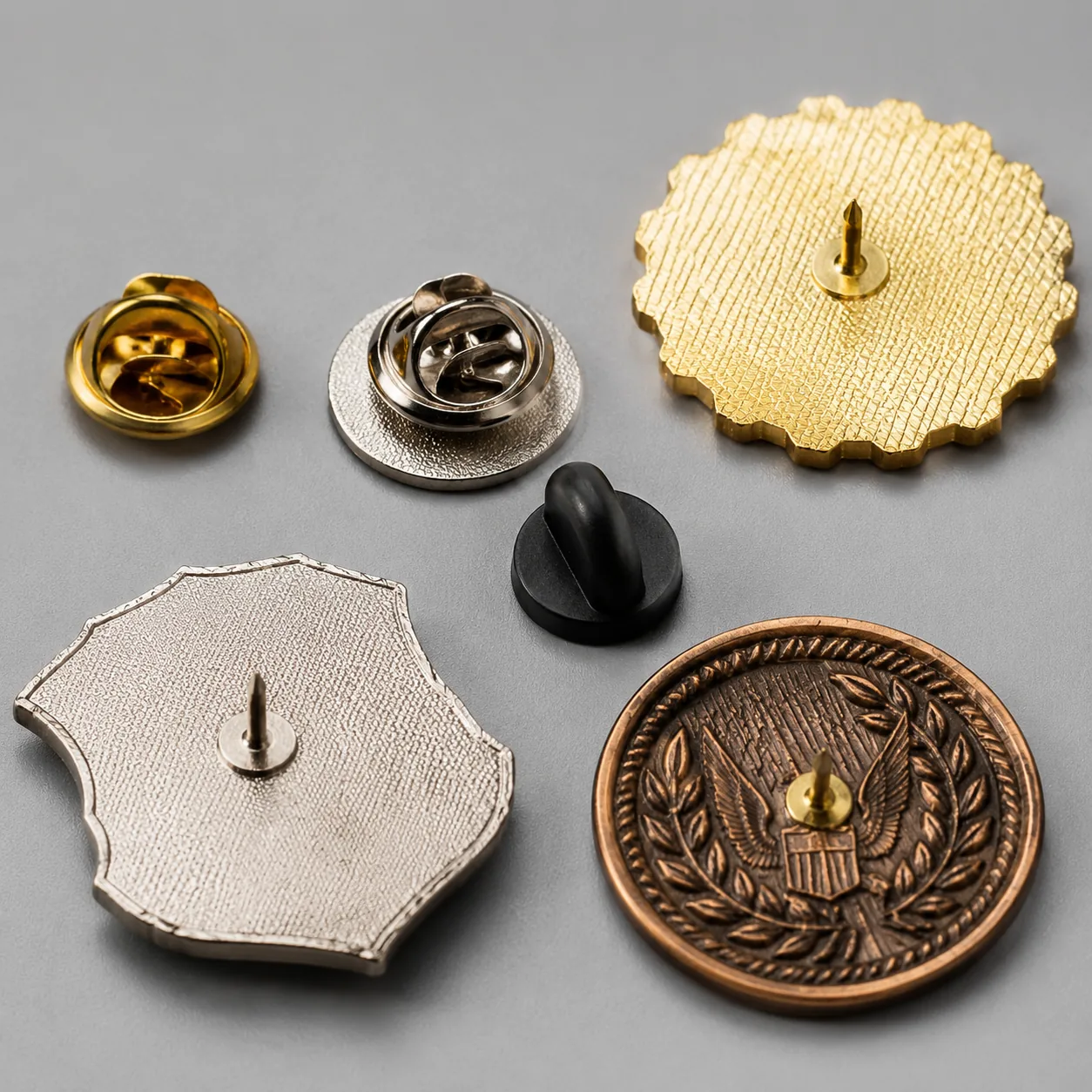
Set freight strategy at RFQ stage, not after sample approval
The cheapest FOB unit price can still create the highest landed cost. A 35 mm die-cast zinc alloy keychain quoted at USD 0.62 FOB Ningbo may look strong until gift-box packing cuts carton density from roughly 280-320 units to 80-120 units per master carton, triples total cube, and pushes the order into high volumetric charging. The same problem appears with carded enamel pins, challenge coins in capsules or velvet boxes, and mixed-SKU orders where one bulky retail pack distorts freight economics for the whole shipment.
For custom pins, badges, keychains, coins and lanyards, freight mode should be chosen before tooling starts. Mode selection affects retail pack format, pieces per carton, carton dimensions, export marks, whether split shipments are viable, and how much schedule buffer is actually available. In practice, buyers should quote product cost and shipment plan together as one commercial decision, not as separate late-stage tasks.
A typical example: 1,000 pieces of a 30 mm iron soft enamel pin with 1.2-1.5 mm thickness may quote around USD 0.28-0.48 FOB China in bulk OPP packing, but the same pin with a 350 gsm backing card plus individual polybag can increase total carton cube by 20-35%. On sea freight that may be manageable. On courier or air, it often changes cost materially because chargeable weight is the higher of actual weight or volumetric weight. Common courier volumetric formulas remain L x W x H in cm divided by 5,000, while many airfreight programs use divisor 6,000 or the IATA conversion of 1 CBM = 167 kg. Buyers who negotiate cents on unit price while leaving packaging open often give back much more in freight.
Build the RFQ around in-hand date, pack-out and trade term
A freight-usable RFQ needs more than artwork, size and quantity. It should state the in-hand date, latest acceptable cargo-ready date, destination country, final delivery type, comparison trade term, and final retail packing assumption. If packaging is left undefined, suppliers cannot estimate carton count, recommend mode, or provide realistic DDP pricing with confidence.
Packed density varies sharply on small metal goods. A 30 mm soft enamel pin in an OPP bag with a 90 x 55 mm backing card may ship at about 900-1,300 pieces per export carton when the carton is capped at 12-14 kg gross. The same pin in a rigid acrylic display case may drop to 250-400 pieces per carton. A 50 mm zinc alloy keychain in a velvet box may fall to 80-140 pieces per carton depending on insert depth, wall thickness and whether the split ring is packed folded or flat. One packaging choice can move the best mode from sea LCL to air, or from courier to forwarder-managed airport freight.
- State the product spec completely: for example, 32 mm iron soft enamel pin, 1.5 mm thickness, 2 posts, butterfly clutch, polished gold finish, 4 spot colors.
- State the retail pack exactly: bulk OPP, carded OPP, acrylic case, EVA tray, velvet box, paper sleeve, barcode label, suffocation warning and carton sticker.
- Request pieces per carton, carton size in cm, net weight, gross weight, carton count and total CBM for each packing option.
- Specify one comparison trade term: EXW, FOB Ningbo, FOB Shanghai, CIF destination port, or DDP delivered address.
- Provide one must-hit in-hand date and one latest cargo-ready date so suppliers can quote split-shipment options.
- If shipping to multiple addresses, give carton allocation by address before quotation because pick-pack labor and DDP charges change materially.
For 2026 buying plans, ask whether lead time runs to ex-factory completion, cargo-ready status, or FOB handover. A factory saying "18 days" may mean 18 days to finish production only. Booking cutoff, truck loading, customs release and terminal handover can still take another 2-4 days at origin, and during pre-holiday peaks even airport handover may need 1-2 extra days beyond the nominal booking window.
Request freight-aware quotations with MOQ tiers, lead times and carton data
Useful quotations compare product and dispatch options together. Ask each supplier to quote the same item under the same packing and trade term, then add estimated courier, air, rail where relevant, and sea options. This quickly reveals which suppliers understand export packing, carton discipline and realistic booking windows rather than quoting only factory output.
Typical 2026 FOB pricing for a standard 30 mm iron soft enamel pin with up to 4 enamel colors, 1.2-1.5 mm thickness and butterfly clutch is roughly USD 0.55-0.95 each at 100 pcs, USD 0.36-0.62 at 500 pcs, USD 0.28-0.48 at 1,000 pcs, and USD 0.22-0.39 at 3,000 pcs, excluding tooling. MOQ is often 50-100 pcs for simple 2D designs. Tooling for a basic stamped iron pin commonly runs USD 45-90. Sample lead time is often 5-7 days after artwork approval, with bulk production 10-18 days for 500-3,000 pcs and 18-25 days for 5,000+ pcs.
A 50 mm die-cast zinc alloy keychain with epoxy dome and split ring may run around USD 0.80-1.40 at 100 pcs, USD 0.58-0.98 at 500 pcs, USD 0.45-0.85 at 1,000 pcs, and USD 0.39-0.72 at 3,000 pcs FOB, with tooling often USD 80-160 depending on cut-outs, 3D relief and back texture. A 45-50 mm challenge coin at 3.0-3.5 mm thickness commonly quotes USD 1.10-2.20 at 100 pcs and USD 0.68-1.35 at 1,000 pcs FOB, with mold charges typically USD 90-180. Bulk lead time for die-cast keychains and coins is usually 12-22 days, rising if antique plating, edge numbering or individual capsules are required.
Carton control matters almost as much as piece price. For small metal promotional goods, many buyers cap export cartons at 12-15 kg gross to reduce breakage, warehouse handling issues and courier overweight surcharges. A practical shipping tolerance is often ±1 cm on carton dimensions, ±0.5 kg on gross weight, and ±3% on pieces per carton unless an exact retail count is required. If the supplier cannot hold that consistency, chargeable weight and booking estimates can drift materially.
| Item | Typical MOQ | FOB 100 pcs | FOB 1,000 pcs | Typical bulk lead time | Packed density example |
|---|---|---|---|---|---|
| 30 mm iron soft enamel pin | 50-100 pcs | USD 0.55-0.95 | USD 0.28-0.48 | 10-18 days | 900-1,300 pcs/carton with carded OPP |
| 50 mm zinc alloy keychain | 100 pcs | USD 0.80-1.40 | USD 0.45-0.85 | 12-22 days | 180-260 pcs/carton bulk OPP; 80-140 in velvet box |
| 45-50 mm challenge coin | 50-100 pcs | USD 1.10-2.20 | USD 0.68-1.35 | 12-20 days | 250-400 pcs/carton bulk; 90-120 in capsule |
| Polyester lanyard with safety breakaway | 100 pcs | USD 0.65-1.10 | USD 0.32-0.58 | 8-15 days | 400-700 pcs/carton depending on buckle set and folding method |
Compare freight modes by chargeable weight and real transit
Mode choice should be based on chargeable weight, cube, lane and deadline buffer, not product count alone. Two 1,000-piece orders can require different transport if one is bulk-packed and the other gift-boxed. The basic rule is simple: calculate actual weight, calculate volumetric weight, and use whichever is higher before comparing freight modes.
| Mode | Best use case | Typical transit in 2026 | Indicative cost band | Main trade-off |
|---|---|---|---|---|
| Courier | Samples, urgent small bulk, usually under 100-150 kg chargeable | 3-7 days door-to-door | Often USD 6.0-12.0/kg equivalent before fuel, remote area and residential surcharges | Fastest and simplest, but volumetric charging can make boxed goods expensive |
| Air freight | Deadline-driven bulk, commonly 150-800 kg | 5-10 days airport-to-airport or 7-12 days door-to-door | Airport-to-airport often USD 3.5-7.5/kg before local charges; usually 25-45% below courier at scale | Strong speed-to-cost balance, but needs customs and terminal coordination |
| Rail | Europe-bound mid-volume replenishment where sea is too slow | 18-30 days terminal-to-terminal plus drayage | Often 25-45% below air and 2-3x sea cost on workable lanes | Useful only on the right lane; reliability varies by route and border congestion |
| Sea LCL | Smaller mixed bulk with flexible timing | 25-45 days port-to-port plus 5-10 days origin and destination handling | Lowest line-haul cost for small cube, but destination charges can be high on small consignments | Cheaper than air, but more touchpoints and more delay exposure |
| Sea FCL | Large-volume multi-SKU programs or seasonal replenishment | 20-40 days port-to-port depending on route | Lowest landed freight per unit at scale | Best economics, but least flexible if one SKU or supplier slips |
Courier is not only for samples. It can be the correct choice for a 200-300 piece badge order packed flat to one commercial address when the event date leaves no room for port delay. But for dense products such as 3 mm zinc alloy keychains or 4 mm challenge coins, courier often becomes uneconomical once volumetric and fuel surcharges are added. Six cartons at 42 x 30 x 28 cm each equal about 0.212 CBM. On courier terms, volumetric weight is roughly 127 kg, even if actual weight is only 58 kg.
Air freight is usually the best escalation path when production is complete but sea timing is too tight. For many B2B orders, the lowest-risk option is a split shipment: for example, 300 launch units by air and 1,700 replenishment units by sea. On a 2,000-piece keychain program, that often costs far less than air-freighting the full order while still protecting the retail launch or event date.
Rail is worth considering mainly for Europe-bound shipments from China when sea is too slow and air is too expensive. It should not be treated as a default. Lane stability, customs processing and terminal handoff vary by route. For North America, sea plus a controlled emergency air tranche is usually more practical than trying to force a mid-speed mode that does not fit the lane.
Validate final pack-out during sampling and freeze shipping specs
Most buyers review pre-production samples only for color, plating, attachment and dimensions. That is incomplete. If timing or order value matters, require one packed sample set that reflects the final shipping configuration: backing card, bag size, barcode placement, insert style, master carton specification and carton mark. Appearance approval without logistics approval is one of the main reasons launch orders suddenly shift from sea to air.
Packaging details can more than double cube. A 45 mm challenge coin bulk-packed with tissue separators may fit around 250-400 pieces per carton, while the same coin in a capsule or velvet presentation box may fall below 100-120 pieces. Lanyards with breakaways, buckles and safety clips can tangle if packed loosely; folding method and bag size routinely change carton efficiency by 10-20%.
Check manufacturing and logistics tolerances together. For metal products, realistic tolerances are often ±0.15 mm on stamped dimensions, ±0.20 mm on die-cast dimensions and ±0.10 mm on thickness, assuming the artwork and mold design are suitable. Die-cut backing card tolerance is typically ±1 mm. For export packing, ask the factory to freeze carton specification, target pieces per carton, desiccant use, tissue wrap and anti-tarnish protection for finishes such as bright silver, imitation gold and black nickel.
If plating appearance is sensitive, ask what decorative finish is actually being applied. Promo-grade plating on pins and keychains is usually decorative flash plating, often around 0.03-0.10 micron for the visible top layer over the underlying plating system, not heavy functional plating. Claims such as "thicker plating" are not useful unless tied to a sealed approval sample and agreed appearance standard. For retail-facing products, a retained golden sample is more reliable than a generic micron claim alone.
Control quality before cartons close and book against inspection release
Freight delays are often created in production, not by the forwarder. Loose jump rings, weak split rings, bent pin posts, poor butterfly clutch fit, scratched plating or crushed backing cards trigger rework, and rework usually consumes the same days originally reserved for shipment. If the order is launch-sensitive, lock an inspection standard and carton release process before packing begins.
For small metal promotional goods, many B2B buyers use final random inspection at AQL 2.5 major and 4.0 minor under ANSI/ASQ Z1.4 or equivalent practice. For premium retail presentation packs, some tighten to AQL 1.5 major and 2.5 minor on visible cosmetic defects. Packed goods should be inspected as packed goods, not only as loose pieces, because a perfect lapel pin inside a scuffed acrylic case is still a failed delivered item.
Useful controls include pull testing for keychain hardware, retention checks for pin clutches, plating adhesion review after dry rubbing, barcode scan checks on carded units, polybag seal checks, and at least one master-carton drop test per SKU from 60-80 cm. Request final carton photos, shipping marks, carton count, gross and net weight and confirmed CBM before booking cargo. If cartons exceed the agreed weight cap, the forwarder should know before pickup, not after warehouse refusal or surcharge assessment.
A practical release sequence is: pre-production sample approval, in-line inspection at 20-30% output for plating and assembly issues, final random inspection at 80-100% packed, then booking release after passed report and confirmed carton list. This reduces last-minute air upgrades caused by discovering defects only after the factory has already packed all cartons.
Use DDP selectively; use FOB when consolidation and control matter
DDP is attractive because it reduces administrative effort, especially for samples, trial runs and buyers without import infrastructure. But DDP is not automatically the lowest-risk or lowest-cost option. If you already use a nominated forwarder, have import compliance in place and consolidate cargo from multiple factories, FOB usually gives better visibility and fewer pricing surprises.
DDP usually makes sense for low-volume urgent shipments, first-time importers and one-off projects shipping to a single address. FOB is usually stronger for repeat buyers combining orders through Ningbo, Shanghai, Shenzhen or Guangzhou because it allows one forwarder to consolidate, compare sailings and avoid duplicated destination charges. For larger seasonal programs, FOB also gives more control if one supplier slips and bookings must be reallocated.
If accepting DDP, ask exactly what is included: customs clearance, duties, VAT or GST where applicable, terminal handling, last-mile delivery, appointment fee, residential surcharge, lift-gate fee and remote-area surcharge. If buying FOB, confirm cargo-ready date, handover deadline, port, carton spec and who pays if factory delay forces a mode change from sea to air after the agreed schedule slips. That liability should be written into the purchase order, not debated after production runs late.
Create a written shipping trigger plan before mass production starts
Before mass production, lock the items buyers most often leave vague: approved sample, tooling sign-off, final retail pack, target pieces per carton, carton gross-weight cap, inspection level, export mark format and split-shipment trigger date. Then require every supplier to return three things together: product quote, carton estimate and recommended shipment mode. Suppliers that cannot quote all three are usually quoting only factory price, not delivered reality.
A practical trigger plan might read as follows: if goods for North America are not cargo-ready 30-35 calendar days before an event date, release 20-30% by air and balance by sea; if goods for Western Europe are not cargo-ready 24-28 days before event date, release an air tranche; if goods are packed in bulky retail boxes and courier volumetric weight exceeds actual weight by more than 40%, bypass courier and compare airfreight immediately. Exact cutoffs depend on route, customs profile and whether delivery is port, airport or final door.
If sourcing pins, keychains, coins, patches and lanyards together, request one combined shipment plan across all SKUs rather than separate mode decisions for each line. Freight cost is driven by the packed order, not by isolated product categories. The most reliable outcome is straightforward: one approved specification, one realistic dispatch plan, and no surprise freight upgrade in the final week.
Have a project? Send your artwork and target quantity and we’ll reply with a detailed quotation within 12 working hours.
Ready to get this made?
Send your sketch, target quantity and ship-date. Detailed quotation in 12 hours.



