Air, Sea or Rail? 2026 Freight Math for Custom Metal Promos
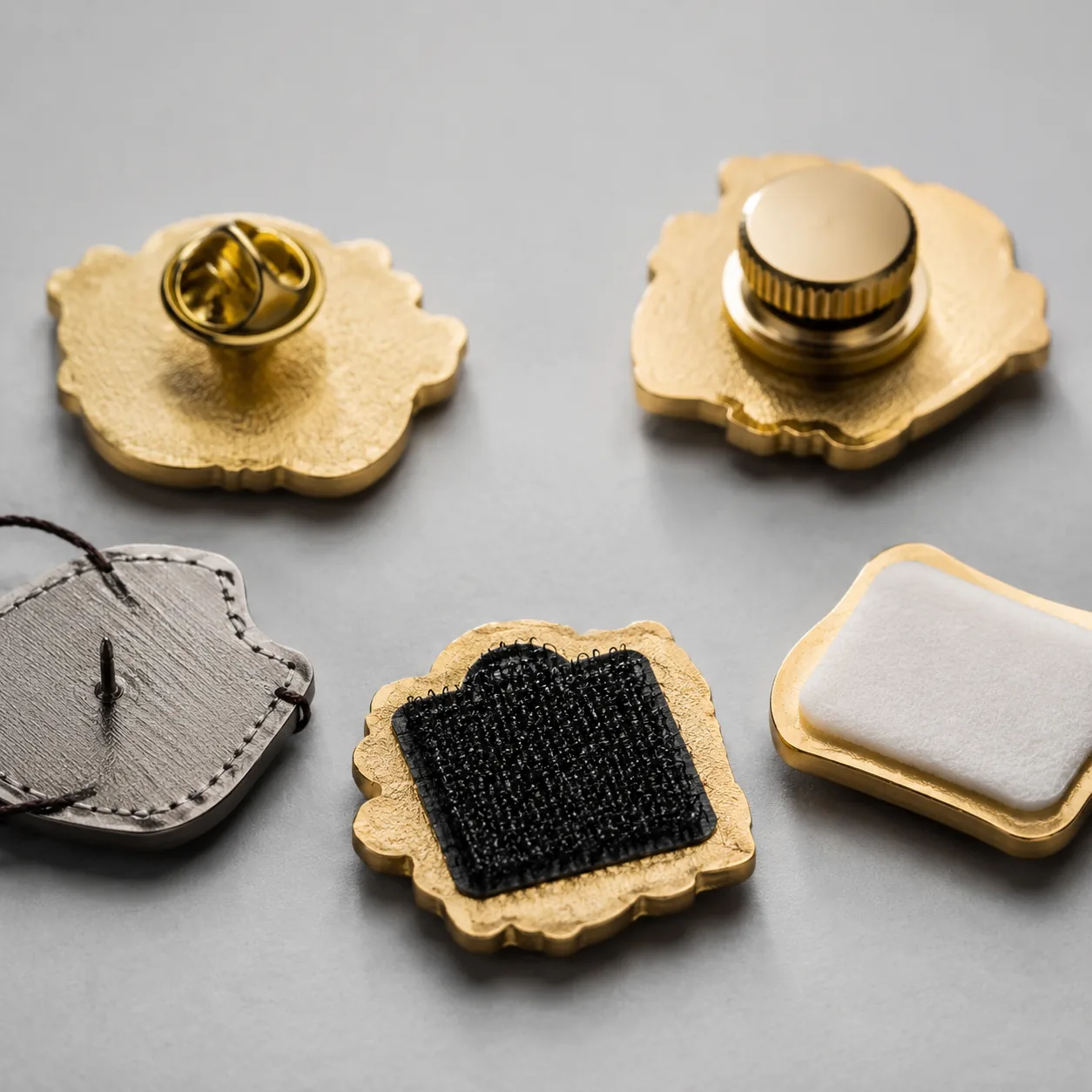
Why the lowest FOB quote often produces the highest landed cost
A low FOB price on enamel pins, keychains, challenge coins, or metal magnets is not a good buy if freight mode is decided after sample approval. On dense metal promos, routing mistakes usually erase any unit-price win. A 5,000-piece soft enamel pin order at FOB USD 0.42 each totals USD 2,100. If the packed shipment is 68 kg gross and 0.24 m3, sea LCL may cost roughly USD 180 to USD 320 origin-side plus destination charges, while air cargo or express for the same shipment can push the total freight-and-handling bill into the USD 550 to USD 1,050 range depending on lane, fuel surcharge, and local delivery. That difference alone can add USD 0.07 to USD 0.17 per piece.
The delivered-cost question for 2026 is simple: what does the order cost under the realistic timing scenarios, not under the ideal one? Buyers should model at least six variables together: FOB or EXW price, tooling, packaging type, packed weight, shipment cube, and latest acceptable ship date. For a metal item, packaging changes freight economics faster than most sourcing teams expect. A pin bulk packed in 100s behaves very differently from the same pin on a backing card in an OPP bag, and differently again if placed in a rigid retail box.
The operational risk is as important as the dollar figure. A late switch from sea to air typically reduces inspection buffer from two or three days to one day, increases the odds of split shipment, and raises the chance that customs delay collides with a fixed event date. For custom metal promos, freight mode is not a finishing detail. It should be fixed at quotation stage, then protected during production.
The inputs that actually move freight math
Freight sensitivity usually becomes material once a shipment reaches about 80 to 120 kg gross, or earlier when the in-hands window drops below 20 to 25 calendar days from sample approval. Packed weight matters more than net metal weight because carriers bill what moves, not only what is cast or stamped. A 32 mm soft enamel iron pin at 1.2 to 1.5 mm thickness with butterfly clutch often weighs 6.5 to 8.5 g net, but 10.5 to 13.5 g packed with OPP bag, backing card allocation, inner bag, and carton share. A 50 mm die-cast zinc keychain with split ring usually lands at 23 to 30 g packed. A 44 mm challenge coin at 3.0 mm thickness commonly runs 38 to 50 g packed in polybag, but 65 to 82 g in capsule or velvet box.
Volume matters because express and air often bill by volumetric weight. Common divisors are 5,000 or 6,000 cm3/kg depending on carrier and lane. A 9 x 9 x 2.5 cm rigid coin box equals 202.5 cm3 before outer-carton inefficiency. At 1,000 pieces, that is 0.2025 m3 of product cube before dividers, carton walls, and void fill. Using a 6,000 divisor, 0.24 m3 can bill near 40 kg volumetric even if dead weight is lower. That is why presentation packaging can turn a moderate air shipment into an expensive one.
Tooling and finish choices also affect schedule resilience. Typical 2026 tooling ranges are USD 60 to USD 120 for stamped iron pins, USD 90 to USD 180 for die-cast zinc keychains, and USD 120 to USD 250 for challenge coins, with higher charges for cutouts, spinner structures, custom edges, or multi-level relief. Common adders are USD 0.03 to USD 0.10 for epoxy dome, USD 0.02 to USD 0.06 for printed backing cards, USD 0.04 to USD 0.12 for glitter or transparent enamel sections, and USD 0.35 to USD 0.90 for velvet or rigid presentation boxes.
Quality specifications should be written in measurable terms. AQL 2.5 major / 4.0 minor is standard for promo runs; AQL 1.0 / 2.5 is more common for retail or award programs. Flash nickel or imitation gold at 0.03 to 0.05 micron is typical for low-cost giveaways, while more appearance-sensitive items often target 0.08 to 0.15 micron. For stamped badges and pins, thickness tolerance of plus or minus 0.10 mm is realistic; for flatter hard enamel style pieces, buyers sometimes ask for surface flatness within plus or minus 0.10 mm rather than plus or minus 0.15 mm. Each tighter requirement raises sort-and-hold risk if the golden sample is vague.
MOQ tiers, FOB bands, and where freight overtakes unit savings
| Product type | Typical MOQ | 2026 FOB unit range | Packed weight guide | Freight tipping point |
|---|---|---|---|---|
| Soft enamel pin, 30-40 mm, iron, 1.2-1.5 mm | 100-300 pcs | USD 0.32-0.78 each | 11-14 g each | Usually 2,000-3,000 pcs, or any deadline under 25 days |
| Die-cast keychain, 45-55 mm, zinc alloy | 100-200 pcs | USD 0.72-1.65 each | 23-30 g each | Often 800-1,200 pcs because kg accumulates quickly |
| Challenge coin, 40-45 mm, brass or zinc alloy, 3.0 mm | 100 pcs | USD 1.45-3.40 each | 38-50 g polybagged; 65-82 g boxed | Often 500-800 pcs, especially with gift-box packing |
| Metal fridge magnet, 50-70 mm, stamped or cast with ferrite backing | 100-300 pcs | USD 0.68-1.55 each | 26-44 g each | Often 800 pcs due to dense weight and low unit value |
| Embroidered or woven patch, 70-90 mm | 100 pcs | USD 0.28-0.95 each | 4-8 g each | Usually less sensitive until mixed-SKU consolidations or urgent air moves |
At low MOQs, setup and tooling allocation dominate, so unit price deserves attention. The trap appears at mid-volume. On a 1,000-piece keychain order, reducing FOB from USD 1.02 to USD 0.98 saves USD 40. Missing a sea or rail window and upgrading to air can add USD 180 to USD 500, depending on lane and packaging. That is the real reason buyers should request delivered-cost scenarios at 500, 1,000, 3,000, and 5,000 pieces, not only factory price breaks.
Mixed promo programs should be costed as one logistics job. A 2,000-piece pin order at 26 kg and a 1,000-piece keychain order at 28 kg may each route cheaply alone, but together they can cross a consolidation threshold that changes the best option from sea LCL to air cargo, or from express to airport cargo plus local truck. MOQ strategy is more accurate when tied to shipment weight and cube by tier, not just to per-piece factory cost.
2026 lead times by process, with day counts buyers can schedule against
Generic promises such as "10 to 15 days for pins" are too loose for freight planning. For stamped soft enamel pins in 2026, a realistic sequence is 1 to 2 days for artwork cleanup and production proof, 2 to 4 days for tooling, 2 to 4 days for pre-production sample, 7 to 12 days for bulk production on 1,000 to 5,000 pieces, and 1 to 2 days for final inspection and export packing. Add 1 day for screen print or offset logo details, 1 to 2 days for glow or glitter fill, and 2 to 3 days if epoxy dome curing and re-inspection are required.
Die-cast zinc keychains and challenge coins usually need 4 to 7 days for sampling and 10 to 18 days for mass production because they have larger visible metal areas, more edge exposure, and stricter plating appearance scrutiny. Hard enamel style badges, high-polish coins, and jewelry-like finishes also need longer polishing and visual sorting. If the buyer tightens flatness from plus or minus 0.15 mm to plus or minus 0.10 mm, or asks for tighter fill-height consistency, expect 2 to 4 extra days on appearance control.
Special features add verification time more than machine time. Sequential numbering, laser engraving, edge lettering, QR marking, and name-matched packing often add 0.5 to 1.5 days on runs above 2,000 pieces. Custom backing cards can add 1 to 3 days if artwork is approved late. Retail box inserts, barcode labels, or multilingual compliance labels can add another 1 to 2 days because they create one more incoming component that must arrive before final pack-out.
Two dates should be locked internally: artwork freeze and freight-mode lock. If a Europe sea booking requires cargo-ready date on day 21, then a design revision on day 18 is not a minor change; it is a routing risk. In practice, small artwork edits, packaging changes, or revised card copy are common reasons orders miss the cheapest route.
Air, sea, and rail: where each mode wins in 2026
| Freight mode | Typical 2026 transit | Best-fit order profile | Main cost risk | Main schedule risk |
|---|---|---|---|---|
| Air express | 3-7 days door-to-door | Low-volume urgent shipments, prototypes, premium boxed items under roughly 120 kg chargeable | Highest cost per kg; volumetric billing often applies | One-day customs or hub delay consumes most buffer |
| Air cargo + local delivery | 5-10 days airport-to-door | Mid-weight urgent shipments roughly 80-500 kg | Airport handling, documentation, and final-mile charges | Booking volatility in peak weeks |
| Rail to Europe | 18-28 days terminal-to-terminal, plus 3-7 days delivery | Europe-bound shipments around 150-800 kg that are too urgent for sea and too heavy for air | Terminal fees dilute savings on small loads | Terminal congestion and customs timing |
| Sea LCL | 22-40 days port-to-port, plus 5-10 days deconsolidation and delivery | Dense, heavy shipments with flexible dates | Destination charges vary by lane and can distort a low origin quote | Missed cutoff or vessel rollover can cost 5-7 days |
| Sea FCL or direct shared consolidation | 18-35 days port-to-port, plus delivery | Repeat programs with stable carton planning and disciplined bookings | Needs accurate cube forecast and earlier booking | Port congestion and rollover risk in peak season |
Air is justified when event dates are fixed and the order value per kilogram can absorb the premium. Good examples are 300 award coins in rigid boxes, a 500-piece keychain reorder for a trade show, or a retail launch where shelf stockout costs more than freight. It is usually the wrong economic choice for basic magnets, standard giveaway pins, or low-value mixed assortments unless the alternative is a failed event.
Rail is mainly relevant for Europe. It often saves 7 to 14 days against sea while costing materially less than air on medium-weight orders. Sea remains the lowest-cost route for dense metal goods, but only when artwork, packaging, and carton dimensions are locked early enough to hit booking and cutoff dates. The best mode is rarely the theoretical cheapest one. It is the lowest-cost mode that the production plan can still support with real inspection and customs buffer.
The hidden cost drivers buyers usually discover too late
Packaging is the most underestimated landed-cost variable. A pin on a 90 x 55 mm backing card in OPP bag packs efficiently. Put that same pin into a rigid box and the carton cube can increase by 2x to 4x while end-user value barely changes. For challenge coins, changing from polybag to velvet box commonly adds USD 0.35 to USD 0.90 per piece in packaging cost before freight, then can add another USD 0.10 to USD 0.40 per piece if the shipment moves by air on volumetric billing.
Carton specification affects both cost and reliability. For most metal promos, 5-ply or 7-ply corrugated export cartons are standard, and gross carton weight is best kept around 12 to 15 kg. Once cartons exceed about 18 kg, handling complaints, corner crush, and repacking risk rise. Repacking at the forwarder is not only a nuisance; it can add a day and create count discrepancies on mixed-SKU shipments. Dense plated goods also need abrasion control. Tissue wrap, individual bags, or tray separation may add a few cents per piece but can prevent surface rub that triggers rework.
Finish consistency is another frequent delay point. Bright nickel and imitation gold are generally easier to hold consistently than black nickel, antique copper, antique brass, or dual-plated combinations. If brand color or finish consistency matters, keep a signed golden sample and define what counts as acceptable shade variation. Without that physical benchmark, a buyer and factory can spend two days debating whether a lot is within expectation, and those two days are often the difference between sea and air.
PO checklist: lock these items before production starts
- Request net weight, packed weight, carton size, carton count, and gross weight estimates at 300, 1,000, 3,000, and 5,000-piece tiers.
- Confirm the trade term clearly: EXW or FOB, and name the FOB port if applicable.
- State latest acceptable ship date separately from final in-hands date.
- Freeze packaging method before sample approval on any date-sensitive program.
- Specify inspection level, such as AQL 2.5 major / 4.0 minor or AQL 1.0 / 2.5 for tighter retail programs.
- Define measurable tolerances: piece thickness, flatness, enamel fill level, plating appearance, and attachment pull strength.
- Confirm whether split shipment is allowed if one SKU is ready but boxes, inserts, or cards are delayed.
- Reserve a 2 to 4-day rework buffer for plated, boxed, sequentially numbered, or multi-process items.
A usable quote should include product price, tooling, packaging cost, packed shipment estimate, and at least one freight recommendation tied to timing. Better still, ask for a matrix: 500, 1,000, and 3,000 pieces; bulk pack versus retail pack; estimated packed weight and cube at each tier; and recommended routing for each scenario. Without those inputs, the forwarder is quoting assumptions, and assumptions are where profitable orders become rush shipments.
Where to spend, where to save, and how to protect margin
Spend where extra cost reduces approval risk, transit damage, or end-user disappointment. That usually means clean vector artwork, hardware that fits the use case, a realistic plating specification, and packaging matched to the sales channel. For employee awards, museum gift items, collector coins, or retail badge sets, paying for tighter sorting, better inserts, and stronger boxes often costs less than remakes, chargebacks, or missed launch windows.
Save where the difference is invisible to the user. Most event pins do not need rigid individual boxes; backing card plus OPP bag is usually enough and keeps both freight and handling down. Standard split rings and short chains are sufficient for most promotional keychains unless the product is positioned as retail. Flash plating, standard tolerance bands, and AQL 2.5 / 4.0 are often appropriate for mass giveaways, while boxed award items justify tighter controls and slower routing decisions.
If both deadline and margin are tight, put the decision on one sheet: SKU, quantity, package type, estimated packed weight, cube, required ship date, destination, and event date. Then ask the supplier for three scenarios: lowest FOB cost, lowest delivered cost, and fastest safe timeline. That comparison usually makes the real lever obvious. In many programs it is not unit price at all; it is packaging choice, inspection level, or whether the order stays inside the sea or rail window.
Have a project? Send your artwork and target quantity and we’ll reply with a detailed quotation within 12 working hours.
Ready to get this made?
Send your sketch, target quantity and ship-date. Detailed quotation in 12 hours.



