Adhesive Specs for Custom Magnets, Badges and Patches
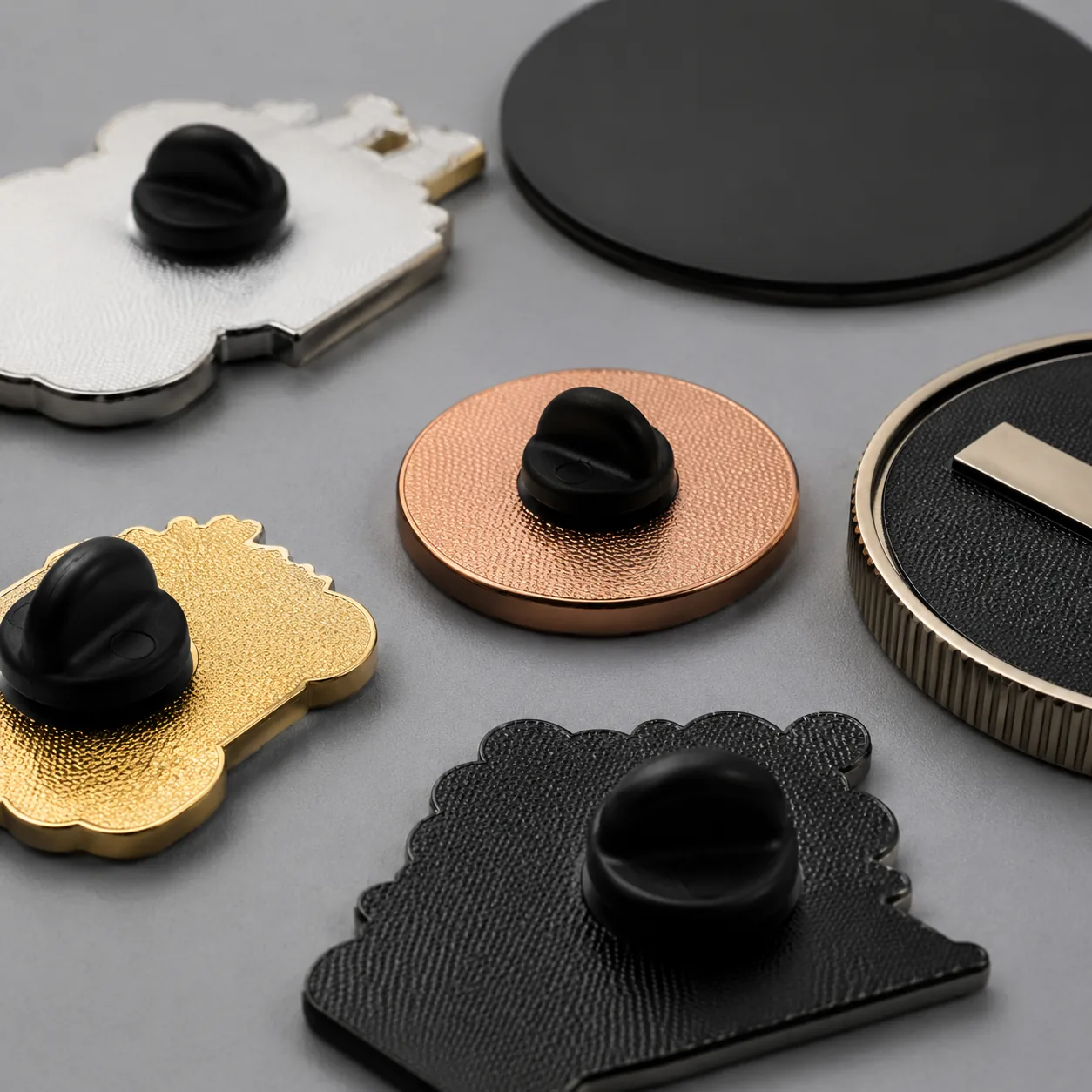
The buyer problem: the product looks approved, then the glue fails
Adhesive failure is one of the most frustrating defects in custom promotional products because it often appears after approval. A fridge magnet sample may stick well in the office, but the printed layer curls after ocean freight. A brooch badge may pass visual inspection, then the pin bar separates when staff attach it to uniforms. A patch may arrive flat, but the heat-seal backing lifts after washing or after being stored in a hot warehouse.
For pins, magnets, patches and mixed promo sets, adhesive should not be treated as a factory detail. It needs to be specified by material pair, bonding area, storage condition and pull test. At ZheCraft, we see the highest risk when buyers approve only artwork, plating and packaging, while leaving adhesive type, curing time and inspection method undefined.
This guide focuses on adhesive-backed components: magnet sheet on fridge magnets, pin bars on lightweight badges, foam tape on event badges, heat-seal backing on patches, and labels or inserts used in promo sets. It is not a replacement for structural hardware such as riveted clutch posts or welded pin backs. When the item will be pulled, twisted, washed or exposed outdoors, adhesive should be engineered, not assumed.
Start by defining the material pair, not just the finished product
Adhesives work differently depending on what they bond. Metal to metal, rubber magnet to coated paper, PVC to polyester fabric and acrylic to stainless steel all need different surface preparation. A glue that performs well on zinc alloy may peel cleanly from silicone-treated backing paper or from a low-surface-energy plastic.
In an RFQ, state both sides of the bond. For example: 0.4 mm printed art paper laminated to 0.7 mm flexible ferrite magnet, or 25 mm nickel-plated steel pin bar bonded to painted zinc alloy badge back. If the supplier only sees “fridge magnet” or “patch with backing,” they may choose the lowest-cost adhesive that works on a short sample run but not under shipment, heat or aging.
| Bond Type | Typical Use | Recommended Spec | When Not To Use |
|---|---|---|---|
| Flexible magnet to printed layer | Fridge magnets, calendar magnets | 0.5-0.8 mm ferrite magnet with pressure-sensitive adhesive, peel strength 8-12 N per 25 mm after 24 h dwell | Heavy resin-coated parts or uneven backs over 1.0 mm height variation |
| Pin bar to metal badge back | Light brooches, name badges | Two-part epoxy or high-strength cyanoacrylate, bonded area at least 80 percent of pin bar base | Badges over 35 g or items used on thick coats; use soldered or riveted hardware instead |
| Foam tape to plastic or metal | Temporary event badges, nameplates | 0.8-1.2 mm acrylic foam tape, 180 degree peel 12-18 N per 25 mm | Outdoor gifts exposed to rain or textured powder-coated surfaces |
| Heat-seal film to patch | Embroidered or woven patches | 80-120 micron film, press at 150-165 C for 12-18 seconds, peel after cooling below 40 C | Nylon, waterproof coatings, or garments that cannot tolerate press temperature |
| Label adhesive to packaging | Backing cards, barcode labels | Removable or permanent label adhesive matched to paper or OPP bag surface | Retail packs where residue on product surface is unacceptable |
Magnet adhesive: specify thickness, curl control and edge margin
For standard fridge magnets, the common build is printed paper or PP film laminated to flexible ferrite magnet. Typical total thickness is 0.6-1.2 mm. For flat mailer magnets, 0.4-0.5 mm magnet sheet keeps postage weight down but has weaker holding force and more curl risk. For retail or souvenir magnets, 0.7-1.0 mm magnet sheet gives better flatness and a more premium feel.
The adhesive layer between print and magnet is usually pressure-sensitive adhesive. Buyers should specify no visible edge lift at 23 C after 24 hours, edge curl below 1.0 mm when placed flat, and die-cut tolerance of plus or minus 0.5 mm for simple shapes. For complex contour magnets below 30 mm narrow sections, increase inside corner radius to at least 2.0 mm; sharp points are where lamination starts to peel.
Do not over-specify magnet thickness without checking weight and packaging. A 100 mm by 70 mm magnet at 0.8 mm thickness may weigh around 22-30 g depending on construction, while a 0.4 mm version may be closer to 12-16 g. Heavier magnets need stronger cartons and flatter inner packing, otherwise pressure marks and corner curl appear after stacking.
Badge and brooch bonding: adhesive is not a substitute for hardware
Adhesive-bonded pin bars are acceptable for some lightweight badges, especially printed aluminum, acrylic name badges or low-cost event brooches. They are risky for thick zinc alloy, 3D cast badges, large brooches and items worn on heavy fabric. As a rule, if the finished badge weighs more than 25-30 g, or if the longest dimension is above 45 mm, welded, soldered, riveted or mechanically locked attachments are safer.
If adhesive bonding is used, specify the pin bar length and contact area. A 25 mm pin bar on a 35 mm badge is usually more stable than a 20 mm bar, but only if the base sits flat. The back surface flatness under the pin bar should be within 0.15 mm, and plating or paint should be fully cured before bonding. Bonding onto oily plating residue is a common cause of clean separation.
For metal badge backs, ZheCraft normally checks hardware orientation, bonding coverage and pull resistance during in-process QC. A practical buyer spec is no separation under a 2 kg static pull for 10 seconds on light badges under 20 g, and no rotation or cracking after 20 manual open-close cycles. For premium brooches or uniform items, choose soldered or riveted hardware instead of asking adhesive to carry long-term load.
Patch backing: heat-seal film needs fabric and wash assumptions
Heat-seal backing is often requested as if it works on every garment. It does not. Polyester, cotton and cotton-poly blends usually bond well under the right temperature and pressure. Nylon, water-repellent coatings, fleece, leather and elastic fabrics are more difficult, and some should be sewn instead of heat pressed.
For embroidered and woven patches, typical heat-seal film thickness is 80-120 microns. A common press window is 150-165 C, 0.3-0.5 MPa pressure and 12-18 seconds dwell time, followed by cooling before peel testing. If the buyer’s garment can only tolerate 130 C, the patch supplier must know this before production because the backing film may need to change.
Wash expectations should be clear. For promotional apparel with limited use, passing three domestic wash cycles at 30 C may be enough. For uniforms, ask for five to ten wash cycles at 40 C and check edge lift below 2.0 mm. If dry cleaning, industrial laundry or tumble drying is expected, adhesive backing alone is usually not enough; specify sew-on plus heat-seal positioning.
Surface preparation and curing time are part of the spec
Many adhesive failures come from process control rather than adhesive selection. Metal parts may carry polishing compound, release oil or fingerprints. PVC and silicone-like surfaces can have low surface energy. Printed paper may absorb moisture before lamination. If the surface is not controlled, a stronger glue may only hide the problem during sampling.
For adhesive bonding on metal parts, require degreasing before bonding and a minimum curing or dwell time before packing. Two-part epoxy commonly needs 12-24 hours at room temperature to reach handling strength, and longer for full strength. Pressure-sensitive adhesives usually need firm rolling pressure and 24 hours dwell before final peel testing. Packing immediately after bonding increases the risk of creep, sliding or imprint marks.
Tolerance also matters. Adhesive should not squeeze into moving parts, clutch holes or visible edges. For visible badges and magnets, target adhesive overflow of 0 mm, with a reject limit of 0.3 mm if it is visible from the front or side. For foam tape pads, position tolerance of plus or minus 1.0 mm is usually acceptable, but off-center tape can cause tilt on rigid nameplates.
Inspection tests buyers can request without overcomplicating QC
Adhesive testing does not need a laboratory for most promotional orders, but it must be repeatable. State the sample size, test condition and reject criteria. For orders below 5,000 pieces, AQL General Inspection Level II with critical 0, major 2.5 and minor 4.0 is a practical starting point, with adhesive separation treated as a major or critical defect depending on safety risk.
Use simple tests that match the product. For fridge magnets, test flatness, edge peel and holding on a clean painted steel panel. For adhesive pin bars, test static pull and manual cycling. For patches, test edge peel after heat pressing and cooling. Avoid vague wording such as “strong glue” or “good adhesion”; it is not inspectable.
- For fridge magnets: no edge lift over 1.0 mm after 24 hours at 23 C and 50 percent relative humidity.
- For printed magnet lamination: 180 degree peel strength target 8-12 N per 25 mm after 24 hours dwell.
- For adhesive pin bars: no detachment under 2 kg static pull for 10 seconds on badges under 20 g.
- For foam tape badges: tape coverage at least 60 percent of back area, with no exposed adhesive in retail packaging.
- For heat-seal patches: edge lift below 2.0 mm after three 30 C wash cycles unless a higher standard is agreed.
- For carton storage simulation: no adhesive bleed, sliding or blocking after 48 hours at 40 C for heat-sensitive orders.
For large retail orders, add a pilot run or pre-shipment aging test. A 48-hour hold at 40 C is not the same as a full environmental test, but it often reveals adhesive bleed, edge lift and tape creep before shipment. If the product will be used outdoors, in vehicles, or near heat sources, ask for higher-temperature validation before confirming the adhesive system.
Cost and lead-time trade-offs: stronger glue is not always better
Adhesive upgrades are usually low-cost compared with remaking goods, but they still affect price and schedule. For magnets, moving from basic lamination adhesive to higher-peel pressure-sensitive adhesive may add about USD 0.01-0.03 per piece at 1,000-5,000 pieces. Acrylic foam tape on badges can add USD 0.03-0.08 per piece depending on pad size. Two-part epoxy bonding adds more labor and curing space than instant glue, often adding 1-2 production days.
Typical MOQs depend on the product. Custom fridge magnets are often practical from 300-500 pieces per design, patches with heat-seal backing from 100-300 pieces, and adhesive-backed name badges from 300-1,000 pieces. For FOB pricing, simple printed fridge magnets may run about USD 0.20-0.65 at 500-3,000 pieces, woven patches with heat-seal backing about USD 0.35-1.20, and adhesive-backed metal badges about USD 0.60-1.80 depending on size, plating and packaging.
Stronger is not always better. Very aggressive adhesive can damage paper backing cards, leave residue on retail packaging, or make assembly rework impossible. Thick foam tape can improve bonding on uneven surfaces but may create a visible gap. Heat-seal film can make patches easier to position, but it can stiffen the hand feel; for soft fashion garments, sew-on backing may be better.
What to put in the RFQ and approval sample
The safest RFQ describes the adhesive system in the same way it describes metal thickness, plating or Pantone color. Include the substrate pair, adhesive type, target test result, expected storage temperature and use condition. If you do not know the exact adhesive grade, specify the performance requirement and ask the factory to propose a suitable material.
Ask the supplier to mark adhesive details on the approval sample sheet. For example: 0.7 mm ferrite magnet with pressure-sensitive lamination adhesive, 24-hour dwell before peel test, packed flat in inner cartons of 100 pieces. For patches, record heat press temperature, time and pressure. For badges, record whether the pin bar is glued, welded, soldered or riveted.
At ZheCraft, adhesive-related specs are easiest to lock before sampling, because tooling, back design and packaging can all affect the bond. If a buyer changes from glued to riveted hardware after mass production starts, the badge back may need redesign. If a magnet is changed from flat paper to resin dome, the magnet strength and adhesive layer both need rechecking.
What to do next before placing the order
Before you approve artwork or pay for tooling, identify every adhesive joint in the product. A mixed promotional set may include a magnet, pin, patch, backing card, barcode label and foam insert; each one has a different adhesive risk. The goal is not to write a chemistry textbook into the purchase order, but to remove assumptions that cause peeling, curling and returns.
- Send the factory the finished-use condition: indoor, outdoor, garment type, washing, vehicle use, warehouse heat or retail display.
- Specify the material pair for each bond, such as magnet to printed PP, pin bar to plated zinc alloy, or heat film to embroidered patch.
- Set one measurable test per adhesive joint, such as peel strength, static pull, wash cycles or heat storage.
- Confirm whether adhesive is structural or only for positioning; choose welded, riveted or sewn construction when load is high.
- Approve a physical sample only after the normal dwell or curing time, not immediately after assembly.
- Keep one signed golden sample and one production test record for reorders so the adhesive system is not silently changed.
For most buyers, the best next step is to add a short adhesive section to the RFQ rather than asking for “better glue” after sampling. If the item is light, flat and used indoors, a standard adhesive may be enough. If it is heavy, washed, worn, mailed, stored hot or sold at retail, define the adhesive performance before production starts.
Have a project? Send your artwork and target quantity and we’ll reply with a detailed quotation within 12 working hours.
Ready to get this made?
Send your sketch, target quantity and ship-date. Detailed quotation in 12 hours.



