7 QC Failure Modes That Ruin Custom Metal Giveaways
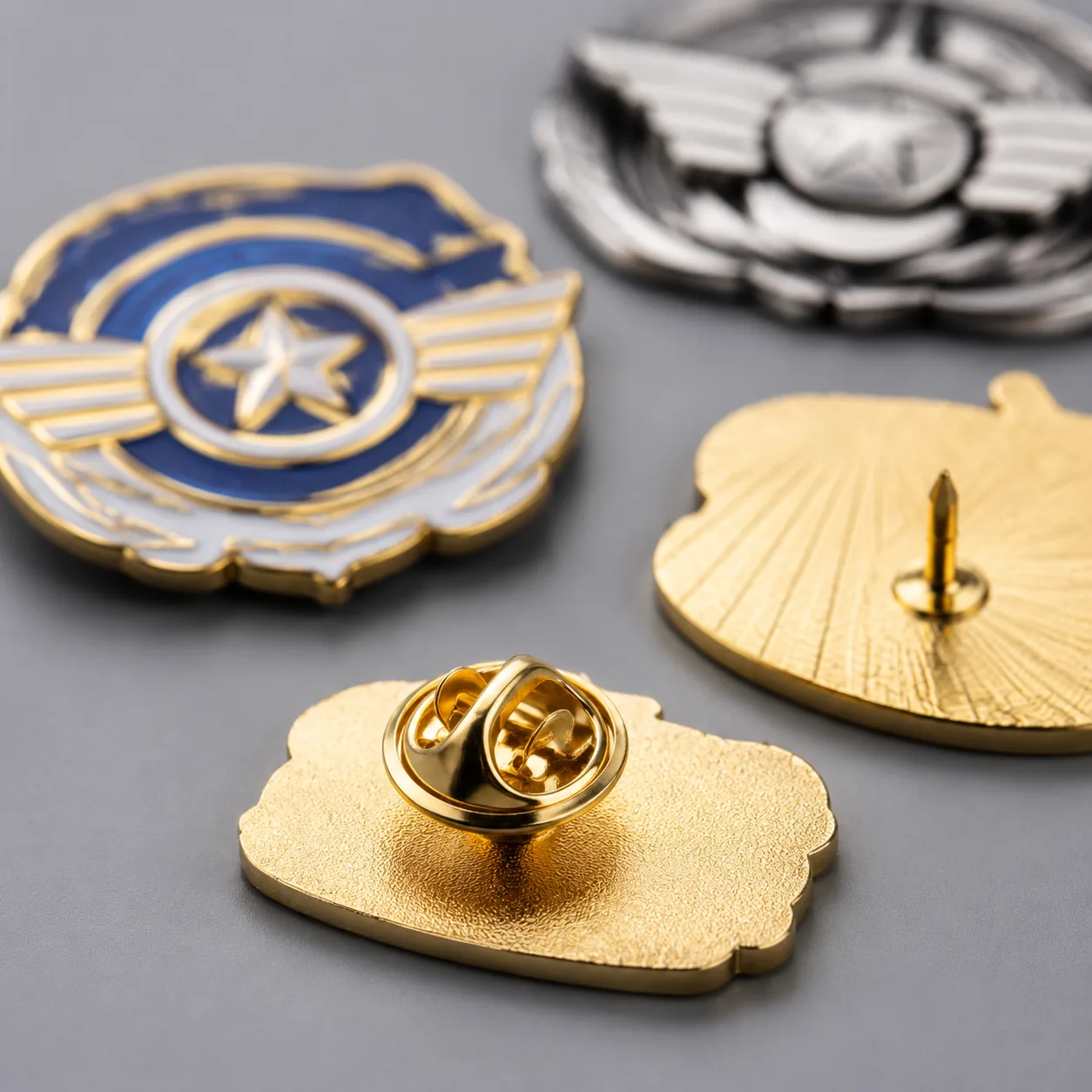
Why samples pass and bulk orders fail
Most custom metal giveaways do not fail because the concept is weak. They fail because the first sample is made slowly, by a senior operator, with fresh tooling and a close eye on finish. Bulk production changes the conditions: tooling wears, plating baths age, ovens drift, and labor shifts. A 20-piece sample can look perfect while a 5,000-piece run exposes haze, sink marks, loosened hardware, or print drift.
The fix is to spec the likely failure mode, not just approve the appearance. For enamel pins, medals, coins, keychains, fridge magnets, patches with metal badges, and lanyard hardware, the common risks are finish stability, fill control, attachment strength, dimensional drift, packing damage, and vague inspection rules. If those are left open-ended, a factory can still deliver parts that are technically “within tolerance” and commercially unacceptable.
In Yiwu-style production, the same pattern repeats: artwork is approved, a clean sample is signed, then the mass run reveals a weak point the buyer never wrote down. The practical goal is to define the weak point before tooling starts, so the factory cannot improvise its way into a defect.
1. Plating looks bright on day one, then spots or dulls
Finish failure usually starts before the customer ever touches the item. A weak polish, contaminated base metal, thin deposit, or poor post-plate handling can all show up later as haze, discoloration, rub-through, or edge darkening. Decorative finishes such as nickel, black nickel, gold, rose gold, antique silver, antique brass, and matte black are all common, but the name alone tells you almost nothing about durability.
The spec needs a thickness target, not just a color name. For promotional metal items, a useful baseline is 0.03–0.05 μm for flash finishes, 0.10–0.30 μm for standard decorative plating, and 0.50 μm or higher for better wear resistance on high-contact surfaces. For nickel-free requirements, ask for the exact process and the test standard used, because “nickel-free” is often treated loosely unless it is tied to a compliance report.
If the item will be handled often or worn outdoors, ask for more than a visual approval. A practical QC package includes crosshatch or tape adhesion on plated edges, a 48-hour humidity hold at 40–50°C where feasible, and a simple rub check on sharp corners and raised details. For retail or corporate gifts, it is also worth defining acceptable shade variation under D65 lighting, not room light. If the supplier cannot state the bath control method or measurement tool, you are buying appearance, not process control.
A workable FOB benchmark for small custom badges and pins is often USD 0.35–1.20 per piece at 500–1,000 pcs, USD 0.22–0.85 at 3,000–5,000 pcs, and lower only when size, plating steps, and packaging are simplified. Lead time is commonly 12–20 days after sample approval for standard finishes, with 25–35 days if the plating stack is more complex or requires a compliance test.
2. Enamel sinks, domes, or bleeds past the wall
Fill defects are easy to spot once you know what to look for. Soft enamel should have a deliberate recess; hard enamel should be flush or nearly flush after polishing. If the fill sinks too far, the logo reads weak and collects dirt. If it domes too high, curing shrinkage can crack the surface or distort the edge line. Bleed happens when low metal walls, unstable viscosity, or overfilling push color past the intended boundary.
The core controls are line width, wall height, cavity depth, and fill pass count. For reliable production, keep minimum visible line width at 0.20 mm or above; 0.15 mm can work, but only with disciplined tooling and a less aggressive layout. Small text and tiny islands are the first things to fail. For soft enamel, specify a recess depth range of roughly 0.20–0.35 mm so the effect stays intentional rather than accidental. For hard enamel, define the polish target and any allowable surface haze, because “smooth” is too vague for a shop floor.
Color accuracy also matters. Ask the factory to match Pantone references under controlled light, and define whether a slight tint shift is allowed between batches. If the artwork contains fine outlines, small negative spaces, or stacked color zones, ask for a pre-production die check before filling starts. It is far cheaper to reject a tooling drawing than to scrap 2,000 pieces after curing.
For these items, common MOQ tiers are 100–300 pcs for simple soft enamel samples or low-volume promos, 500 pcs for most standard runs, and 1,000+ pcs when the design uses multiple colors, hard enamel polishing, or special finishes. A typical FOB range is USD 0.28–1.50 per piece depending on size, plating, and enamel count.
3. Attachments loosen, rotate, or fail in transit
A lot of returns are caused by the back side, not the decoration. Butterfly clutches slip, rubber clutches loosen, magnet backs shear, pin posts bend, split rings open, and chain joints fatigue. A product can pass visual QC and still fail after one drop, one carton shake, or one week of real use. If the attachment is not specified, the factory usually picks the cheapest component that looks equivalent.
The buyer should define hardware by use case. For lapel pins, butterfly clutches suit low-cost giveaways, but they are not ideal for repeated wear or heavy pieces. Rubber clutches reduce fabric damage, but they can relax over time. Magnetic backs avoid piercing garments, but they lose retention on thick fabric and are not suitable for larger, heavier items. For keychains, specify split-ring outer diameter, wire thickness, and pull strength instead of asking for a generic standard ring.
A useful acceptance target is to test the assembly under real handling. Set a minimum pull check for the clasp or pin post, a rotation check for any moving part, and a drop test from carton height onto flat and corner faces. For key rings and chain attachments, buyers commonly request 1.0–2.0 kg pull resistance for light gifts and higher for heavier retail items, with no opening, permanent deformation, or detachment. If the supplier cannot tell you the wire gauge or post diameter, the hardware is probably underspecified.
A practical FOB range for a basic metal keychain is USD 0.60–2.50 at 300–1,000 pcs and USD 0.35–1.40 at 3,000–5,000 pcs, depending on size, plating, and packaging. Typical lead time is 15–25 days, longer if the order includes multiple components or custom retail boxes.
4. Detail disappears after polishing, coating, or doming
A design can look sharp on a rendering and still lose its identity after casting, polishing, coating, or doming. This usually happens when raised lines are too fine, relief is too shallow, texture is too aggressive, or epoxy flows into areas that were already marginal. The result is blurred logos, soft edges, unreadable microtext, and weak contrast on coins, badges, medals, and multi-level metal pieces.
The fix is to define the relationship between relief and detail size. For stamped or cast metal, keep minimum line widths at 0.20–0.25 mm for dependable production and avoid tiny isolated features that cannot survive polishing. Relief depth should usually sit around 0.30–0.50 mm for standard visibility; anything shallower should be treated as high risk. If the item uses laser engraving, specify line depth, contrast expectation, and whether a dark fill or paint-in is required. If it uses doming, define the dome height and edge clearance so epoxy does not flood the border.
A compact design rule is: the smaller the part, the bolder the art. Microtext below about 1.2 mm cap height is unreliable on small metal giveaways unless the buyer accepts loss of legibility. On the production side, surface detail should also have a tolerance target. For visible alignment on logos and borders, ±0.1–0.2 mm is a practical target for standard pieces; ±0.5 mm is too loose for premium presentation.
| Feature | Safer production spec | High-risk request |
|---|---|---|
| Minimum line width | 0.20–0.25 mm | Below 0.15 mm |
| Relief depth | 0.30–0.50 mm | Very shallow single-level relief |
| Text size | 1.2–1.5 mm cap height minimum | Microtext without magnification |
| Epoxy dome | Defined dome height and edge stop | Uncontrolled overflow over detail |
| Visible alignment tolerance | ±0.1–0.2 mm | ±0.5 mm or unspecified |
5. Sets drift out of alignment and stop looking like one campaign
This failure shows up when one campaign includes several items: pins, coins, magnets, keychains, patches, and lanyards. Each piece may be acceptable by itself, but the set no longer looks unified because diameters, border widths, hole positions, or print zones have drifted. The buyer receives the right products, but not the same brand system.
The solution is one master spec for the whole set. Lock the logo scale, center position, border allowance, and acceptable stack-up between components. On visible metal parts, a tolerance of ±0.2 mm is a sensible target for standard pieces, tighter where multiple parts must align. For printed items, define maximum registration shift and how much bleed is acceptable at the edge. If there is a backing card, insert, sleeve, or gift box, that packaging must be treated as part of the design, not a separate afterthought.
In practical buying terms, the golden sample should cover the full set, not only the hero item. A 1 mm error on a coin can become a 3 mm presentation error once it is mounted in a card, tray, or box insert. When the set is meant for retail or corporate gifting, ask the supplier to confirm a single reference drawing for every component before mass production starts. That avoids the common problem of each piece being correct in isolation and wrong in combination.
For mixed sets, MOQ is often driven by the hardest component. A simple printed insert may start at 500 pcs, while a cast metal coin with custom plating may require 300–1,000 pcs depending on size and mold complexity. Lead time usually falls in the 18–30 day range after sample approval if all components are controlled under one drawing.
6. Packaging protects the product in theory, not in transit
Packaging failures often appear only after the final leg of shipping. Pins scratch each other, coins scuff carton walls, magnets chip at corners, or lanyard hardware punctures the inner pack. The product can be perfectly made and still arrive as a loss if it can move inside the carton. This is common when the buyer checks unit appearance but ignores shipping vibration, corner impact, and stack pressure.
A usable packaging spec defines the inner bag, carton grade, partition method, and void fill. For small metal items, a polybag of 0.03 mm or thicker is a common baseline, but polished or sharp-edged parts often need individual cavities, interleaving paper, or a blister tray. If items are stacked, state whether foam sheet, card separator, or molded insert is required. For export cartons, ask for the board grade and compression standard, not just “strong carton.” For light promotional goods, buyers often accept AQL 2.5 for outer-pack cosmetic issues but keep damage and count errors at zero tolerance.
The goal is not premium packaging; it is stable packaging. If a supplier offers a cheaper pack-out but cannot explain how it prevents rubbing, bending, or edge impact, the savings are usually paid back through claims, replacements, or freight delays. Packaging is part of QC because a perfect part in a broken carton is still a failure.
Typical FOB packaging adders are small but meaningful: plain polybagging may add USD 0.01–0.04 per piece, a printed backing card can add USD 0.04–0.18, and a gift box or molded insert can add USD 0.15–0.60 depending on size and print finish. Lead time usually increases by 3–7 days when custom packaging is part of the order.
7. QC checks are too vague to catch real rejects
A lot of factories say “100% inspected,” but that phrase is almost useless unless the buyer knows what was checked. Was the inspector looking only at color fill, or also plating spots, burrs, hardware torque, count accuracy, and pack integrity? Was the batch judged against one signed sample, or against written limits with clear pass/fail criteria? Without a defect list and AQL target, QC becomes subjective.
For most promotional metal orders, a visible-defect AQL of 2.5 is a reasonable starting point for minor cosmetic issues, while major defects such as wrong size, missing parts, or broken hardware should be tighter, often 1.0 or lower. Critical defects should be zero tolerance. The important point is to separate minor, major, and critical defects before the run starts, then state what happens when a batch fails. If there is no reject action, the line will keep shipping borderline goods with a comment attached.
A serious QC sheet should name the inspection points, the tools, the sample size, the lighting condition, and the acceptance rule. Use calipers for dimensions, a pull gauge or force check for hardware, and photo-based standards for visual defects. A signed golden sample is useful only if it is paired with a written limit sheet that the inspector can use without guessing. The factory should know whether a scratch is cosmetic, whether a plating spot is acceptable near the back, and whether packaging count errors are rejectable at once.
- Confirm one golden sample for each SKU and component.
- Write dimensions, tolerances, and allowable shift in millimeters.
- Specify plating finish, thickness, and any shade limit.
- Define hardware by size, material, and pull requirement.
- Set AQL by defect class: minor, major, critical.
- State pack format, carton grade, and damage rejection rules.
What to lock before you place the order
Before mass production, identify the one or two failure modes most likely for your item: plating, fill, hardware, alignment, packing, or inspection ambiguity. Then write the spec so the factory does not have to interpret your intent. If the design is tight, require a pre-production sample, a signed golden sample, and a written defect rule for both visible areas and hidden hardware.
A practical buyer workflow is simple. Ask for a confirmed drawing with dimensions and tolerances, a finish or plating standard, a hardware spec, and a carton-pack test. If the supplier hesitates on any one of those, that is usually where the later problem will come from. The cheapest order is not the one with the lowest quote; it is the one that avoids remake costs, freight delays, and customer complaints.
For a rough purchasing benchmark, simple metal giveaways often sit around MOQ 100–300 pcs for samples or pilots, 500 pcs for standard promotional runs, and 1,000+ pcs for retail-style orders with tighter finishing. FOB pricing varies widely, but many basic custom metal items land between USD 0.22 and USD 2.50 per piece depending on size, finish, and packaging. Lead time is commonly 12–35 days after approval, with packaging and compliance work extending the schedule.
If you want a factory-side review of your artwork or spec sheet, ZheCraft can pressure-test the weak points before tooling starts. That saves time, but more importantly, it removes the guesswork that causes preventable rejects.
Have a project? Send your artwork and target quantity and we’ll reply with a detailed quotation within 12 working hours.
Ready to get this made?
Send your sketch, target quantity and ship-date. Detailed quotation in 12 hours.



