300-Piece Custom Pins: Small-MOQ Buyer Walkthrough
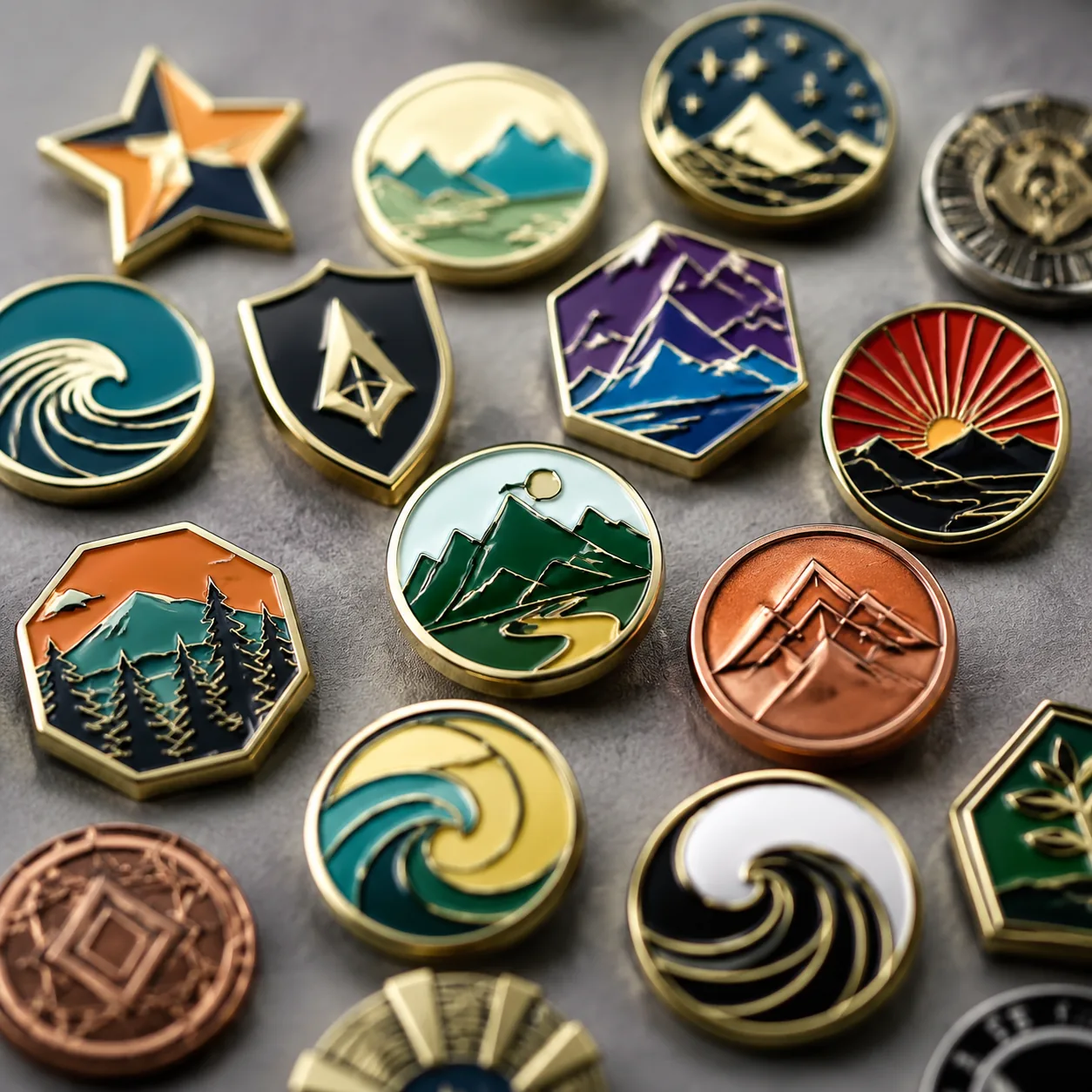
The real situation: 300 pins, retail expectations, limited room for error
A common custom pin order is not a 10,000-piece corporate rollout. It is a 300-piece launch: a museum shop testing an exhibition badge, a game studio preparing convention merch, a brewery releasing a limited drop, or a distributor supporting a local brand. The buyer wants a retail-ready pin, but the quantity is too small to absorb repeated artwork revisions, failed samples, repacking, or a surprise courier bill.
For this walkthrough, assume 300 soft enamel pins, 28 mm wide, 1.5 mm stamped iron, 5 enamel colors, nickel plating, one 8 mm post, black rubber clutch, individual opp bag, and shipment to a US or EU buyer. This is a realistic small-MOQ project for ZheCraft and many Yiwu, Dongguan, or Zhongshan pin factories. The key decision is not who advertises the lowest MOQ. It is who can control tooling, plating, inspection, packaging, and freight without turning the pin into a low-grade giveaway.
Small pin orders fail in predictable ways. The artwork is too detailed for the size. The buyer requests hard enamel but budgets for soft enamel. The supplier quotes FOB, while the buyer assumes delivery is included. Plating, backstamp, clutch type, and packaging are missing from the purchase order. Inspection criteria are discussed only after defects appear. A 300-piece run can work well, but it should be managed as a controlled pilot order, not as an informal sample batch.
Day 1: freeze manufacturable artwork before asking for a final price
A factory cannot price accurately from “1 inch logo pin, 300 pcs.” At small quantities, design details can move the FOB unit price by 30-60%. The supplier needs vector artwork in AI, EPS, editable PDF, or SVG format, with finished size in millimeters, enamel color callouts, plating finish, and any back design shown separately. PNG and JPG files are useful references, but they are not reliable tooling files.
For a 28 mm stamped soft enamel pin, use practical minimums. Raised metal lines should be at least 0.25 mm wide; recessed enamel channels should be at least 0.35 mm wide; isolated metal islands should be at least 0.30 mm wide so they do not break, polish away, or fill poorly. Overall size tolerance of +/-0.2 mm and thickness tolerance of +/-0.1 mm are realistic for stamped iron pins in the 20-35 mm range. Standard thickness is usually 1.2-1.5 mm. A 1.8 mm body feels heavier but increases metal cost and may require a stronger post if the pin will be worn on denim, canvas, or outerwear.
Revise the design before quoting if it includes legal text under 4 pt, QR codes, halftones, gradients, hairline strokes, or photographic effects. Enamel pins reproduce solid color areas separated by raised metal, not continuous-tone images. Use Pantone Coated references instead of RGB screen colors. A normal enamel color tolerance is about Delta E 2-4 unless a tighter measured standard is written into the order. Decide early whether a backstamp is required. A recessed back logo improves brand control and helps verify reorders, but it can add $10-$35 to tooling on a small run.
- Submit vector artwork with final dimensions in millimeters and marked front/back views.
- Keep enamel colors to 5-6 for the first small-MOQ run unless the design genuinely requires more.
- Mark critical logo geometry that the factory artist must not simplify during cleanup.
- Confirm material, thickness, plating, attachment, backstamp, and packaging before requesting the final quote.
- Specify whether the approved reference is the digital proof, a physical sample, or both.
Day 2: select the construction that fits the artwork and selling price
For 100-500 custom pins, the lowest-risk construction is usually soft enamel on stamped iron or die-cast zinc alloy. Stamped iron is cost-effective for flat badges with clean outlines and moderate detail. Zinc alloy is better for thicker shapes, 3D relief, deep cutouts, or irregular openwork that would distort during stamping. Brass is used for premium pins, especially hard enamel, but it raises unit cost and is not necessary for most promotional or entry-level retail pins.
Hard enamel can be justified at 300 pieces when the pin is sold as premium merchandise or used by a brand that requires a smooth, jewelry-like surface. It needs repeated enamel filling, baking, polishing, and final finishing, so both cost and lead time rise. Soft enamel has recessed color areas and raised metal borders. It gives a recognizable custom-metal look at a lower price. Printed metal pins with epoxy are better when the design depends on gradients, photos, small character art, or text that cannot be separated by metal lines.
| Build option | Best small-MOQ use | Practical MOQ | Typical FOB unit price at 300 pcs | Tooling range | Production time after approval |
|---|---|---|---|---|---|
| Soft enamel, stamped iron, 25-35 mm | Event pins, club badges, fan merch, museum shop tests | 100 pcs | $0.55-$1.20 | $35-$70 | 10-14 days |
| Hard enamel, iron or brass, 25-35 mm | Premium retail pins, licensed goods, brand gifts | 100-300 pcs | $0.95-$1.90 | $45-$90 | 14-20 days |
| Die-cast zinc alloy, 30-45 mm | Cutouts, thicker shapes, 3D relief, irregular outlines | 100 pcs | $0.90-$2.10 | $60-$130 | 14-22 days |
| Printed metal pin with epoxy, 25-40 mm | Gradients, photos, fine text, complex illustrations | 100 pcs | $0.45-$1.10 | $20-$50 | 8-12 days |
| Soft enamel with glitter or glow fill, 25-35 mm | Limited drops, character merch, seasonal campaigns | 100 pcs | $0.75-$1.55 | $40-$80 | 12-16 days |
Do not choose the most premium build only because the order is small and visible. Match the process to the artwork, selling price, and reorder plan. A $6-$10 retail pin can often support hard enamel or backing cards. A one-day event giveaway usually cannot. The best pilot order proves appearance, sell-through, and reorder economics at the same time.
Day 3: read the quotation like a factory worksheet
A useful small-MOQ quote separates mold fee, unit price, sample charge, plating, special effects, packaging, domestic China handling if any, and freight. Bundled pricing makes supplier comparison difficult. For the base example, a realistic quote might be: mold fee $45; 300 soft enamel iron pins at $0.72 each FOB Ningbo or Shanghai; black rubber clutch and individual opp bag included; production artwork included; courier freight quoted separately. That puts the goods value at $261 before international freight, duty, VAT, GST, or brokerage.
Ask for quantity tiers at 100, 300, and 500 pieces. Fixed setup time affects small runs heavily. A typical soft enamel price curve for the same 25-35 mm design might be $1.05-$1.45 at 100 pcs, $0.65-$0.95 at 300 pcs, and $0.55-$0.82 at 500 pcs. Moving from 300 to 500 pieces often reduces unit price by 10-25%, but the buyer should increase quantity only if the extra inventory has a real sales channel.
Plating is often under-specified. For standard promotional pins, a nickel underlayer of about 3-5 microns with a decorative finish is common. Imitation gold is usually a flash layer, often around 0.03-0.08 microns, and should not be confused with heavy gold plating. Black nickel, antique brass, and antique silver are controlled mainly by color uniformity, coverage, and adhesion. If pins will be sold as jewelry, handled heavily, or exposed to humidity, request a stronger plating stack, an adhesion check, and a basic corrosion target such as 24-hour neutral salt spray for nickel finish, understanding that cost and lead time may increase.
Clarify Incoterms before comparing suppliers. EXW means the buyer or forwarder collects from the factory. FOB means the supplier delivers to the named Chinese port or forwarder under agreed export terms. DAP courier means delivery to the buyer’s address, excluding import duty and taxes unless otherwise stated. For a 300-piece order, the difference between FOB and DAP can be larger than the tooling fee.
Day 4-7: decide whether a physical sample is worth the delay
For a new 300-piece retail design, a physical pre-production sample is usually worth the extra time. Typical sample time is 5-7 days for soft enamel, 7-10 days for hard enamel, and 4-6 days for printed epoxy, excluding courier transit. Sample cost is commonly $30-$80 plus tooling. Some factories deduct part of the sample charge after bulk confirmation, but that must be confirmed in writing before payment.
A digital proof may be acceptable when the design is simple: standard soft enamel, no cutouts, no special plating, no tiny text, no transparent enamel, and no moving parts. It is risky for hard enamel, glitter fill, glow powder, epoxy domes, translucent enamel, spinner pins, danglers, or any design where depth, shine, and surface feel affect the result. Digital proofs show geometry; they do not show real edge height, polishing quality, enamel depth, or plating tone.
ZheCraft’s preferred control method for small orders is to issue a production artwork proof showing finished size, metal line layout, Pantone colors, plating, back attachment, backstamp, packaging, and carton mark. If a physical sample is approved, that sample becomes the mass production reference. The buyer should state whether production must match the exact sample or whether normal batch variation is acceptable.
- Approve a physical sample when the pin will be sold, licensed, photographed for ecommerce, or used by a premium brand.
- Skip the sample only when the design is simple, the deadline is tight, and the buyer accepts normal production tolerance.
- Do not approve a photo sample without a straight-on front view, angled surface view, back view, and clutch view.
- Ask for one image beside a ruler or caliper and one short video showing plating reflection and enamel depth.
- Keep the approved sample, sealed retained sample, or dated photo proof for future reorders and dispute resolution.
Day 8-21: control production with tolerances and AQL limits
A 300-piece order does not need the inspection burden of a 50,000-piece chain-store program, but it still needs written acceptance limits. Critical defects should be zero tolerance: sharp exposed burrs, wrong logo, wrong plating color, loose or missing post, unsafe sharp edges, missing clutch, mixed design, or contamination that makes the item unsellable. Major defects can follow AQL 2.5, and minor cosmetic defects can follow AQL 4.0 under ANSI/ASQ Z1.4 general inspection level II unless the buyer has a stricter policy.
For 300 pieces at general inspection level II, the usual sample size code is H, meaning 50 pieces inspected. At AQL 2.5, the normal single-sampling acceptance number is 3 major defects and rejection number is 4. At AQL 4.0, the acceptance number is 5 minor defects and rejection number is 6. Critical defects remain Ac 0/Re 1. Buyers selling through retail chains may require tighter criteria, but small brands should not introduce unrealistic zero-defect cosmetic standards after production is complete.
Practical tolerances should be agreed before the deposit. Overall length and width should be within +/-0.2 mm of the approved drawing for stamped pins in this size range. Enamel registration should be within +/-0.15 mm relative to raised metal borders. Post position should be within +/-0.5 mm unless the pin must hang in a precise orientation. Soft enamel will sit slightly below the metal rim; small fill-depth variation is normal. Missing enamel, color overflow onto raised metal, visible foreign particles, pinholes larger than about 0.3 mm, or bubbles clustered in a focal area should be rejected.
| Check point | Acceptable for most 300-piece orders | Reject or escalate |
|---|---|---|
| Overall size | Within +/-0.2 mm of approved drawing | Visible size mismatch against approved sample or wrong die used |
| Thickness | Within +/-0.1 mm for standard stamped iron | Thin, bent, or warped body affecting feel or resale |
| Plating | Uniform tone, no bare metal, no flaking after tape/handling check | Blistering, peeling, heavy stains, wrong finish, exposed base metal |
| Enamel fill | Clean fill, minor depth variation, no obvious contamination | Missing color, overflow, bubbles, or pinholes over 0.3 mm in visible areas |
| Attachment | Post within +/-0.5 mm, clutch fits securely, normal manual pull/twist passes | Loose post, weak solder, clutch falls off, sharp burr around post |
| Packaging | Correct opp bag or backing card, correct count and SKU label | Mixed designs, scratched loose pins, wrong barcode, incorrect carton mark |
For post strength, a manual pull-and-twist check catches many weak welds. If a numeric requirement is needed, specify 3-5 kgf minimum pull force for standard pin posts, depending on post diameter and soldering method. Inspect packaging at the same time as the product. Small orders are often damaged not by pin-making, but by loose bulk packing, mixed SKUs, or backing cards rubbing against exposed metal.
Day 22-28: prevent freight and packaging from becoming the surprise cost
Small-MOQ buyers often focus on unit price and overlook freight. A 300-piece, 28 mm soft enamel order usually weighs about 4-7 kg gross with opp bags and one export carton. Add printed backing cards and the carton may reach 6-9 kg dimensional or actual weight. Add rigid gift boxes and the chargeable weight can double. Courier delivery by DHL, FedEx, UPS, or TNT is common for this order size and normally takes 3-7 days after pickup, but remote-area fees, import duty, VAT/GST, and customs brokerage are not included in a simple FOB quote.
For urgent small orders, DAP courier is usually the simplest routing: the supplier or forwarder books delivery to the buyer’s address, while the buyer pays duties and taxes if assessed. FOB is suitable when the buyer has a consolidator or is combining the pins with other goods. Sea freight is rarely economical for only 300 pins unless they move with a larger shipment. Air cargo can make sense above roughly 80-100 kg, but courier is normally more practical below that.
Packaging should support the selling plan, not just appearance in a quote sheet. An opp bag is low-cost and protects the surface. A printed backing card helps retail display, barcode control, and brand presentation, usually adding $0.08-$0.25 per set depending on paper, printing, and bagging. A rigid box can add $0.40-$1.20 and much more volume. For a first sell-through test, use backing cards only if they are needed for retail merchandising; otherwise, reserve premium packaging for the reorder.
Before the PO: lock the spec sheet and reorder path
Before issuing the purchase order, prepare a one-page specification sheet instead of relying on email history. Include artwork revision number, finished size, material, thickness, plating, enamel type, Pantone colors, attachment, backstamp, packaging, inspection standard, shipping terms, required delivery date, and approved sample reference. This protects both buyer and factory because artwork, plating, production, packing, and shipping teams work from the same document.
For a first 300-piece order, choose the simplest construction that still respects the brand. Soft enamel iron pins with standard nickel, imitation gold, black nickel, or antique plating are usually the best balance for cost, appearance, and lead time. Move to hard enamel, brass, custom boxes, glitter, glow, transparent enamel, or complex moving parts only when the retail price, licensing requirement, or reorder plan justifies the additional cost.
- Ask for MOQ and price tiers at 100, 300, and 500 pieces to see the real cost curve.
- Confirm whether the mold fee is one-time, how long the factory keeps the tool, and whether reorders avoid new tooling.
- Request a production proof with all dimensions, Pantone colors, plating, attachment, and packaging before paying the deposit.
- Approve a physical sample if the pin will be sold, licensed, photographed for ecommerce, or used by a premium brand.
- Set Ac 0/Re 1 for critical defects, AQL 2.5 for major defects, and AQL 4.0 for minor defects unless your policy is stricter.
- Confirm whether the logistics quote is EXW, FOB, DAP, or another term, and ask who pays duty, VAT/GST, brokerage, and remote-area charges.
- Keep the approved proof, sample photos, invoice, and QC record so the next 500 or 1,000 pieces can be reordered without rebuilding the spec.
ZheCraft can support small-MOQ pilot runs when specifications are clear and decisions are made early. The best first order is not always the cheapest 300 pieces. It is the order that delivers a sellable pin, clean cost data, controlled quality, and a repeatable specification for the next production run.
Have a project? Send your artwork and target quantity and we’ll reply with a detailed quotation within 12 working hours.
Ready to get this made?
Send your sketch, target quantity and ship-date. Detailed quotation in 12 hours.



