300 Custom Pins in 18 Days: A Small-Batch Buyer Scenario
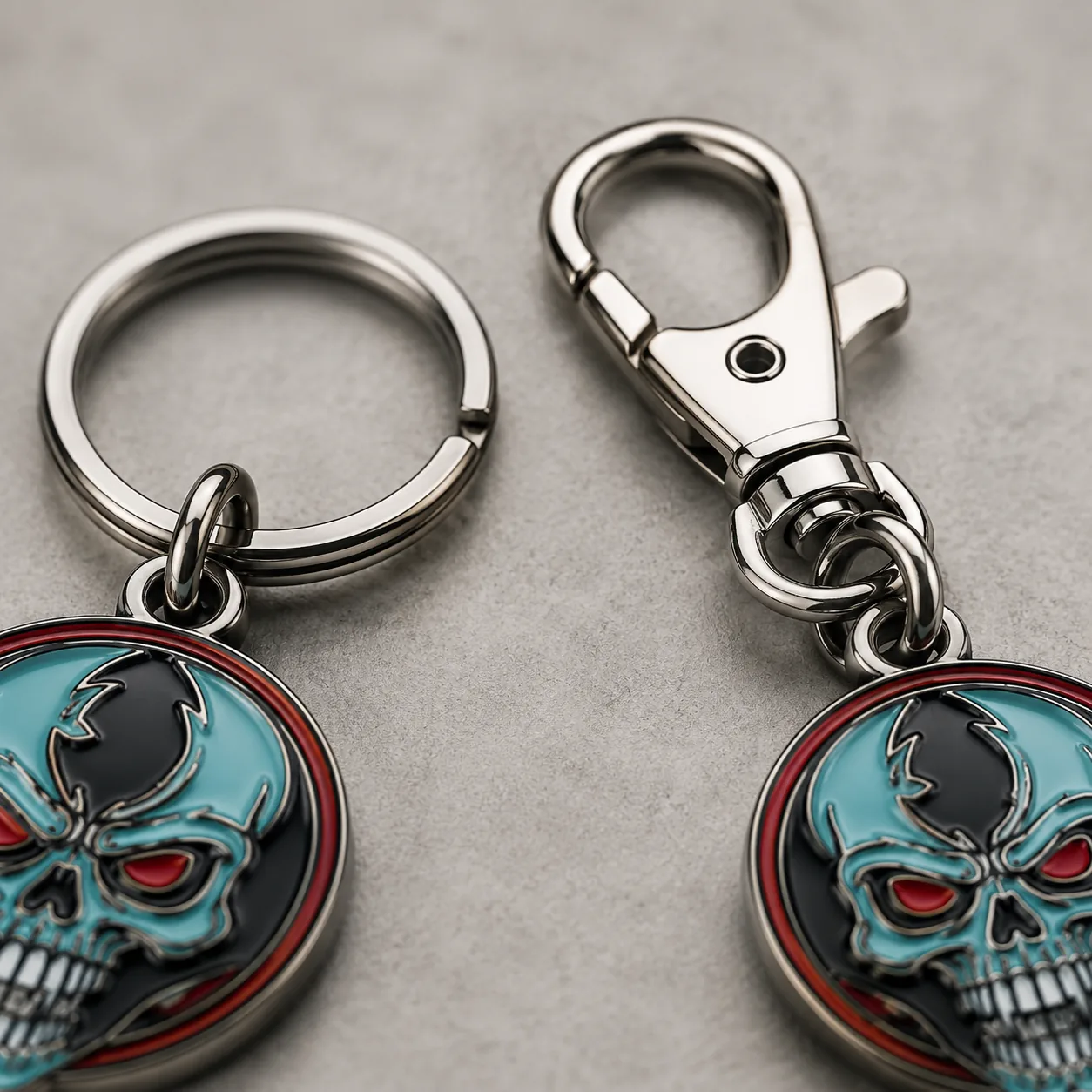
A 300-piece rush pin order fails when the spec is still negotiable
A procurement manager needs 300 custom enamel pins for a distributor campaign that launches in 18 calendar days. The target is tight but realistic: finished unit cost below USD 1.55 per pin FOB, four Pantone colors, one internal cutout, and split packaging with 150 pieces on retail-style backing cards and 150 pieces bulk packed. The build itself is common. The constraint is that at 300 pieces there is almost no room for remake scrap, repeated sample loops, or late packaging changes.
On a short run, small technical errors affect the whole lot. A post welded even 0.8 to 1.0 mm off-center can make card mounting visibly crooked. A color recess below the process minimum can create underfill or exposed metal after polish. Changing from bulk to card packing after mass production has started often adds 0.5 to 1.0 working day plus manual handling charges of roughly USD 0.03 to 0.06 per piece. On 3,000 pieces, these losses are diluted. On 300 pieces, they change yield, inspection outcome, and freight options.
For this scenario, the safest construction is a 32 mm die-struck iron pin with soft enamel, 1.5 mm base thickness, bright gold-color plating, one centered butterfly clutch, and one cutout. The backing card is 60 x 90 mm on 350 gsm C2S stock for 150 units. This build holds fine line definition better than cast zinc on a mostly flat design, keeps tooling in a standard low-MOQ range, and avoids the extra fill-and-polish time that imitation hard enamel usually requires.
Day 1: lock the manufacturing spec before requesting quotes
The RFQ should remove every avoidable variable. Instead of asking whether the factory recommends iron, brass, zinc alloy, soft enamel, or hard enamel, define the build up front: die-struck iron, soft enamel, no epoxy dome, one standard butterfly clutch, one cutout, bright gold-color plating, mixed packaging. Once those decisions are fixed, prices become comparable and lead-time commitments become more meaningful.
Artwork must also fit the process. For a 32 mm stamped soft enamel pin, raised metal lines should be at least 0.30 mm, with 0.35 mm preferred on tight curves. Recessed color cells should be at least 0.35 mm at the narrowest point; 0.40 mm is safer on a rush order. Reversed text should generally be at least 1.2 mm high with line thickness of 0.20 mm or more. For the cutout, the narrowest bridge should be 1.0 mm minimum, with 1.2 mm preferred if the bridge sits close to the outer profile. These are manufacturing thresholds, not design suggestions.
The RFQ should read like a production note. Specify dimensions, base thickness, plating tone, Pantone references, attachment type, packaging split, QC level, and the required ship window in working days. 'Urgent' is not planning data. 'Digital proof in 24 hours, final approval by day 2, shipment by day 12 to day 14 after approval' is.
- Product: custom lapel pin, 32 mm high, die-struck iron, 1.5 mm nominal thickness
- Finish: soft enamel, 4 Pantone colors, bright gold-color plating, no epoxy dome
- Artwork limits: raised lines at least 0.30 mm, recessed color areas at least 0.35 mm, reversed text height at least 1.2 mm
- Structure: one cutout, minimum bridge width 1.0 mm, preferred 1.2 mm
- Attachment: one butterfly clutch, centered; second post only if anti-rotation is required by the design
- Packaging: 150 pcs on 60 x 90 mm backing cards in OPP bags, 150 pcs bulk OPP packed
- Quality target: AQL 2.5 major, 4.0 minor; burr-free rim; no exposed base metal on the front face
- Timeline: proof in 1-2 working days, approval by day 2-3, shipment by day 12-14 after approval
Day 2: compare viable build methods and eliminate the slow or costly ones
For a flat 32 mm pin with one cutout and four filled colors, there are four realistic methods: stamped iron soft enamel, stamped brass soft enamel, imitation hard enamel on iron or brass, and zinc alloy casting. Casting is useful for thicker 3D forms or multiple cut-through areas, but it is usually not the best fit when crisp borders and small text are priorities.
Stamped brass gives better corrosion resistance and slightly cleaner edge retention than iron after polish. That matters for premium retail programs or long storage in humid conditions. The trade-off is cost: at 300 pieces, brass commonly adds USD 0.12 to 0.22 per piece and raises tooling by around USD 15 to 30. If the total FOB target is below USD 1.55 with mixed carding, that extra material cost reduces the margin available for inspection and freight.
Imitation hard enamel is often marketed as a premium upgrade, but the schedule cost is real. The enamel is filled above the recess and polished flush to the metal lines, which usually adds 3 to 5 working days versus soft enamel. On a normal program that may be fine. On an 18-calendar-day campaign, those days often force a freight upgrade or remove all delivery buffer.
| Build option | Best use case | Typical FOB at 300 pcs | Tooling charge | Production lead time after approval | Main risk on this order |
|---|---|---|---|---|---|
| Stamped iron soft enamel, 1.5 mm | Budget-controlled promo, distributor, and event pins with clear metal outlines | USD 0.96-1.20 each | USD 50-75 | 8-11 working days | Face scratching or pin rubbing if inner packing is loose |
| Stamped brass soft enamel, 1.5 mm | Retail and presentation pins where finish quality matters more than lowest cost | USD 1.12-1.42 each | USD 70-105 | 9-12 working days | Budget pressure once carding, QC, and contingency are added |
| Imitation hard enamel on iron or brass | Premium flat pins with smooth flush surface and better wipe resistance | USD 1.30-1.75 each | USD 75-120 | 12-16 working days | Schedule overrun on a rush order, especially with narrow color fills |
| Zinc alloy cast soft enamel, about 2.0 mm | 3D relief, thicker profiles, irregular silhouettes, multiple cut-throughs | USD 1.08-1.38 each | USD 60-95 | 10-13 working days | Softer fine-line definition and more edge cleanup on a flat design |
For this case, stamped iron soft enamel is the correct commercial choice. It stays inside the target FOB range, keeps tooling moderate, and is the least likely path to trigger premium shipping because production slipped.
Day 3: use one approval path and define pass-fail criteria in advance
Approval is where many small-batch orders lose time. A buyer approves a digital proof, then asks for a physical sample, then revises the art while the sample is already in process. That interrupts die making, color planning, and post placement. For a straightforward soft enamel pin built from production-ready vector art, a digital production proof with Pantone callouts is usually enough.
A physical pre-production sample is justified only when one of three conditions applies: the cutout bridge is close to the minimum, brand colors require tight matching, or card presentation is retail critical. If a sample is required, choose one route only. A single pre-production sample commonly takes 5 to 7 working days after artwork approval and mold setup, and each revision loop adds another 2 to 4 working days. On an 18-calendar-day program, two extra loops can consume the shipping buffer entirely.
Acceptance criteria should be measurable, not aesthetic. For this pin, practical standards are overall size tolerance of +/-0.20 mm, thickness tolerance of +/-0.15 mm, post position tolerance of +/-0.50 mm relative to card hole spacing, and no front-face pits, blistering, or exposed base metal when viewed at 30 cm under 5000K to 6500K neutral light. If these points are not written down before approval, different teams will interpret 'looks fine' differently.
Day 5 to Day 9: control short-run production at the points where defects actually occur
Once approval is complete, the main risk is not the die. It is process control during a short run. The typical failure points are enamel underfill along narrow borders, plating pinholes on outer rims, bent posts from tray handling, and color drift when Pantones are mixed by eye instead of against a standard swatch. On a 300-piece order, 10 defective pins already equal 3.3 percent of the lot, so drift becomes visible immediately.
The buyer should request specific in-process checks. First-off measurement after stamping and trimming confirms the profile, cutout bridge, and thickness. Surface review after polish catches edge scratches before plating. Pantone comparison under neutral light should happen before full filling continues. Plating appearance should be reviewed before post welding, because rework after post attachment increases handling damage. Final random inspection should use AQL 2.5 major and 4.0 minor. For general inspection level II, a 300-piece lot typically uses a sample size code J, or 80 pcs sampled, with acceptance numbers commonly around Ac 5/Re 6 for major defects and Ac 7/Re 8 for minor defects.
Plating should be specified realistically. For decorative bright gold-color plating on an iron lapel pin in this cost band, 0.03 to 0.05 microns is common. That is acceptable for campaign, souvenir, and short- to medium-term promotional use, but it is not jewelry-grade plating and will mark if pieces rub face-to-face in transit. A practical requirement is no exposed iron on the front face and no obvious plating skips on visible rim areas. For the bulk-packed half, ask for smaller inner bags of 25 to 50 pieces or paper separators to reduce abrasion.
- Plating: decorative bright gold-color, target 0.03-0.05 microns
- Dimensions: overall size +/-0.20 mm; thickness +/-0.15 mm
- Edges: smooth hand feel, no sharp burrs on outer rim or cutout
- Enamel: no obvious underfill, overflow, sink, or contamination visible at arm's length
- Posts: weld secure; random pull and twist check with no looseness
- Card fit: post center matched to card holes within +/-0.50 mm
- Packing: prevent face-to-face abrasion during inner packing and export-carton transit
Day 10: packaging is a cost driver and a defect-control step, not an afterthought
On a 300-piece order, packaging is not a minor line item because setup labor is spread across few units. Plain OPP bag packing usually adds about USD 0.02 to 0.04 per piece. A printed backing card plus insertion and OPP bag commonly adds USD 0.10 to 0.18 per piece at this MOQ, depending on card size, print coverage, and whether the hanger hole is standard or custom. If the buyer switches from bulk to carded packing after production begins, extra sorting and repacking charges plus a one-day delay are normal.
For a 32 mm pin, both 55 x 85 mm and 60 x 90 mm cards work. The larger 60 x 90 mm format presents better for distributor handouts, retail pegs, and press kits because it leaves more quiet space around the pin and cutout. Stock in the 300 to 400 gsm range is standard; 350 gsm coated two-side card is a practical midpoint because it is stiff enough to resist curl without adding unnecessary carton volume.
The 150-and-150 split is commercially sensible. The carded half supports presentation and perceived value. The bulk half protects budget for downstream distribution. The key is to lock the split before the proforma invoice is issued so card printing, assembly, and export packing can be planned as one job rather than three disconnected tasks.
Day 12 to ship: freight math matters more than chasing another four cents off unit price
Assume the factory quote is USD 1.08 FOB per pin for 300 pieces, tooling is USD 68, and 150 backing cards add USD 21 total, or USD 0.14 each for the carded half. The goods value is then USD 324 for the pins plus USD 21 for carding plus USD 68 tooling, totaling about USD 413 FOB before document charges or destination costs. Pushing the supplier down by another USD 0.04 per pin saves only USD 12 on the goods. Missing the ship window and moving to premium express can cost several times that amount immediately.
For 300 pieces with mixed card packing, gross weight is usually about 8.0 to 10.5 kg and a practical export carton is often near 38 x 28 x 22 cm, depending on inner arrangement and card thickness. Major-lane express or priority air courier is commonly 3 to 5 days door-to-door. Economy air may quote 6 to 9 days but usually carries more transfer risk. If the campaign date is fixed, shipping 2 days earlier on a dependable service is usually cheaper than gambling on a slower handoff.
Under FOB terms, the buyer or forwarder needs final carton count, gross and net weights, carton dimensions, packed photos if required, HS code, and pickup-ready date as soon as final packing closes. If these details are still being assembled after inspection, one administrative day disappears immediately. On an 18-day program, that is not paperwork noise; it is a preventable schedule failure.
Before deposit: the order should already read like a production instruction
Before any deposit is paid, the buyer should have a clean document set that ties the commercial deal to manufacturing reality: approved vector artwork, final spec, tolerances, packaging split, sample policy, tooling charge, production lead time in working days, QC level, and the FOB ship window. If key details still sit inside email threads or chat messages, the order is underdefined and the schedule is still at risk.
For this scenario, the workable final specification is precise: 300 pcs custom lapel pin, 32 mm, die-struck iron, 1.5 mm thickness, soft enamel, bright gold-color plating at approximately 0.03 to 0.05 microns, one cutout with bridge width not less than 1.0 mm and preferably 1.2 mm, one centered butterfly clutch, 150 pcs on 60 x 90 mm 350 gsm backing cards in OPP bags, 150 pcs bulk OPP packed in inner bags of 25 to 50 pcs, AQL 2.5 major and 4.0 minor, dimension tolerance +/-0.20 mm, thickness tolerance +/-0.15 mm, post placement tolerance +/-0.50 mm for card fit, digital proof in 1 to 2 working days, and ship within 12 to 14 working days after final approval.
That specification is not glamorous, but it is usable by engineering, plating, packing, QC, and freight teams without reinterpretation. On a 200- to 500-piece pin order, that is what protects both schedule and cost. Strong artwork and a low quote do not rescue a program if the build method, approval path, packaging split, and shipment handoff were never aligned at the start.
Have a project? Send your artwork and target quantity and we’ll reply with a detailed quotation within 12 working hours.
Ready to get this made?
Send your sketch, target quantity and ship-date. Detailed quotation in 12 hours.



