250 Pins, 3 Weeks, 1 Event: A Small-MOQ Buying Plan
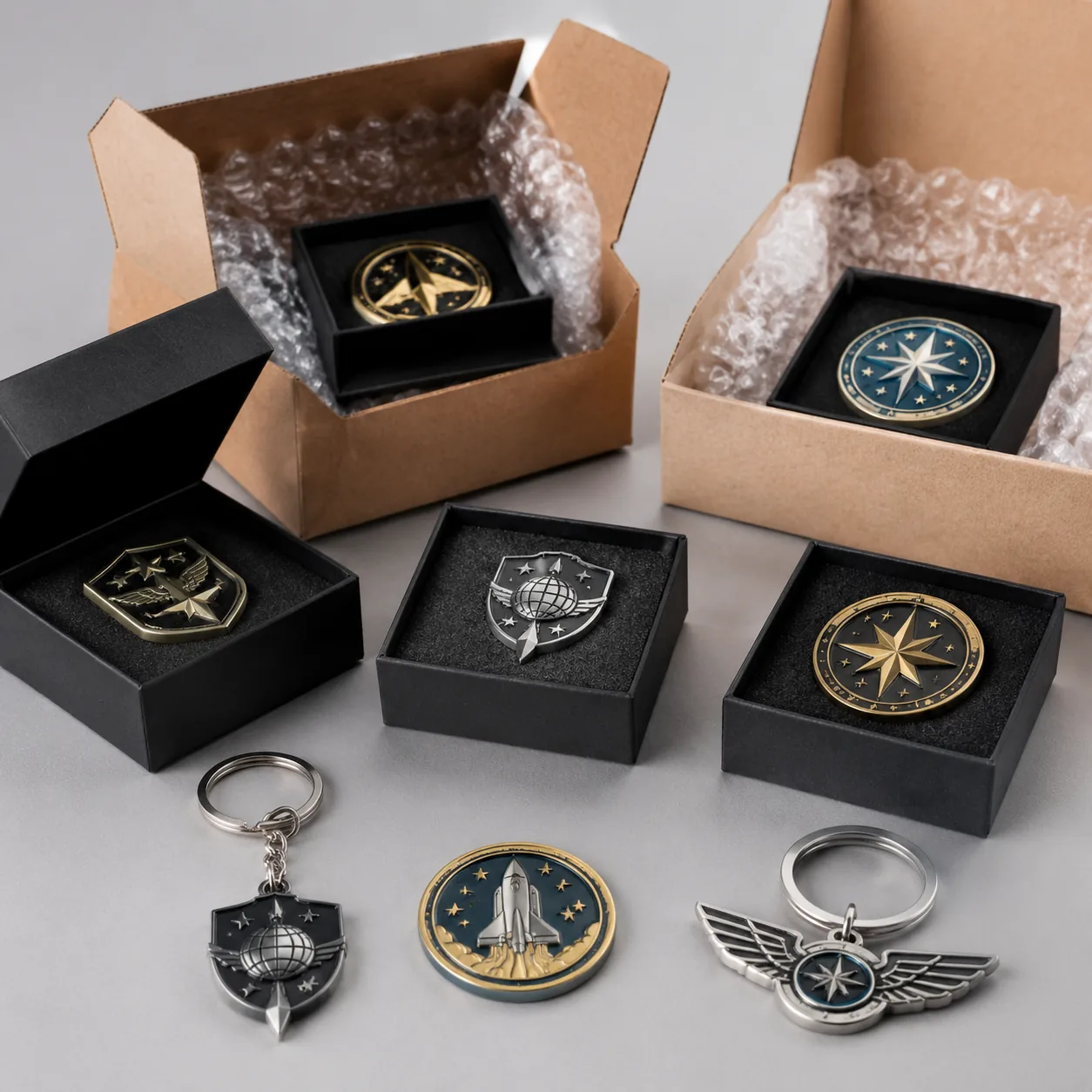
The situation: 250 event pins, fixed date, no room for rework
A common 2026 sourcing problem is not designing a pin. It is getting a small order delivered before a fixed event date without late spec drift. Picture a distributor, agency, or brand team needing 250 custom lapel pins for a product launch in 23 calendar days, with artwork about 80 percent settled and finance asking for a clean split between tooling, unit price, packaging, and freight.
At this volume, the buyer is squeezed between two weak options. A trading company may promise speed, then place the job behind larger orders. A factory may quote a low unit price, then add mold revisions, plating surcharges, or packing fees after approval. Either way, the landed cost and delivery date become unstable.
The practical response is to treat the order as a schedule-control exercise first and a design exercise second. For 250 pieces, the fastest path is usually a simple construction, early approval checkpoints, and a spec the factory can run with stable yield on the first tool. In practice, that is the difference between a 15 to 18 day production cycle and a rushed job that slips past the carton close date.
Start with a design the process can hold
Small-MOQ buyers often overestimate how much artwork a 28 to 32 mm pin can carry. If the logo includes a thin slogan, multiple outlines, and several micro-details, the first sample may technically match the file while still looking crowded in hand. For event distribution, legibility at arm’s length matters more than exact graphic fidelity.
A safer baseline is 28 to 32 mm width, 1.2 to 1.5 mm thickness, soft enamel, and no more than 5 enamel colors. For stamped metal work, keep raised line width at 0.25 mm or above. Keep recessed text at 0.8 mm cap height or larger if it must be read on the front. For internal cutouts, bridge widths should stay at 1.0 mm or above so the part does not distort during stamping, polishing, or plating. If a stroke is thinner than that, it usually disappears in finishing rather than on the CAD file.
If the artwork depends on gradients, shadows, or halftone detail, change the method instead of forcing the design into enamel. Printed inserts, screen printing, or epoxy-printed badges can reproduce those effects, but they add another production step and another approval point. For 250 pieces and a short deadline, a simplified metal-and-enamel build is usually the lower-risk choice.
- Recommended event size: 28 to 32 mm
- Common thickness: 1.2 to 1.5 mm
- Practical enamel count: 3 to 5 colors
- Minimum raised metal line: 0.25 mm
- Minimum bridge around cutouts: 1.0 mm
- Minimum readable front text: about 0.8 mm cap height
Choose the construction that protects lead time
For 250 pieces, the lowest unit price is not always the lowest landed cost. Hard enamel looks premium, but it requires flatter finishing, more polishing control, and tighter color management. That makes it more sensitive to small artwork errors and late revisions. Soft enamel is usually more forgiving because the recessed fill and raised metal edges tolerate minor process variation better.
Stamped iron is the most common value route for flat or medium-relief shapes and usually keeps tooling cost lower than zinc alloy. Zinc alloy is better when the outline is irregular, includes larger cutouts, or uses sculpted edges that would be expensive or unstable to stamp cleanly. Brass is often chosen when a buyer wants a more rigid base metal for a cleaner edge definition or a higher-end hard enamel finish.
Plating also affects schedule. Bright gold, bright nickel, and black nickel are usually stable and repeatable. Antique finishes can look good, but they create more visual variation from piece to piece, which can trigger avoidable approval friction on a small run where every unit gets attention. For short deadlines, consistency is usually worth more than visual complexity.
| Build option | Best for | Typical MOQ comfort | Tooling USD | FOB unit USD at 250 pcs | Typical lead time |
|---|---|---|---|---|---|
| Stamped iron soft enamel | Simple to medium detail, fastest value option | 100 to 300 pcs | 60 to 110 | 0.70 to 1.20 | 10 to 15 days |
| Stamped iron soft enamel + epoxy | Event giveaway pins needing more scratch resistance | 100 to 300 pcs | 70 to 120 | 0.78 to 1.32 | 11 to 16 days |
| Zinc alloy soft enamel | Irregular shapes, cutouts, sculpted edges | 100 to 300 pcs | 90 to 160 | 0.95 to 1.60 | 12 to 17 days |
| Brass hard enamel | Premium finish, flatter face, tighter visual appearance | 200 to 500 pcs | 110 to 180 | 1.30 to 2.10 | 14 to 20 days |
Quote the job around total delivered risk
At 250 pieces, buyers should request a fully itemized quote because fixed charges matter more than they do on a larger run. Tooling, proofing, packaging, export carton count, and courier cost can change the landed unit by 20 to 40 percent. A quote that shows only one line for pins and one line for shipping is not enough to compare suppliers accurately.
For a typical 30 mm soft enamel stamped iron pin with 4 colors, one butterfly clutch, bright nickel plating, and standard polybag packing, a realistic 2026 FOB range at 250 pieces is USD 0.75 to 1.15 each, plus tooling of about USD 70 to 110. Add a printed backing card and individual bagging with card insertion, and the effective unit cost may rise by another USD 0.12 to 0.28. If the buyer needs direct courier delivery to an overseas office, freight can exceed tooling cost.
This is why the first question should be about use case, not artwork. Is the pin for gifting, retail resale, staff use, or free handout? For free handout use, skip expensive packaging and put budget into a stronger clutch or faster transit. For retail or sponsor packs, presentation may deserve more spend than a premium base metal. The quote should reflect that decision clearly.
A clean supplier quote should break out tooling, unit price, plating, packaging, sample method, packing days, and freight estimate. Buyers should also ask whether the quoted FOB price assumes a single post, double post, or custom backstamp. Those details move cost more than many teams expect. FOB alone is not landed cost, so internal comparisons should also note the expected carton weight, courier lane, and whether customs clearance is included or excluded.
Lock the specs that actually prevent rework
Many approval sheets contain too much information and still miss the details that drive rework. A small order should not try to control every variable. Instead, lock the handful of specs that directly affect whether the shipment can be accepted without argument.
For a standard event pin, the critical list is short: overall size with tolerance of plus or minus 0.3 mm, thickness tolerance of plus or minus 0.15 mm, plating finish, Pantone reference or nearest achievable color match, attachment type and post position, packaging format, and final quantity. For decorative plating, a typical thickness target is about 0.03 to 0.08 microns, enough for appearance but not a heavy wear coating. If the pins will sit in storage for months, ask for anti-tarnish protection and define acceptable cosmetic quality at AQL 2.5 for major defects and AQL 4.0 for minor defects.
Attachment choice matters more than many buyers expect. One butterfly clutch on a 30 mm round pin is usually fine. But if the shape is horizontal, top-heavy, or over 35 mm wide, specify two posts with confirmed spacing on the artwork. Without that, rotation complaints are common even when the pin itself is well made. For packed sets or higher-value giveaways, a locking clutch or rubber clutch can reduce lost-piece complaints, but it adds a small unit premium and should be called out in the quote.
It also helps to define defect language before production starts. Major defects usually include missing enamel, wrong plating, wrong backing, missing clutch, sharp burrs, bent posts, or a wrong-size part outside tolerance. Minor defects usually include light polish haze, small enamel waviness within process limits, or tiny backside marks that do not affect wear. Put those rules in the approval email so the factory is not guessing what the buyer will reject.
- Overall size tolerance: plus or minus 0.3 mm
- Thickness tolerance: plus or minus 0.15 mm
- Plating finish: bright nickel, gold, black nickel, or antique
- Decorative plating thickness target: about 0.03 to 0.08 microns
- Color reference: Pantone code or approved digital match note
- Attachment: clutch type, post count, and post position
- Quality level: AQL 2.5 major, AQL 4.0 minor
- Packing: bulk, individual polybag, or carded polybag
Approve the sample without reopening the whole job
Small runs get delayed when buyers insist on a physical sample by default even when the date does not support it. If the design is straightforward and the factory can provide a clear digital proof with production notes, pre-production photo approval can save 3 to 5 days. On a 23-day schedule, that is meaningful.
If a physical sample is necessary, define the decision rule before it is made. For example: the sample is for structure, plating, and color balance approval only, not for redesign. Without that rule, internal teams use the sample to reopen logo proportions, line weights, or packaging text, and the project slips into another tool revision.
The review itself should stay practical. Check clasp alignment, enamel fill consistency, edge smoothness, readable text, plating tone, and card fit. Do not reject a sample because one phone image looks warmer than another unless the actual plated tone or enamel hue is clearly outside the agreed range. If color is critical, compare under neutral light and with the same Pantone reference used in the brief.
When the sample is close but not perfect, the buyer should decide which issue matters. A slightly darker nickel tone may be acceptable. A post placed 2 mm off center on a two-post pin is not. That distinction keeps the job moving without compromising the final result.
Track the production milestones that predict delay
Once approval is done, buyers often go silent and wait for the ship notice. That is risky on small event orders because there is almost no recovery room if plating backup, enamel touch-up, or packing bottlenecks appear. The better approach is to request milestone updates tied to production stages rather than generic daily status reports.
The useful checkpoints are straightforward: tooling completed, first stamped or cast pieces checked, plating completed, color fill completed, final assembly completed, packing started, and packing completed. If the factory says the order is still in color fill several days later than planned, the buyer can immediately decide whether to downgrade packaging, split shipment, or approve a minor cosmetic deviation to protect the event date.
Factories with integrated stamping, coloring, assembly, and packing usually handle these adjustments faster because fewer handoffs are involved. That does not guarantee perfection, but it reduces the delay that often hurts small mixed-priority orders. For buyers with a fixed launch date, that response speed is often worth more than saving a few cents per piece.
The other signal worth watching is labor balance. If packing starts while plating is still incomplete, the schedule is probably being compressed. That is not automatically bad, but it does mean the buyer should ask for finished-piece counts and reject-rate numbers before assuming the order is on track. A factory that can report a daily output count and first-pass yield is usually easier to manage than one that only says the job is progressing.
Inspect, ship, and close the order cleanly
At 250 pieces, 100 percent inspection is often practical and worth requesting if the order is for an executive event, sponsor bundle, or ticketed launch. For a simple giveaway pin, AQL inspection is usually enough, but the defect definitions should be stated in plain language. Do not leave quality terms open to interpretation.
For final acceptance, buyers should confirm packed quantity, carton dimensions, gross weight, and 10 to 20 random finished-piece photos from the packed lot. That gives one last chance to catch a packing mismatch, wrong card insertion, or attachment swap before the cartons leave the factory. It also helps customs brokers and freight forwarders quote with fewer surprises.
Freight choice can affect schedule more than production itself. Express courier is usually the safest for 250 pieces, especially when total carton volume is small. Air freight plus local customs handling can be cheaper on paper, but it can lose time in consolidation and clearance, which is exactly what a date-sensitive small order cannot absorb. For a job this size, speed usually beats theoretical freight efficiency.
A sensible shipment plan is to ship complete cartons only, not partial mixed cartons, unless the event date makes split delivery unavoidable. Mixed cartons complicate packing checks and increase the chance that the wrong quantity reaches the office or event warehouse.
The practical buying plan for a 23-day deadline
If you are buying 250 pins for a near-term event, the winning move is usually not chasing the absolute lowest quote. It is reducing variables. Choose a 28 to 32 mm soft enamel build, limit colors, avoid tiny text, use one standard plating, and keep packaging simple unless presentation is part of the sale.
Send suppliers one concise brief with exact quantity, size, thickness, plating, attachment, packaging, delivery date, and destination country. Ask for tooling cost, FOB unit price, sample method, production days, packing days, and courier estimate as separate lines. If a supplier cannot answer those points clearly, the issue is usually not communication style. The job has not been engineered tightly enough yet.
A useful internal decision sheet compares only two options: a value build and a premium-safe build. That keeps stakeholders focused on trade-offs they can actually evaluate. For small-MOQ event orders in 2026, clarity protects budget, schedule, and acceptance rate better than trying to optimize every detail at once.
Have a project? Send your artwork and target quantity and we’ll reply with a detailed quotation within 12 working hours.
Ready to get this made?
Send your sketch, target quantity and ship-date. Detailed quotation in 12 hours.



