21-Day Trade Show Badge Order: Factory Triage for a 2,000-Piece Rush
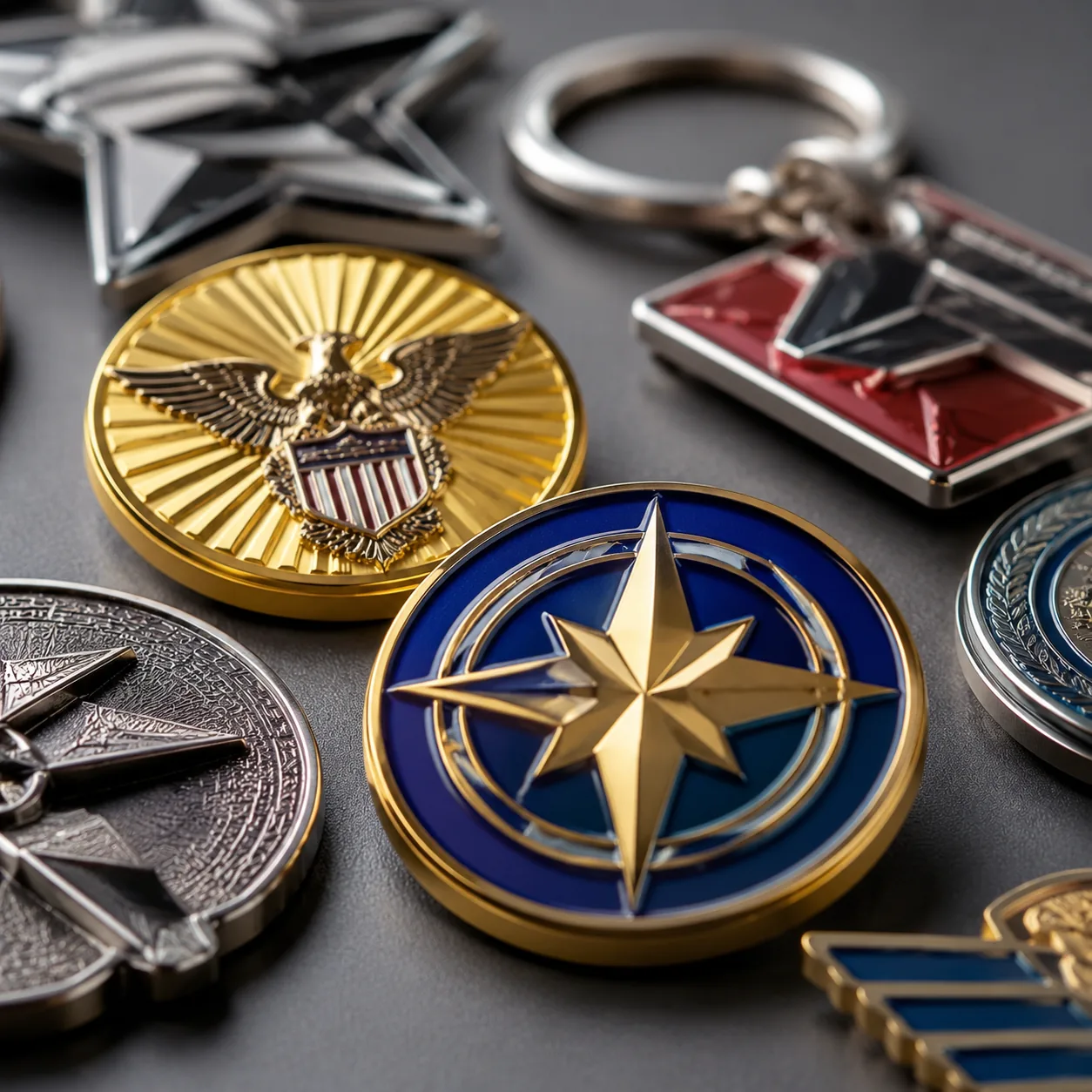
Rush Reality: 2,000 Badges in 21 Calendar Days
A common emergency brief sounds harmless: 2,000 custom metal badges for a Frankfurt trade show, booth opening in 21 calendar days, only a logo PDF available, target size “about 35 mm,” and a landed budget near USD 1.20 per piece. The order is possible, but only if day 1 is used for specification control, not quotation chasing. On this timeline, a 24-hour delay in artwork approval or one unsuitable finish can remove the entire safety margin.
The factory question is not which supplier says “yes” first. It is which construction can pass artwork conversion, tooling, plating, enamel fill, attachment, packing, inspection, export handover, and air express without moving quality control to the final hour. For a 2,000-piece badge order, a realistic 21-day plan reserves 11-14 days for production and inspection, 3-5 days for express transit and customs clearance, and 1-2 days for buyer approval or contingency.
At ZheCraft in Yiwu, we treat this as a triage order. In the first two hours, the factory checks logo complexity, minimum line width, enamel color count, plating, attachment position, packing format, delivery city, and customs paperwork. If the buyer requires hard enamel, PMS drawdowns, retail cards, individual barcodes, and a shipped pre-production sample, the safest answer may be no. If the badge can use soft enamel, standard plating, stock clutch, and opp bag packing, the schedule becomes controllable.
| Decision Point | Safe 21-Day Choice | High-Risk Choice | Schedule Impact |
|---|---|---|---|
| Construction | Die struck soft enamel, 1.2-1.5 mm iron or zinc alloy | Hard enamel with detailed polishing | Adds 3-6 days |
| Size | 30-40 mm largest dimension | Over 50 mm, deep cutouts, spinner or hinge parts | Adds 1-4 days |
| Colors | 1-5 solid enamel colors | 8+ colors, gradients, transparent enamel | Adds 1-3 days and more rejects |
| Plating | Nickel, black nickel, imitation gold, antique bronze | Dual plating, selective plating, brushed effects | Adds 2-5 days |
| Packing | Opp bag, bulk tray, or stock card | New printed card, sleeve, retail box | Adds 3-7 days if artwork is not final |
Day 1: Lock a Production Drawing, Not Just a Logo
The first deliverable is a production drawing the toolmaker can use. For a 35 mm soft enamel badge, a practical minimum raised metal line is 0.25 mm, the minimum recessed enamel channel is 0.35 mm, and outside dimension tolerance should be set at ±0.20 mm. Small legal text under 1.2 mm high should move to the backstamp or be removed. It may look readable in a PDF but fill with plating, enamel, or polishing dust during production.
The buyer should approve final width, height, plating, attachment, backstamp, and enamel color count on day 1. Pantone references are useful, but rush orders should avoid waiting for multiple physical color dips. A factory enamel chart match or visual tolerance around Delta E 3-5 is more realistic. Enamel is not offset print: gradients, drop shadows, metallic blends, and photographs must be simplified into flat color fields or converted to printed metal with epoxy.
- Confirm final size in millimeters, including maximum width and height.
- Supply vector artwork in AI, EPS, PDF, or SVG with fonts outlined.
- Set minimum raised metal line at 0.25 mm and enamel channel at 0.35 mm.
- Limit soft enamel to five colors or fewer for sub-21-day delivery.
- Approve the digital proof within 12 hours; missed approval windows become freight risk.
- Specify attachment type and location, measured from the top edge or centerline.
Days 2-4: Choose a Build That Fits the Clock
The safest rush construction is usually die struck soft enamel in iron for flat regular shapes, or zinc alloy for irregular outlines and deeper relief. Iron is economical and clean for 25-45 mm badges. At 2,000 pieces, typical FOB China pricing is about USD 0.45-0.95 per piece for 1.2-1.5 mm iron, depending on size, color count, plating, attachment, and packing. Zinc alloy handles complex outlines and thicker bodies better; expect about USD 0.65-1.25 FOB at the same quantity.
Hard enamel looks more premium because the surface is filled, baked, ground, and polished flush with the metal. That finishing sequence is why it is risky under deadline pressure. Polishing can expose uneven metal lines, color bleed may appear late, and rejected pieces are often discovered only after final finishing. For a trade show giveaway, soft enamel with clear epoxy often gives the best balance: smoother touch, protected color, and only USD 0.08-0.18 per piece extra with 1-2 additional days.
| Build Option | Best Use | Practical MOQ Tier | FOB Range at 2,000 pcs | Factory Lead Time After Proof |
|---|---|---|---|---|
| Soft enamel iron, 1.2 mm | Budget logo badges and giveaways | 100-300 pcs sampleable; 500+ efficient | USD 0.45-0.95 | 8-12 days |
| Soft enamel zinc alloy, 1.5-2.0 mm | Irregular shapes and heavier feel | 300+ practical; 1,000+ efficient | USD 0.65-1.25 | 10-14 days |
| Hard enamel iron or brass, 1.2-1.5 mm | Executive, retail, or long-use badges | 300+ practical; 1,000+ efficient | USD 0.85-1.80 | 14-20 days |
| Printed metal with epoxy | Gradients, QR art, photos, fine text | 500+ practical | USD 0.50-1.10 | 9-13 days |
Days 5-7: Tooling and Sample Approval Without Losing a Week
A normal badge project may include a physical pre-production sample couriered to the buyer before mass production. In a 21-day order, that step can consume 4-6 days: 2-3 days to make the sample, 2-3 days for courier delivery, and another day for review. The buyer must decide whether holding one sample is worth the risk of missing the event.
A workable compromise is a factory-held pre-production sample. The factory photographs the struck metal before plating, the plated sample before enamel, and the finished sample under neutral light with a ruler, caliper, thickness gauge, and color reference card. This does not replace a sample in hand, but it catches the common failures: wrong outline, missing cutout, incorrect plating, weak logo separation, poor color boundary, and misplaced attachment.
Tooling should be quoted separately from unit cost. Standard die struck badge tooling commonly runs USD 35-90, while complex zinc alloy molds may run USD 80-180 depending on size, cavity count, and relief depth. If the event repeats annually, ask the factory to store the die or mold for at least two years and record the artwork revision number on the purchase order. That prevents a reorder being remade from an outdated logo file.
Days 8-13: Plating and Enamel Controls That Prevent Late Rejects
Plating is where rush badge orders often fail quietly. Standard nickel, black nickel, imitation gold, copper, and antique bronze are more predictable than selective or dual plating. Decorative nickel is often specified at 3-5 microns, with 5-8 microns used when better handling resistance is required. Gold-tone promotional finishes are usually flash decorative layers over nickel or copper, not heavy precious-metal plating; the visible gold layer may be below 0.1 micron unless a higher specification is purchased.
For soft enamel, the factory should control overflow, underfill, bubbles, dust, color contamination, and inconsistent recess depth. A practical fill-level tolerance is ±0.10 mm against the raised metal edge, but visual acceptance matters as much as measurement. White enamel shows contamination quickly, black nickel highlights dust and scratches, and imitation gold can reveal polishing marks. These risks should be reviewed before mass production, not discovered during final inspection.
After tooling approval, changes should be treated as schedule resets. Revising a Pantone color after fill starts can require stripping or remaking parts. Moving a post after plating can discolor the surface because soldering requires heat. Changing from clutch to magnet can alter balance, carton weight, and freight cost. The purchase order should state that post-proof changes require written approval of revised cost and lead time.
Days 14-16: Attachments, Balance, and Event-Ready Packing
For badges worn on clothing, a butterfly clutch is the lowest-cost attachment and typically adds USD 0.03-0.06 per piece. Rubber clutches reduce scratching in packing and feel better in use, usually adding USD 0.04-0.08. Magnets avoid holes in garments, but they increase weight and are not suitable for every user or badge shape; a dual-magnet system may add USD 0.18-0.35 per piece and may require stronger cartons.
Attachment placement should be specified in millimeters. For a 35 mm badge, a single post normally sits 8-12 mm below the top edge and centered left to right. For badges wider than 45 mm, two posts are often safer, with 18-25 mm spacing depending on shape. A single centered post on a long horizontal badge tends to rotate during wear, which makes a good badge look poorly made.
Packing should match event use. Individual opp bags are fastest and cheapest at USD 0.01-0.03 per piece. A printed backing card improves presentation but usually adds USD 0.05-0.15 per set and 3-5 days if artwork is not already approved. For a 21-day order, a plain stock card, such as 55 x 85 mm, is safer than a fully custom retail card. For booth distribution, pack counted inner bags of 50 or 100 pieces and mark each bag clearly.
Days 17-18: Inspection Before Cartons Close
Rush production does not justify skipping inspection. It requires a narrower inspection plan with clear acceptance rules. For a 2,000-piece lot, buyers commonly use ANSI/ASQ Z1.4 or ISO 2859-1, general inspection level II, with AQL 2.5 for major defects and AQL 4.0 for minor defects. Depending on the table used, the sample size is often 125 pieces. Critical defects, such as exposed sharp points, unsafe magnets, or restricted-material concerns, should be zero-tolerance.
Major defects include wrong plating, wrong size beyond tolerance, missing enamel, broken post, weak magnet, sharp burrs, unreadable logo, severe scratches, mixed colors, or quantity shortage. Measurements should include outside dimension tolerance of ±0.20 mm for die struck badges, thickness tolerance of ±0.15 mm, and attachment strength. For standard soldered posts, a practical internal pull check is 5-7 kg on sampled pieces. For magnets, test against both a steel plate and fabric because a badge that holds through a shirt may sag on a thick blazer.
- Inspect 80-125 random pieces for a 2,000-piece lot, depending on the agreed sampling plan.
- Compare finished badges against the approved digital proof and factory-held sample photos.
- Check carton labels for item number, quantity, gross weight, net weight, and destination mark.
- Pack 20-50 spare pieces beyond the event quantity for replacements and VIP requests.
- Request defect photos and measurement photos, not only perfect top-tray images.
Days 19-21: Freight, Landed Cost, and Delivery Buffer
Air express is normally the only safe route when the event is 21 days away. A 2,000-piece order of 35 mm metal badges in opp bags may weigh roughly 18-28 kg depending on thickness, attachment, and packing. Express freight to major US and EU cities commonly ranges from USD 5-9 per kg in normal periods, but peak season, fuel surcharges, remote-area fees, and customs delays can change the landed cost.
Compare quotations under the same Incoterms. FOB unit price does not include international freight, duty, VAT, customs brokerage, or local delivery. EXW may look cheaper but pushes export handling and pickup coordination to the buyer. DDP is convenient for distributors but hides the freight and tax structure. For a rush event order, the cleanest comparison is usually FOB Ningbo or Shanghai plus a separate express quote, or one all-in courier option with a named carrier and transit estimate.
Do not plan delivery to a hotel on the final show day unless there is no alternative. A safer target is arrival at the buyer’s office, show contractor, or local distributor 2-3 days before setup. If the delivery date is immovable, split shipping can reduce risk: send the first 500 pieces by fastest express and the remaining 1,500 by standard express. Freight cost is higher, but the booth team has usable stock if customs, weather, or address errors delay the second carton.
A complete rush RFQ should include the event date, required in-hand date, delivery city and postal code, quantity, artwork file, target size, construction preference, plating, attachment, packing, inspection requirement, and whether a shipped physical sample is mandatory. Ask for a dated timeline, not just “10-12 days production.” A workable schedule may read: day 1 proof; days 2-4 tooling; days 5-6 factory-held sample; days 7-14 production; days 15-16 inspection and packing; day 17 export handover; days 20-21 courier delivery. If a supplier cannot show where the days go, the schedule is probably optimism rather than production planning.
Have a project? Send your artwork and target quantity and we’ll reply with a detailed quotation within 12 working hours.
Ready to get this made?
Send your sketch, target quantity and ship-date. Detailed quotation in 12 hours.



