2026 Spec Sheet for Sustainable Swaps in Promo Products
When the RFQ says sustainable but the build sheet is still standard
Most failures start in the RFQ, not on the line. A buyer labels the project eco or sustainable, but the actual construction still calls for virgin zinc alloy, soft PVC, virgin polyester webbing, PET-laminated card, and OPP bagging. The factory quotes exactly that build, sampling begins, and the first sample is noncompliant before anyone reaches inspection. On promo products, a workable 2026 sustainable brief has to read like a controlled specification: base material, recycled-content requirement if any, finish or plating, ink or print process, hardware, pack-out, inspection standard, MOQ tier, production lead time in days, and an approved fallback if the preferred stock is unavailable.
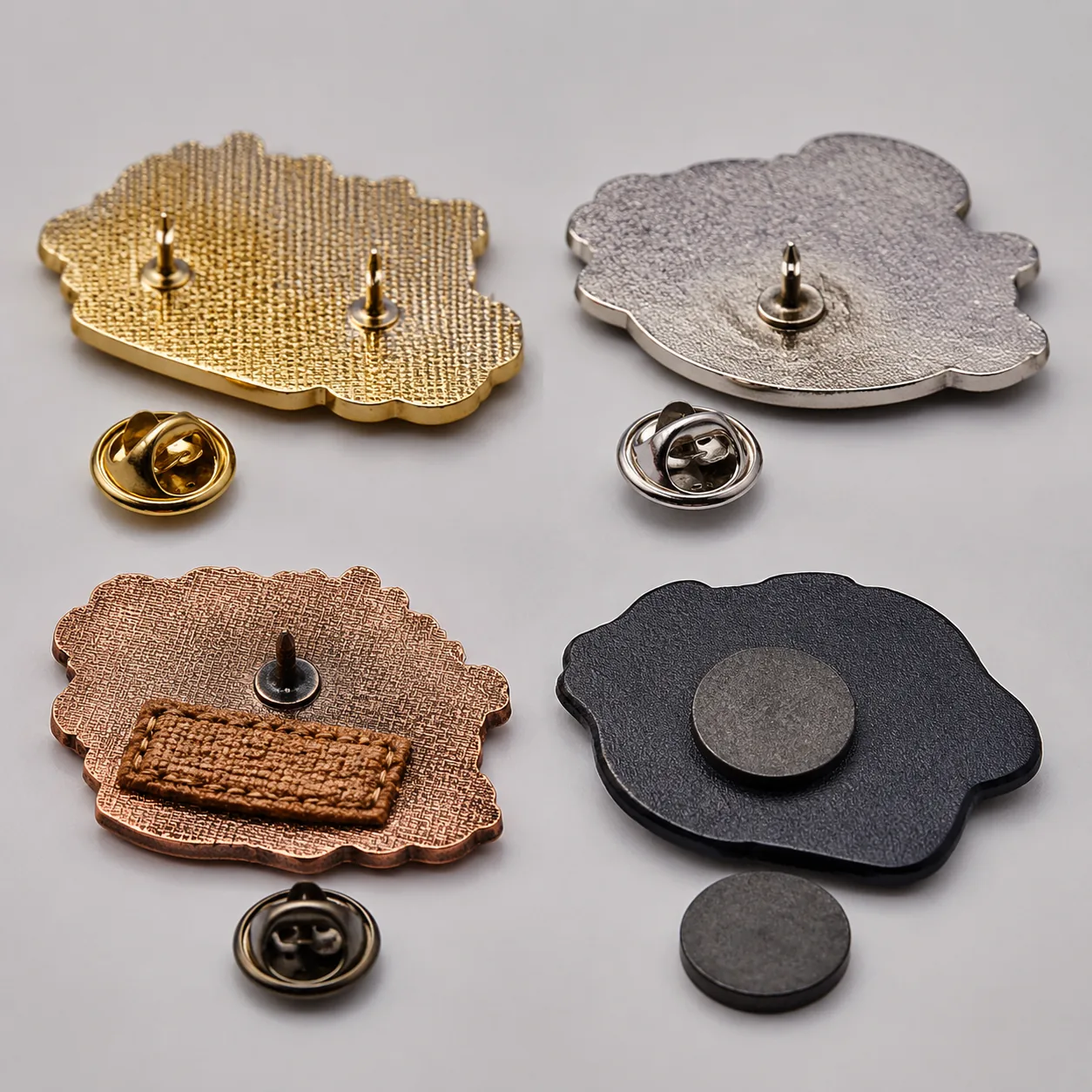
That level of detail matters because promo items are mixed-material assemblies. A pin is not just a pin; it is base metal, plating, color fill, post, clutch, backing card, and transit pack. A lanyard is yarn source, webbing width and thickness, print method, hook, buckle, breakaway, stitch thread, and individual packing method. In commercial terms, the realistic path is usually not a fully redesigned all-green item. It is a targeted substitution on the highest-volume or easiest-to-control components first: recycled PET webbing instead of virgin polyester, FSC board and paper band instead of laminated card and OPP, and metal, woven, embroidered, or acrylic constructions instead of soft PVC where the artwork still works.
Planning assumptions should also be stated up front. MOQ usually moves up by one tier versus a standard build. A routine stamped pin may start at 100 to 200 pieces, but traceable recycled-content metal is more realistic at 300 pieces per design and more stable at 500. Recycled PET lanyards typically start at 500 pieces per colorway and quote more competitively at 1,000 or 3,000. Sampling usually adds 3 to 5 calendar days if substitute stock is already in the supplier program, and 7 to 12 days if the order needs custom-dyed recycled yarn, FSC specialty board, cork paper, or nonstandard trims. Typical FOB uplift is modest on small metal parts, often USD 0.02 to 0.08 each, and more visible on textiles and packaging, usually USD 0.05 to 0.30 each depending on assembly complexity.
1. Base material swaps that are commercially usable
For pins, medals, coins, and keychain medallions, the practical substitution is recycled-content zinc alloy, brass, or iron from a foundry or mill that can document feedstock control. Avoid vague wording such as eco metal. The engineering questions remain the same as with standard stock: density, fill behavior, hardness, porosity, polishing response, and plating adhesion. For a die-cast zinc alloy keychain at 50 mm overall size and 3.0 mm nominal thickness, a recycled-content melt is commercially workable if dimensional tolerance stays within plus or minus 0.15 mm, small polishing pits are limited to non-display surfaces, and plating coverage remains continuous across edges and recessed areas. For stamped iron or brass pins at 1.2 to 1.5 mm thickness, recycled-content feed is usually easier to stabilize because edge definition, flatness, and polish consistency are more predictable than in deep 3D castings.
For lanyards, ribbons, and patches, recycled polyester is the clearest substitution because supply is mature and repeatable. Recycled PET webbing is commonly stocked in 15 mm, 20 mm, and 25 mm widths, with finished thickness around 0.9 to 1.2 mm and fabric weight roughly 120 to 180 gsm depending on weave and hand feel. Sublimation on recycled webbing is routine, but dark navy, black, and saturated red can read slightly softer than on virgin filament. Woven patches in recycled yarn usually hold line detail down to about 0.7 mm; embroidery is safer at 1.0 mm minimum stroke width and 3.0 mm minimum text height when stitch density is high. Organic cotton and cotton-poly blends can work for neck lanyards or label-style patches, but they are weaker options where the artwork requires bright color, photo detail, or a sealed low-fray edge.
Natural-material substitutions have a narrower role. FSC paperboard, bagasse board, bamboo-fiber paper, and cork paper are suitable for backing cards, belly bands, inserts, and header cards. They are not load-bearing replacements for split rings, hooks, spring clips, or swivels. Acrylic can replace PVC in some tag or charm applications where a rigid transparent look is acceptable, but that is a redesign rather than a direct material swap. Edge feel changes, drop resistance changes, and the visual effect shifts from soft-touch matte to hard-gloss clarity.
- Use recycled-content zinc alloy for die-cast keychains, bottle openers, and 3D emblems at 2.5 mm thickness or above.
- Use recycled-content brass or iron for stamped flat pins and badges where crisp lines, flatness, and polish consistency matter.
- Use recycled polyester for sublimated lanyards, woven patches, ribbons, and backing tapes.
- Avoid soft PVC when the brief explicitly aims to reduce fossil-plastic content; move to metal, woven, embroidered, or acrylic only if the artwork and use case still fit.
- Keep cork, bagasse, bamboo-fiber, and FSC paper materials in packaging and carding applications, not in hardware under load.
2. Finishes, plating, and print specs that still hold up in production
Changing the substrate while leaving every finish standard is where many sustainable briefs lose credibility. Recycled content does not improve corrosion resistance by itself, so plating still has to match the use case. For indoor promo use, bright nickel, imitation gold, or black nickel over copper strike is commonly acceptable at 0.03 to 0.05 microns. For parts exposed to frequent handling, humid storage, or long ocean transit, 0.08 microns is a more defensible minimum, with 0.10 microns preferred on black nickel or antique finishes that show edge rub quickly. If the item is intended for daily carry, the brief should pair the plating thickness with the transit pack method, such as tissue wrap or individual pockets during bulk shipment, because thin cosmetic plating can fail in transport before the customer ever uses the item.
Color systems also have to fit the substrate. On metal items, soft enamel and imitation hard enamel can target Pantone references, with final approval based on the signed physical sample. On recycled polyester webbing, the commercial standard should be visual match to the approved sample under D65 light, not exact card-to-part equivalence. On woven patches, slight lot-to-lot tone shift is normal because recycled yarn lots can vary in dye uptake. For paper packaging, water-based inks with matte aqueous coating are the practical baseline when heavy moisture resistance is not required. Replacing PET lamination with aqueous coating often saves only USD 0.01 to 0.03 per card, but it removes a plastic layer and usually reduces score-line cracking on 300 to 350 gsm folded cards.
Decorative add-ons need separate review rather than automatic carryover from the standard version. Antique plating, spray colors, heavy epoxy domes, glitter fills, and multilayer resin effects add chemistry, handling steps, and reject risk. They are not automatically excluded, but they should be quoted separately because they lengthen sample approval by roughly 2 to 4 days and widen cosmetic variation. In many cases, removing one decorative process does more for consistency than the recycled-content swap does for claims value.
| Component | Standard spec | Lower-impact swap | Typical FOB impact | Main trade-off |
|---|---|---|---|---|
| Stamped pin, 30 mm, 1.5 mm | Virgin brass or iron, standard plating | Recycled-content brass or iron, bright nickel 0.05 micron min | USD 0.02 to 0.06 each at 500 pcs | Fewer mills support traceable low-MOQ stock |
| Die-cast keychain, 50 mm, 3.0 mm | Standard zinc alloy, bright nickel | Recycled-content zinc alloy, bright nickel 0.05 to 0.08 microns | USD 0.03 to 0.08 each at 500 pcs | Porosity and pit control need tighter cosmetic review |
| Sublimated lanyard, 20 x 900 mm | Virgin polyester webbing | Recycled PET webbing, same hardware | USD 0.05 to 0.12 each at 1,000 pcs | Dark colors may read slightly less saturated |
| Woven patch, 70 mm | Virgin polyester yarn | Recycled polyester yarn | USD 0.04 to 0.10 each at 500 pcs | Minimum detail window widens slightly |
| Backing card, 300 gsm + PET lamination | Virgin board with plastic lamination | FSC board + matte aqueous coating | USD 0.01 to 0.03 each at 1,000 pcs | Lower moisture resistance and easier surface marking |
3. Hardware is where most claims become inconsistent
Hardware deserves its own line because this is where sustainability claims usually overreach. A lanyard may use recycled webbing, but the hook, buckle, breakaway, slider, badge reel, and stitch thread remain standard unless each one is defined. In most programs, the sensible approach is to keep hardware performance-stable and focus the sustainability target on the webbing and packaging. Trying to substitute every small hardware part often adds supply risk faster than it reduces total material impact.
For keychains, split rings, jump rings, and swivels are performance-critical. A standard commercial split ring is usually 25 mm outer diameter in 1.8 to 2.0 mm wire, with plating matched to the main body. Swivels for daily-carry items are commonly 30 to 35 mm overall length, and the spring gate should return cleanly after at least 200 manual cycles without sticking. These parts should not be downgraded to thinner wire just to claim material reduction, because returns from ring opening, swivel seizure, or plating rub-through cost more than the grams saved. If skin contact matters, specify nickel-free finish on clutches, brooch fittings, or badge-contact components, but treat that as a compliance and comfort requirement, not as a general sustainability claim.
The same logic applies to magnetic badge fittings and lanyard breakaways. There are fewer credible lower-impact alternatives for these components, so the better spec is durability and functional retention. For example, the magnet pair should hold through one layer of shirting plus one 300 gsm badge card without drift, and the breakaway opening force should stay within the buyer's safety standard across the lot. On corporate ID programs where the item is retained for six to twelve months, longer service life is often the most meaningful environmental improvement available on the hardware line.
4. Artwork, geometry, and tolerance limits after the material change
Material substitution often forces design edits even when the logo stays the same. Recycled woven yarns do not always hold the same edge sharpness as virgin filament. Natural-fiber board can show flecking. Recycled-content die-cast zinc can show slightly more fill variation in narrow bridges or deep undercuts. If the artwork is treated as absolute, sample development turns into a predictable dispute.
The RFQ should therefore include geometry limits, not just a PDF proof. For flat metal products, a reliable starting point is minimum line width 0.25 to 0.30 mm for separated enamel areas, minimum raised metal 0.20 mm, minimum recessed fill area 0.30 mm, and minimum hole diameter 1.2 mm where the part also needs stable polishing and plating. For die-cast 3D parts, floating bridges below 1.0 mm width and deep undercuts should be reviewed before tooling release; many factories will recommend 1.2 mm if the part is larger than 50 mm or has double-sided detail. For woven patches, keep line detail at 0.7 mm or above and text at 3.0 mm cap height or larger. For embroidery, use 1.0 mm stroke width and avoid reversed microtext entirely.
In many cases, a slight size increase is cheaper than forcing unrealistic detail. Moving a pin from 25 mm to 30 mm or a woven patch from 60 mm to 75 mm may add only USD 0.04 to 0.12 FOB, but it can preserve legibility on the lower-impact substrate and avoid a full extra sample round. That is usually the better commercial decision than insisting on a small format that only worked cleanly in the original material.
5. QC and inspection criteria for swapped-material orders
Standard QC wording is usually too vague for mixed-material sustainable orders. If gift-grade cosmetic standards are applied to recycled yarn, cork paper, or matte aqueous-coated board, the factory will reject commercially normal variation. If the spec is relaxed too far, the lot can drift away from the approved sample and create claims risk at receipt. The practical control point is to keep function and dimensions tight while defining appearance allowances separately for each substituted material.
A workable baseline for promo programs is AQL 2.5 for major defects and 4.0 for minor defects, with 100 percent functional inspection on moving or retention-related parts: split rings, trigger hooks, butterfly clutches, magnet sets, breakaways, and buckle closures. Dimensional tolerance can remain at plus or minus 0.15 mm for small metal parts up to 50 mm, plus or minus 0.20 mm for larger cast items, plus or minus 1 mm on patch cut size, and plus or minus 2 mm on finished lanyard length. Webbing width tolerance is commonly plus or minus 0.5 mm, and finished webbing thickness should stay within plus or minus 0.1 mm where that dimension affects hardware fit.
Appearance limits should be written explicitly. Examples include slight yarn-tone shift within the approved sample range under D65 light, minor fiber specking on recycled board, natural grain variation on cork paper, matte rather than gloss finish on aqueous-coated cards, and small non-display-side polishing pits on die-cast pieces if they do not break plating coverage or create a rough touch point. For lanyards, edge fray should be checked after heat cut, and for woven patches, border lock should be checked after peel or sew backing application. A physical pre-production sample should be approved and retained as the golden sample. A digital mockup is not enough because many of the meaningful differences are tactile, reflective, and surface-related.
- Set AQL at 2.5 major and 4.0 minor for standard promo-grade mixed-material orders.
- Require 100 percent functional checks on rings, hooks, clutches, magnets, buckles, and breakaways.
- Approve one physical pre-production sample and retain it as the golden sample for final inspection.
- Record Pantone references together with acceptable substrate-driven variation under D65 light.
- Define transit packing, because recycled board and matte coatings mark more easily than laminated packs.
6. Cost, MOQ, and lead-time lines that belong in the PO
The purchase order should show the swap cost separately from the base-item cost. Otherwise procurement cannot see which component is actually driving the uplift. In 2026 working ranges, recycled-content stamped metal pins often run about USD 0.32 to 0.42 FOB each at 500 pieces for a 30 mm, 1.5 mm soft-enamel build, versus roughly USD 0.30 to 0.36 for the standard version depending on plating and attachment. At 1,000 pieces, that same recycled-content pin may drop to about USD 0.26 to 0.34 FOB. A 50 mm die-cast recycled-content zinc keychain at 500 pieces typically lands around USD 0.68 to 1.10 FOB depending on thickness, plating, cutout complexity, and whether the design is one-sided or two-sided; at 1,000 pieces, USD 0.58 to 0.92 is more typical.
On textiles, the premium is more visible. A 20 x 900 mm sublimated lanyard in virgin polyester may quote around USD 0.38 to 0.55 FOB at 1,000 pieces with standard hook and breakaway, while the recycled PET version usually runs USD 0.45 to 0.67. At 3,000 pieces, the gap often narrows to about USD 0.04 to 0.07 each. If a custom FSC backing card, paper band, or kraft envelope replaces OPP bagging, the complete set can move into the USD 0.55 to 0.82 range. Woven recycled-yarn patches at 70 mm are commonly USD 0.22 to 0.40 FOB at 500 pieces and USD 0.18 to 0.32 at 1,000, depending on border finish, backing type, and color count. Tooling on metal items usually remains unchanged, but sample charges can rise by USD 15 to 50 when nonstandard packaging components need separate proofing.
MOQ and lead time need the same level of clarity. Recycled-content metal items are usually workable at 300 pieces per design, with better stock stability at 500. Recycled polyester lanyards are more realistic at 500 to 1,000 pieces per colorway, especially when custom webbing color, jacquard weave, or two-side sublimation is required. Recycled-yarn woven patches generally start at 300 to 500 pieces. Lead time after final art approval is commonly 10 to 15 days for metal items using a standard plating line, 12 to 18 days for recycled-webbing lanyards, and 15 to 22 days for mixed sets with custom sustainable packaging. If the ship date is fixed, the PO should also state an approved fallback such as stock black recycled webbing instead of custom-dyed webbing, or FSC matte card instead of molded paper pack-out.
7. What the next RFQ should actually say
The fix is straightforward: stop using sustainable as a loose adjective and convert it into a controlled build sheet. For each SKU, identify one to three components to change, state what remains standard for performance reasons, and write the acceptable trade-offs in color, finish, MOQ, and lead time. That produces a quotable and manufacturable brief instead of a symbolic request.
A usable pin spec reads like this: 30 mm stamped pin, 1.5 mm thickness, recycled-content brass where available, bright nickel plating 0.05 microns minimum over copper strike, soft enamel to Pantone reference, one 8 mm post with butterfly clutch, dimensional tolerance plus or minus 0.15 mm, FSC-certified 300 gsm backing card with matte aqueous coating, no individual OPP bag, bulk packed 50 pieces per inner polybag, AQL 2.5 major and 4.0 minor, one physical pre-production sample required, production lead time 12 to 15 days after sample approval. A usable lanyard spec reads: 20 x 900 mm recycled PET webbing, both-side sublimation, webbing thickness 1.0 plus or minus 0.1 mm, width tolerance plus or minus 0.5 mm, zinc alloy trigger hook, plastic safety breakaway, buckle optional, color match to approved sample under D65 light, individual paper band instead of OPP bag, 100 percent breakaway function check, lead time 14 to 18 days.
For mixed promo programs, request two parallel quotations: standard build and swapped-material build, with tooling, sample days, production days, MOQ, and FOB uplift broken out by line. For example, ask the supplier to separate metal-body uplift, recycled webbing uplift, and packaging uplift instead of rolling them into one net price. Side-by-side quoting quickly shows where the substitution is meaningful, where it is mostly cosmetic, and where the cost increase is disproportionate to the material change. That gives procurement a defensible basis for choosing the swaps that will survive sourcing, production, and delivery pressure.
Have a project? Send your artwork and target quantity and we’ll reply with a detailed quotation within 12 working hours.
Ready to get this made?
Send your sketch, target quantity and ship-date. Detailed quotation in 12 hours.



