2026 Custom Pin Sampling Costs and Lead Times, Stage by Stage
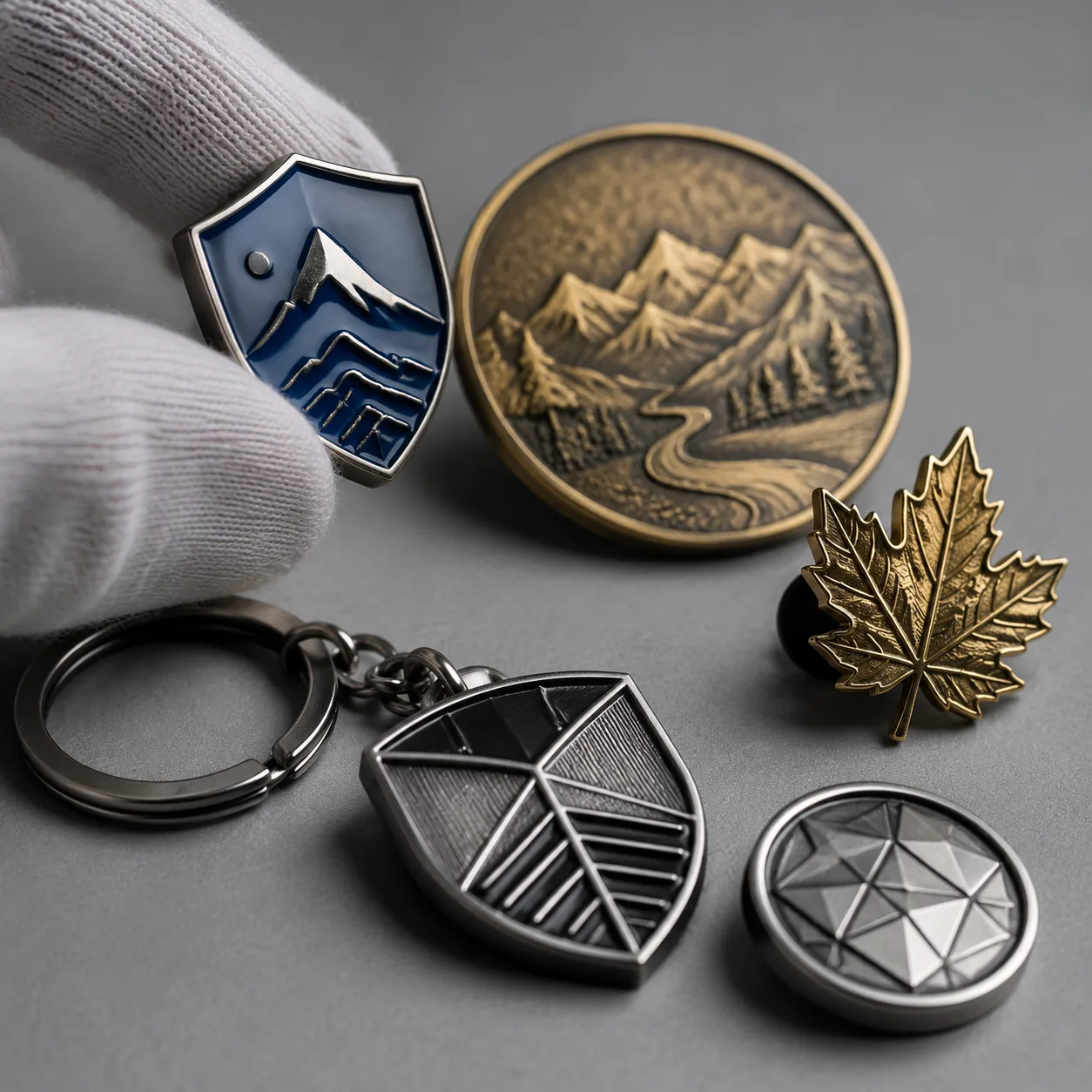
Why sample-stage mistakes delay more pin orders than factory production
Most custom enamel pin delays start before bulk production, not on the production line. The recurring failure points are predictable: artwork changes after proof signoff, plating switched after die layout, post locations moved after backing-card slot approval, or a buyer approving only factory photos when the real risk is clasp tension, edge smoothness, epoxy height, spinner play, or card-slot fit. In 2026, many factories still quote attractive bulk lead times only after sample approval is frozen. Every ambiguous checkpoint pushes the mass-production start date back.
In practical terms, one avoidable revision loop usually adds 3-6 calendar days. A die remake caused by changed geometry often adds another 5-9 days before bulk production even enters the queue. If the launch is tied to a convention, retail reset, subscription-box packout, or creator drop, that delay can cost far more than the sample fee. The goal is not to minimize sample spend. The goal is to buy the right level of proof for the order value, finish complexity, and brand risk.
A basic 35 mm soft enamel iron pin with 2 spot colors, shiny nickel plating, 1 butterfly clutch, and no retail packaging can often move from digital proof to bulk release after a finished photo sample. A 50 mm zinc alloy pin with imitation hard enamel, screen print, glitter, epoxy dome, and a custom die-cut backing card usually should not. On the second SKU, a physical pre-production sample is inexpensive insurance against remakes, repacking labor, or expedited freight.
A disciplined sampling plan separates five checkpoints that buyers often blur together: digital proof, tooling confirmation, finished photo sample, physical pre-production sample, and revised sample. Each stage verifies something different. The money saved by using them correctly is rarely just USD 30-80 in sample fees. It is the avoided cost of reworking a 500-2,000 piece order after metal, plating, and packaging materials have already been committed.
What each sampling stage actually verifies
Digital proof is the lowest-cost checkpoint and is often included in the quoted unit price. A useful proof should show overall size in mm, finished thickness, Pantone references, raised and recessed areas, plating finish, attachment type, exact post positions, backing orientation, and packaging notes. For standard jobs, 1-2 proof revisions are commonly free. Extra redraw work, missing vector artwork, or multiple variant splits typically add USD 15-45 and 1-2 working days. A proof confirms layout and engineering intent, but it does not confirm actual plating tone, enamel flatness, glitter load, print sharpness, edge polish, or clasp feel.
Tooling confirmation is where artwork becomes manufacturable metal. For die-struck, soft enamel, and imitation hard enamel pins, this stage determines whether outlines are deep enough, recessed cells are wide enough to fill cleanly, and small text will still read after plating and polish. As a practical factory rule, minimum raised metal line width should usually be at least 0.20 mm, isolated recessed gaps at least 0.25 mm, and small text at least 1.0-1.2 mm cap height. For cleaner yields, many buyers set 0.25 mm raised lines and 0.30 mm gaps as the safer target. Below those thresholds, reject rates rise quickly, especially on matte, antique, or black nickel finishes that reduce contrast.
A finished photo sample is an actual produced piece photographed after plating, color fill, polishing, and assembly. It is faster than a couriered sample because transit is removed from the timeline. For repeat orders or low-risk new designs, this is often enough to confirm color blocking, plating contrast, logo orientation, and basic assembly. A physical pre-production sample is different. It is the only stage that reliably checks edge smoothness, pin-back clutch insertion force, moving-part clearance, epoxy dome height, print registration under magnification, and whether the pin fits the backing-card slot without bowing the card or cracking the coating.
Revised samples are where avoidable cost accumulates. The cheapest revisions happen before die cutting and are limited to artwork or note changes. The expensive revisions happen after tooling or after the first finished sample, especially if they affect metal geometry, post placement, plating, spinner hardware, or packaging die lines. Moving a post by 2-3 mm, increasing a border from 1.2 mm to 1.5 mm, or switching from shiny gold to antique brass can require partial rework or a new die depending on how the recesses and polished faces were engineered.
| Sample stage | Typical 2026 FOB cost | Lead time after artwork approval | What it confirms | Where it falls short |
|---|---|---|---|---|
| Digital proof | USD 0-45 | 1-2 days | Size, layout, Pantone callouts, plating notes, post positions, backing-card notes | Cannot confirm actual plating color, enamel surface, glitter density, print registration, or clutch feel |
| Tooling confirmation | USD 50-140 for new iron die; USD 90-180 for larger/complex zinc-alloy die | 2-4 days | Manufacturable line widths, text size, recessed fill areas, die depth, post feasibility | Not a finished appearance or tactile approval stage |
| Finished photo sample | USD 25-70 plus tooling if new die | 4-7 production days | Real piece appearance, color placement, plating result, basic assembly, orientation | Weak for edge feel, epoxy height, moving-part play, backing-card fit, and fine print inspection |
| Physical pre-production sample | USD 40-110 plus tooling and USD 30-60 courier | 6-10 production days plus 3-6 transit days | In-hand verification of finish, clasp tension, edge polish, movement tolerance, epoxy level, and packaging fit | Often unnecessary for repeat SKUs with frozen tooling and unchanged packaging |
| Revised sample | USD 20-90 per loop; die remake extra | 3-6 extra days per loop | Correction of confirmed defects or specification mismatches before bulk release | Costly when revisions are cosmetic rather than functional |
MOQ, unit economics, and the sample route that makes sense
Sampling economics are front-loaded. Tooling, setup, and courier charges do not scale down well, so the same USD 120 spent on sampling matters very differently on a 100-piece order than on a 1,000-piece order. In 2026, workable MOQs for many suppliers still start around 100 pieces for standard soft enamel pins, 200 pieces for more complex finishes or custom carding, and 300-500 pieces for retail-packed programs with custom cards, OPP bags, barcodes, or presentation boxes.
As a realistic benchmark, a standard 30-40 mm soft enamel pin in iron or zinc alloy, 1.2-1.5 mm thick, with 1 attachment and 4-6 colors, often lands around USD 0.55-1.00 FOB at 100 pieces, USD 0.39-0.75 at 300 pieces, USD 0.30-0.56 at 500 pieces, and USD 0.23-0.44 at 1,000 pieces. Larger sizes shift those ranges upward. A 45-50 mm pin with 2 posts and 6-8 colors may run 15-35 percent higher than a 30 mm single-post pin using the same finish stack.
Upgrade features change cost quickly. Glitter commonly adds USD 0.03-0.08 per piece, epoxy dome USD 0.05-0.12, dual posts USD 0.04-0.10, screen print USD 0.04-0.09, glow pigment USD 0.03-0.07, spinner or dangler hardware USD 0.12-0.35, and custom backing card plus polybag another USD 0.08-0.20 depending on card stock, print coverage, die-cut shape, and pack method. If the card uses 350-400 gsm coated stock with a custom slot, matte lamination, and euro hole, expect setup tolerance issues to matter more than on a simple flat card.
That means a physical sample cycle costing USD 90-170 all-in can equal 12-30 percent of a 100-300 piece order, but only 3-8 percent of a 1,000-piece run. For low-volume internal giveaways, a photo sample is often the rational choice. For museum shops, event merchandise, blind-box programs, and retail launches, even a 300-piece order can justify a physical sample because a packaging or finish error has a higher downstream cost than the sample spend.
| Order quantity | Typical standard pin FOB unit price | Sample route that usually fits | Sampling cost as share of project |
|---|---|---|---|
| 100 pcs | USD 0.55-1.00 | Digital proof, then photo sample unless packaging, print, epoxy, or movement risk is high | About 15-35% |
| 300 pcs | USD 0.39-0.75 | Photo sample for simple new designs; physical sample for retail card fit or premium finishes | About 8-18% |
| 500 pcs | USD 0.30-0.56 | Physical sample is usually justified on first-run branded work | About 5-10% |
| 1,000 pcs | USD 0.23-0.44 | Physical sample is usually economical for any new die or effect-heavy design | About 3-8% |
The technical cost drivers that turn routine sampling into expensive sampling
The first driver is process stack. A basic soft enamel pin with shiny nickel plating and one butterfly clutch is comparatively stable. Cost and risk rise when the design adds imitation hard enamel polishing, translucent enamel over sandblasted texture, pearl pigment, glow pigment, dual plating, offset or screen print, epoxy dome, spinner or dangler assembly, magnets, or custom die-cut packaging. Each added process creates another labor step, another inspection point, and another chance that a photo-only approval will miss a functional defect.
The second driver is revision timing. Changes before die cutting are mostly engineering and redraw time. Changes after tooling or after the first finished sample can trigger metal rework, replating, fresh print screens, revised card die lines, or a full die recut. On designs with many small cells, changing outline geometry is not a minor tweak. It often means a new die because cell walls, metal bridges, and fill depths all shift together. Plating changes matter more than buyers expect. Antique brass, matte gold, black nickel, and dual-tone finishes can reduce readability, soften border contrast, or reveal polishing marks that shiny nickel would hide.
The third driver is tolerance sensitivity. A pin itself may accept ±0.20 mm on overall size and ±0.10 mm on thickness without issue, but the moment it must fit a die-cut backing-card slot, acrylic display insert, or foam presentation box, tighter controls may be needed. A card slot designed at pin width plus only 0.3 mm clearance may work on one sample and fail in packout if the board swells slightly or lamination closes the cut edge. For slot-fit programs, buyers usually get better results by specifying at least 0.5-0.8 mm clearance and testing a real sample on the final card stock.
The fourth driver is approval method. Skipping a physical sample may save USD 40-60 in direct cost, but that saving disappears if bulk goods arrive with loose rubber clutches, off-center posts, rough edges, print haloing, epoxy overflow, or backing cards that tear on the packing line. Where touch, fit, and movement matter, sample money should be spent there. On repeat SKUs with frozen specifications, extra checkpoints usually add cost without reducing risk.
- Set minimum raised metal line width at 0.20 mm, isolated gaps at 0.25 mm, and small text at 1.0-1.2 mm before die cutting
- Treat plating changes, post-position changes, backing-card die-line changes, added epoxy, and new print layers as cost-impacting revisions
- Confirm whether the die charge is one-time, amortized into bulk, partially refundable at MOQ, or recharged if geometry changes after cutting
- For backing-card slot fit, target 0.5-0.8 mm clearance over the pin’s maximum width and test on final board stock
- Use physical samples for tactile, fit, movement, and packaging checks; use photo samples for stable repeat specifications with unchanged tooling
Lead-time math in 2026: where the days actually go
Sample lead time is not just factory floor time. The full clock includes buyer clarification, proof revision, internal signoff, die queue, die polishing, plating queue, enamel fill and cure, polish, assembly, inspection, sample photography, approval lag, and sometimes courier transit plus customs. On many pin programs, the buyer's own approvals consume 1-3 days at each checkpoint, which is why a supplier quoting a fast sample window can still miss the required launch date.
For standard custom pins in 2026, a realistic sequence after final artwork submission is 1-2 days for proof confirmation, 2-4 days for die preparation, 3-5 days for first sample production and finishing, and 1 day for QC and photography. If approval is given from photos, bulk production can often start around day 7-12 from receipt of a clean final artwork file. If a physical sample is required, add roughly 3-6 days express transit to North America or Europe and allow another 1-3 days for customs hold, broker contact, or delivery correction.
Rush service exists, but it should be costed correctly. Compressing an 8-day sample cycle to 5-6 days often adds a 10-20 percent expedite premium, especially when plating, print, or polishing queues need to be resequenced. Transit upgrades from standard express to priority may add another USD 15-35 on a small sample parcel. That premium only makes sense when the deadline is fixed and the approval team is ready to sign off within hours, not days.
As a practical benchmark, straightforward soft enamel programs can reach bulk release inside 7-12 days, mid-complexity retail-packed programs often need 12-18 days, and premium multi-effect programs with one revision loop are more realistically 16-24 days. Bulk production itself is commonly another 10-18 days for standard orders, excluding freight. Scheduling backward from the required in-hand date remains the safest approach, especially when sea freight is planned and there is no room for an airfreight recovery.
When skipping a physical sample is justified and when it is risky
Skipping a physical sample is usually reasonable on repeat orders with already approved tooling, unchanged Pantone references, unchanged plating, the same post configuration, and identical packaging. It is also reasonable for internal-use items where minor fill variation, light backside polish marks, or a size tolerance of ±0.20 mm will not cause returns or brand damage. In those cases, a finished photo sample plus a final inspection report is usually sufficient.
It is usually a mistake to skip the physical stage when the design uses premium effects or moving parts. Typical examples are spinners, danglers, sliders, glow enamel, transparent colors over texture, dual plating zones, magnetic gift boxes, or backing cards with tight slot tolerances. Those features can match the proof and still fail in use because movement feels loose, jump rings rotate poorly, epoxy sits too high, the edge feels sharp, or the card fit is too tight for consistent packing.
It is also a mistake to skip the physical stage on high-exposure launch items where failure is expensive. On a 2,000-piece event pin or retail drop, spending USD 100-180 on a physical sample is usually rational if it reduces the risk of remaking the run, discounting flawed inventory, or paying airfreight to recover lost time. The pre-production sample should be treated as a formal control point with pass-fail criteria, not as a box-checking exercise.
A practical 2026 sample budget, QC spec, and approval model
For a simple first-run pin, budget roughly USD 90-160 before mass production. That usually covers one new die, one finished photo sample, and one limited artwork or color revision. Total elapsed time from approved artwork to bulk-release decision is commonly 7-12 days if the buyer responds within 24 hours and the design stays within normal factory thresholds.
For a mid-complexity order with custom backing card, special plating, and one visual effect such as glitter, print, or epoxy, a more realistic budget is USD 150-280 including one couriered physical sample. Total elapsed time is usually 12-18 days including transit and one revision loop. For premium or retail-sensitive programs, assume two sample loops, total sample cost of roughly USD 240-420, and about 16-24 days before bulk production starts. That is conservative, but still cheaper than compressing production later or accepting defects that should have been caught during sampling.
The cleanest approval file is a specification sheet, not just an annotated image. It should include final size, thickness, base metal, plating finish, Pantone numbers, attachment type, exact post positions, packaging format, barcode placement if any, and inspection standard. For most custom pins, practical tolerances are ±0.20 mm on overall size, ±0.10 mm on thickness, and about ±0.50 mm on post placement unless the backing card or display fixture requires tighter control. For screen print, buyers often specify registration within ±0.15 mm on visible logo elements. For epoxy, a common acceptance rule is even coverage with no exposed print edge and no obvious overflow onto plated borders when viewed at normal inspection distance.
On quality control, AQL 2.5 is a common standard for major defects on finished pins, while AQL 4.0 is often used for minor cosmetic defects unless a stricter retail standard is agreed in writing. Major defects typically include wrong plating, missing attachment, unreadable print, sharp hazardous burrs, or failed movement function on spinners and sliders. Minor defects usually include small backside polish marks, slight enamel dust points, or light color variation within agreed tolerance. Buyers who separate sample stages clearly, quote them line by line, and approve against a written specification usually spend slightly more upfront and substantially less on delay, remake, dispute, and freight recovery once production begins.
Have a project? Send your artwork and target quantity and we’ll reply with a detailed quotation within 12 working hours.
Ready to get this made?
Send your sketch, target quantity and ship-date. Detailed quotation in 12 hours.



