2026 Buyer Framework for Choosing Promo Product Build Paths
Start With the End Use, Not the Product
Most quote requests fail because the buyer starts with the object and not the job. A pin, keychain, magnet, badge, or patch can all look cheap on paper, but the wrong build path creates cost drift, color issues, breakage, or a reorder mismatch later. In 2026, buyers also have to account for shorter planning windows, more reorder volatility, and tighter control over what can be replicated across factories. The first decision is simple: decide whether the item must be collected, worn, mailed, handled daily, or kept as a brand token, then let that use case choose the construction.
A giveaway for a conference booth does not need the same wear resistance as a retail merch item, and a donor gift coin does not need the same surface tolerance as a staff name badge. This is where experienced buyers save money: they select the lowest-risk construction that still survives the actual use. ZheCraft sees the same pattern across enamel pins, badges, coins, magnets, lanyards, and patches: most problems come from over-specifying one area while under-specifying the real failure point.
- Choose the lightest construction that will survive the real handling pattern.
- Choose the simplest decoration method that can hold the brand detail you need.
- Treat reorder consistency as a separate requirement from first-order sample approval.
- Assume the factory will optimize for yield unless you define the critical spec.
- If the item has moving parts, magnets, epoxy, or mixed materials, expect a higher failure risk and a longer approval cycle.
Map the Decision to Four Cost Drivers
Every custom promo product price is driven by four levers: tooling, material, labor, and finishing. Buyers often look only at unit price and miss the hidden effect of setup, plating, special fills, packing, and inspection. In 2026, the market still rewards buyers who can separate one-time cost from recurring cost, because a slightly higher tooling charge can reduce per-piece cost enough to matter by the second reorder. The right decision framework is to ask which lever you can move without hurting the customer experience.
For example, a stamped brass pin with soft enamel may be cheaper at 500 pieces than an acrylic alternative if the artwork is simple and the plating is standard. A large, full-color printed keychain may win when the artwork is photo-heavy and repeat orders are uncertain. The mistake is to force one construction into a use case it does not suit. That is how buyers end up paying twice: once in production, and again in rework or replacement.
| Cost Driver | What Raises It | What Lowers It |
|---|---|---|
| Tooling | 3D relief, cutouts, moving parts, custom molds | Flat shapes, standard molds, shared components |
| Material | Heavy base metal, thicker stock, specialty alloys | Lighter base metal, thinner stock, standard materials |
| Labor | Multi-step coloring, hand assembly, mixed finishes | Single-process decoration, fewer components |
| Finishing | Plating layers, epoxy, texture, special effects | Standard plating, simple polish, no added coating |
Use a Build Path, Not a Product Name
Two buyers can ask for the same product name and get radically different risk profiles. A custom keychain may be die-cast zinc with enamel, laser-engraved stainless steel, acrylic UV print, or PVC mold injection. Each path has a different MOQ floor, lead time, visual result, and defect mode. The buyer should pick the build path first, then the supplier can quote the product accurately instead of guessing at intent.
This matters more in 2026 because supply chains are faster but less forgiving. Factories are willing to quote quickly, but fast quotes often assume the simplest interpretation. If you do not define build path, thickness, attachment, finish, and packing, the quote can look attractive and still be unusable. ZheCraft uses this same logic internally when helping buyers compare enamel pins, challenge coins, fridge magnets, patches, and lanyards, because the build path determines whether the order behaves like a low-risk repeat item or a custom engineering job.
| Build Path | Best For | Typical MOQ | Typical Lead Time | FOB Range USD |
|---|---|---|---|---|
| Stamped metal with enamel | Logos, mascots, simple artwork | 100-300 pcs | 12-18 days | 0.35-1.20 |
| Die-cast zinc with plating | 3D detail, raised texture, heavy feel | 200-500 pcs | 15-25 days | 0.60-2.50 |
| Printed acrylic/PVC | Full color, low weight, lower badge wear | 100-300 pcs | 8-15 days | 0.25-1.50 |
| Embroidery or woven patch | Uniforms, apparel, flexible sizing | 100-200 pcs | 10-20 days | 0.30-2.00 |
| Metal badge or coin | Recognition, premium gifting, presentation | 200-500 pcs | 15-30 days | 0.80-4.50 |
Trade Off Detail Against Repeatability
Not every detail is worth buying. Fine text, tiny internal cutouts, very thin lines, and deep relief can look impressive in renderings but reduce repeatability in mass production. If a detail cannot survive plating variation, polishing, or edge cleanup, it becomes a risk rather than a feature. A buyer should decide which visual elements must survive scrutiny at arm’s length and which only matter in a close-up sample photo.
The practical standard is this: spend detail budget where it changes recognition, not where it only adds complexity. For example, a mascot outline, main color blocks, and one signature texture are usually enough. Micro-lettering, aggressive undercuts, and highly segmented color fields often increase reject rates without improving perceived quality. This is especially true for small-format items such as lapel pins, magnets, and keychains, where the physical canvas is limited from the start.
- Protect the logo shape before you protect decorative texture.
- Keep the number of color zones as low as the design allows.
- Use raised lines and clear borders when colors must stay separated.
- Avoid tiny internal cavities if the item needs polished metal surfaces.
- Treat any feature thinner than the factory's normal finishing tolerance as optional unless it is functionally necessary.
Choose the Spec That Controls Failure
A buyer framework only works if it identifies the one spec that prevents the most expensive failure. For some products that is thickness; for others it is attachment strength, plating durability, or magnet pull. Too many RFQs bury the critical spec under a long list of nice-to-have details, and the factory still does not know what matters most. In 2026, the best buyers are narrowing their requests to the spec that actually controls returns.
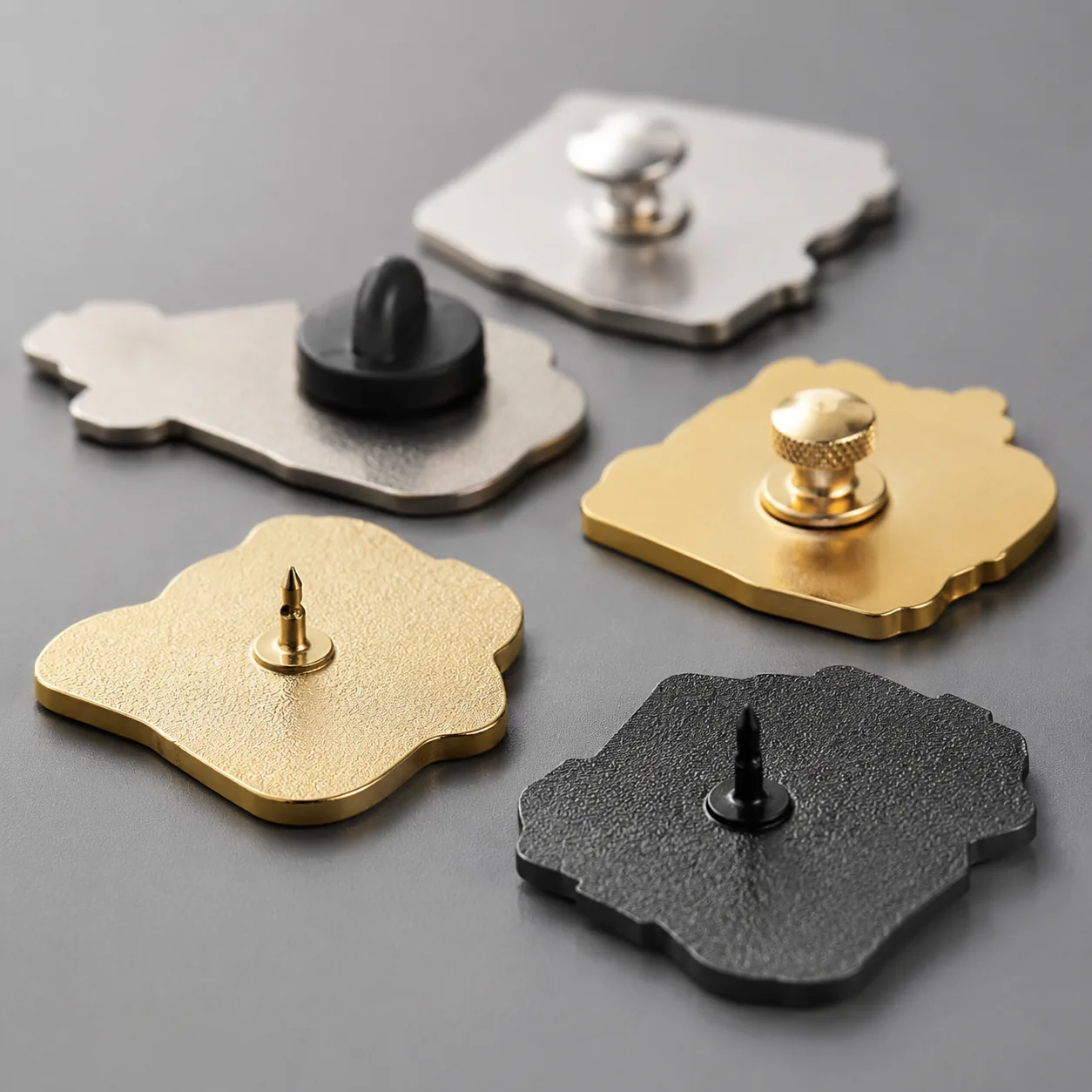
For metal products, plating thickness, polish level, and substrate choice often matter more than decorative extras. For badges and pins, back attachment security and edge finish can decide whether the item feels premium or cheap. For magnets and fridge items, magnetic grade and adhesive layout matter more than visual complexity. For patches and lanyards, thread density, edge finishing, and print method are usually the failure points. The point is not to over-engineer; it is to specify the one or two numbers that stop the wrong outcome.
| Product | Failure Point to Control | Useful Spec Range |
|---|---|---|
| Pins | Plating wear or rotation | 0.8-1.2 micron standard plating, 2-point attachment for larger pieces |
| Coins | Edge damage or weak relief | 2.0-3.5 mm thickness, consistent rim depth |
| Magnets | Poor hold or peel failure | Pull force matched to weight and surface use |
| Patches | Curling or fraying | Heat-cut or merrowed edge, stable backing |
| Lanyards | Print fade or hardware failure | Sublimation or woven method matched to artwork and clip load |
Read MOQ and Lead Time as Risk Signals
MOQ and lead time are not just commercial terms. They are signals about the amount of setup the factory needs, the number of process steps, and the likelihood of variation. A very low MOQ on a complex metal item often means the supplier is simplifying the spec, not magically reducing engineering cost. A very fast lead time on a custom item can be fine, but only if the artwork, mold, and finishing path are already proven.
A practical 2026 sourcing rule is to treat any quote that looks unusually easy as incomplete until the factory confirms the build details. Ask how many days are for tooling, sample, and mass production separately. Ask whether the quoted MOQ is for one design, one colorway, or one combined shipment. The answer tells you whether the supplier is quoting a production plan or only a sales number.
- Separate tooling time from production time in every order.
- Ask whether MOQs change with plating, color count, or packaging.
- Confirm whether sample approval is included in the lead-time estimate.
- Check whether reorders can use existing tooling without extra setup charges.
- Treat speed claims as suspect unless they are broken into process steps.
Decide What Must Stay the Same on Reorder
A first order can be forgiven for being slightly slower or more hands-on. A reorder cannot. In 2026, many buyers are managing tighter brand systems, more seasonal campaigns, and multi-supplier continuity, so reorder consistency matters more than ever. This is where you should lock the specifications that will be painful to rediscover later: dimensions, plating code, attachment type, packaging, artwork file format, and acceptable tolerance.
The right reorder decision is to freeze the parts that customers will notice and leave flexibility only where the factory can vary safely. For example, you may allow a different carton configuration if the unit presentation stays consistent, but you should not leave plating tone or backing style open. ZheCraft typically advises buyers to treat any visible difference that could be seen side by side as a locked spec, especially for recurring corporate gifts, retail merch, and internal recognition items.
| Lock This | Why It Matters | Typical Tolerance |
|---|---|---|
| Dimensions | Affects fit, packaging, and appearance | 0.2-0.5 mm depending on product |
| Plating code | Controls appearance across batches | Use one named finish per SKU |
| Attachment type | Affects wear and user experience | Do not mix across reorders |
| Backing/packing | Controls presentation and transit damage | Keep carton and insert spec fixed |
| Artwork file | Prevents redraw drift | Use the same vector source and approved proof |
What to Do Next
Take one active or planned product and run it through this framework before requesting quotes. Decide the actual use case, pick the build path, identify the failure-control spec, and mark the reorder-critical items you cannot afford to change later. Then ask suppliers to quote the same spec set, not their preferred interpretation of it. That gives you a real comparison instead of a stack of mismatched numbers.
If you are sourcing in 2026, the best next move is to standardize your RFQ around one page: use case, build path, size, thickness, attachment, finish, packaging, MOQ target, lead-time target, and reorder lock points. That format reduces back-and-forth and exposes suppliers who are guessing. It also gives ZheCraft enough structure to quote pins, coins, magnets, patches, lanyards, and keychains on the same basis, which is the only way a buyer can compare them honestly.
Have a project? Send your artwork and target quantity and we’ll reply with a detailed quotation within 12 working hours.
Ready to get this made?
Send your sketch, target quantity and ship-date. Detailed quotation in 12 hours.



