Lapel Pin Wholesale Supplier Production Scalability Planning for European Buyers
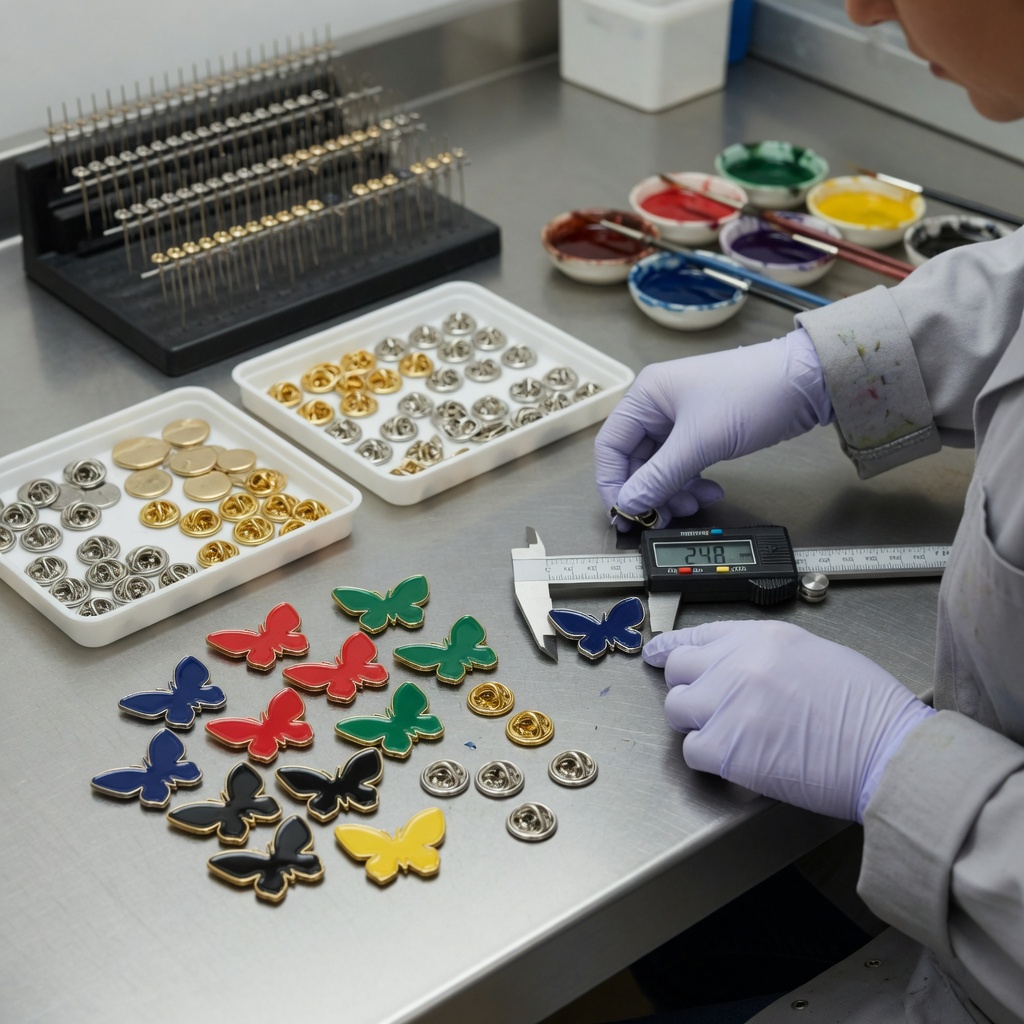
By Vincent Xi, Editorial Author, ZheCraft. Experience basis: public editorial authorship on ZheCraft only. This article does not claim factory visits, tests, awards, certifications, named clients, customer outcomes, or first-person production experience.
Answer first. For B2B buyers in Europe, lapel pin wholesale supplier production scalability planning is a reserved-capacity decision on the actual SKU mix—not a purchase based on a plant-wide daily-output headline. Do not freeze artwork or dies until the supplier writes four items: committed pieces per week for the processes, platings, enamel colors, backings, and packing on the order; the bottleneck process for that mix; a quality sampling plan that still holds at wholesale volume; and a delivery calendar that separates factory days from transit, customs, and entry files for the named EU member state, EEA destination, or the UK. Those destinations are not one customs territory.
Public manufacturer pages cited below publish plant-level daily capacity, line counts, floor area, coloring-machine counts, MOQ bands, and standard production ranges in business days. Those figures are undated self-descriptions or guide-level planning ranges. Use them to structure the RFQ for lapel pin wholesale supply; replace every number with contract values for the named European program.
How the figures were derived. The capacity, plant-size, MOQ, and lead-time numbers in this article come from three manufacturer-published pages: a bulk-order guide, a wholesale manufacturing page, and a factory overview. They are self-descriptions or planning ranges, not independently timed output for a defined European SKU mix. The cited pages do not state an audit date, uptime percentage, or SKU-mix timestamp in the excerpts used here. No other numeric factory performance is used.
Limitations / what to verify. Self-reported daily capacity may be a theoretical peak for simple designs rather than sustained mixed wholesale output. Confirm current quotes, die and color-match time, sampling at volume, Incoterms, and destination-specific chemical, labeling, VAT, and packing-file rules for the named EU member state, EEA destination, or the UK as applicable. EU REACH and UK REACH are separate regimes; do not copy one evidence pack onto the other, and do not assume an EEA entry uses the same file as an EU member-state or UK entry. Nothing cited below is a current test report or certificate.
Source evidence register (claim, unit, scope, as-of)
| Published claim | Unit | Scope | As-of / date context | Source | Do not infer |
|---|---|---|---|---|---|
| Daily capacity of 50,000 pieces; 5 production lines; more than 20 years of operation; wholesale-client support; quality-guarantee language | pieces/day; line count; years | Manufacturer self-description at plant/company level, not a named European SKU mix | No audit date, uptime %, or SKU-mix timestamp in the excerpt used | TALMUD custom lapel pin wholesale manufacturing page | Not sustained mixed-wholesale output; not a certificate; not door-to-destination lead time |
| Plant over 64,000 square meters; 1,000 experienced workers; 18 automated coloring machines; processes including die stamping, die casting, and electroplating; founded 1984; later expansion in Dongguan, China | m²; headcount; machine count; calendar year | Plant-level self-description | No production-audit date in the excerpt used | Star Lapel Pin factory page | Not proven pieces/week for a named pin mix; area/headcount are not coloring or pack-out capacity. Dongguan is a manufacturing-origin statement, not a sales-market target |
| Bulk orders generally start at 100 pieces; price breaks at 250, 500 and 1,000 units; wholesale often needs 500–1,000 minimums; standard production takes 10–15 business days; evaluate capacity and keep 2–3 suppliers for peak seasons | pieces; business days of production (not transit); supplier-count advice | Guide-level planning ranges, not a capacity audit | Undated guide; not a factory timestamp | Hesank complete guide to custom lapel pins bulk orders and wholesale solutions | Not reorder MOQ after tooling; not mixed-SKU economics; not EU, EEA, or UK delivery days |
Production scalability planning for wholesale programs in Europe
Production scalability planning turns a catalog claim into a schedule a European buyer can purchase against. For lapel pins, volume is rarely limited only by how many pieces a factory says it can make. Stamping or casting may be fast relative to plating, coloring, epoxy or enamel fill, clutch or magnetic assembly, and individual carding. A line that runs a single gold-plated, two-color die-struck pin at high speed can slow sharply when the same order adds antique finishes, translucent enamel, dual backings, unique barcodes, or retail hang cards required by a named European distributor.
Decision rule. Fail the supplier at screening if they will not map published plant claims to this mix in writing. A 10,000-piece single-SKU restock and a 10,000-piece program of 20 designs are different planning problems even if the metal weight is similar. The 10,000-piece and 20-design figures are example RFQ quantities to specify in the quote, not sourced factory throughput.
Ask for scalability in four layers, in writing:
- Process capacity — named lines or machines for die stamping, die casting, electroplating, coloring, assembly, and packing, plus which of those is the bottleneck for the artwork on the order.
- Sustained versus peak — pieces per day (or per week) the supplier will commit for a defined window, not a theoretical maximum.
- Changeover cost — extra days for new dies, PMS/enamel matching, plating baths, and first-article approval when SKUs are added.
- European calendar — factory completion date, booked freight mode, and a buffer that is not the same for an EU member-state DDP shipment as for a UK entry, and not assumed to be the same for an EEA destination without a named ship-to country.
How published factory capacity figures compare (and what they omit)
Treat every published plant figure as a claim to re-measure against the named mix. The register above is the evidence base. In short:
- 5 production lines and 50,000 pieces per day, more than 20 years of operation, wholesale-client language, and a stated quality guarantee (TALMUD custom lapel pin wholesale manufacturing page). Unit: pieces/day and line count; scope: undated plant-level self-description, not a named European SKU mix.
- Over 64,000 square meters, 1,000 experienced workers, 18 automated coloring machines, die stamping, die casting, electroplating, founding in 1984, and later expansion in Dongguan, China (Star Lapel Pin factory page). Area and headcount are not proven pieces/week. Dongguan is manufacturing origin, not a sales-market target.
- Bulk orders generally start at 100 pieces, price breaks at 250, 500 and 1,000 units, wholesale often 500–1,000 minimums, standard production 10–15 business days, and a suggestion to keep 2–3 suppliers for peak seasons (Hesank complete guide to custom lapel pins bulk orders and wholesale solutions). Units: pieces and factory business days, not EU, EEA, or UK delivery.
Those pages omit uptime, overtime, reserved versus spot capacity, concurrent plating load, and whether 50,000 pieces/day (unit: pieces/day; scope: undated TALMUD plant-level self-description) assumes one simple pin or a mixed enamel calendar. Square meters and headcount are weak proxies if coloring or packing constrains output. The 10–15 business day band (unit: business days of production; scope: undated Hesank guide) is not an EU, EEA, or UK delivery date.
Convert headlines into an RFQ: the supplier publishes 5 lines / 50,000 pcs/day / 18 coloring machines / 10–15 days; for this artwork pack, what is the committed weekly output in weeks 1–6 after first-article approval, and which process is the bottleneck? Weeks 1–6 is an example window to set in the quote, not a sourced factory slot.
Lead time, MOQ, and SKU-mix trade-offs when scaling wholesale volume
Score these trade-offs in the quote, not in brochure language.
MOQ versus true wholesale economics. Guide-level ranges of 100 pieces to start bulk, with breaks at 250 / 500 / 1,000 and wholesale floors around 500–1,000 pieces, reflect setup amortization (dies, films, color matching, plating jigs), not a physical machine limit (Hesank bulk-order guide). For a European distributor, the better questions are reorder MOQ after dies exist, and whether mixed SKUs in one shipment still hit the break. A supplier that drops price at 1,000 pieces of one design may not grant the same break on 20 designs of 50 pieces each even if the total is 1,000. The 20 × 50 mix is an example calculation to verify in the supplier quote, not a published factory rule.
New-tooling time versus repeat-run time. The first wholesale PO pays for die cutting, 3D mold (if cast), enamel PMS matching, and plating standards. Repeat POs should quote a shorter band. If the supplier's standard 10–15 business days includes both, insist on two calendars: first article plus mass, and repeat mass. Production scalability planning fails when marketing lead time is only the repeat number.
Mix complexity tax. Each added plating, translucent color, dual-height enamel, epoxy dome, or magnetic backing can move work from a fast stamping cell to a slower wet-process or manual cell. Automated coloring machines (18 machines at plant level, undated self-description) help only if the colors fit the automated path (Star factory page). Hand-filled enamel, glitter, or glow layers do not scale like a two-color pantone fill. That last sentence is process-planning logic, not a timed output study.
Peak-season contention. The same guide recommends maintaining 2–3 suppliers for peak seasons (Hesank bulk-order guide). That is a procurement control, not a factory feature. Align any capacity hold to the ISO weeks of the named European program. Dual-source only after interchangeable specs exist (metal, plating thickness target, color standard, backing, and packing); otherwise the second source is a redesign project.
Transit is not production. A 50,000-piece daily claim still leaves air versus sea and UK versus EU customs files. An EEA ship-to country is a third file, not an automatic copy of an EU member-state invoice. Show three dates: ex-works ready, onboard/depart, and requested delivery at the named European DC.
Quality control and process bottlenecks when wholesale output ramps
Volume without a frozen inspection plan is a larger defect stream, not scalable supply. Lapel pins concentrate risk in edges, plating color, enamel fill height, clutch retention, and needle or magnet safety for the destination market.
Request, as part of production scalability planning:
- First-article standard — photo and physical sign-off against pantone/enamel chips and plating sample; mass may not start from an unfrozen digital proof alone.
- In-process checks at stamping (fill, burr), plating (color, adhesion, exposed-nickel risk where the named destination requires a chemical file), coloring (voids, overflow), and assembly (pin stem, clutch friction).
- Sampling rate that scales — a 100% visual claim on a trial lot is not the AQL paid for at 20,000 pieces. Ask what is 100% (for example, clutch function) versus sampled (color). The 20,000-piece figure is an example wholesale quantity to specify in the RFQ, not sourced factory throughput. If an AQL is used, name the standard and the lot size in the quote.
- Rework and pack-out — strip-and-refill versus scrap for off-shade enamel; polybag versus individually carded pins; mixed SKUs; labels the named European warehouse can receive.
Quality-guarantee language on a marketing page is a commercial claim, not a documented inspection procedure or a current certificate (TALMUD page). Do not treat any page slogan as certification. Name a QC owner and a hold point before export packing.
| Process stage | Why it gates wholesale scale | Typical failure when volume jumps |
|---|---|---|
| Die stamping / casting | New dies and press time | Shared presses; rush jobs jump the queue |
| Electroplating | Bath capacity, color change | Gold/antique/black nickel queues; shade drift |
| Coloring / enamel | Machine vs hand fill | Voids, overflow, cure time |
| Assembly (clutch, magnet, deluxe) | Labor and mix | Mixed backings destroy line balance |
| Individual packing | Cards, bags, inserts | Packing becomes slower than metal |
| Final inspection | Sampling vs 100% | Undetected burrs or weak clutches in the named EU, EEA, or UK retail channel |
Decision table: comparing a lapel pin wholesale supplier on scalability
Score two or three factories against the same European program. Prefer a smaller committed weekly output with a named bottleneck and a QC plan over a larger unverified daily claim.
| Decision factor | What good looks like | What to put in the RFQ | How to verify before PO |
|---|---|---|---|
| Sustained output for this mix | Weekly committed pieces after FA approval, not peak theoretical | Committed pcs/week for SKU list A for a named 4–8 week window (example window to set in the quote); name bottleneck | Written slot plus buffer; optional paid pilot at about 10–20% of first wholesale quantity (example assumption to verify commercially) |
| Published vs usable capacity | Headlines (50,000 pcs/day, 5 lines, 18 coloring machines) mapped to this process | Which published lines/machines run this pin? | Process map; photos of the actual cells |
| Plant scale context | Area/headcount only as context (over 64,000 m² / 1,000 workers) | Share of plant on lapel pins vs other promo SKUs | Pin vs mixed-promo split; overtime policy |
| MOQ after tooling | Reorder and mixed-SKU MOQ separate from first-run 100 / 250 / 500 / 1,000 breaks | First-run, reorder, and mixed-SKU carton rules | Quote line items; die storage and ownership |
| Standard production band | 10–15 business days as a repeat band unless proven otherwise | Die + FA + mass vs repeat mass; exclude transit | Gantt with hold points |
| Color/plating changeover | Hours or days to switch baths and enamel sets | Max concurrent platings and colors in one week | Changeover SOP; extra plating cost |
| QC at volume | Named AQL or 100% functional checks; hold before export | Inspection plan at trial qty and at 10k+ (example volume gate to set in the RFQ); rework path | Signed QC plan; retain samples at the named European DC and at factory |
| European delivery file | Incoterms, packing list, origin, VAT per destination | EXW vs FOB vs DAP/DDP to [named EU member state / EEA country / UK] | Draft commercial invoice and packing spec |
| Destination compliance file | Chemical, nickel-release, labeling, and packaging for the named market | Restrictions for destination X; EU REACH vs UK REACH separately; no all-Europe sameness | Current test reports if offered—do not infer certification from a web page |
RFQ checklist for production scalability planning
Send this as a single specification pack. Do not issue a PO if any fail-closed item is blank.
Fail-closed minimum. (1) SKU list with size in mm, process, metal, plating, enamel colors, backings, and packing; (2) quantity split by named EU member state, EEA country, and/or UK; (3) committed pieces per week after first-article approval plus named bottleneck; (4) first-run, reorder, and mixed-SKU MOQ; (5) two factory calendars (new dies + color match + FA + mass vs repeat mass), as factory days; (6) QC plan at the real wholesale quantity and a hold point before export packing; (7) Incoterms, importer of record, and document pack for the named destination; (8) payment that actually reserves the capacity slot and through which ISO week.
Full pack:
- Program identity — every SKU: size (mm), process, metal, plating, enamel/print colors, backing, packing.
- Destination split — quantities by EU member state, EEA country, and UK on separate lines; do not write Europe as one customs territory.
- Committed capacity — pieces per week for a named 4–8 week window after first-article approval (example window to set in the quote); name the bottleneck.
- Headline-claim reconciliation — which published daily capacity, lines, area, headcount, or coloring machines actually run this order.
- MOQ matrix — first-run, reorder, and mixed-SKU MOQ; apply 100 / 250 / 500 / 1,000 breaks only if they fit this mix.
- Two calendars — new dies + color match + FA + mass versus repeat mass; factory days, not door-to-destination days.
- Color, plating, first article — pantone/enamel chips; extra-plating days; plating-thickness targets as specs to verify; who signs the golden sample; mass cannot start from an unfrozen digital proof.
- QC, rework, pack-out — sampling or 100% points; AQL if used; hold before export packing; scrap % as a quote assumption until written; cards, bags, labels, mixed-SKU cartons the named European DC can receive.
- Incoterms, freight, documents — EXW / FOB / CIP / DAP / DDP; air vs sea; importer of record; invoice, packing list, origin, and current chemical or nickel-release reports if offered (a web claim is not a certificate).
- UK versus EU versus EEA file — separate marks, language, and entry data; do not copy an EU invoice onto a UK shipment without review; do not assume an EEA destination accepts the EU pack unchanged; name the ship-to country.
- Peak, price, hold, change control — overtime; second supplier only after interchangeable specs; die ownership; unit price by break qty, surcharge, quote expiry; deposit that reserves the slot through a named ISO week; factory-ready date vs requested DC date; how late artwork is priced and whether it voids the capacity window.
Do not issue a PO that only states quantity, size, and as sample. That is not production scalability planning.
European delivery windows, Incoterms, and destination rules when scaling volume
Keep product and RFQ intent primary: the pin spec still decides factory days. Europe changes the calendar after ex-works and the file that travels with the goods.
Do not collapse Europe into one rule set. The EU customs union, EEA states, and the UK are not interchangeable for entry, VAT, and markings. A wholesale program that ships part of the volume to an EU member-state DC and part to the UK needs two document packs and often two packing or labeling variants. An EEA ship-to country needs its own named line. Country-specific packaging, language, or waste-scheme duties can sit on top of any union-level chemical rule; specify the ship-to country on the RFQ rather than Europe.
Incoterms decide who owns delay. EXW or FOB can look cheaper while leaving the European buyer to book space in a tight air market. DAP/DDP can look simpler while hiding whether the supplier has filed correctly for that destination. For a first scaled order, keep freight visible (FOB or CIP) until factory readiness is proven, unless there is a contractual reason to buy DDP.
Compliance is a file, not a slogan. Require the supplier to state, for the named destination, what chemical and nickel-release evidence they can currently provide. EU member-state obligations are not automatically UK obligations, and UK REACH is not EU REACH. Nothing in the three manufacturer pages cited here is a current test report or certification document. Do not imply that a factory overview or quality guarantee equals REACH, UK REACH, CE, UKCA, or any other mark. Do not copy an EU evidence pack onto a UK or EEA shipment without checking that destination. Do not infer that CE or UKCA marking applies unless the named product and destination actually require it.
Time buffers and dual-source for European peaks. Add a buffer independent of the 10–15 business day production band: document check, origin statement, booking cutoff, and destination clearance. Put air and sea on the RFQ with a decision date. Maintaining 2–3 suppliers for peak seasons only works if dies, color standards, and QC plans are portable (Hesank bulk-order guide). If dual-sourcing is used, freeze a common specification appendix and run a small overlapping PO before the named peak weeks.
Approve, in this order: (1) frozen artwork and process; (2) first-article against physical standards; (3) written weekly capacity and bottleneck; (4) QC plan at the real wholesale quantity; (5) packing and document pack for the named EU member state, EEA country, or UK destination; (6) Incoterms and the two-date calendar (factory ready and DC request). Only then is a large PO a scalability decision rather than a hope that a published daily-output headline will absorb mix, plating queues, and European entry.
Re-verify every numeric claim in the live quote. The 50,000 pieces/day, 5-line, 64,000 m², 1,000-worker, 18-machine, 100-piece bulk start, 250/500/1,000 breaks, 500–1,000 wholesale minimum, and 10–15 business day figures in this article are manufacturer- or guide-published planning inputs (see cited pages; no independent as-of production audit is provided). They are screening evidence a European buyer should demand—and then replace with contract numbers for the actual lapel pin wholesale supply program.
Discuss Your Requirements
Review our manufacturing capabilities, then share your specifications for a supplier-fit review.