Enamel Pin Sourcing Business Continuity Planning for New Zealand Buyers
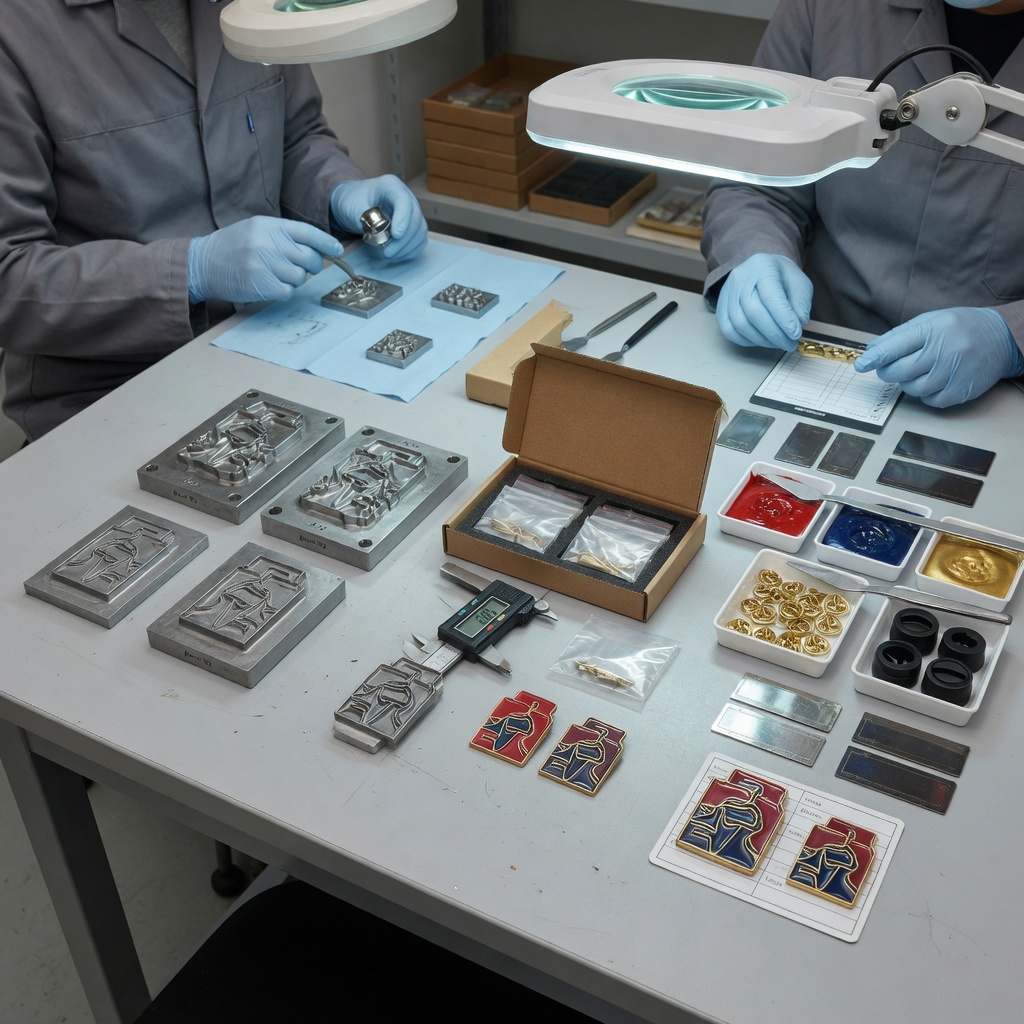
Vincent Xi, Editorial Author, ZheCraft. This is a research-based procurement briefing. It does not claim first-hand factory visits, laboratory tests, certifications held by any plant, or named customer outcomes.
Decision first. For a New Zealand in-hands date, enamel pin sourcing business continuity planning is four purchase-order controls to lock before artwork freeze—not a slogan on a quotation:
- More than one production site that can run the same enamel pin construction.
- A calendar that keeps the critical path off Chinese public holidays such as Spring Festival.
- Site-level evidence of logistics, power, personnel, and recovery preparedness.
- Named metal, enamel, and plating tiers, including whether plating is in-house.
Approve the enamel pin purchase order only when those answers are dated, site-specific, and comparable across bidders. Hold the award if the file shows 'partner factories' without two production addresses, a single blended lead time that hides holiday downtime, or an ISO 22301 name-drop without a current site-scoped certificate. Do not freeze artwork if the New Zealand event date cannot move and the supplier is still a single path.
Residual-risk control. If a single site is still awarded, record in the enamel pin procurement file why the New Zealand date can move, or record a verified finished-goods buffer (owner, insurance, carton marks) before artwork freeze. An unsigned single-path award is not a continuity plan.
Most custom enamel pins are produced in China, with factories concentrated in Wenzhou, Kunshan, and Foshan. For large bulk orders, working with more than one factory reduces the risk that a production issue or unexpected closure stops the whole shipment and can provide a delivery buffer (LPM Pins Coins). Data point 3: three named production concentrations—Wenzhou, Kunshan, and Foshan; unit = named industrial locations; scope = LPM's description of where most custom enamel pins are produced; as-of = as published on that tips page; source = LPM Pins Coins. China is manufacturing origin on that page; it is not a sales-market target for this New Zealand briefing.
Ask every bidder to split production working days, holiday downtime days, and freight-plus-clearance days, each labelled as plant working days or calendar days. Dual sites add tooling, colour-match samples, and paperwork. A single site is simpler on setup but concentrates closure, power, plating-line, and raw-material risk on one address.
The sections below are RFQ controls a New Zealand buyer can attach to enamel pin procurement. Figures are from cited pages with unit, scope, and as-of context, or labelled as example structures to verify on the quote and with the New Zealand import broker.
Dual-factory enamel pin production as a continuity buffer
A second factory is useful only if it can finish the same pin. Soft enamel, hard enamel, imitation cloisonné, die-struck plating, screen print, and epoxy dome are different process routes. A backup plant that only does printed badges cannot recover a recessed-cell enamel order. Specify construction once: base metal (zinc alloy, iron, or brass—confirm on the drawing), millimetre size on the dieline, plating, fill, polish of raised metal, backing (butterfly clutch, rubber clutch, magnet, or locking clutch), and card or polybag pack.
RFQ language from LPM's dual-factory point:
- Name two legal entities and two physical production addresses, not two sales offices.
- State whether dies are duplicated or one plant is finishing-only overflow. Overflow without a die cannot restart stamping.
- Require a side-by-side plated sample from each site under the same lighting before mass production.
- Split quantity only after both sites pass the same colour and plating standard. Example allocation to price—not a recommended lot size—a 5,000-piece New Zealand drop split 2,500 / 2,500 (unit = pieces; scope = quote-comparison structure only; as-of = not a market statistic; verify each site's minimum order quantity, setup fee, and carton mark on the quote).
Decision rule. Pay for a second die set when the New Zealand in-hands date cannot slip and a single-site stop would miss the event. Price it as non-recurring engineering, not a verbal promise. If the date can move, collect two addresses and a holiday calendar, and document residual single-path risk.
Bid-file trade-offs:
- Tooling. A second die set is extra NRE. Moving tools needs ownership clauses and condition photos.
- Match risk. Two wet-process enamel lines will not match by accident. Specify a visual adjacent-pair check against an approved master, or an instrumental Delta E limit if the quality team already uses one.
- Intellectual property. Dual source means two artwork copies and often two die sets. State mould ownership and what happens if one site stops.
- Unit price versus failure cost. A lower single-source unit price is not a saving if the New Zealand event date is fixed and there is no second path.
Do not treat 'partner factories' as dual sourcing. Partner language without addresses, die ownership, and a second sample is still a single path.
New Zealand in-hands dates and Chinese public holidays
LPM advises buyers to avoid Chinese public holidays such as Spring Festival when planning urgent custom enamel pin orders (LPM Pins Coins). That is a production-calendar control, not a freight product and not a published transit day-count. Spring Festival dates move with the lunar calendar. This article does not publish a holiday start date; attach the official notice for the order year to the RFQ. Ask each factory for:
- Last ship-from-plant date before the holiday shutdown.
- First full production date after restart, including plating and epoxy if used.
- Whether subcontracted plating or enamel fill follows a different calendar than stamping.
- How work-in-process is stored so a shutdown does not scrap a half-filled lot.
- Last artwork-revision date that still meets the last-ship date, sample loop included.
- Whether each day-count is plant working days or calendar days.
Map those dates to the New Zealand in-hands date. State the delivery postcode, whether the goods are a commercial import, the named Incoterm, and who files the import entry. Do not bury GST, duty, or brokerage inside the pin unit price unless the named Incoterm includes them. This briefing does not quote a GST rate, HS code, or transit day-count; those figures are importer- and broker-specific. Put three numbered assumptions on the quote: production working days, holiday downtime days, and international transit-plus-clearance days.
If the New Zealand date cannot move (conference badge, retail launch, school term, uniform issue), pull purchase-order placement backward by the sum of those three assumptions plus a sample-approval loop. If that PO date sits inside a shutdown, dual-source so one plant ships before the holiday, change construction to a process the backup site can run, or hold finished goods in a New Zealand warehouse. Finished-goods buffer quantity is an example calculation: remaining campaign demand minus the latest recoverable production lot (unit = pieces; scope = buyer inventory math on that campaign; verify inventory ownership, insurance, and carton labelling before pre-build). Do not copy a day-count from this article into the purchase order.
Site-level business continuity planning checks for enamel pin suppliers
Factory concentration makes site failure a pin-specific problem: stamping dies, enamel fill, and plating are not interchangeable commodities. A continuity file that only lists a head-office phone number does not describe recovery.
Resilinc describes site-level collection of operations, logistics, personnel, backup power, safety, and communication following ISO 22301, with risk assessments and mitigation suggestions. It also states that analysis of over 35,000 sites shows many lack BCP procedures, IT disaster-recovery plans, or backup power (Resilinc). Data point 1: more than 35,000 sites; unit = supplier sites in Resilinc's published analysis; scope = the site set Resilinc cites on its business continuity planning solutions page; as-of = as published on that page (re-check the live page for any update to the count); source = Resilinc. That figure is not a census of enamel pin plants in Wenzhou, Kunshan, or Foshan, and it is not a score for any named vendor in this article.
Distinguish the standard from anyone's practice:
- ISO 22301 is a business continuity management system standard. Naming it in a brochure is not the same as holding a current, site-scoped certificate. This article does not claim that any enamel pin plant is certified.
- A factory's own practice (fire drills, generator photos, or a crisis group) is local procedure. Ask for dated evidence. Do not infer certification or read those procedures as publisher plant claims.
- A software platform's assessment is a third-party method useful as a questionnaire design, not as a substitute for purchase-order documents.
Minimum site file to request:
- Legal name, export licence name if different, and production address for stamping versus plating (often not the same building).
- Backup power: load covered (press, compressor, plating rectifiers, enamel curing), hours, and last test date. Verify on dated evidence; do not treat hours as a standard requirement.
- IT and communication: how artwork, die drawings, and shipping documents are recovered if the office LAN fails.
- Logistics: alternate trucker to the export port; dedicated carton line or consolidator fill.
- Personnel: who can release a shipment if the usual merchandiser is unavailable.
- Recovery time objective as the supplier's stated target (example: restart plating within X working days—X is a supplier claim to verify, not a standard requirement).
- Stop-the-line notice: hours within which the plant must tell the buyer if a press, enamel line, or plating bath is down after PO award (integer hours on the quote; supplier-stated; verify).
If the supplier cannot answer backup power or plating-subcontractor location, site-level continuity data is missing. Score that as a residual single-point failure, even if unit price is low.
Multi-tier metal and enamel visibility when materials swing
Enamel pins sit on a short bill of materials with volatile inputs: zinc, iron, or brass; coloured enamel paste or powder; plating anodes and salts (nickel, copper, gold-colour, antique finishes); epoxy; clutches; and printed backing cards. A plant can look stable while its plating shop or enamel vendor is not.
Boston Consulting Group's 2022 publication on managing raw-material supply volatility argues that companies should assess key risk indicators for critical raw materials and build crisis-response capability through multiple sourcing options across regions, near-shoring, and vertical integration. It also describes proactive supplier management as multi-tier transparency, KPI monitoring, and risk committees that develop business continuity plans for disruptions (BCG, 2022). Data point 2: 2022; unit = calendar year of the cited BCG publication; scope = BCG's general raw-material and supplier-management guidance, including three named crisis-response option types (multiple sourcing across regions, near-shoring, and vertical integration); as-of = the 2022 publication year on that page; source = BCG, 2022. That year is not an enamel-pin price index.
Apply BCG's multi-tier point to the pin:
- Ask which metal and enamel system the quote assumes. 'Iron, nickel plating, soft enamel' is a specification; 'as sample' is not.
- Ask whether plating is in-house or subcontracted. If subcontracted, require the production address, not only a trading-company city.
- Ask for a second approved source for clutches and backing cards. Hardware shortages stop packing even when the metal pin is finished.
- Near-shoring and vertical integration are BCG-listed crisis-response options. They are not a capacity claim for any plant and are not a New Zealand sales-market expansion. If a bidder offers a non-China process route, compare construction capability, sample match, and total landed cost to the New Zealand delivery postcode.
KPI set for the pin continuity file (supplier-stated, dated): on-time sample rate, plating-reject rate, and share of metal from a named mill versus spot traders. If tiers are unnamed even under NDA, the risk BCG flags cannot be monitored.
Decision table: continuity options New Zealand buyers can compare
Use this table in the bid scoring file. Costs, days, and quantities are not list prices and are not ZheCraft commercial offers; numbers are example structures to verify on the supplier quote and with the New Zealand broker.
| Continuity lever | Specify in the enamel pin RFQ | Verify before PO approval | Trade-off | New Zealand order action |
|---|---|---|---|---|
| Dual production sites | Two legal names, two production addresses, same construction | Business licences and workshop photos of the press and plating line, not a showroom | Higher commercial workload | Do not split the PO until both sites pass the same master sample |
| Duplicate dies versus finishing overflow | Whether a second steel die set is included; who stores the steel; cavity count | Die photos, cavity count, ownership clause | Extra NRE versus faster restart | Pay for duplicate dies only if the New Zealand in-hands date cannot slip |
| Holiday shutdown | Last ship date and first restart date for the order year, including subcontract plating | Written calendar against the official public-holiday notice for that year | Earlier PO placement | If Spring Festival sits inside the critical path, dual-source or pre-build |
| Site BCP file | Backup power, logistics, personnel, IT recovery, crisis contacts, stop-the-line hours | Dated generator/test record if claimed; ISO 22301 certificate only if current and site-scoped—otherwise record 'not certified' | Audit time | Reject ISO 22301 name-drops without a document |
| Multi-tier materials | Named metal, enamel system, plating location, clutch/card sources | Second source list or explicit single-source residual risk | Less price shopping | Hold a residual-risk sign-off if plating is one exclusive shop |
| Colour and plating match | Master sample, lighting condition, acceptance method | Adjacent-pair check of site A vs site B vs master | Extra sample round | Freeze mass production until both lots match the master |
| NZ in-hands date | Postcode, named Incoterm, who files import entry, who carries insurance; day-counts labelled working or calendar | Production days + holiday days + transit/clearance days listed separately | May raise air-freight cost | Broker confirms documentation; do not assume a transit day-count from this article |
| Die and artwork escrow | Who may transfer tools if a site closes | Written mould-release process | Legal drafting | Tie tool release to unpaid-balance terms |
| Finished-goods buffer | Optional pre-build quantity stored in New Zealand | Inventory owner, insurance, carton marks | Cash tied in stock | Example: buffer = unsold campaign demand minus recoverable lot; calculate on the quote |
| Residual-risk sign-off | Single-path award only with a written reason (movable date or verified NZ buffer) | Signatures from buyer, design owner, and receiving site | Documents a known failure mode | Do not freeze artwork on an unsigned single path |
RFQ checklist for enamel pin procurement continuity
Issue these items as a single attachment so bidders answer in the same order. A continuity-complete enamel pin RFQ is one a New Zealand buyer can score without a follow-up chat.
- Construction lock: metal, millimetre size on the dieline (example 25 mm pin—unit = millimetres; scope = example size to confirm on artwork; not a standard pin size claimed by this page), process (soft enamel / hard enamel / other), plating, backing, pack, and whether epoxy dome is included.
- Colour system: master reference (physical sample and/or buyer-stated colour method). Do not accept 'as artwork on screen' as the production standard.
- Quantity and split rule: total pieces; dual-site split only after dual samples pass; quoted overrun/spare percentage (no unstated over-ship).
- Two production addresses for stamping and for plating if different; no trading-company address as a substitute.
- Die plan: one set or two; owner of steel; photos of completed dies before mass production; cavity count; mould-release if a site stops.
- Holiday calendar for the order year, including Spring Festival and any other shutdown, plus last-ship, first-restart, and last artwork-revision dates (LPM Pins Coins).
- Sample path: strike-off working days as an integer on the quote (supplier-stated; verify); plated sample from each site on the same backing card; sample cost as a line, and whether deductible.
- Match method: master sample control, lighting, and action if site B fails match (re-sample, drop site B, or hold PO).
- Site BCP evidence: backup power, IT recovery, personnel coverage, alternate logistics, crisis contacts, and hours to notify a line stop. If the bidder cites ISO 22301, require the current certificate scope and expiry; if none, mark 'practice only' (Resilinc).
- Multi-tier list: metal source type, enamel system, plating in-house or named subcontractor, clutch and card alternates (BCG, 2022).
- Quality hold points: in-process photos of fill and plating, plus pre-shipment inspection sampling method and location (state the plan already used; do not invent an AQL here).
- New Zealand delivery file: named Incoterm, destination postcode, who files the import entry, who carries cargo insurance, invoice fields the broker requires, packing list, and carton marks. Broker confirms HS classification. A lump-sum delivered price does not replace the three day-counts in item 13.
- Time-phased quote: production working days, holiday downtime days, and transit-plus-clearance days as three numbers to verify. Label each as working days or calendar days. State assumed mode (air or sea) as a quote assumption, not as a published transit statistic.
- Commercial lines: currency; unit price; tooling/NRE as a separate line; whether a second die set is included; payment versus tool-release terms.
- Failure order: written sequence if site A stops after die approval (move steel, start site B, ship partial to the New Zealand postcode, or hold).
- Residual-risk sign-off: if dual sites, duplicate dies, or plating second-source is declined, record the accepted residual risk and the compensating control (movable New Zealand date or verified finished-goods buffer) before artwork freeze.
- Approval signature block: buyer, design owner, and New Zealand receiving site agree the master sample before mass production.
Completeness gate. Do not award on unit price alone if items 4, 6, 9, 12, and 13 are blank. Those five lines are the minimum continuity file for this enamel pin procurement. If item 16 is also blank on a single-path award, hold artwork freeze.
How this briefing was derived and what to verify
Author note. Written by Vincent Xi, Editorial Author at ZheCraft. The approved experience basis for this page is editorial authorship on the Vincent Xi author profile. No factory-tour, lab-test, client-delivery, or first-person production claim is attached to the author.
Source contexts. (1) A manufacturer-side ordering-tips page on custom enamel pins, used for production geography (Wenzhou, Kunshan, Foshan), dual-factory buffering on large bulk orders, and Spring Festival planning (LPM Pins Coins). (2) A supply-chain BCP solutions page describing site-level evaluation following ISO 22301 and a published analysis of over 35,000 sites, many lacking BCP procedures, IT disaster-recovery plans, or backup power (Resilinc). (3) A 2022 BCG article on raw-material volatility, used for multiple sourcing, multi-tier transparency, KPI monitoring, and risk-committee continuity plans (BCG, 2022).
Method. Source-supported facts are limited to what those three public pages state, tagged above with unit, scope, as-of context, and URL. Process steps a buyer can put in an RFQ (stamping, enamel fill, plating, assembly, pack, export documents) were sequenced as approve / hold / residual-risk / do-not-freeze-artwork controls for a New Zealand in-hands date. Those RFQ controls are specification language, not additional measurements from LPM, Resilinc, or BCG. Numbers in this article are either taken from those pages with unit, scope, and as-of context, or labelled as example calculations to verify on a supplier quote or with a New Zealand customs broker.
Limitations and what to verify. LPM is not an official People's Republic of China holiday notice and is not a plant audit of every Wenzhou, Kunshan, or Foshan workshop. Resilinc's 35,000-site figure is their published analysis, not a count of enamel pin factories, and it does not score any vendor named here. ISO 22301 is a standard; this article does not claim any factory is certified. BCG 2022 is general raw-material guidance, not a pin-metal price series. The author did not independently audit those third-party pages against factory records for this briefing. New Zealand GST, duty, HS classification, and freight days are broker- and shipment-specific; they are omitted as point figures on purpose. Holiday dates, generator coverage, plating subcontractors, and die-ownership clauses change. Re-verify them on dated documents before purchase-order approval.
Discuss Your Requirements
Review our manufacturing capabilities, then share your specifications for a supplier-fit review.